Best Hearing-Friendly Phones for Seniors With Hearing Loss
Affiliate Disclosure: This post contains Amazon affiliate links. As an Amazon Associate, I earn from qualifying purchases. I only recommend products I’d genuinely suggest to a friend.
If you find yourself asking people to repeat themselves on every phone call, or avoiding calls altogether because straining to hear has become exhausting, the right phone can make a genuine, immediate difference. The best hearing-friendly phones for seniors with hearing loss combine real amplification, hearing aid compatibility, and visual cues in ways that a standard phone simply doesn’t prioritize.
This guide covers exactly what to look for, and a few specific options depending on your level of hearing loss.
Choosing the Best Phones for Seniors with Hearing Loss
TL;DR
- Amplification level (measured in decibels) should match your specific hearing loss — 30dB for mild loss, up to 50dB for more significant loss.
- Hearing aid compatibility (HAC) ratings matter enormously if you wear hearing aids — look for M3/T3 at minimum, M4/T4 for the clearest results.
- Visual ringers and flashing alerts solve the “I didn’t hear the phone ring at all” problem, which amplification alone doesn’t address.
- Captioned phones, which display real-time text of what the other person is saying, are worth serious consideration for more significant hearing loss.
- Corded and cordless each have tradeoffs — corded is more reliable, cordless offers mobility around the house.
Amplification Level: Matching the Phone to Your Actual Hearing Loss
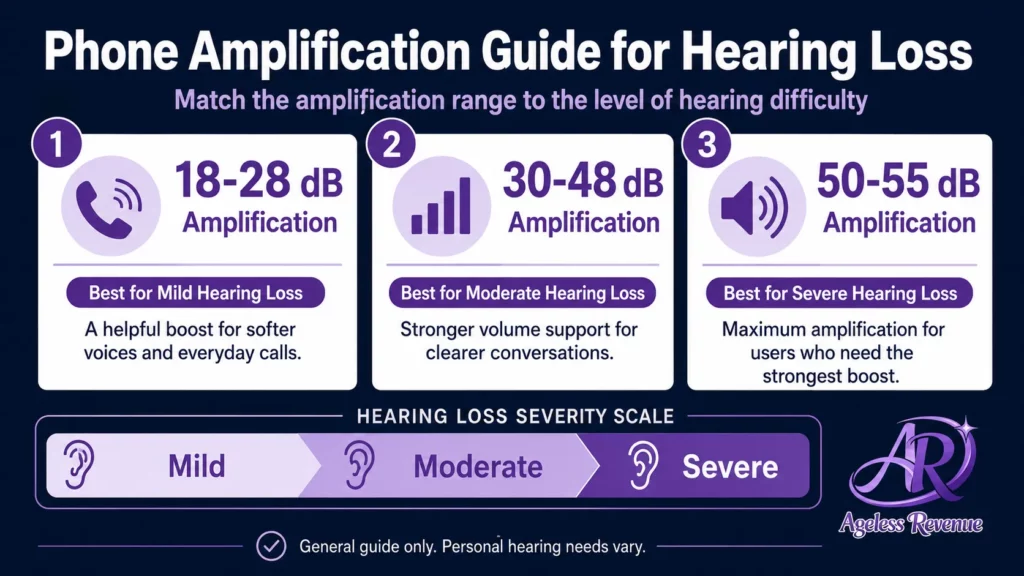
This is the specification that matters most, and it’s worth understanding rather than assuming “louder is always better.” Amplification is measured in decibels (dB) of volume boost, and the right level depends on the degree of your hearing loss — roughly 18–28dB for mild hearing loss, 30–48dB for moderate loss, and 50–55dB for more significant hearing loss.
Buying more amplification than you need isn’t harmful, since most amplified phones let you adjust the volume down, but starting with a phone rated for your actual hearing loss level (rather than guessing) gives the best starting point for comfortable use.
Hearing Aid Compatibility (HAC): The Rating That Matters If You Wear Aids
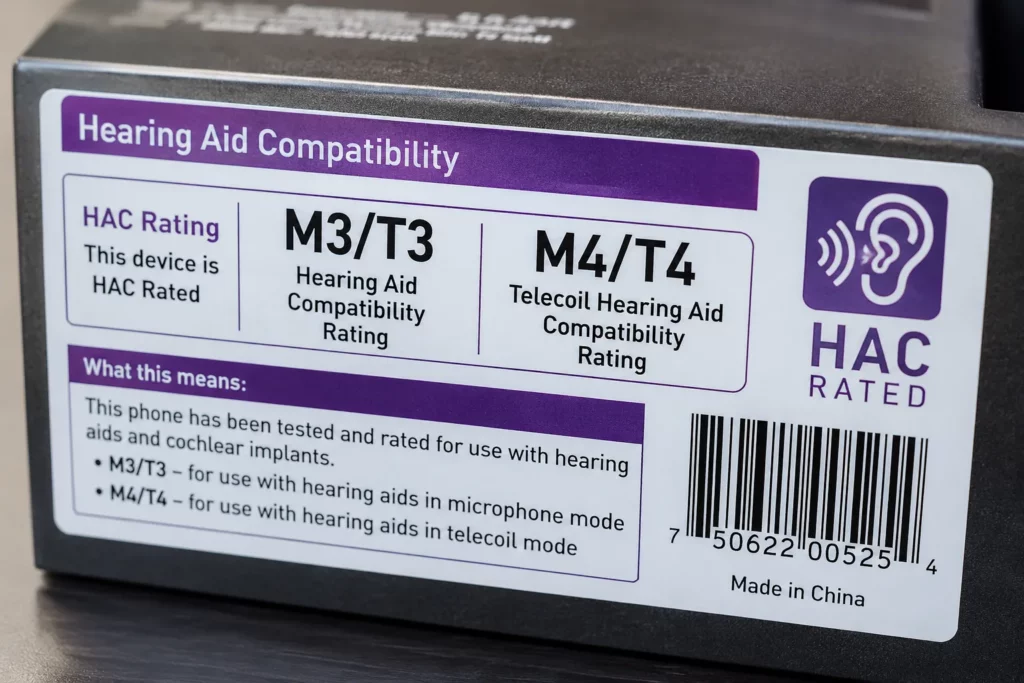
If you wear hearing aids, this is arguably more important than the phone’s raw amplification level. HAC ratings use two numbers — an “M” rating for how well the phone works with your hearing aid’s microphone setting, and a “T” rating for compatibility with the telecoil (T-coil) setting many hearing aids include.
Look for a rating of at least M3/T3, with M4/T4 representing the best available compatibility — higher numbers mean less interference, less buzzing, and clearer sound when using the phone with hearing aids active. This rating is usually printed directly on the phone’s packaging or listed in the product specifications, worth checking specifically before buying rather than assuming any phone will work well.
Visual Ringers: Solving the Problem Amplification Doesn’t Address
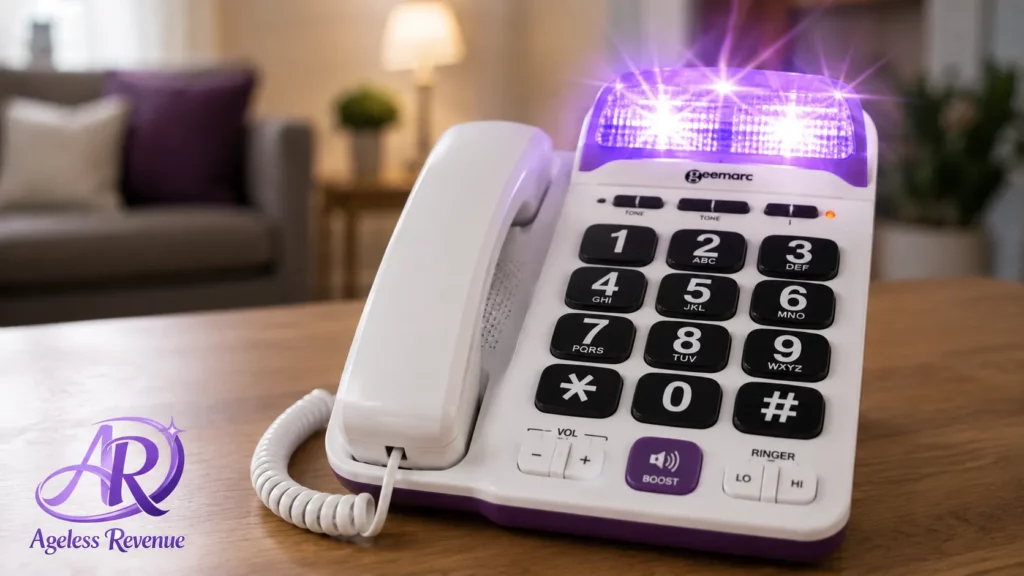
Amplifying the voice on a call doesn’t help if you don’t hear the phone ring in the first place — a separate, equally common frustration for anyone with hearing loss. A visual ringer, typically a bright flashing light built into the phone or a separate plug-in accessory, solves this by giving you a visual cue alongside (or instead of) an audible ring.
This matters especially for anyone who spends time in a different room than the phone, or who has more significant hearing loss where even a loud ring may not be reliably noticed.
Captioned Phones: Worth Serious Consideration for More Significant Loss
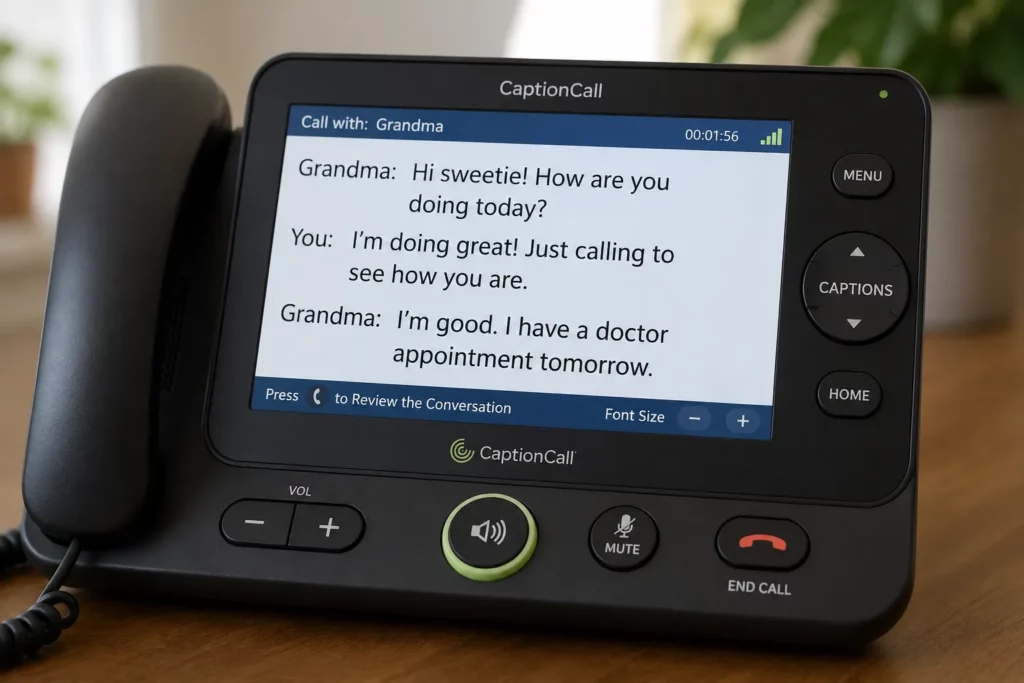
For hearing loss significant enough that amplification alone isn’t sufficient, captioned phones display a real-time text transcription of what the other person is saying, right on the phone’s screen as the conversation happens. This is a genuinely different category of solution than simply making sound louder — it addresses situations where clarity, not just volume, is the core problem.
Some captioned phone services are available at reduced or no cost through state relay programs for individuals with documented hearing loss, which is worth researching directly, since program availability and eligibility requirements vary by state.
Corded vs. Cordless: A Real Tradeoff Worth Understanding
Corded amplified phones have a genuine advantage that’s easy to overlook: they draw power directly from the phone line itself in many cases, meaning they continue working during a power outage when a cordless phone’s charging base would not. For anyone who considers phone reliability during an emergency a priority, this is a meaningful factor.
Cordless amplified phones offer the freedom to move around the house during a call, which matters if mobility or simply convenience is a bigger priority than emergency backup reliability. Some systems offer both — a corded base station paired with a cordless handset — covering both use cases in one system.
A Few Specific Options Worth Considering
For strong amplification with clear speech tone control: Cordless amplified phones offering up to 50dB volume boost with adjustable tone control (not just volume) help distinguish speech more clearly, not just louder — a meaningful difference for many types of hearing loss.
For memory support alongside hearing loss: Corded phones with large photo speed-dial buttons combine visual memory aids with amplification, useful if memory support and hearing support are both relevant.
For maximum reliability during outages: A corded amplified phone with a loud visual ringer provides both amplification and continued function during a power outage, without relying on a charged cordless battery.
For significant hearing loss where amplification alone isn’t enough: Captioned phone services display real-time text of the conversation, worth researching directly with your state’s relay program for potential reduced-cost or free access based on documented hearing loss.
Amplified phone prices vary by feature set — basic amplified corded phones typically start under $40, while phones with captioning, higher amplification, and additional accessibility features run higher. Always check current pricing and confirm the specific HAC rating before purchasing.
The National Institute on Deafness and Other Communication Disorders (NIDCD) reports that roughly one in three adults between 65 and 74 has hearing loss, and nearly half of those over 75 — a genuinely common experience worth addressing directly rather than working around indefinitely. The Hearing Loss Association of America also offers practical resources and support specifically for people navigating hearing loss and the devices that help manage it.
Frequently Asked Questions
How do I know what amplification level (dB) I actually need? This depends on your specific degree of hearing loss, which an audiologist can assess directly. As a general guide, 18–28dB suits mild hearing loss, 30–48dB suits moderate loss, and 50–55dB suits more significant loss — most amplified phones let you adjust volume down if you buy slightly more amplification than strictly needed.
What does the HAC rating on a phone actually mean? It measures how well the phone works with hearing aids, using an “M” number for microphone compatibility and a “T” number for telecoil compatibility. Look for at least M3/T3, with M4/T4 offering the best available compatibility and least interference.
Are captioned phones only for people who are profoundly deaf? No — they’re worth considering for anyone whose hearing loss makes phone conversations genuinely difficult even with amplification, not just the most severe cases. Many users find captions helpful as a confidence backup even when they can hear most of a conversation.
Is a corded or cordless amplified phone better? It depends on your priority. Corded phones offer more reliable function during power outages; cordless phones offer mobility around the house. Some systems combine a corded base with a cordless handset to cover both.
Do visual ringers work well, or are they just a gimmick? They’re a genuinely useful, well-established feature for anyone who doesn’t reliably hear a phone ring, especially from another room. A bright flashing light is a simple, effective visual cue that doesn’t depend on hearing at all.
Can I get a captioned phone for free or reduced cost? Many states offer captioned phone services at reduced or no cost through relay programs for individuals with documented hearing loss. Eligibility and availability vary by state, so it’s worth researching your specific state’s program directly.
The Bottom Line
The right hearing-friendly phone depends on matching the amplification level and features to your actual degree of hearing loss, rather than assuming any “senior phone” will automatically solve the problem. Getting your hearing loss assessed first, then shopping with that specific information, leads to a much better outcome than guessing.
If living alone is also a concern alongside hearing loss, it’s worth exploring further. See our full guide to medical alert systems for seniors for devices that combine emergency response with accessibility features relevant to hearing loss as well.