
Best Lightweight Garden Hoses for Easy Watering
Affiliate Disclosure: This post contains Amazon affiliate links. As an Amazon Associate, I earn from qualifying purchases. I only recommend products I’d genuinely suggest to a friend.
A standard rubber garden hose, once it’s 50 or 75 feet long and full of water, can weigh well over 20 pounds — genuinely difficult to drag around a yard, coil up, or maneuver around garden beds if grip strength or shoulder mobility has become a concern. The best lightweight garden hoses for seniors solve this specific problem with materials and designs that cut that weight dramatically without sacrificing durability.
Why Choose Lightweight Garden Hoses for Seniors?
Here’s what actually matters when choosing one, and a few specific options worth considering.
TL;DR
- Expandable and lightweight polyurethane hoses can weigh 60–70% less than a standard rubber hose of the same length.
- Expandable hoses solve weight brilliantly but are more prone to punctures than traditional rubber — worth knowing the tradeoff upfront.
- A quality brass (not plastic) fitting at both ends significantly reduces leaks and makes attaching to a spigot easier on the hands.
- Hose reels and hangers reduce a huge amount of the physical strain that comes from coiling a hose by hand after each use.
- Expect to pay $25–$45 for a genuinely good lightweight hose in the 50-foot range.
Why Hose Weight Matters More Than It Seems
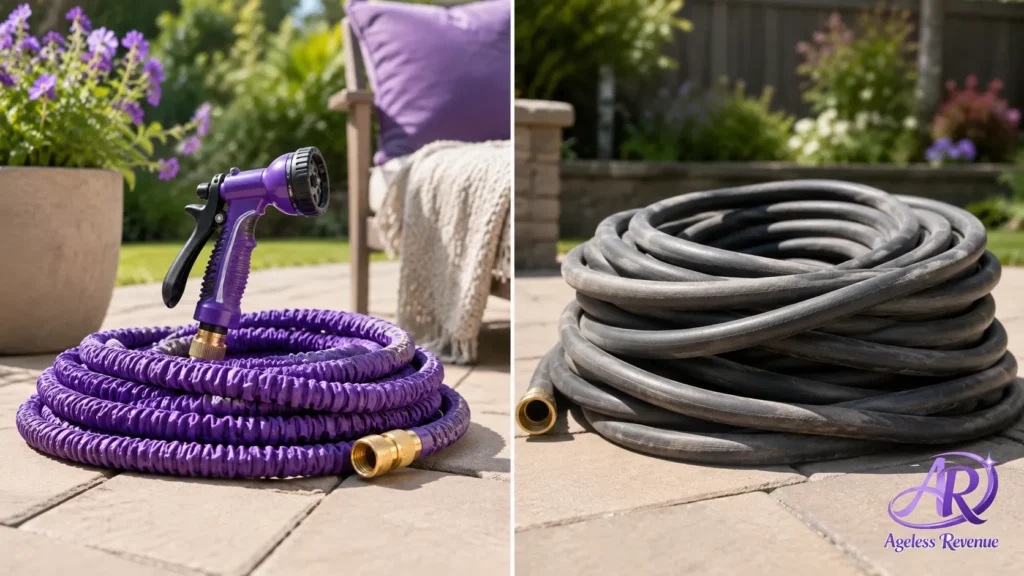
A standard 5/8-inch rubber garden hose weighs roughly 0.3 to 0.4 pounds per foot even before water fills it — a 75-foot hose can weigh over 25 pounds dry, and meaningfully more once water is running through it. Dragging that weight across a yard, especially around corners or garden beds, requires real arm and shoulder strength that many people don’t realize they’re missing until they’re standing there struggling with it.
Lightweight alternatives address this directly, some weighing less than half of a comparable rubber hose, which translates into noticeably less effort for the same watering task.
Expandable Hoses: The Lightest Option, With One Real Tradeoff
Expandable hoses use an inner elastic tube surrounded by a fabric outer layer, starting compact and stretching to full length once water pressure fills them — and shrinking back down for easy, lightweight storage once the water is turned off. These are dramatically lighter than any traditional hose, often the easiest option to handle for anyone managing reduced grip or arm strength.
The honest tradeoff: the inner elastic tube is more prone to punctures and splits than solid rubber, particularly with rough handling or extended sun exposure over multiple seasons. For most residential use, this is a reasonable tradeoff for the weight savings, but it’s worth knowing rather than being surprised by a shorter lifespan than a traditional rubber hose.
Lightweight Polyurethane Hoses: A Middle Ground Worth Considering
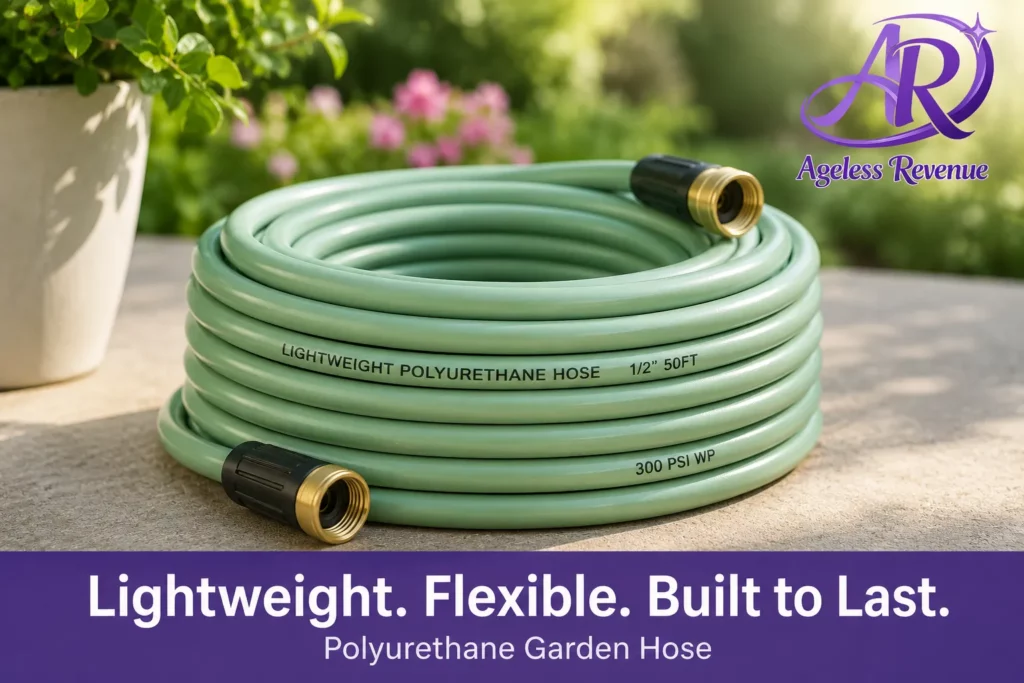
Polyurethane hoses offer another substantially lighter alternative to rubber, without the puncture vulnerability of expandable designs. They stay a consistent diameter (unlike expandable hoses, which change shape under pressure) and tend to be more kink-resistant, which matters for anyone who finds untangling a kinked hose to be its own physical frustration.
These typically cost somewhat more than a basic expandable hose but offer a longer expected lifespan and more durability against UV exposure and rough surfaces.
Pairing an easier hose with self-watering containers reduces manual watering even further
Fittings: The Small Detail That Determines Daily Frustration
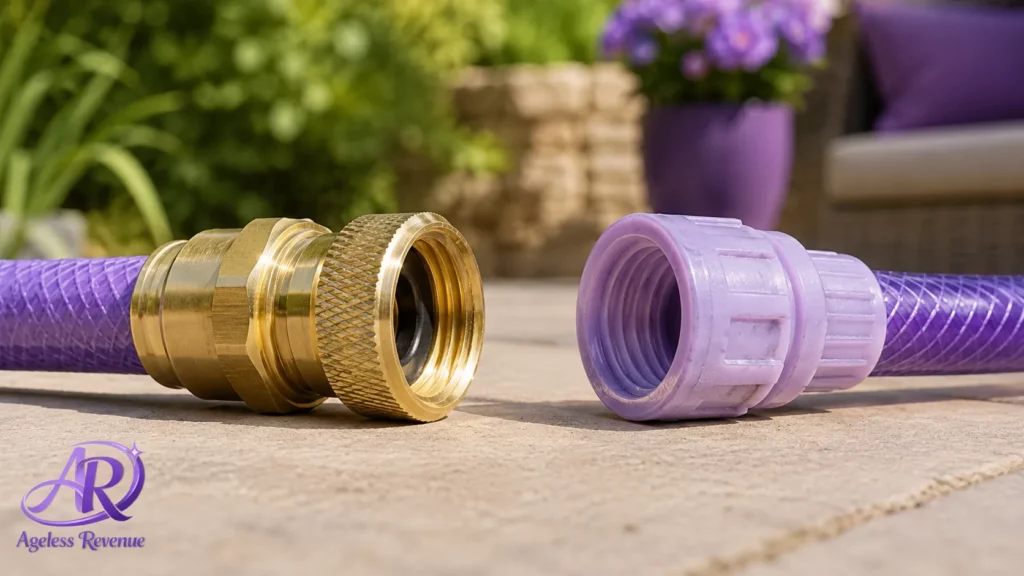
This is a detail that’s easy to overlook while comparing hose material and length, but it matters just as much for daily usability. Plastic fittings are lighter but more prone to cracking over time and can be harder to grip firmly when attaching or removing from a spigot, especially with reduced hand strength.
Solid brass fittings, while adding a small amount of weight compared to plastic, provide a more secure, leak-resistant connection and are generally easier to grip and turn thanks to their more substantial, textured surface. For most people, this small tradeoff in weight is worth the improved usability and durability at the connection points.
Reels and Hangers: Solving the Coiling Problem, Not Just the Weight Problem
Even a genuinely lightweight hose still needs to be coiled up after use, and manually coiling a long hose by hand is its own repetitive, sometimes awkward motion — bending, looping, and gathering length by length.
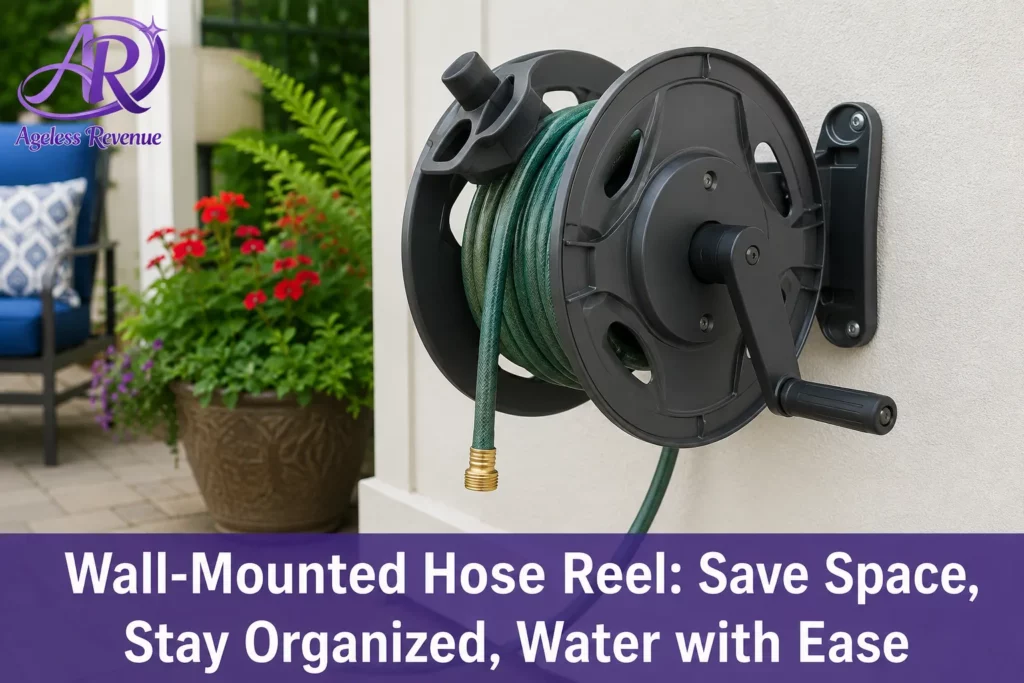
A wall-mounted hose reel or hanger with a hand crank lets you wind the hose up while standing, using a simple turning motion rather than manual coiling. Some reels are even motorized, retracting the hose automatically at the push of a button — worth considering if hand strength or repetitive motion is a genuine daily concern, not just an occasional annoyance.
A Few Specific Options Worth Considering
For maximum weight reduction: Expandable hoses in the 50-foot range are the lightest option available and easiest to handle for anyone prioritizing minimal weight above all else, with the understood tradeoff of a shorter expected lifespan than rubber or polyurethane.
For a durability-weight balance: Lightweight polyurethane hoses offer meaningfully reduced weight compared to rubber while holding up better than expandable designs to punctures, kinks, and UV exposure over multiple seasons.
For the easiest fittings to handle: Look specifically for hoses advertised with solid brass connectors at both ends — a small detail that makes a real difference in how easy the hose is to attach and detach without straining hands or wrists.
For reducing the coiling task entirely: A wall-mounted hand-crank or motorized hose reel removes the manual coiling motion from the routine, worth the added cost if repetitive bending and looping is itself a source of strain.
A genuinely good lightweight hose in the 50-foot range typically costs $25 to $45, with reels and hangers adding $20 to $60 depending on whether it’s manual or motorized.
The NC State Extension’s guide to accessible gardening touches on watering setups as part of a broader accessible garden design. The Arthritis Foundation also offers joint-protection guidance relevant to repeated dragging and coiling motions like those involved in hose use.
Frequently Asked Questions
Are expandable hoses actually durable, or do they fail quickly? They’re more prone to punctures and splits than traditional rubber hoses, particularly with rough handling or years of sun exposure, but for typical residential use, most last multiple seasons reasonably well. It’s a genuine tradeoff for the significant weight savings, not a guarantee of failure.
How much lighter are these hoses really, compared to a standard rubber hose? Lightweight polyurethane and expandable hoses can weigh 60 to 70 percent less than a comparable rubber hose of the same length — a meaningful, noticeable difference when dragging a hose across a yard.
Do lightweight hoses lose water pressure compared to rubber? Generally no, for typical residential watering needs — the diameter and design determine pressure and flow more than the specific material, so a quality lightweight hose performs comparably to a standard rubber one for everyday use.
What’s the easiest type of fitting to attach and detach? Solid brass fittings with a wider, more textured grip surface are generally easier to turn and provide a more secure, leak-resistant connection than plastic fittings, which can also crack over time.
Is a hose reel worth the extra cost? If manually coiling a hose is itself a source of physical strain, yes — a hand-crank or motorized reel removes that repetitive bending and looping motion from the routine entirely.
What hose length should I buy? Buy the shortest length that actually reaches every area of your yard you need to water, rather than defaulting to the longest available option — a shorter hose is both lighter and easier to manage day to day.
The Bottom Line
A lightweight hose, paired with quality brass fittings and ideally a reel that removes the manual coiling task, can make watering feel like a completely different, far less physically demanding chore than it currently is.
If watering frequency itself is the bigger issue, not just hose weight, keep exploring. See our guide to self-watering planters for seniors for a way to reduce how often you need to water at all.