
Ergonomic Garden Tools for Arthritis: Best Picks Reviewed
Affiliate Disclosure: This post contains Amazon affiliate links. As an Amazon Associate, I earn from qualifying purchases. I only recommend products I’d genuinely suggest to a friend.
If arthritis has made you set down tools mid-task because your hands simply won’t grip anymore, the problem usually isn’t your enthusiasm for gardening — it’s the tools themselves. Ergonomic garden tools for arthritis are built around wider, softer grips and mechanisms that reduce the force your hands and wrists need to apply, and the difference between a standard trowel and a well-designed ergonomic one is bigger than most people expect.
This guide covers exactly what to look for and a few specific tools worth trying first.
TL;DR
- Grip diameter matters more than any other single feature — thicker, cushioned grips reduce the pinch force your hands need to apply.
- Spring-loaded and ratchet-mechanism tools (pruners, especially) can cut the required hand force by more than half.
- Look for tools with a slight bend or angle in the handle — this keeps your wrist in a neutral position instead of bent, which reduces strain significantly over a gardening session.
- Lightweight doesn’t always mean better — a little weight can actually help leverage the work instead of your grip.
- A full ergonomic tool set typically costs $30–$80, a fraction of what a single mobility-related injury or flare-up costs in lost gardening time.
Why Standard Garden Tools Are Genuinely Hard on Arthritic Hands
Most traditional garden tools were designed decades ago around a straight handle and a narrow grip, which requires a tight pinch grip to control. For anyone with arthritis in the hands or wrists, that pinch grip is exactly the motion that causes the most pain and the least control.
Ergonomic tools solve this in three specific ways: a wider grip diameter that shifts effort from your fingers to your whole hand and palm, a spring-assist or ratchet mechanism that reduces the force needed to complete a cutting or gripping motion, and a handle angle that keeps your wrist straight rather than bent during use.
Grip Diameter: The Single Biggest Factor
If you try nothing else from this guide, try this: pick up any tool you already own and compare its grip diameter to a foam pipe insulation tube from a hardware store. Many arthritis sufferers find that simply adding foam grip padding to existing tools makes an immediate, noticeable difference — before spending anything on new tools at all.
Choosing the Right Ergonomic Garden Tools for Arthritis
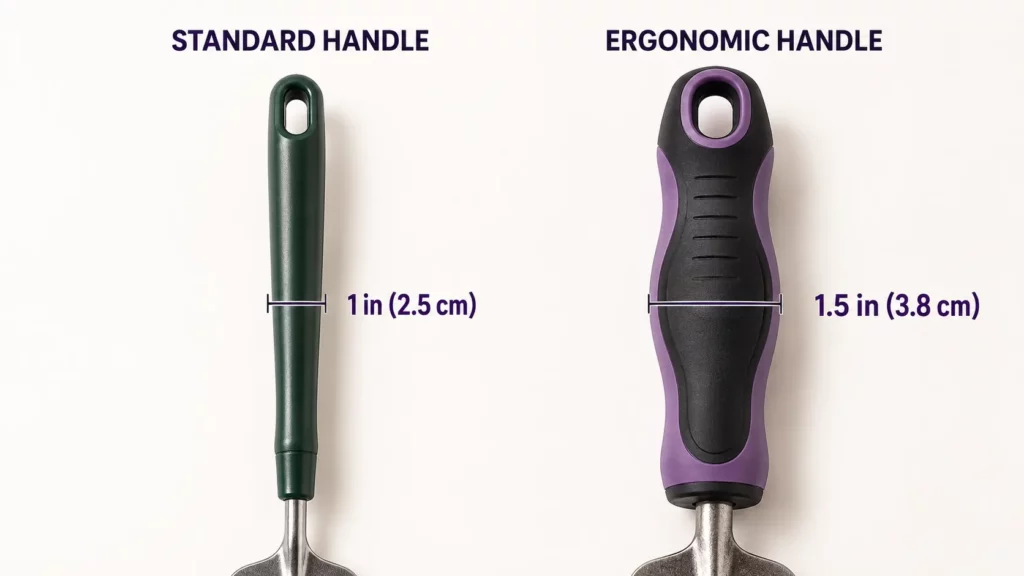
Purpose-built ergonomic tools bake this in from the start, typically with a grip diameter close to 1.5 inches, cushioned with a soft-touch rubber or foam-like material. That width lets you hold the tool with your whole hand wrapped around it rather than pinched between fingertips, which uses larger, stronger muscle groups instead of the small joints most affected by arthritis.
Spring-Loaded and Ratchet Mechanisms: Where the Real Innovation Is
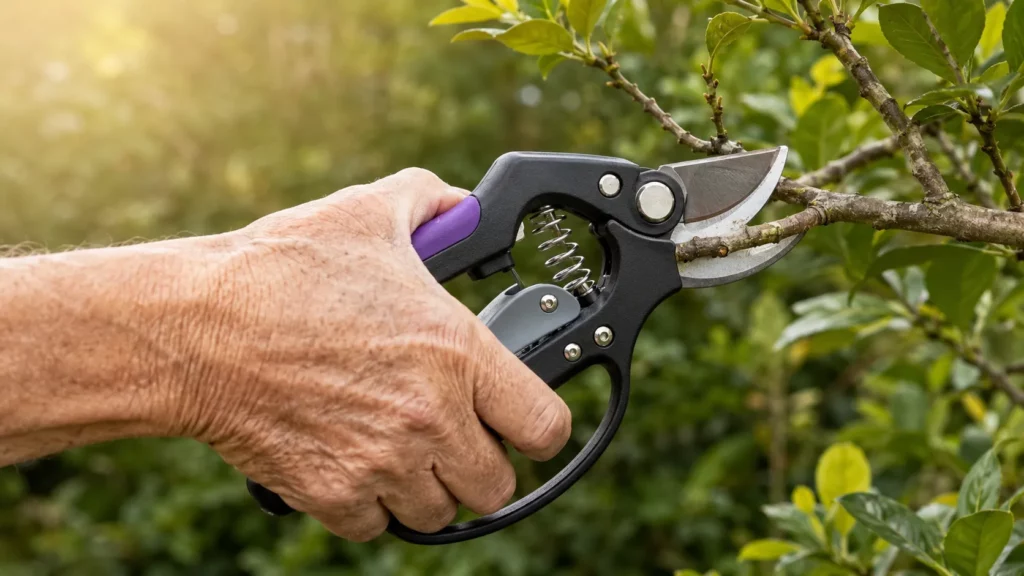
For pruners and shears specifically, spring-loaded designs that automatically reopen the blades after each cut can reduce the total hand force needed by roughly half, since you’re no longer fighting the tool’s own resistance to open it again for the next cut.
Ratchet-mechanism pruners take this further for thicker branches, using a multi-stage cutting action so you apply force in several smaller squeezes rather than one large one. For anyone who has had to give up pruning larger shrubs because a single full-strength squeeze wasn’t possible anymore, a ratchet pruner is often the single tool that brings that task back within reach.
If grip strength is a broader concern, our container gardening guide covers lower-effort growing options, too.
Handle Angle and Length: Protecting Your Wrist, Not Just Your Hand
A tool that’s comfortable to grip but forces your wrist into a bent position during use will still cause strain over a longer gardening session — just somewhere different.
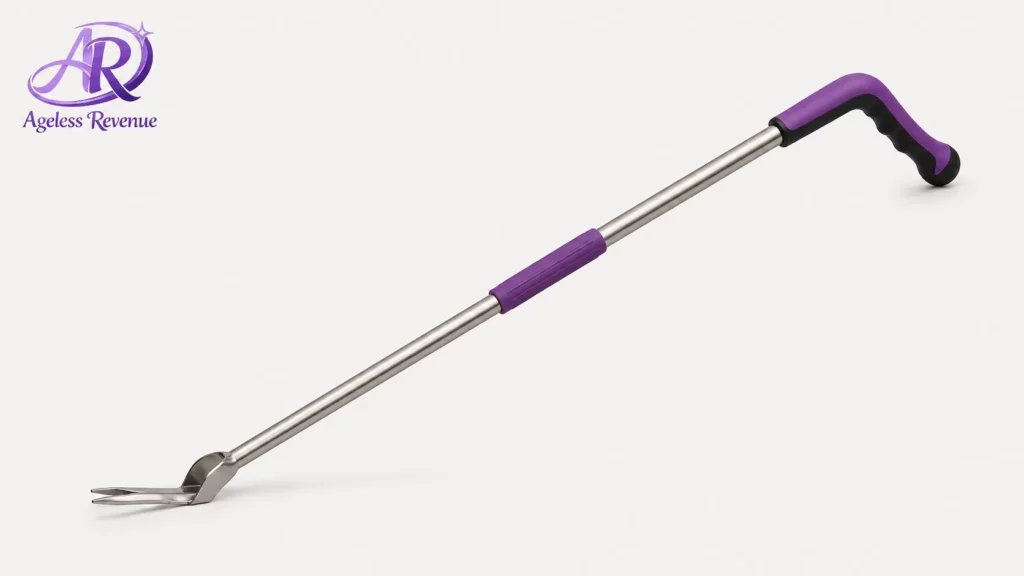
Look for handles with a slight downward bend near the grip (often called a “cushioned angled handle”), which keeps the wrist in a neutral, straight position while the working end of the tool still meets the ground or plant at the correct angle. Long-handled versions of common tools — trowels, weeders, cultivators — also reduce how much bending and reaching is required in the first place, which matters as much for joint strain as grip does.
Weight: Why Lighter Isn’t Automatically Better
It’s a common assumption that the lightest possible tool must be the best choice for someone with arthritis, but that’s not quite right. A little weight, placed correctly, lets the tool’s own momentum help do cutting or digging work, rather than relying entirely on your grip strength to force the motion.
The better question isn’t “how light is it” but “how well-balanced is it” — a well-designed ergonomic tool concentrates its weight near the working end, so a small effort from your hand translates into real cutting or digging force, rather than fighting an awkwardly weighted handle.
A Few Specific Tools Worth Looking At
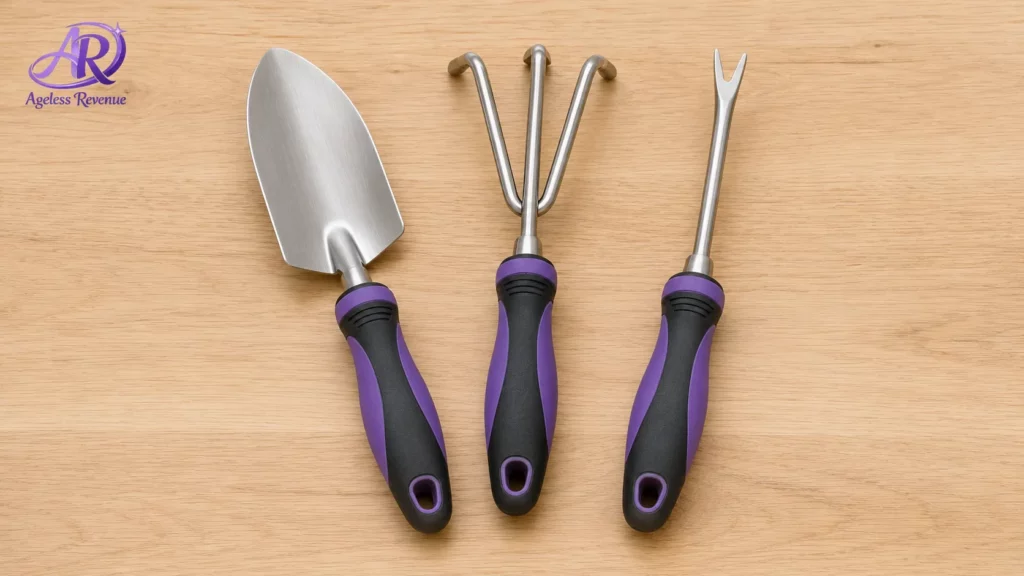
For general hand tools (trowel, cultivator, weeder): Look for sets with cushioned, contoured foam grips around 1.5 inches in diameter and a slight handle bend — these are widely available as matched 3-piece sets designed specifically for arthritis and marketed under “ergonomic garden tool set.”
For pruning: Spring-loaded bypass pruners with a ratchet mechanism for thicker stems are worth prioritizing over standard anvil pruners, which typically require more consistent hand force throughout the cut.
For digging and weeding without kneeling: Long-handled versions of a hand trowel or weeder (sometimes called “stand-up” tools) let you work from a standing position, removing the kneeling motion entirely rather than just easing the grip.
For an all-in-one option: Several brands now sell complete ergonomic garden tool kits bundling a trowel, cultivator, and weeder with matched cushioned grips — often the best value if you’re replacing multiple tools at once rather than one at a time.
A full ergonomic set typically runs $30 to $80, which is modest compared to the cost — in both money and missed gardening time — of a flare-up caused by fighting standard tools.
The Arthritis Foundation publishes joint-protection guidance for daily activities, including gardening-specific tips worth reviewing alongside your tool choices.
The Hospital for Special Surgery also has a detailed guide on assistive devices for arthritic hands, written by occupational and hand therapists, that goes deeper into the joint-protection principles behind tools like these.
Frequently Asked Questions
Do ergonomic garden tools actually help, or is it mostly marketing? The core design elements — wider grips, spring-assist mechanisms, and neutral wrist angles — are grounded in genuine ergonomic and occupational therapy principles used well beyond gardening. Most people with arthritis who switch report a real, noticeable difference, though results vary by the severity and location of joint involvement.
Can I just add padding to tools I already own instead of buying new ones? Yes, and it’s a reasonable first step. Foam pipe insulation or purpose-made grip padding, wrapped around an existing tool handle, can replicate much of the grip-diameter benefit before you invest in a full replacement set.
What’s the single most useful ergonomic tool to buy first? For most people, a spring-loaded pruner delivers the most noticeable relief per dollar, since pruning tends to require the most repetitive, sustained hand force of any common gardening task.
Are these tools more expensive than standard garden tools? Somewhat — expect to pay a modest premium over basic tools, typically in the $30–$80 range for a full set. Given how much gardening time can be lost to hand pain from ill-fitting tools, most people find the cost easily justified.
Will these tools work for other conditions besides arthritis, like carpal tunnel or general hand weakness? Yes. The same design principles — wider grips, reduced required force, neutral wrist position — benefit anyone dealing with reduced grip strength or hand pain, regardless of the underlying cause.
The Bottom Line
If gardening has started to feel like a fight with your own hands rather than a relaxing hobby, the tools are very likely part of the problem — and a relatively small investment can fix a surprising amount of it. Start with grip diameter and a spring-loaded pruner, and build out from there.
Pairing the right tools with the right garden setup makes the biggest difference of all. See our full raised garden bed guide for seniors to make sure your whole gardening setup — not just your tools — is working with you instead of against you.