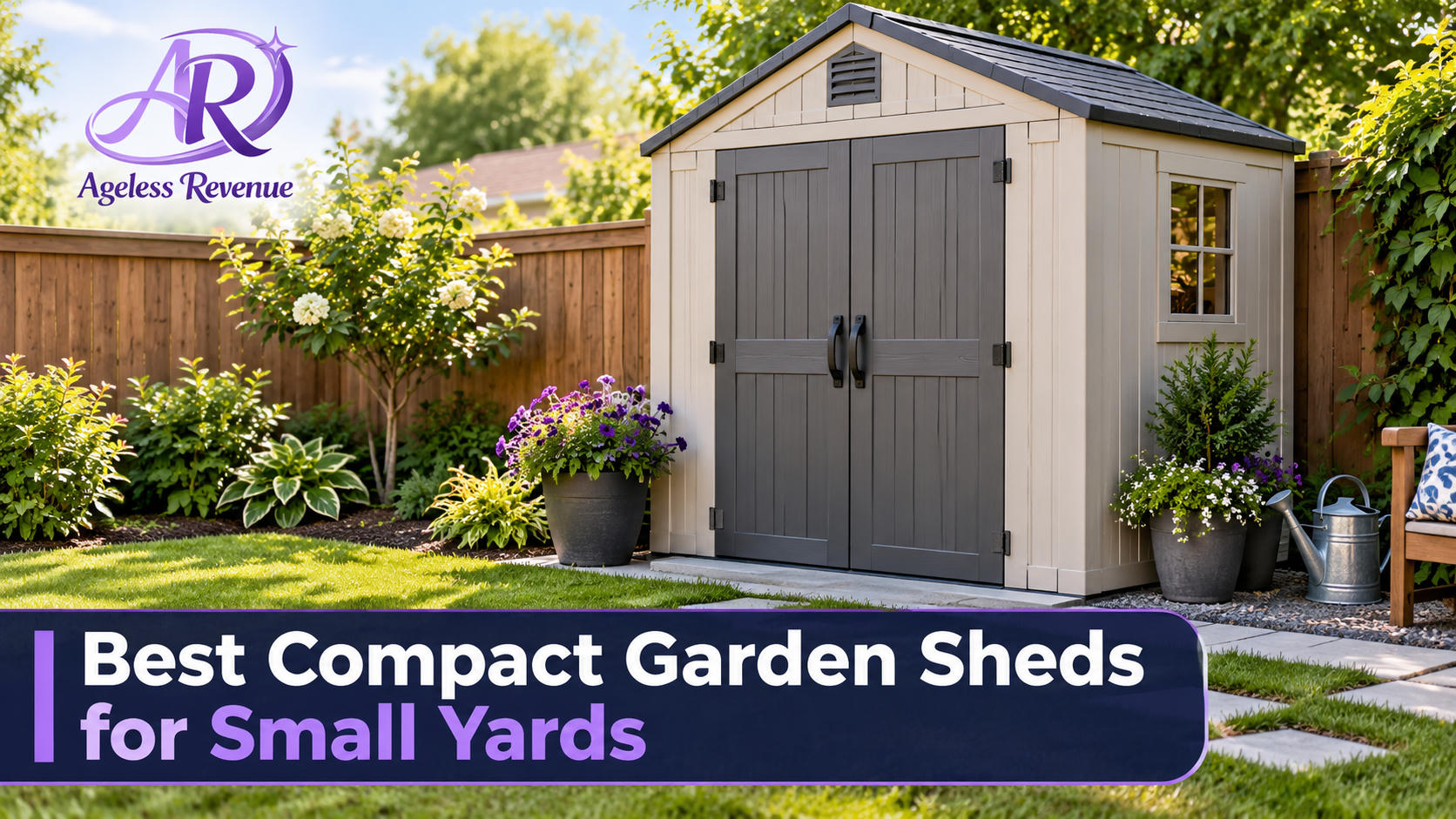
Best Compact Garden Sheds for Small Yards
Affiliate Disclosure: This post contains Amazon affiliate links. As an Amazon Associate, I earn from qualifying purchases. I only recommend products I’d genuinely suggest to a friend.
Compact Garden Sheds for Small Yards: The Ideal Storage Solution
Gardening tools, pots, soil bags, and hoses accumulate quickly, and without somewhere dedicated to store them, they end up cluttering a patio or garage in a way that makes gardening feel more chaotic than relaxing. A compact garden shed solves this without requiring the yard space or budget a full-size shed demands. For those seeking solutions, compact garden sheds for small yards are a perfect fit.
This guide covers what actually matters when choosing one for a smaller yard, and a few specific options worth considering.
TL;DR
- Compact sheds in the 4×3 to 6×4 foot range fit comfortably in most small yards while still holding a genuinely useful amount of equipment.
- Resin and vinyl sheds require far less maintenance than wood — no painting, sealing, or rot risk — a real advantage if upkeep itself is a concern.
- Floor kits matter more than most buyers expect; a shed without a proper floor can let moisture and pests in from below.
- Door width and threshold height affect whether you can easily wheel a mower or wheelbarrow in and out, not just walk in yourself.
- Compact sheds in this category typically cost $200–$600 depending on size and material.
Sizing for a Small Yard Without Overbuying
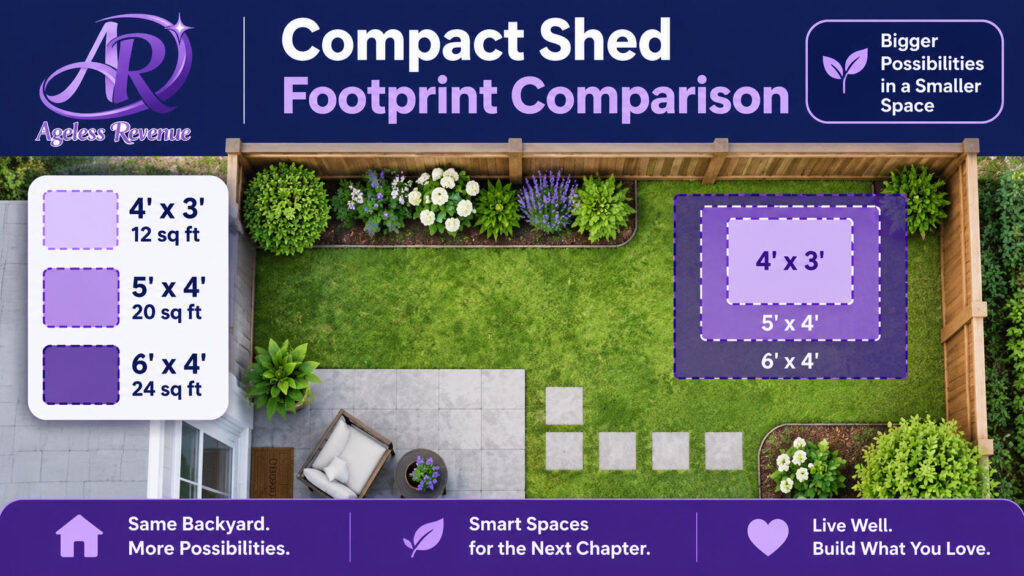
The instinct with storage is often “bigger is better,” but for a small yard, an oversized shed just relocates the clutter problem rather than solving it — and eats into space you’d rather use for actual gardening.
A shed in the 4×3 to 6×4 foot range holds a genuinely useful amount: a mower or wheelbarrow along one wall, shelving for pots and small tools, and hooks for long-handled tools, all within a footprint that fits comfortably in a corner of most small yards without dominating the space.
Material: Where Maintenance Requirements Genuinely Differ
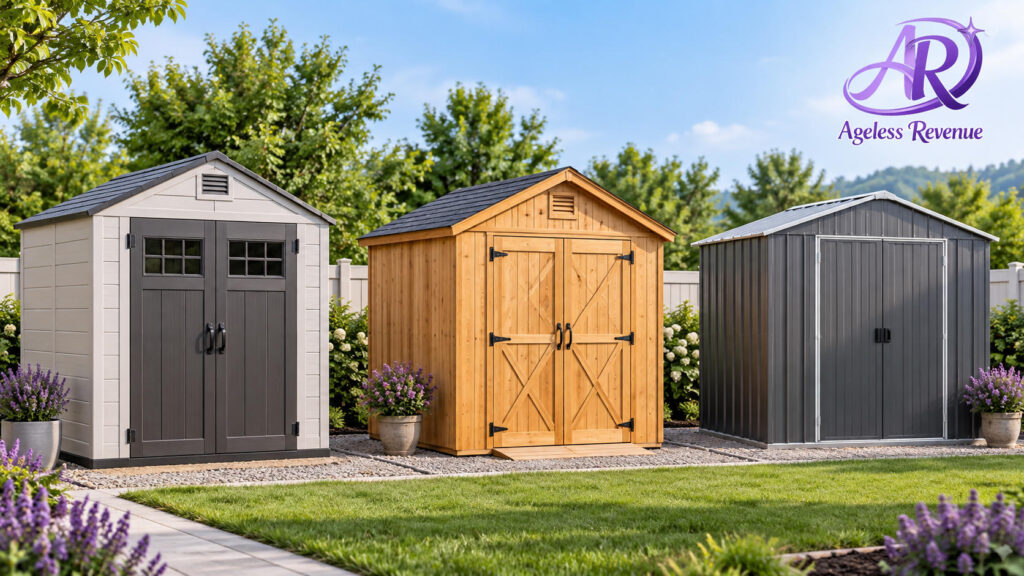
This is the decision that matters most for anyone who wants a shed they can set up once and largely forget about, rather than take on as an ongoing project.
Resin and vinyl sheds never need painting, sealing, or staining, and won’t rot, warp, or attract wood-boring insects. They’re also generally lighter to move during assembly, an advantage if you’re setting it up without help. The tradeoff is a less traditional appearance and, on lower-end models, less structural rigidity than solid wood.
Wood sheds offer a more classic look and can be more easily customized (adding shelving, hooks, or windows), but require periodic sealing or painting to prevent rot and weather damage — an ongoing maintenance task worth being honest with yourself about before committing.
Metal sheds resist rot and pests entirely and are usually the most affordable option, but can be prone to condensation inside (leading to rust or mildew on stored items) without proper ventilation, and tend to dent more easily than resin.
Floor Kits: The Detail That’s Easy to Skip and Shouldn’t Be
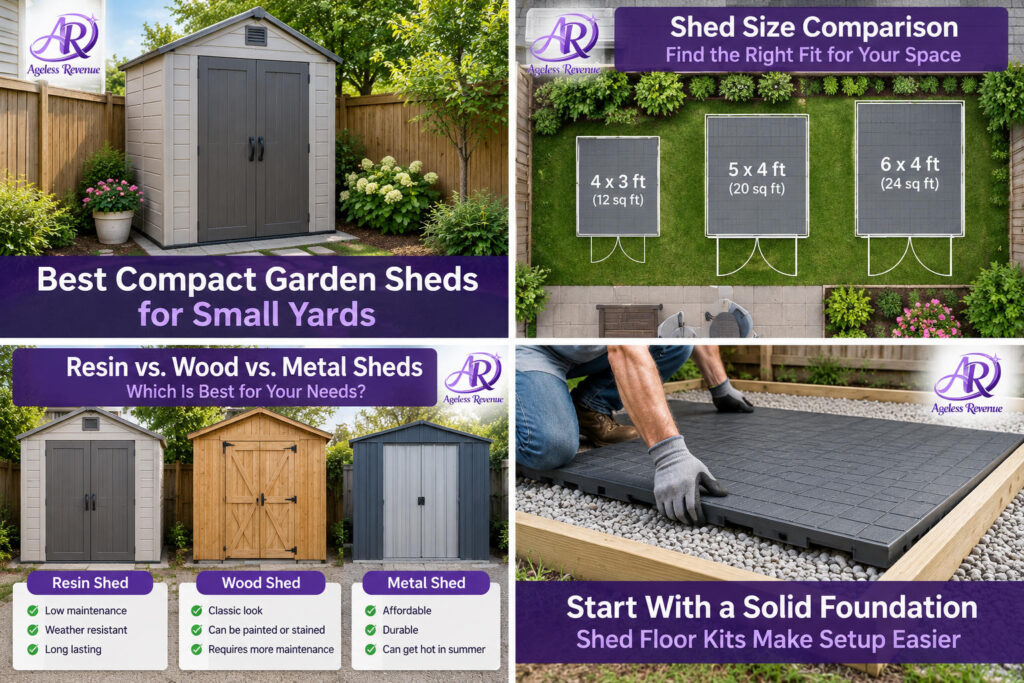
Many compact sheds are sold without a floor kit as a separate add-on, and it’s tempting to skip this to save money — setting the shed directly on a gravel pad or bare ground instead. This is worth reconsidering: a proper floor keeps moisture, insects, and small rodents from entering from below, and gives stored items a stable, dry surface rather than sitting on bare earth or gravel.
If a floor kit isn’t included, at minimum set the shed on a level concrete paver base or a compacted gravel pad specifically sized for the shed’s footprint, rather than directly on soil or grass.
Door Width and Threshold: Think About What You’ll Wheel In and Out
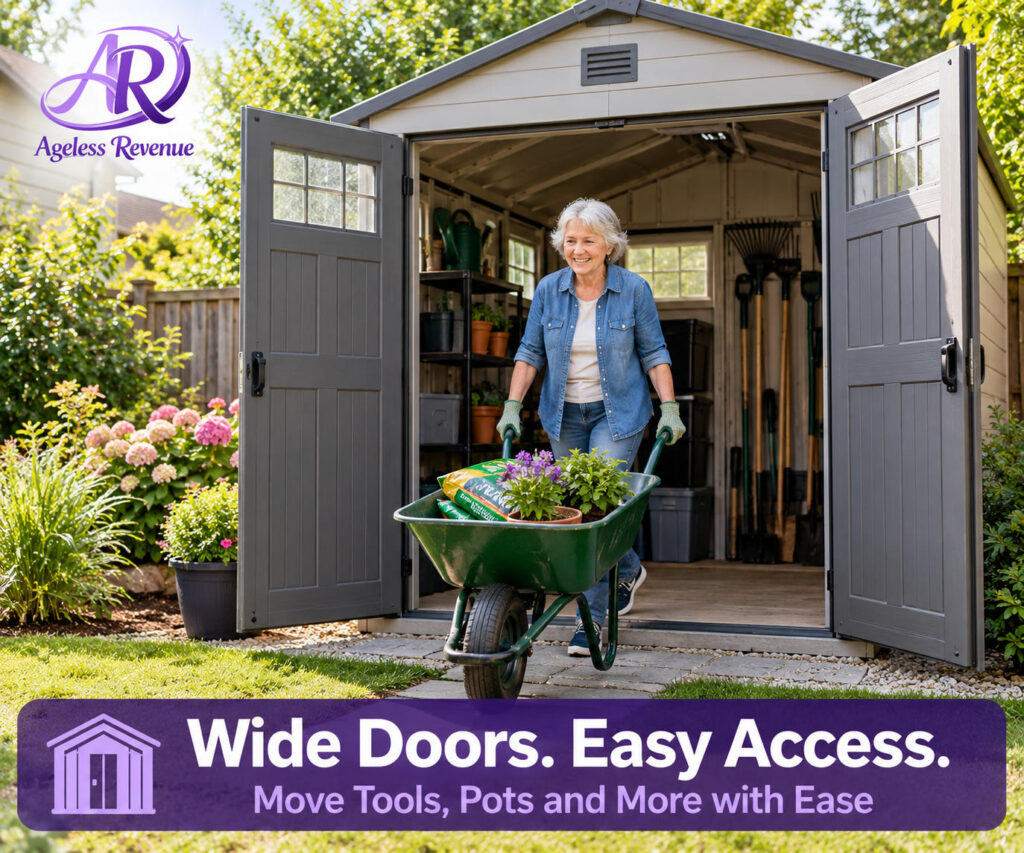
It’s easy to focus on overall shed dimensions and overlook the door itself, but door width and threshold height determine whether you can easily move a mower, wheelbarrow, or large potted plant in and out — not just walk through yourself.
Look for a door at least 24-30 inches wide for wheeled equipment, and a low or flush threshold rather than a raised lip, which can catch wheels and make loading and unloading more of a struggle than it needs to be.
Assembly: Worth Checking Before You Buy, Not After
Compact shed assembly ranges enormously in difficulty — some resin models snap together with minimal tools in an afternoon, while larger wood kits can involve a full weekend and a second pair of hands. Reading assembly-specific reviews before buying, rather than assuming based on size alone, avoids an unpleasant surprise once the box arrives.
If solo assembly is a priority, resin and vinyl sheds with a panel-based design are generally the easiest category, while wood sheds with traditional stick-built construction tend to be the most involved.
A Few Specific Options Worth Considering
For minimal ongoing maintenance: A resin or vinyl shed in the 4×3 to 6×4 foot range, with a molded floor included, is the lowest-upkeep option and holds up well against weather without any sealing or painting required.
For a more traditional look with some customization: A wood shed kit with a peaked roof and a single window offers natural light inside and the classic garden-shed appearance, provided you’re comfortable with periodic exterior sealing.
For maximum affordability: A basic metal shed kit is generally the least expensive option for the storage space provided, though it’s worth adding basic ventilation (a roof vent or louvered panel) to reduce condensation risk.
For easy wheeled-equipment access: Look specifically for models with a wide double door and a flush or low threshold, worth prioritizing if a mower or wheelbarrow needs to go in and out regularly.
Compact sheds in this size range typically cost $200 to $600 depending on material and included accessories like shelving or a floor kit — always check current pricing, and factor in the cost of a floor kit or gravel pad base separately if it isn’t included.
The NC State Extension’s guide to accessible gardening touches on organizing a garden space for ease of use, relevant to planning shed placement and layout. According to the National Institute on Aging, staying engaged in hobbies like gardening supports both physical and mental health in older adults — a well-organized shed makes that easier to sustain.
Frequently Asked Questions
What size shed is actually enough for a small yard? A 4×3 to 6×4 foot shed holds a genuinely useful amount — a mower or wheelbarrow, shelving, and hooks for long-handled tools — without dominating a small yard’s footprint.
Is resin or wood better for a low-maintenance shed? Resin and vinyl require no painting, sealing, or rot prevention, making them the lower-maintenance choice. Wood offers a more traditional look and easier customization but needs periodic upkeep to prevent weather damage.
Do I really need a floor kit, or can I just set the shed on the ground? A proper floor is worth having — it keeps moisture, insects, and small rodents out and gives stored items a stable, dry surface. If a floor kit isn’t included, at minimum use a level paver or gravel base rather than bare soil.
How wide should the shed door be? At least 24 to 30 inches if you plan to wheel a mower or wheelbarrow in and out, with a low or flush threshold to avoid catching wheels during loading and unloading.
Is assembly difficult? It varies significantly by material and design — resin panel-based sheds are generally the easiest for solo assembly, while larger wood kits can take a full weekend and benefit from a second person helping.
Do metal sheds have any real downsides compared to resin? The main one is condensation risk, which without proper ventilation can lead to rust on the shed itself or mildew on stored items. Adding a roof vent or louvered panel largely addresses this.
The Bottom Line
A compact shed sized appropriately for your yard, with a material that matches how much ongoing maintenance you actually want to take on, solves the storage clutter problem without becoming its own maintenance project.
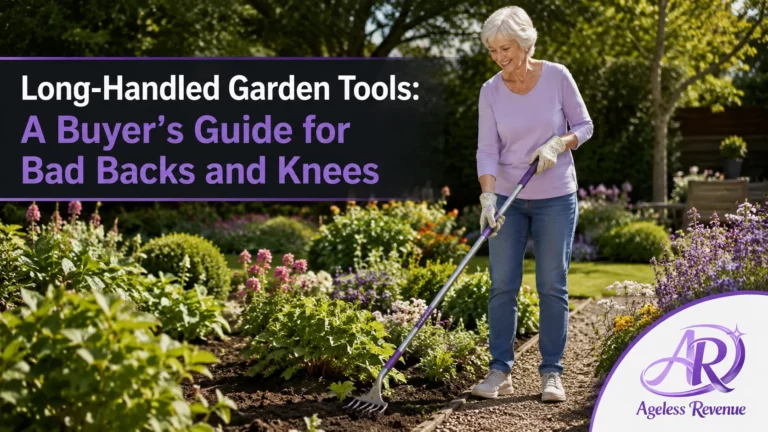
Once your storage is sorted, the tools themselves are worth getting right too. See our long-handled garden tools guide for bad backs and knees for what’s worth keeping in that new shed.