Long-Handled Garden Tools: A Buyer’s Guide for Bad Backs and Knees
Affiliate Disclosure: This post contains Amazon affiliate links. As an Amazon Associate, I earn from qualifying purchases. I only recommend products I’d genuinely suggest to a friend.
If every gardening task seems to require bending, kneeling, or crouching — weeding, planting, cultivating, edging — the tools themselves are often more of the problem than your body is. Long-handled garden tools for seniors extend your reach enough that most ground-level tasks can be done from a standing position, removing the bending motion entirely rather than just cushioning it. These long handled garden tools for seniors are designed specifically to alleviate strain and provide comfort while gardening.
This guide covers what actually makes a long-handled tool work well, and a few specific options worth considering.
TL;DR
- Long-handled tools convert kneeling or crouching tasks into standing ones — the core benefit is eliminating bending, not just easing it.
- Handle length needs to match your height; a universal “one size fits all” handle often isn’t the right length for shorter or taller gardeners.
- Look for a padded, ergonomic grip at the handle’s top — the extra length means more leverage, and a poor grip undermines that advantage.
- Stirrup-style (hoe) and claw-style long-handled weeders each suit different weed types — knowing which you’re dealing with matters more than brand.
- A full set of long-handled essentials (weeder, cultivator, edger) typically costs $40–$90.
What Long-Handled Tools Actually Change
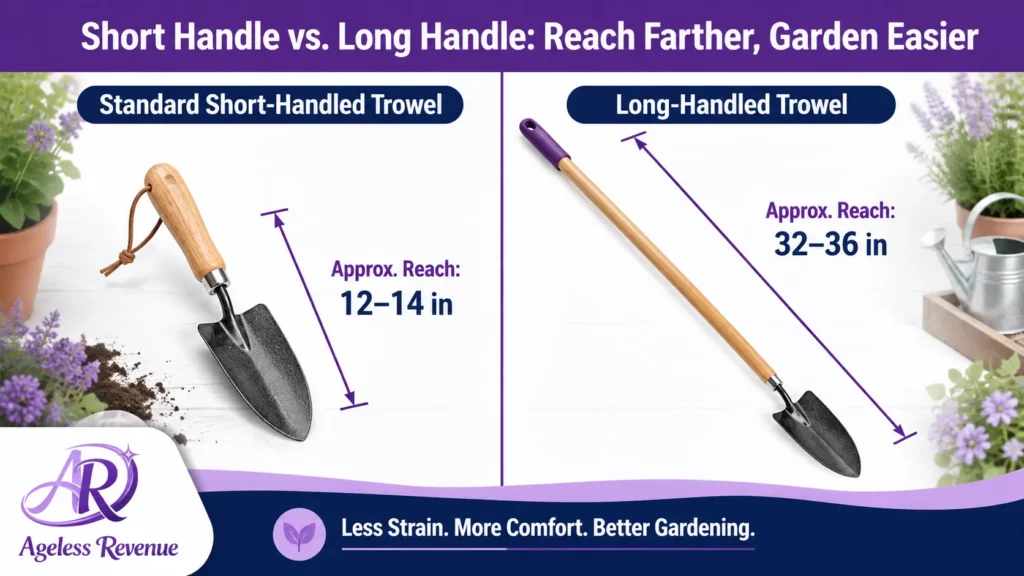
The core idea is simple: extending a tool’s handle to 40–54 inches (compared to a standard 10–14 inch hand tool) lets you reach ground level while standing fully upright. This isn’t the same as a kneeling pad or garden stool solution — those still require getting down to ground level in some form. A long-handled tool removes the need to get down there at all.
This matters most for tasks that are repetitive and spread across a wide area — weeding a long bed, cultivating soil before planting, or edging along a walkway — where bending down and standing back up dozens of times per session adds up to real strain.
Handle Length: The Detail Most Buyers Get Wrong
Choosing the Right Long Handled Garden Tools for Seniors
A tool marketed simply as “long-handled” doesn’t automatically fit your height — handle lengths in this category commonly range from 40 to 54 inches, and the right length depends on your own height and how you naturally hold a tool.
As a rough guide, the tool should reach comfortably to about waist or hip height when the working end touches the ground, and you’re standing upright with a slight, natural bend at the elbow — not a full stretch, and not so short that you’re still bending at the waist. Some brands offer adjustable-length or telescoping handles specifically to solve this, worth prioritizing if you’re buying for someone else or aren’t sure of the ideal length in advance.
Stirrup vs. Claw: Matching the Tool to the Weed
This is where most long-handled tool purchases go wrong — buying based on the handle length alone without considering which weeding mechanism actually suits your yard.
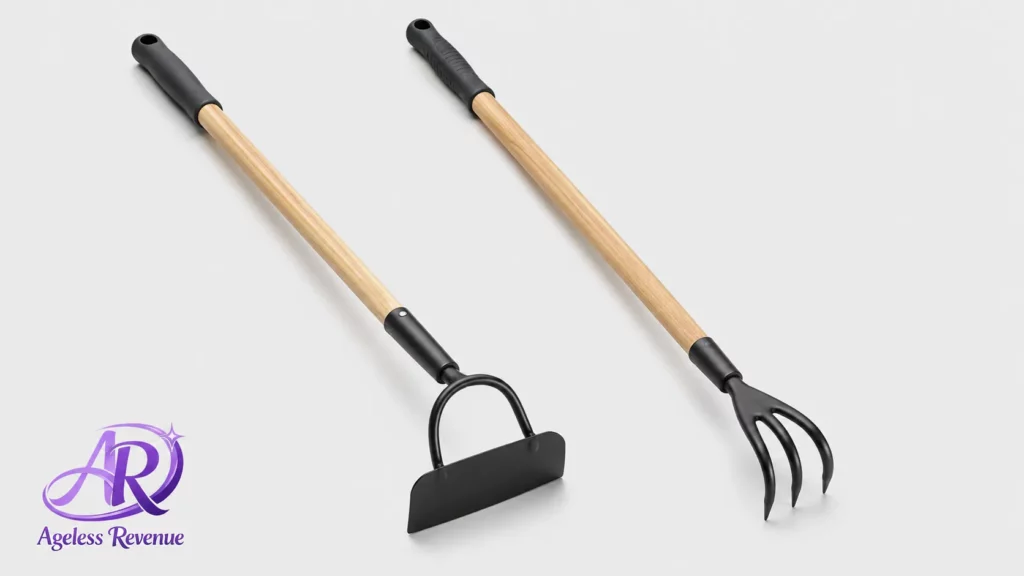
A stirrup hoe (sometimes called a hula hoe) has a looped, stirrup-shaped blade that cuts weeds just below the soil surface with a simple push-pull motion — excellent for surface weeds and larger open areas, but less effective against deep-rooted weeds like dandelions.
A claw-style long-handled weeder uses two or three curved prongs that grip and pull a weed’s root system out entirely, operated with a stepping-and-twisting motion rather than push-pull — better suited to deep-rooted individual weeds in garden beds, but slower for clearing a large open area.
Grip Matters More Here Than on Short-Handled Tools
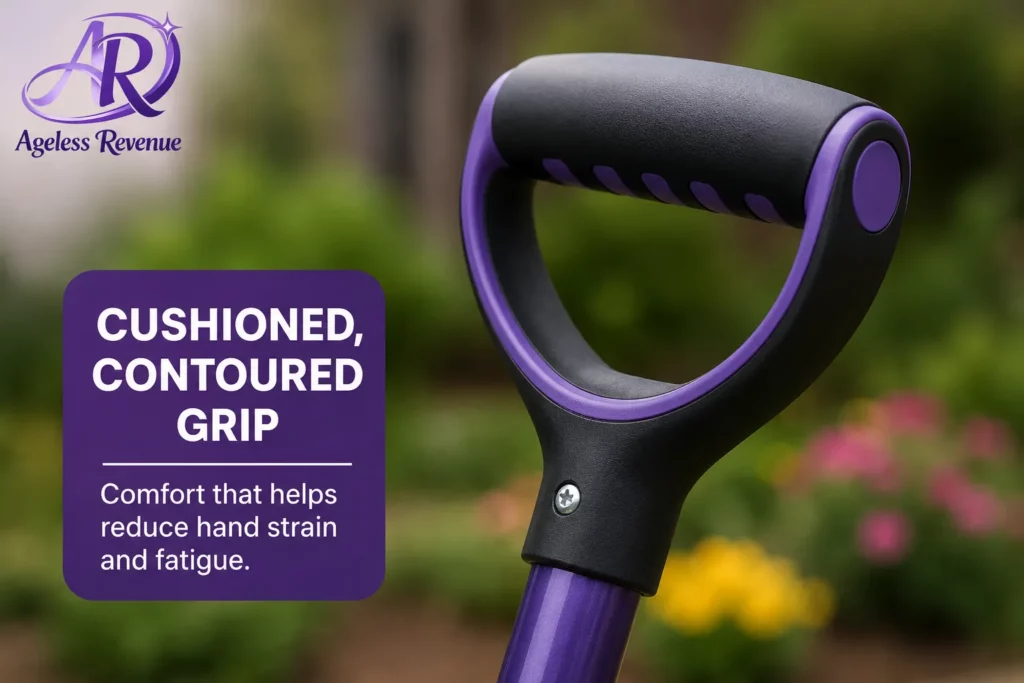
It might seem like grip design matters less once you’ve solved the bending problem, but the opposite is true. A long handle creates significantly more leverage on your hands and wrists than a short one — good leverage if the grip is well-designed, but a source of new strain if it isn’t.
Look for a cushioned, contoured grip at the top of the handle, ideally with a secondary grip point partway down the shaft for two-handed control on tools like cultivators and edgers. A hard plastic or bare wood handle, however long, transfers more vibration and shock into your hands than a padded one.
Storage: A Small Practical Detail Worth Planning For
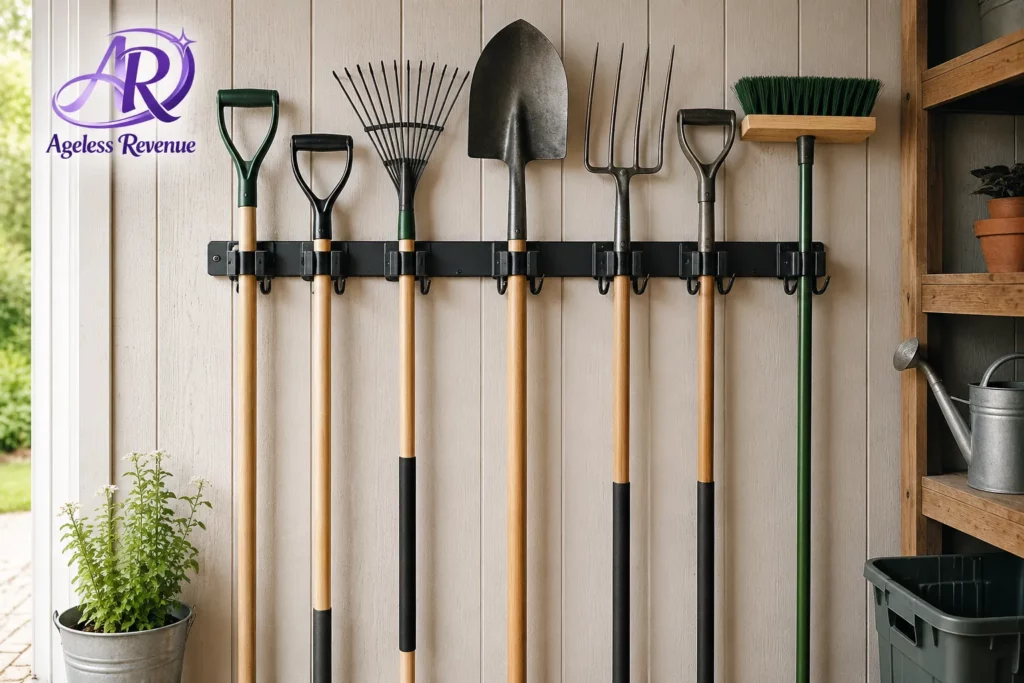
Long-handled tools take up meaningfully more storage space than their short-handled counterparts — worth a moment’s thought before buying several at once. Wall-mounted garden tool racks, designed specifically for long-handled tools, keep them organized and off the ground, and are inexpensive relative to the tools themselves.
A Few Specific Options Worth Considering
For general surface weeding across open areas: A long-handled stirrup hoe with a cushioned grip covers the most ground with the least effort for surface-level weeds in larger beds or open soil.
For pulling individual deep-rooted weeds: A claw-style long-handled weeder with a foot-assist step bar lets you use body weight rather than arm strength to drive the claws into soil, useful for stubborn taproot weeds.
For soil preparation before planting: A long-handled cultivator with 3-4 curved tines breaks up soil for planting without kneeling, useful as a season-opener tool.
For clean bed edges without bending: A long-handled edging tool with a sharp, angled blade maintains crisp borders between lawn and garden bed from a standing position.
A full set of long-handled essentials in this category typically runs $40 to $90 depending on how many tools you’re starting with — always check current pricing before buying.
The Arthritis Foundation recommends minimizing repetitive bending and kneeling as part of general joint protection, which is exactly the principle long-handled tools are built around.
The Hospital for Special Surgery also publishes guidance on assistive devices and joint protection more broadly, useful background on why grip and leverage matter as much as reach.
Frequently Asked Questions
How do I know what handle length is right for me? As a rough guide, the tool should reach the ground comfortably while you stand upright with a slight, natural elbow bend — not a full stretch. If you’re unsure or buying for someone else, an adjustable or telescoping handle removes the guesswork.
Is a stirrup hoe or a claw weeder better? It depends on the weed type. Stirrup hoes work well for surface weeds across open areas; claw-style weeders are better for pulling individual deep-rooted weeds like dandelions from garden beds.
Do long-handled tools actually eliminate bending, or just reduce it? For most tasks — weeding, cultivating, edging — a properly sized long-handled tool eliminates the need to bend at all, since you can reach the ground while standing fully upright.
Are these tools harder to control than short-handled ones? Not with a good grip design. A cushioned handle with a secondary grip point gives you solid two-handed control despite the added length; a poor grip is what makes long tools feel unwieldy.
How much storage space do these tools need? More than short-handled tools, given their length — a wall-mounted tool rack designed for long-handled tools is an inexpensive way to keep them organized without needing significant floor space.
Can I use long-handled tools in a raised garden bed? It depends on the bed’s height and width. For a tall raised bed, a long-handled tool may actually be too long for comfortable use inside the bed itself — these tools are best suited to ground-level beds and open garden areas.
The Bottom Line
If bending is the specific barrier standing between you and the gardening tasks you want to keep doing, long-handled tools solve that directly — properly sized to your height, with a matching mechanism for your actual weed type, and a grip that doesn’t undo the benefit with new hand strain.
Ready to tackle the tools you hold closer to the ground too? See our full ergonomic garden tools guide for arthritis for the trowels and pruners that complete a comfortable gardening toolkit.