Self-Watering Planters: Top Picks for Low-Maintenance Gardening
Affiliate Disclosure: This post contains Amazon affiliate links. As an Amazon Associate, I earn from qualifying purchases. I only recommend products I’d genuinely suggest to a friend.
If daily watering has become the reason you’re gardening less, not the reason you’re gardening at all, self-watering planters for seniors solve that specific problem directly. Instead of watering every single day — often while bending or kneeling to reach soil level — you fill a reservoir every several days from a standing position, and the plant draws water as it actually needs it.
This guide covers what actually distinguishes a good self-watering system from a gimmick, and a few specific options worth considering.
Choosing the Best Self Watering Planters for Seniors
These self watering planters for seniors are designed to make gardening easier and more accessible, ensuring that everyone can enjoy the benefits of nurturing plants.
TL;DR
- The wicking mechanism, not the reservoir size, is what actually determines whether a self-watering planter works well.
- A visible water-level gauge is worth prioritizing — without one, you’re guessing when to refill, which defeats much of the purpose.
- Reservoir size determines how many days between refills, typically ranging from 3 to 10+ days depending on plant size and weather.
- Overflow drainage matters just as much as the watering system — a reservoir without an overflow outlet can drown roots during heavy rain.
- Expect to pay $25–$60 for a genuinely well-designed self-watering planter, depending on size.
How Self-Watering Planters Actually Work
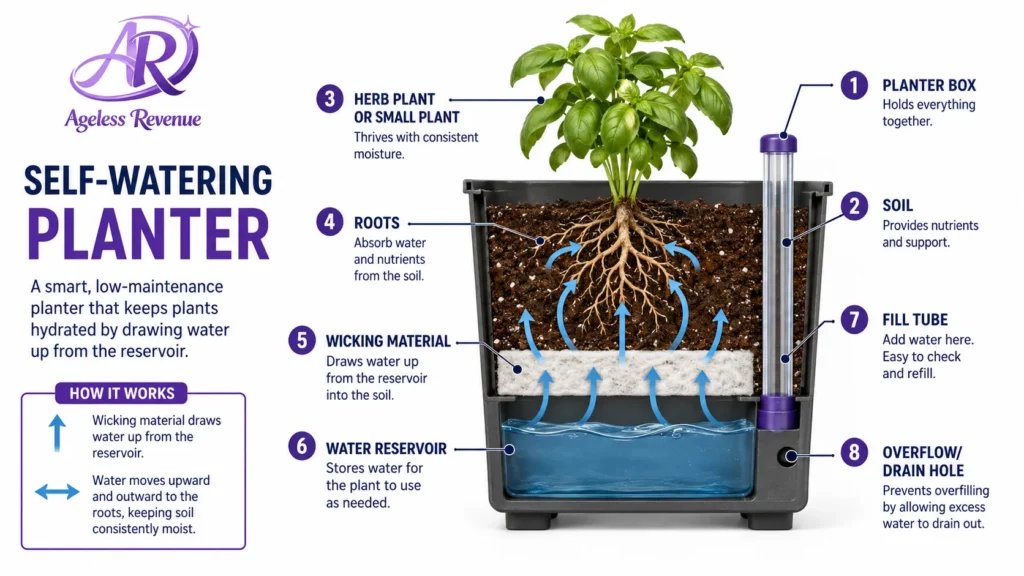
Every self-watering planter uses some version of the same basic design: a water reservoir sits below or beside the main soil chamber, separated by a wicking material or capillary tube that draws water upward into the soil as it dries out — similar to how a paper towel draws up water when one end touches a puddle.
This means the plant pulls water on its own schedule rather than yours, which solves both overwatering and underwatering in one mechanism, since the soil only draws up what it actually needs rather than receiving a fixed amount whether it’s needed or not.
The Wicking Mechanism Is What Actually Matters
This is the detail that separates a genuinely effective self-watering planter from one that looks the part but doesn’t perform. Look specifically for planters using a fabric wicking strip, a capillary mat, or a wicking tube system — not just a water tray sitting underneath a regular pot, which is a much weaker version of the same idea and dries out unevenly.
Cheaper products sometimes market themselves as “self-watering” while only including a basic saucer reservoir with no real wicking mechanism, which provides far less consistent moisture than a true wicking design. Reading the product description specifically for wicking material, rather than just “water reservoir,” is worth the extra minute before buying.
The Water Gauge: A Small Feature With an Outsized Impact
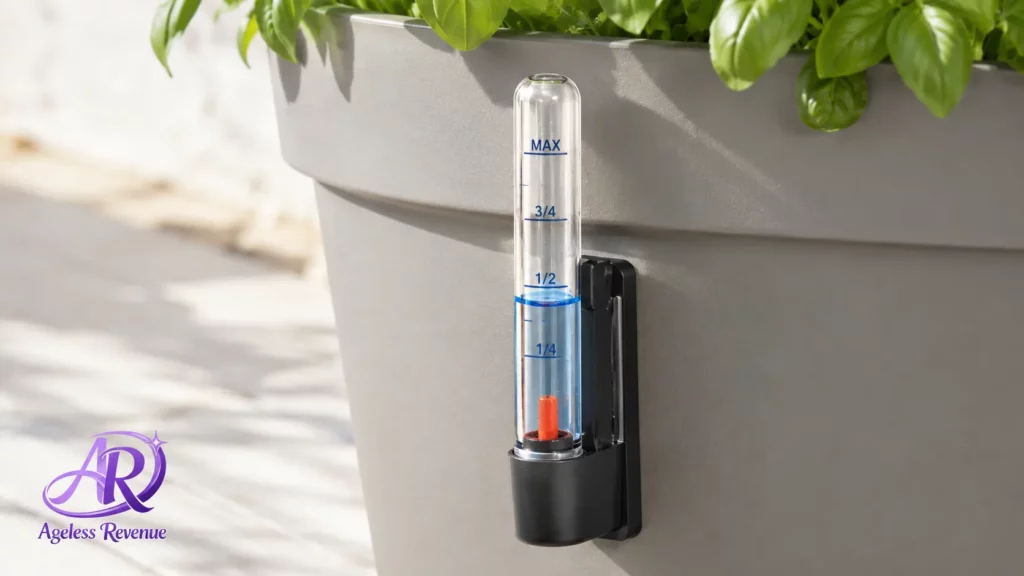
Without a visible gauge showing the current water level, you’re left guessing whether the reservoir needs refilling — which for many people means either checking too often (defeating the low-maintenance purpose) or forgetting entirely until plants show stress.
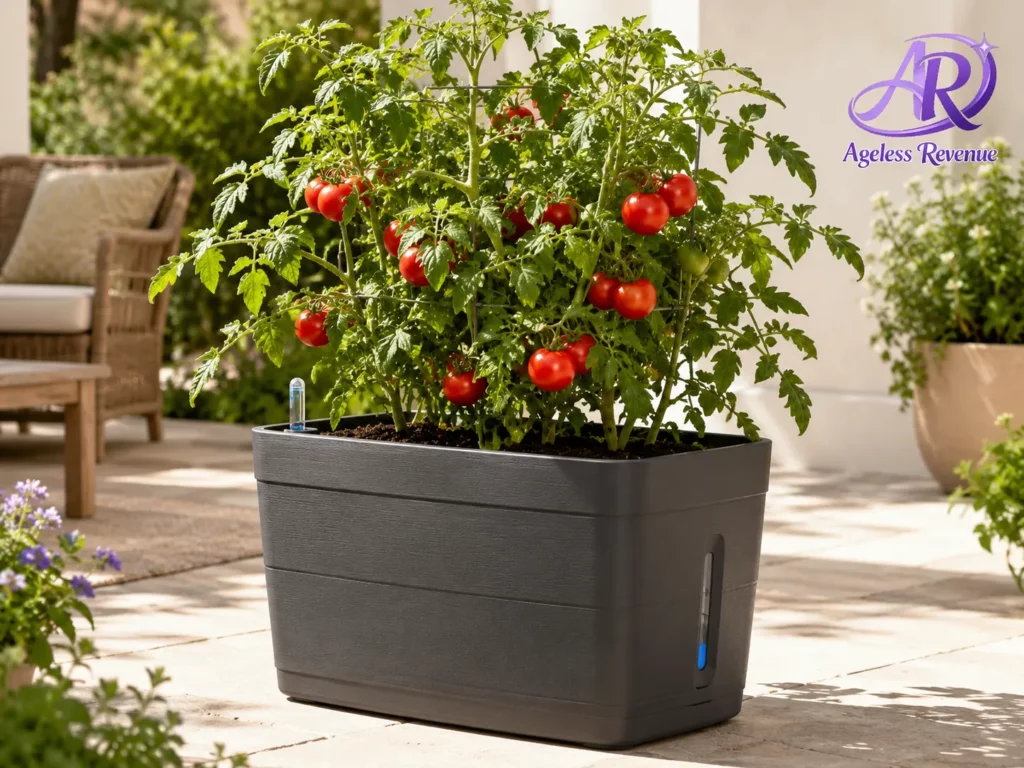
A simple float-style gauge, visible from the side of the planter, removes the guesswork entirely. This is a small, inexpensive feature that makes a genuinely large difference in whether the self-watering system delivers on its promise day to day.
Reservoir Size: Matching Refill Frequency to Your Routine
Reservoir capacity determines how many days pass between refills, and this varies significantly by planter size and design — generally, smaller planters need refilling every 3 to 5 days, while larger reservoir systems can go 7 to 10 days or more between fills, depending on plant size, sun exposure, and weather.
Think honestly about your own routine here. If you’re away frequently or simply don’t want a weekly task, a larger reservoir capacity is worth prioritizing over a smaller, more affordable option that requires more frequent attention.
Overflow Drainage: The Detail That Prevents Root Rot
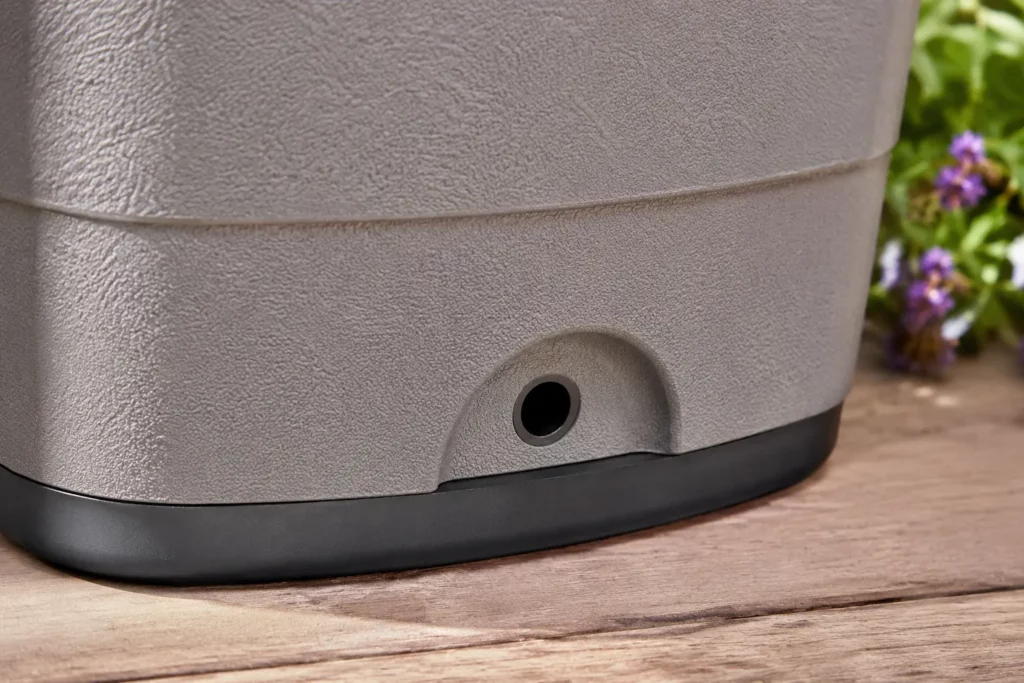
A self-watering reservoir needs a way to release excess water during a heavy rain, or the reservoir can overfill and eventually saturate the soil from below — root rot by a different route than simply overwatering from the top.
Look specifically for an overflow hole or drainage outlet built into the reservoir design, positioned to release excess water once the reservoir reaches capacity. This is a detail that’s easy to overlook when comparing planters primarily on size and price, but it matters enormously for outdoor use where rain is unpredictable.
Material and Weight: The Same Considerations as Any Container
Beyond the self-watering mechanism itself, the same weight and material considerations apply as any planter — resin and fiberglass composites stay lightweight even with a filled reservoir added, while ceramic or concrete self-watering planters can become quite heavy once both soil and water reservoir are factored in.
A Few Specific Options Worth Considering
For a proven wicking design with a visible gauge: Self-watering resin planters with a fabric wicking strip and float gauge are widely available and consistently well-reviewed for genuinely reducing watering frequency, not just claiming to.
For maximum time between refills: Larger-capacity self-watering planters (10+ gallon reservoirs) suit anyone who travels often or simply wants to minimize the refill task to once every week or two.
For a budget-friendly entry point: Smaller self-watering window box and railing planters bring the same wicking technology to a smaller scale, a good way to try the category before committing to larger, pricier units.
For vegetables specifically: Self-watering planters marketed for tomatoes and vegetables typically include a deeper soil chamber (12+ inches) alongside the reservoir, since vegetables need more root depth than herbs or shallow-rooted flowers.
A well-designed self-watering planter typically costs $25 to $60 depending on size — a modest premium over a standard planter that pays for itself quickly in reduced watering time and healthier, more consistently hydrated plants.
According to the National Institute on Aging, maintaining light regular activities like gardening supports both physical health and mood in older adults — a self-watering setup that removes the most repetitive, bending-heavy task makes that activity easier to sustain long-term.
The NC State Extension’s guide to accessible gardening also covers watering considerations for containers alongside raised beds, worth a look if you’re planning a broader low-maintenance garden setup.
Frequently Asked Questions
Do self-watering planters really work, or is it mostly marketing? The wicking mechanism is a genuine, well-established gardening technique, not a gimmick — but quality varies significantly between products. Look specifically for a real wicking material (fabric strip, capillary mat, or tube) rather than just a basic water tray marketed as “self-watering.”
How do I know when to refill the reservoir? A visible float-style water gauge, built into the side of the planter, is the easiest way to check at a glance. Without one, you’re relying on guesswork or checking soil moisture manually, which reduces the low-maintenance benefit.
Can self-watering planters be used outdoors, or are they mainly for indoor plants? They work well for both, but outdoor use requires checking specifically for overflow drainage, since rain can overfill an outdoor reservoir if there’s no way for excess water to escape.
How often do I actually need to refill the reservoir? This varies by planter size, plant type, and weather, but generally ranges from every 3 days for smaller reservoirs to every 7–10 days for larger-capacity systems.
Are self-watering planters heavier than regular planters? Slightly, once the reservoir is filled with water, but the material of the planter itself (resin vs. ceramic) still matters more for overall weight than the reservoir addition alone.
Can I convert a regular planter into a self-watering one? There are retrofit wicking kits available that add a reservoir and wicking system to an existing planter, though a purpose-built self-watering planter is generally more reliable and easier to set up correctly.
The Bottom Line
If daily watering is the specific reason your container garden has gotten harder to maintain, a well-designed self-watering planter — with a real wicking mechanism, a visible gauge, and proper overflow drainage — solves that problem directly rather than just making watering slightly more convenient.
Ready to round out the rest of your container setup? See our full container gardening guide for seniors for the complete picture on weight, drainage, and sizing beyond just the watering question.