Best Senior-Friendly Smartwatches for Fitness and Safety
Affiliate Disclosure: This post contains Amazon affiliate links. As an Amazon Associate, I earn from qualifying purchases. I only recommend products I’d genuinely suggest to a friend.
A smartwatch for seniors sits at the intersection of two genuinely different product categories: mainstream smartwatches (Apple Watch, Samsung Galaxy Watch) that include fall detection as one feature among many, and purpose-built medical-alert smartwatches designed around emergency response first. Knowing which category actually fits your needs is the real decision here — more than any specific brand. This guide will help you find the best smartwatches for seniors.
This guide covers that distinction clearly, plus what else matters, and a few specific options worth considering.
When searching for the best smartwatches for seniors, it’s important to consider both the features and the ease of use to ensure a satisfying experience.
TL;DR
- Mainstream smartwatches (Apple Watch, Galaxy Watch) include fall detection but require a compatible smartphone and don’t include 24/7 monitoring by default.
- Purpose-built medical alert smartwatches include cellular connectivity and live monitoring, working independently of a smartphone, but require an ongoing monthly subscription.
- Fall detection technology recognizes a hard fall’s sudden motion and stop — it can miss slow slumps and occasionally false-alarm on vigorous activity.
- Battery life varies enormously between categories, from all-day (mainstream) to multiple days (some medical-alert-focused models) — worth checking honestly against your charging habits.
- The watch only helps if it’s actually worn every day — comfort and design matter as much as any feature.
The Real Decision: Mainstream Smartwatch or Medical Alert Smartwatch
This is the choice that shapes everything else, and it’s worth understanding clearly before comparing individual models.
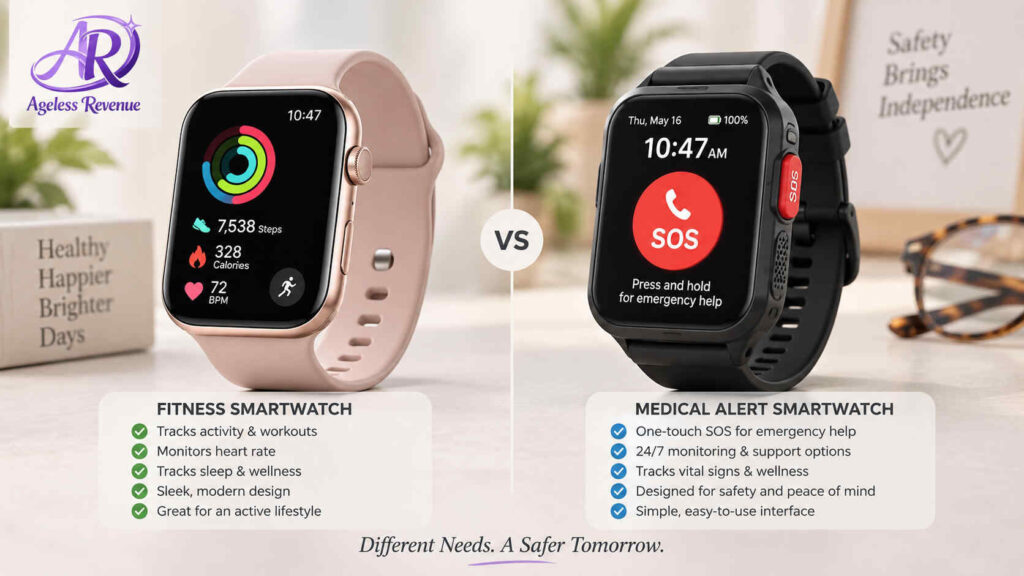
Mainstream smartwatches — Apple Watch and Samsung Galaxy Watch are the two dominant options — include fall detection as one feature within a broader fitness and notification device. Apple Watch requires an iPhone; Galaxy Watch works best with a Samsung or Android phone. Fall detection on these devices, when triggered and unacknowledged, calls emergency services directly and notifies your chosen contacts — a genuinely capable safety net, included at no additional monthly cost beyond the device itself, but tied to your phone’s connectivity and battery.
Top Recommendations: The Best Smartwatches for Seniors
Medical alert smartwatches — from providers like Medical Guardian — are built specifically around emergency response, with built-in cellular service and GPS that work independently of any smartphone. These include live 24/7 monitoring through a subscription (typically $30-$85 monthly depending on the provider and plan), meaning a triggered alert reaches a trained monitoring agent, not just emergency services directly. This is a meaningfully different service model — worth it if independent monitoring matters more than general smartwatch features.
If you want a capable everyday smartwatch that happens to include a strong safety net, and you’re comfortable relying on your phone’s connectivity, mainstream is the better fit. If safety monitoring is the primary purpose and you want it to work independently of a phone, a medical alert smartwatch is worth the subscription cost.
How Fall Detection Actually Works — and Its Real Limits
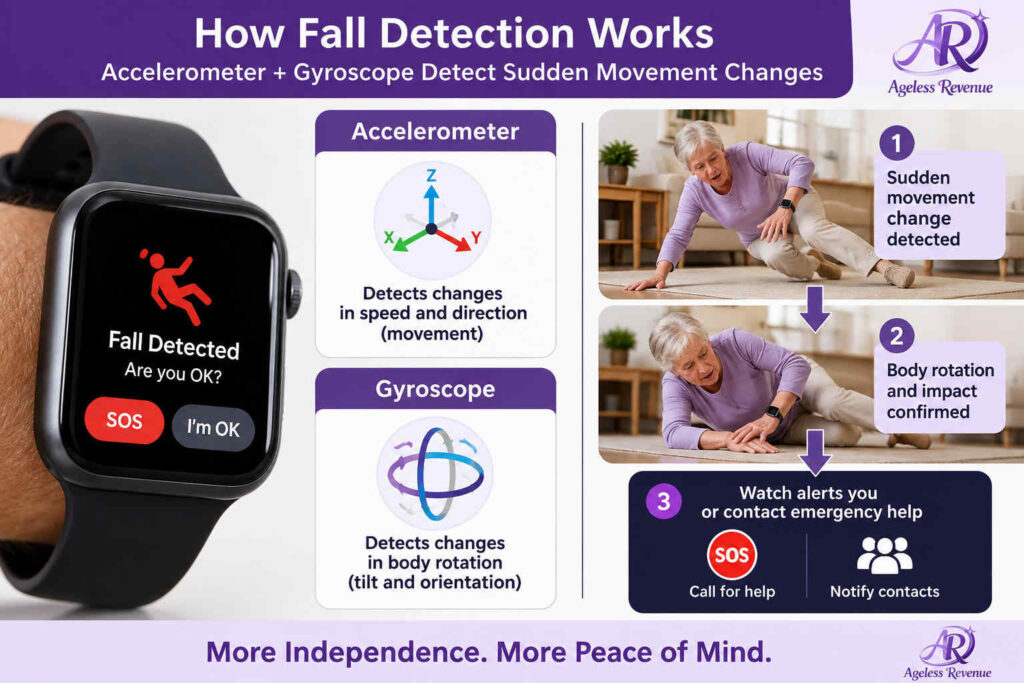
Fall detection uses the watch’s accelerometer and gyroscope to recognize the specific motion pattern of a fall — a sharp, sudden movement followed by a hard stop and a period of stillness. If you don’t respond to an on-wrist prompt within roughly 60 seconds, the watch automatically calls for help and shares your location.
It’s worth understanding honestly what this technology is good and less good at. It reliably catches hard, sudden falls. It can miss a slow slump or gradual fall to the ground, and can occasionally false-alarm during vigorous activity like exercise. Treat it as a valuable backup layer rather than a guarantee — the same honest framing that applies to any fall-detection technology, watch or pendant.
Battery Life: A Real Practical Difference Between Categories
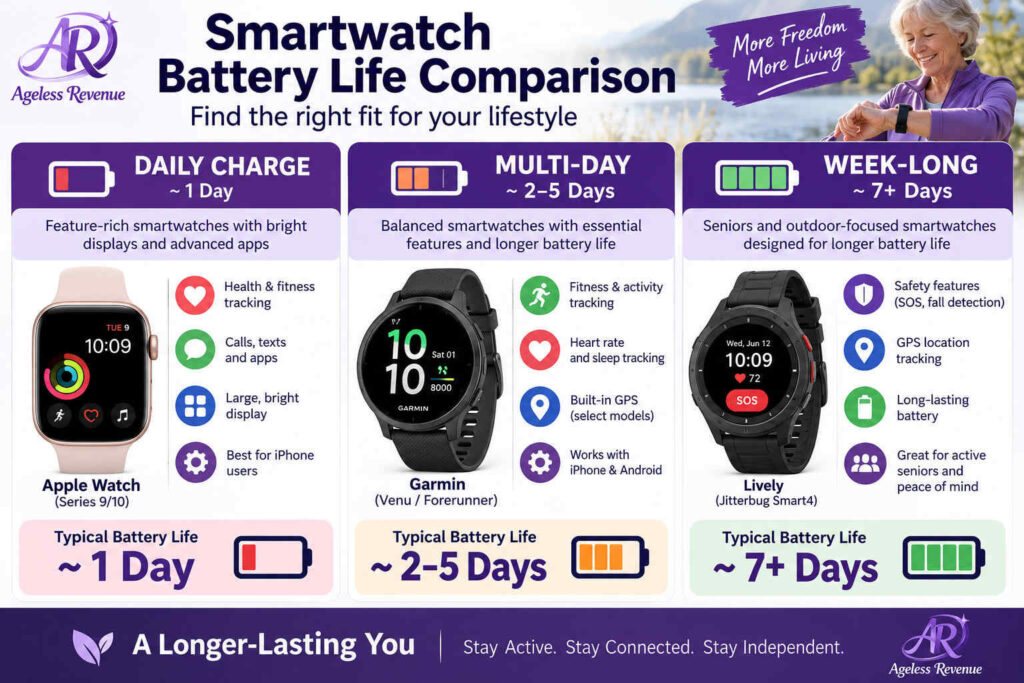
This varies more between the two categories than most buyers expect, and it’s worth being honest about your own charging habits before choosing.
Mainstream smartwatches like Apple Watch typically need daily charging — genuinely fine if that’s already part of your routine, but a real gap in protection if a charge gets forgotten. Some fitness-focused smartwatches (particularly from Garmin) prioritize battery life over touchscreen richness and last several days to over a week between charges. Purpose-built medical alert smartwatches vary by model, but several are specifically designed for multi-day battery life given their safety-first purpose.
If forgetting to charge a device is a realistic scenario, this factor alone might be worth weighing more heavily than any single feature.
Comfort and Design: The Feature That Determines Whether It Gets Worn
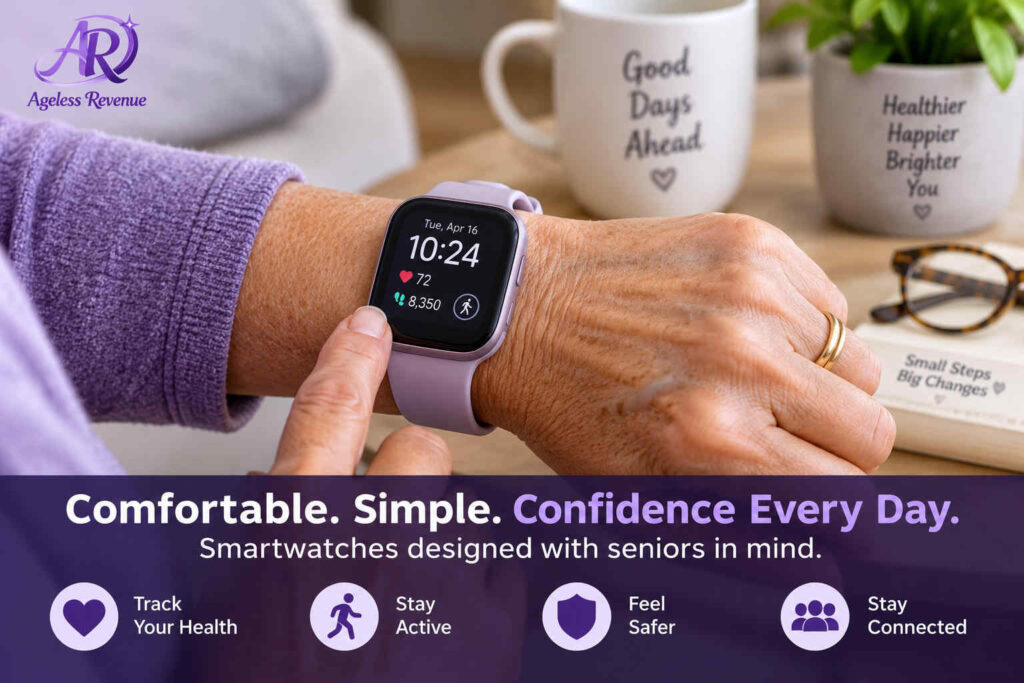
This sounds obvious, but it’s genuinely the biggest real-world failure point in this category — a smartwatch sitting in a drawer protects no one, regardless of how good its fall detection is.
Weight, band material, and screen size all affect daily wearability. A heavier watch with a stiff band may be set aside after a few uncomfortable days; a lighter watch with a soft, adjustable band is more likely to become a genuine daily habit. If possible, involve the person who’ll actually be wearing it in choosing the specific model, rather than deciding purely on features.
A Few Specific Options Worth Considering
For iPhone users wanting a full-featured mainstream option: Apple Watch includes fall detection and Emergency SOS as standard hardware features with no additional monthly cost, plus the broader smartwatch ecosystem of notifications, health tracking, and apps — but requires an iPhone to function.
For Android or Samsung phone users: Samsung Galaxy Watch offers comparable fall detection and safety features within the Android ecosystem, working most seamlessly with a Samsung phone specifically.
For maximum battery life with strong GPS accuracy: Garmin smartwatches prioritize multi-day battery life and outdoor GPS tracking, a good fit for active seniors who walk or hike regularly and don’t want to think about daily charging.
For phone-independent monitoring with a subscription: A medical alert smartwatch with built-in cellular and 24/7 live monitoring works entirely on its own, worth the subscription cost if independent operation and professional monitoring are the priority over general smartwatch features.
Subscription costs for medical alert smartwatches vary significantly by provider and plan — always check current pricing directly, since it changes and can include separate device and monthly monitoring costs.
According to the National Council on Aging, one in four Americans over 65 falls each year, underscoring why fall detection technology — in any form factor — has become such a common feature. The CDC tracks national falls data and offers further context on how common and often preventable these incidents are.
Frequently Asked Questions
Do I need a subscription for smartwatch fall detection? It depends on the category. Apple Watch and Samsung Galaxy Watch include fall detection as a built-in hardware feature at no additional monthly cost. Purpose-built medical alert smartwatches require an ongoing monitoring subscription, typically $30-$85 per month.
Can a smartwatch work without a smartphone? Mainstream smartwatches (Apple Watch, Galaxy Watch) generally need a compatible smartphone nearby or connected via a cellular plan for full functionality. Purpose-built medical alert smartwatches are designed to work independently, with their own built-in cellular connection.
How reliable is fall detection, really? It reliably catches hard, sudden falls but can miss slow slumps and occasionally false alarms during vigorous activity. It’s a valuable backup safety layer, not a guarantee — the same honest limitation that applies to any fall-detection technology.
What happens if I don’t respond after a fall is detected? On most devices, if you don’t respond to an on-wrist prompt within about 60 seconds, the watch automatically calls for help (emergency services or a monitoring center, depending on the device type) and shares your location.
Which is better for someone active and outdoorsy? Garmin smartwatches are generally the strongest fit here, prioritizing multi-day battery life and accurate outdoor GPS tracking over the broader app ecosystem of Apple or Samsung watches.
Does the watch actually need to be worn all the time to be useful? Yes — a smartwatch left in a drawer provides no protection regardless of its features. Comfort and daily wearability matter as much as any single safety feature, since consistent wear is what makes any of this useful.
The Bottom Line
The right smartwatch in this category depends less on brand reputation and more on one honest question: do you want a capable everyday device with a strong safety net, or a device built specifically around independent emergency monitoring? Answer that first, and the right category becomes clear.
If independent, phone-free monitoring is the priority, it’s worth comparing the full picture. See our complete guide to medical alert systems for seniors for pendants and mobile devices alongside the smartwatch option.