
What You Really Need to Start Affiliate Marketing on a Small Budget
A beginner-friendly 2026 guide for retirees and late starters
You can start affiliate marketing on a small budget without spending a lot, if that’s what has been holding you back. It does not require a complicated website or a stack of paid tools to get going. A simple plan, and knowing what to spend on first, goes a long way — especially if you are starting later in life. Keeping things low-cost until you see what actually works is the smart move.
Some things can definitely wait. It might feel overwhelming with all the choices out there, but focusing on the basics clears that up fast. A realistic budget is more useful than trying to have everything ready on day one. Progress happens when you stop overthinking the extras.
Affiliate disclosure: This post contains affiliate links. If you buy through them, I may earn a small commission at no extra cost to you.
What You Really Need to Start
At the beginning, you only need a few core pieces in place:
- A niche you can stick with
- A basic website or blog
- A domain name
- Website hosting
- A simple content plan
- Time to learn and publish consistently
That is the real foundation. Everything else is optional at the beginning.
A lot of beginners waste money buying extra tools before they’ve even published a few helpful articles. It feels productive, but it usually slows them down. The better approach: start with the basics, learn how the process works, and add tools only when they solve a real problem.
The Lowest-Cost Setup That Still Works
If your goal is to start lean, here is the most practical setup for most beginners:
- One domain name
- One hosted WordPress website
- A simple theme
- Basic SEO settings
- A free graphics tool if needed
- One training source or one clear step-by-step guide
That setup is enough to build a site, publish content, apply to affiliate programs, start learning SEO, and create simple blog graphics without overspending.
If you want a guided path to setting up a website, start with Start Here, then read Affiliate Marketing for Retirees: How to Start in 2026 before you buy anything extra.
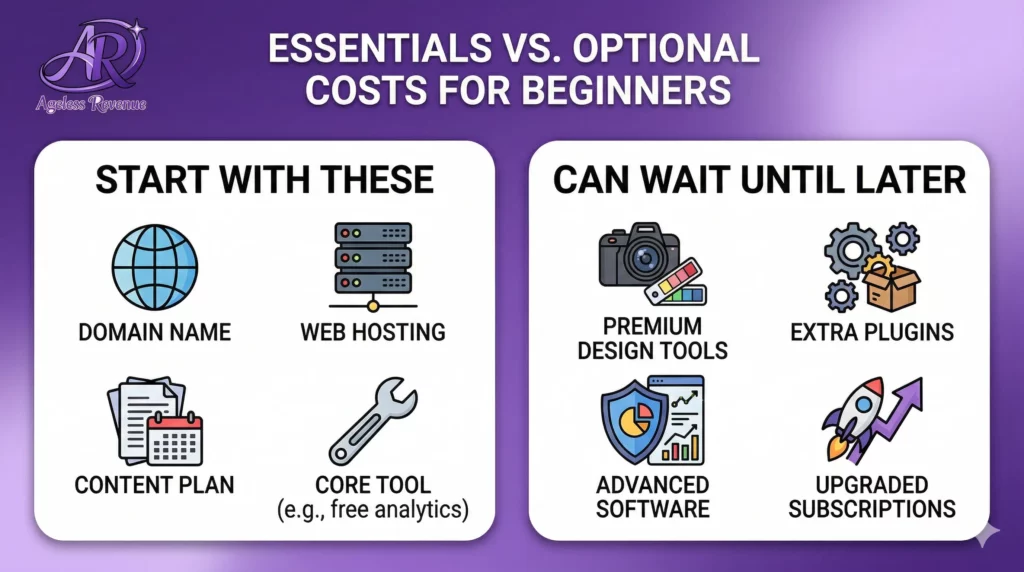
Essential Costs vs Optional Costs
Let’s separate the true essentials from the “nice to have” items.
Essential costs:
- Domain name
- Hosting
- A reliable website platform
- Optional beginner training if you want support
Optional costs:
- Premium design tools
- Paid keyword tools
- Paid email software right away
- Expensive themes
- AI subscriptions for everything
- Pinterest schedulers
- Paid traffic
If your budget is tight, focus your money on the pieces that help you actually launch and publish — that usually means your site, your hosting, and your learning path.
A beginner does not need a giant software stack. A beginner needs a working website and a repeatable routine.
A Realistic Beginner Budget
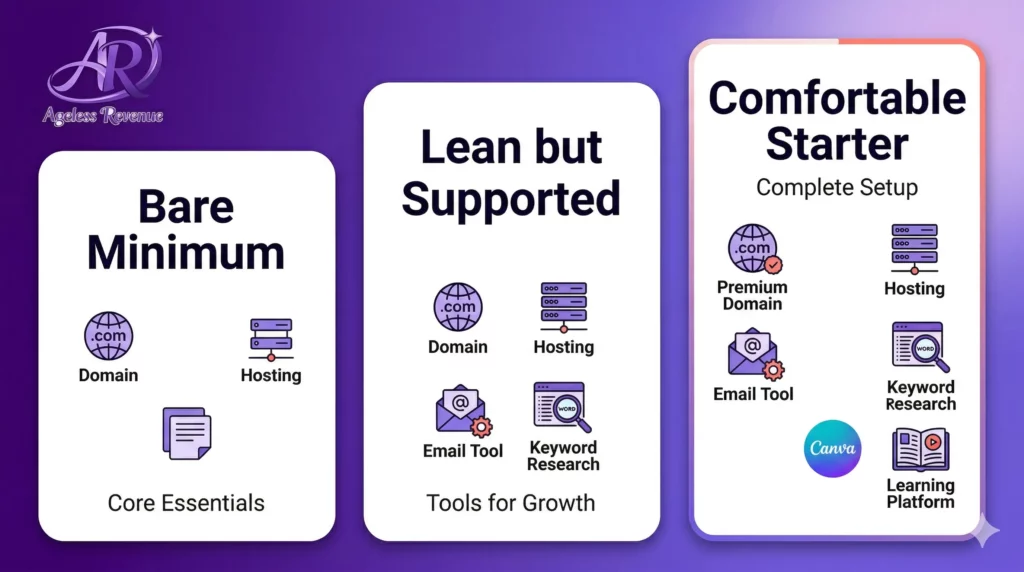
A realistic small-budget plan usually falls into one of three ranges.
Budget level 1: Bare minimum For someone who wants to get started at the lowest practical cost. You pay for a domain and hosting, then use free tools wherever possible.
Budget level 2: Lean but supported This includes your domain, hosting, and one beginner-friendly platform or training resource, so you are not trying to piece everything together alone.
Budget level 3: Comfortable starter budget This gives you room for a few extras — a premium theme, a paid design tool, or one research tool. Still reasonable, but not necessary on day one.
The smartest choice is usually the middle option: lean, but supported. It tends to save money in the long run by reducing mistakes, confusion, and wasted purchases.
What You Can Skip at the Beginning
Here are things many beginners think they need right away but usually do not:
- A paid logo designer
- Multiple courses at once
- Paid ads
- Several SEO plugins
- A premium email platform before you have traffic
- A paid keyword tool before you have content
- Multiple websites
- A complicated funnel setup
Free traffic sources can help you grow before you spend money on ads. One easy place to begin is Pinterest for affiliate marketing beginners if you want a visual platform that does not require being online all day.
Skipping those at first frees up both money and attention — making it easier to stay focused on what actually matters: choosing your niche, building your site, and publishing useful content.
What Usually Wastes Money
If you want to protect your budget, watch out for these common mistakes:
- Buying too many tools before using the basics
- Paying for subscriptions you do not understand yet
- Starting a site without a clear niche
- Jumping from one training program to another
- Expecting fast income and overspending out of frustration
- Trying to automate everything before learning the process
One of the easiest ways to waste money is to keep changing direction. A simple setup used consistently beats a fancy setup you never really learn.
The Best Budget Strategy for Retirees
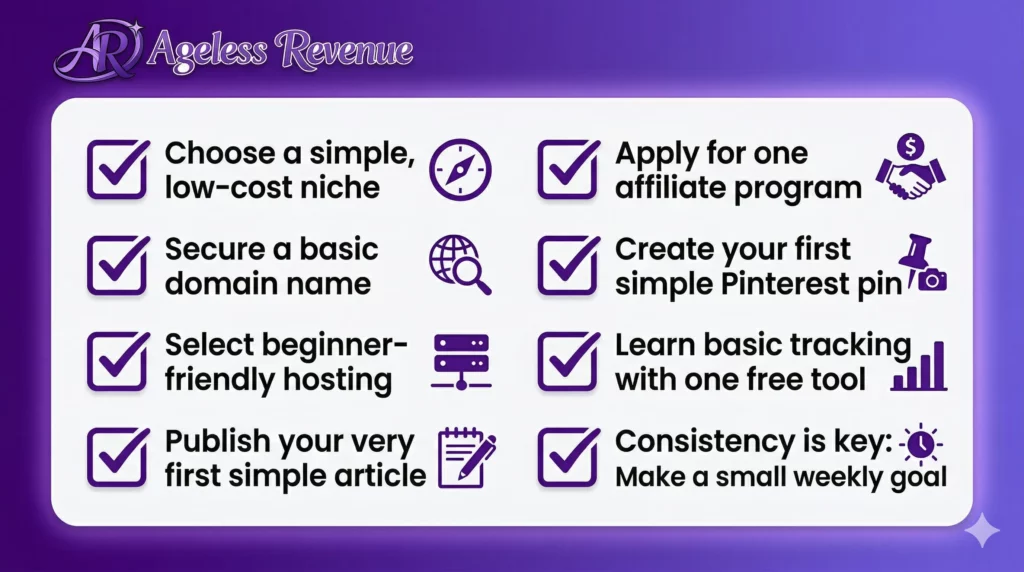
If you are a retiree, the best budget strategy is this:
- Start with one niche
- Build one website
- Use one training path
- Publish helpful articles consistently
- Keep your monthly costs simple
- Add paid tools only when they save time or improve results
This approach is calmer, easier to manage, and more realistic for someone building a business at a steady pace.
Before you spend more, make sure your niche idea is solid by reading How to Validate an Affiliate Niche After Retirement.
My Honest Take
If I were starting affiliate marketing on a small budget today, I would spend money on the website foundation first and keep everything else simple:
- A domain
- Hosting
- A clean website, set up properly
- One clear training path, or one reliable set of guides
I would not spend early money trying to look professional. I would spend it trying to become useful.
If you are wondering when the results usually start showing up, read How Long Does Affiliate Marketing Take to Make Money? next.
Final Thoughts
You can absolutely start affiliate marketing on a small budget.
What matters most is not how many tools you buy. What matters is whether you build a simple foundation and keep going long enough to learn what works.
So if you are feeling stuck because you think you need more money before you begin, take that pressure off yourself. Start small. Keep it practical. Focus on the essentials. Then improve as you grow.
Frequently Asked Questions
Can I start affiliate marketing on a small budget?
Yes. Many beginners can start affiliate marketing on a small budget by focusing on the essentials first, such as a domain name, hosting, a simple website, and helpful content.
What do I need to pay for first?
In most cases, your first paid priorities should be your domain name and website hosting. Those give you the basic foundation to build your site and start publishing.
Do I need paid keyword tools to begin?
No. Paid keyword tools can be helpful later, but most beginners can start with simpler research methods and add paid tools only when they truly save time.
Is Wealthy Affiliate a good budget-friendly option?
It can be. Wealthy Affiliate may be a good fit for beginners who want website tools, hosting, training, and support in one place instead of buying several separate services.
Should I wait until I have a bigger budget?
Usually no. It is often better to start with a realistic, small budget, keep your setup simple, and improve your tools only after you begin making progress.
What if I am not tech-savvy?
That is exactly why keeping your setup simple matters. A beginner-friendly website, one clear learning path, and a small set of tools can make the process much easier.
Your Next Step
If you’re just getting oriented, start with our Getting Started With Affiliate Marketing as a Retiree guide. Once your niche is set, our Affiliate Marketing Starter Kit and Top 10 Online Business Ideas for Retirees are good next reads. If you want an all-in-one beginner option, read Wealthy Affiliate Review 2026: Honest Pros, Cons & Pricing for Retirees.