
How to Turn Your Hobby Into a Business (Gentle Guide for Retirees)
If you’ve ever wondered whether a favorite hobby could quietly pay for a few extras each month — without pressure, deadlines, or tech headaches — this guide on how to turn your hobby into a business for retirees is for you.
Think of it as a friendly cup of tea and a simple plan. We’ll walk through one retiree’s real-life journey from hobby to business and then outline tiny steps you can copy. No rushing. No bravado. Just calm progress at your pace.
Affiliate disclosure: This post contains affiliate links. If you buy through them, I may earn a small commission at no extra cost to you. I only recommend tools I genuinely believe help retirees succeed online.
TL;DR — Turn Your Hobby Into a Calm, Tiny Business
This guide shows you how to turn your hobby into a business for retirees gently, using one tiny offer and a small, friendly audience instead of a big, stressful launch. Follow Ruth’s example: listen to real questions, make a simple sign-up page, run a tiny workshop or offer a small download, and share it calmly in one place.
Use a 30-day plan: Week 1 listen, Week 2 invite, Week 3 deliver, Week 4 gently grow. Each cycle teaches you what to keep, change, or drop. Track just four things — signups, conversion, average order, and monthly total — then improve the smallest one next month. Tiny, kind adjustments compound over time.
Hobby to Business: A Gentle Start
We’ll keep this simple. First, you’ll meet “Ruth,” a 68-year-old who turns her hobby into a tiny, low-stress income stream. Then you’ll get a step-by-step plan you can follow — no special skills needed — to turn your hobby into a business for retirees. By the end, you’ll have a small, doable plan for the next 30 days, plus ideas to grow slowly if you enjoy it.
Who this is for: a retiree who wants small, steady wins and flexible hours.
Case Study: Ruth’s Story (Hobby to Business, One Easy Month)
Meet Ruth. She’s retired, likes her quiet mornings, and enjoys casual photography. She edits photos with a few clicks and gets compliments from friends. Ruth doesn’t want a “big business.” She wants something light she can pause for family visits and holidays.
Week 1 — Listening, not guessing. Ruth spends a few evenings reading beginner posts in a Facebook group and on Reddit. She keeps a notepad nearby. The same worries pop up over and over: “My phone photos look dull,” “Editing feels complicated,” “I wish someone showed the simple way.” Ruth smiles — this is exactly what she enjoys: simple, natural-looking edits.
Week 2 — A tiny promise. She makes a one-page sign-up (nothing fancy) offering a free checklist: “3 Easy Edits for Real-Looking Photos.” She adds a short note: next week she’ll run a live, friendly workshop over Zoom for beginners. She shares the link once in her favorite group and emails a few friends. Her quiet goal is 15–30 signups.
Week 3 — A tiny paid offer. Ruth runs a 60-minute workshop and records it. She prints her checklist for people who like to follow along with a pen. She charges $19 for early supporters and lets others buy the replay later. Her content is simple and kind: three recipes, one tool, and encouragement.
Week 4 — A simple follow-up. She writes a short comparison post — two beginner-friendly editing tools, explained in plain English. She includes honest affiliate links to the one she uses and one she also trusts. She adds a few screenshots and keeps the tone friendly — no pressure.
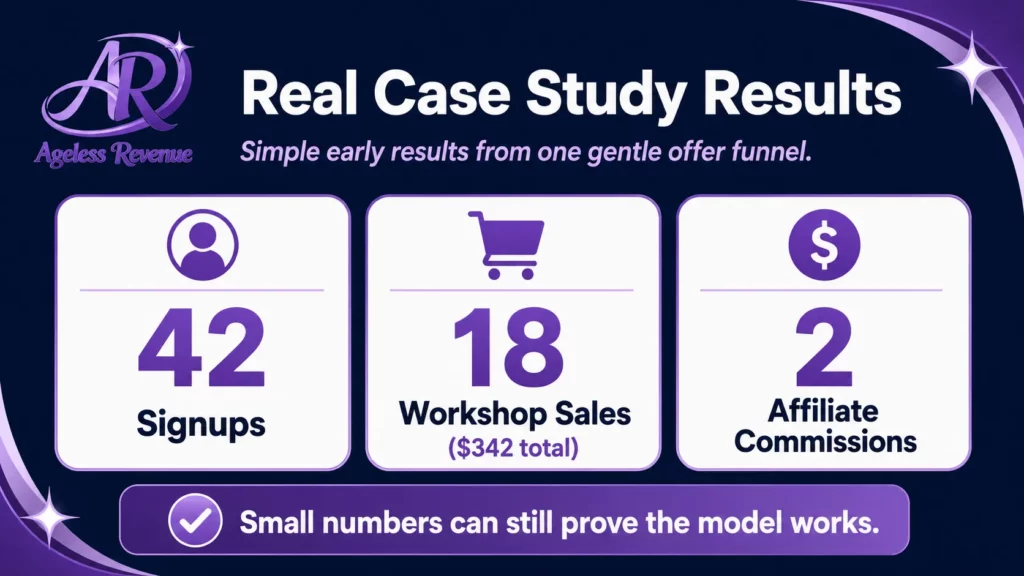
Ruth’s results. She gets 42 signups, 18 workshop sales ($342), and two affiliate commissions. More importantly, she enjoys it. People send thank-you notes. She doesn’t feel rushed. She decides to repeat the workshop next month and tweak one part that people asked about.
Validation the easy way: listen first, then offer one small, helpful step.
If Ruth’s story feels close to what you want, these guides will help you shape and test your own version:
- How to Choose and Validate Your Affiliate Niche — stress-test your hobby idea before you turn it into an offer
- The Best Ways to Conduct Market Research for Your Online Business — listen to real questions and worries before you create your workshop or download.
Hobby to Business: Your Calm Step-by-Step Plan
This plan is written to feel manageable. If any step feels too big, cut it in half. Progress is the goal — not perfection.
Step 1 — Pick the Tiny Version of Your Idea
Write one sentence that promises a small win, fast. Examples:
- “Make three photos look naturally brighter in five minutes.”
- “Set up your first WordPress site in two short sessions.”
- “Sew a simple tote bag in an afternoon — even if you’re rusty.”
Keep it specific and kind. You’re not trying to impress anyone; you’re trying to help someone.
Step 2 — Listen for One Week
Pick one group or forum where your people chat. Read quietly for a week. Collect exact questions and phrases. When the same worry appears a few times, you’ve found the right spot to help.
Step 3 — Make a Simple Sign-Up Page
Promise one small outcome, share a friendly photo, and ask for a first name and email. Offer a tiny freebie — checklist, printable, or template. Let people know you’ll run a short live session soon. Your goal isn’t a huge list; it’s a small group you can genuinely help.
Step 4 — Choose One Gentle Way to Earn
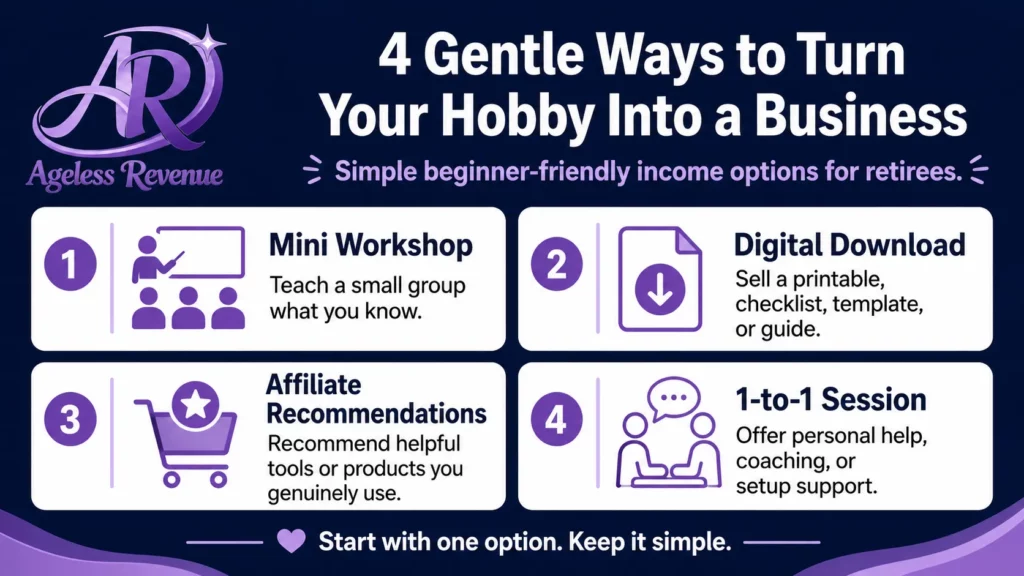
Four gentle ways to earn from a hobby — pick just one to start:
- Mini workshop (45–60 minutes) plus a one-page handout
- Digital download (checklist, template set, beginner guide)
- Affiliate recommendations (honest, beginner-friendly tools)
- Short 1-to-1 session (a clear outcome in one or two calls)
Pick the path that feels kind to your energy. The “right” choice is the one you’ll actually do.
Once you’ve picked one gentle way to earn, these articles will help you choose offers and create content around them:
- Best Passive Income Affiliate Programs for Retirees Over 60 — find simple, beginner-friendly programs that match your hobby
- Getting Started With Affiliate Marketing as a Retiree — understand how affiliate links, commissions, and calm routines work.
- Content Marketing for Retiree Bloggers — turn your tiny offer and recommendations into clear, helpful content that gently sells
Step 5 — Prepare Your Tiny Offer
Outline three parts. Keep each part short. Make a simple handout or checklist (PDF is fine). Choose a calm price ($9–$19 to start). Invite your small list and two friends who would enjoy it. Keep your tone the way you talk to a friend: friendly, clear, and patient. People remember how you made them feel.
Step 6 — Set Up Only What You Need
WordPress with a clean theme is enough. Add RankMath for SEO and one simple email tool. Skip anything that makes you sigh. Your readers want your kindness and clarity — not a fancy build.
Choose one place where your people already gather. Share one tip from your workshop, link your sign-up, and thank folks for reading. No pushing. You’re inviting, not chasing.
When someone says your tip helped, ask if you can quote them with a first name — that tiny proof helps others feel safe to join. Your calm flywheel: one post, one place, one proof — repeat.
Hobby to Business: A Friendly 30-Day Plan
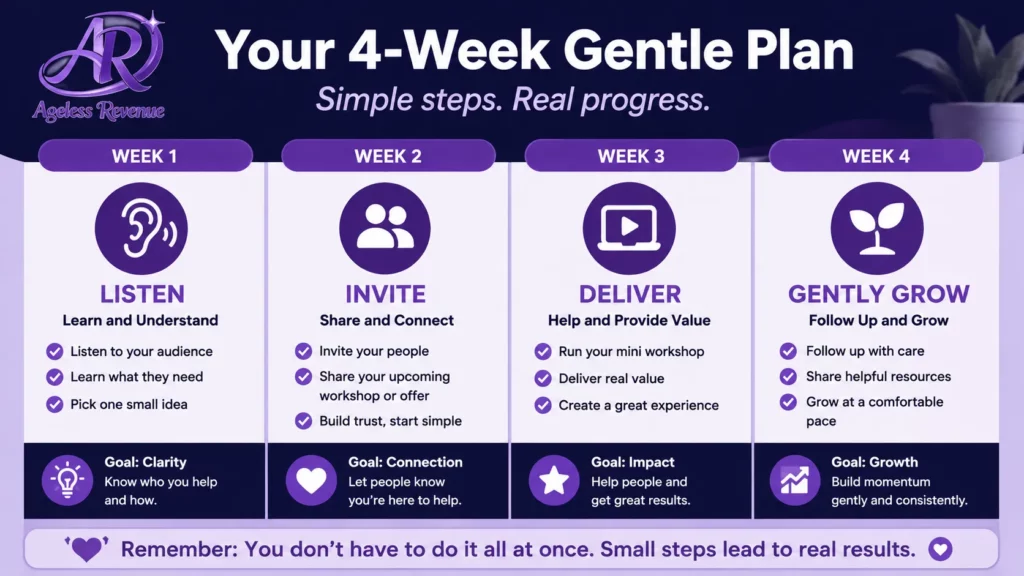
Week 1 — Listen. Collect questions and phrases. Write one small promise in plain language.
Week 2 — Invite. Create a simple sign-up page plus a tiny freebie. Share once where your people are.
Week 3 — Deliver. Run your mini workshop or publish your download. Send the replay to anyone who missed it.
Week 4 — Gently grow. Share one helpful post (a how-to or comparison), add honest affiliate links if relevant, and collect one tiny testimonial. Track four numbers. Improve the smallest one next week.
What to Track (Keep It Tiny)
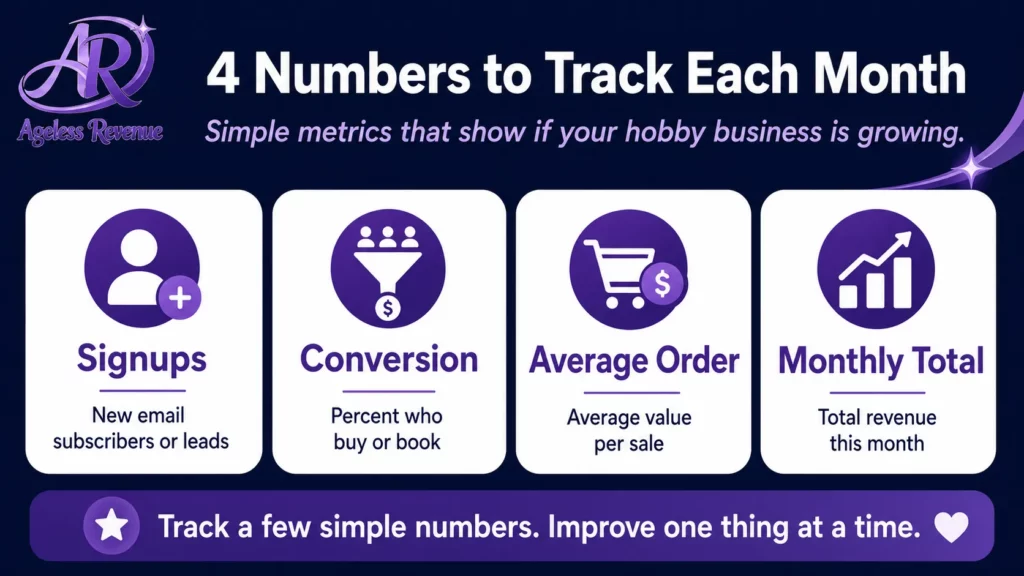
- Signups — people who joined your list this week
- Conversion — how many bought your tiny offer
- Average order — your average sale value
- Monthly total — a simple sum, no fancy charts needed
When you feel ready, raise your price a little or add a small second offer (a printable pack or a part-two session). Grow only if it stays enjoyable.
When you’re comfortable tracking these tiny numbers, you can connect your hobby business to a simple long-term plan:
- Online Business Plan for Retirees — see how your hobby offer fits into a bigger picture
- Online Business Plan Template — map your audience, offer, traffic, and numbers on a single page
- Top 10 Online Business Ideas for Retirees — if this hobby doesn’t feel right, choose another idea that matches your energy better
Common Worries (and Friendly Answers)
“I’m not very technical.” You don’t need to be. Use a clean theme, RankMath, and one email tool. Templates do the heavy lifting.
“What if no one buys?” That’s normal at the start. Shrink the promise, invite two friends, and ask one group again. Each tiny round teaches you what to adjust.
“Is $19 too low?” It’s a great starter price. When you have a few kind quotes, nudge to $29 — or leave it low if you prefer. Your pace, your rules.
Let Your Hobby Support You, Not Exhaust You
Turning a hobby into a business does not mean turning it into another stressful job. It means choosing one tiny promise, one gentle way to earn, and one group of people you genuinely enjoy helping.
Keep your first offer small and kind — something you could deliver even on a low-energy day. Repeat one calm 30-day cycle: listen, invite, deliver, and gently grow. Adjust only one or two things each round — your promise, your price, or where you share.
Over time, these tiny rounds can turn your hobby into a steady, meaningful part of your income and your week — without losing the joy that made you love it in the first place.
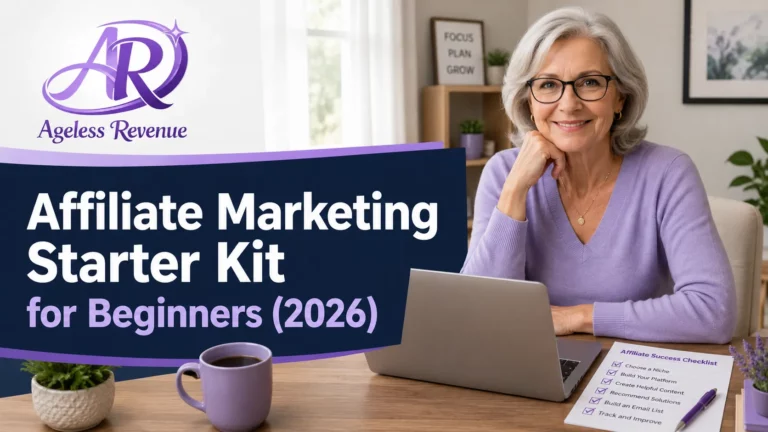
If you’d like a printable checklist to guide you through your first offers, download the free Affiliate Marketing Starter Kit for Retirees → It helps you move from hobby idea to simple plan, step by step, without overwhelm.
Frequently Asked Questions
Do I need technical skills to turn my hobby into a business?
No. A clean WordPress theme, RankMath for SEO, and one simple email tool are enough. You do not need to be technical to get started — templates and simple tools do most of the heavy lifting.
What if no one buys my first offer?
That is normal at the start. Shrink the promise, invite a couple of friends, and try sharing in your group again. Each small round teaches you what to adjust for the next one.
Is a $19 starting price too low?
It is a reasonable starter price. Once you have a few positive responses, you can raise it gradually — or keep it low if that feels right for you.
How long does it take to see results?
Most of the work happens in a single 30-day cycle: listen, invite, deliver, and grow gently. You can repeat that cycle monthly, adjusting one thing each time based on what you learn.
Helpful Next Reads
- How to Choose and Validate Your Affiliate Niche (a friendly, step-by-step check)
- Getting Started With Affiliate Marketing as a Retiree (the calm way to recommend tools you trust)
- Content Marketing for Retiree Bloggers (create helpful content that gently converts)
Most of all, be kind to yourself. A small promise, a small audience, and a small offer — repeated calmly — can turn a hobby into a steady, happy part of your week.
Helpful External Resources for Disclosures & Helpful Content
- FTC – Endorsement Guides & Common Questions
- Google Search Central – Creating Helpful, Reliable, People-First Content
For a structured path with training, hosting, and a supportive community, try Wealthy Affiliate free →
This post contains affiliate links. If you buy through them, I may earn a small commission at no extra cost to you.