
Last Updated on 4 months ago by Gila
New here? Start with Affiliate Marketing 101, grab my Starter Kit, and learn how to validate your idea.

TL;DR: Engaging content that converts for affiliate sales is calm, honest, and structured. You hook the reader, teach them something useful, then recommend a product that genuinely helps—using clear, gentle CTAs.
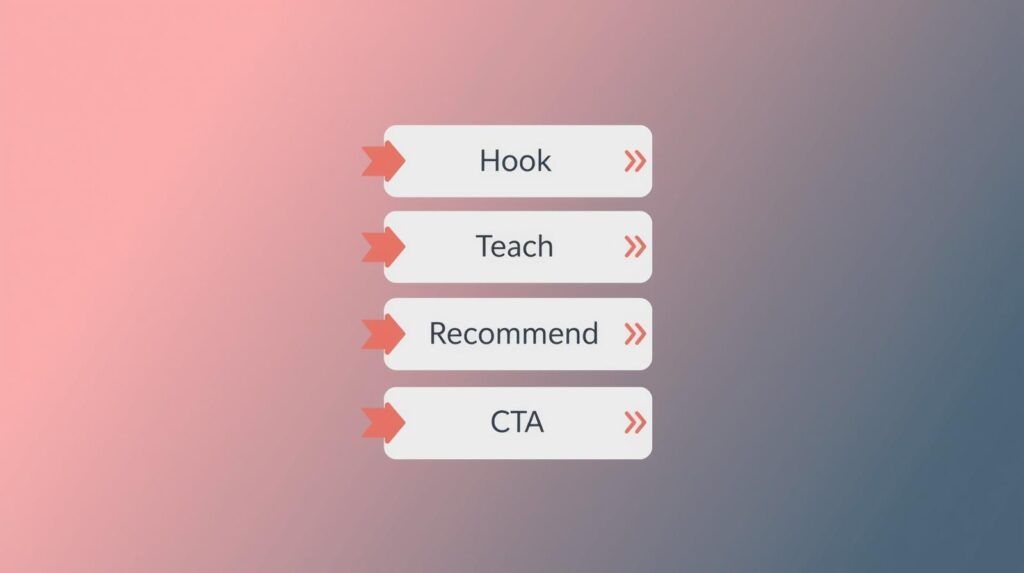
- Use the content ladder: Hook → Teach → Recommend → CTA.
- Write for one reader: One person, one problem, one result per piece.
- Pick one format per week: Review, comparison, tutorial, or checklist.
- Add proof: Screenshots, before/after, and honest pros & cons.
- Place 3 CTAs: Top, mid-post, and end—each matching where the reader is.
The Content Ladder: Teach First, Recommend Second
Affiliate posts convert when readers feel helped, not pushed. Use a simple ladder: Hook → Teach → Recommend → CTA. We’ll walk through engaging content that converts for affiliate sales without hype, using calm steps retirees can repeat every week.
Know Your Reader (and Problem)
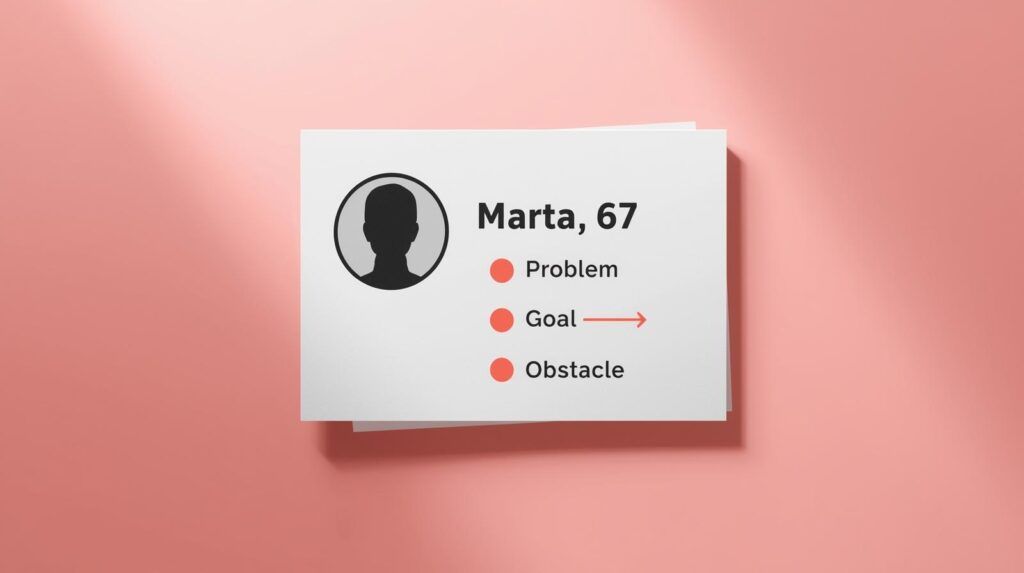
Pick one person in your audience and write only for them. Example: “Marta, 67, wants a simple tool to organize family photos.” Re-read product reviews and forum threads to collect real phrases—those become your subheadings and FAQs. The clearer the problem, the easier it is to teach the next step and recommend the right tool.
Need Help Defining Your Reader and Their Main Problem?
Clear, engaging content starts with knowing exactly who you’re writing for and what they struggle with. Use these guides to sharpen your reader and problem before you draft:
- Business Idea Questions: 25 Essential Checks for Beginners (2025) – Use these questions to understand what your audience really wants and fears.
- The Best Ways To Conduct Market Research For Your Online Business – Turn reviews, forums, and simple surveys into real phrases you can reuse in your content.
- How To Validate Your Online Business Idea: A Step-by-step Guide – Confirm that your idea and your reader’s problem genuinely match before you write a full promo post.
High-Converting Formats (Pick One per Week)
Use formats that naturally include teaching and honest recommendations:
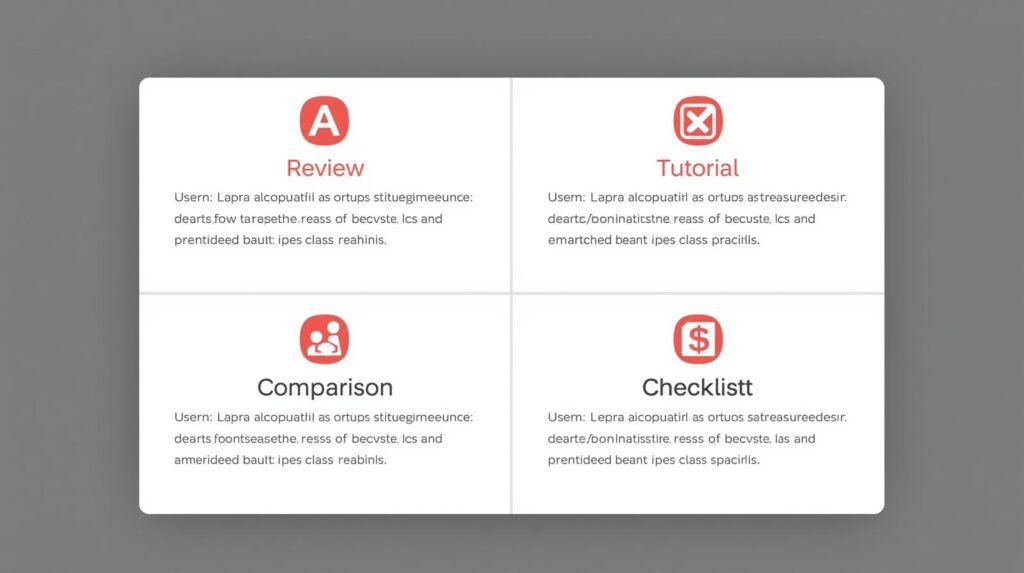
- Review: Who it’s for, setup steps, pros & cons, price, your verdict.
- Comparison: 3–5 criteria (ease, price, features). Declare a winner and who should pick the runner-up.
- Tutorial: Step-by-step “do this with me” lesson using the tool.
- Checklist/Template: One-page printable the reader can use today.
See Real Examples of Reviews, Comparisons, and Step-by-Step Guides
Once you pick your format (review, comparison, tutorial, or checklist), it helps to see calm, honest examples written for retirees:
- Wealthy Affiliate Review 2025: Honest Pros, Cons & Verdict – A review that balances pros, cons, and who WA is really for.
- Wealthy Affiliate vs Other Affiliate Programs: An Honest Beginner’s Comparison (2025) – A comparison that uses clear criteria and declares a winner.
- From “What’s a Niche?” to First Sale: A 90-Day Step-by-Step Guide – A step-by-step tutorial style piece that walks readers from confusion to first sale.
Outline and Research (15 Minutes)
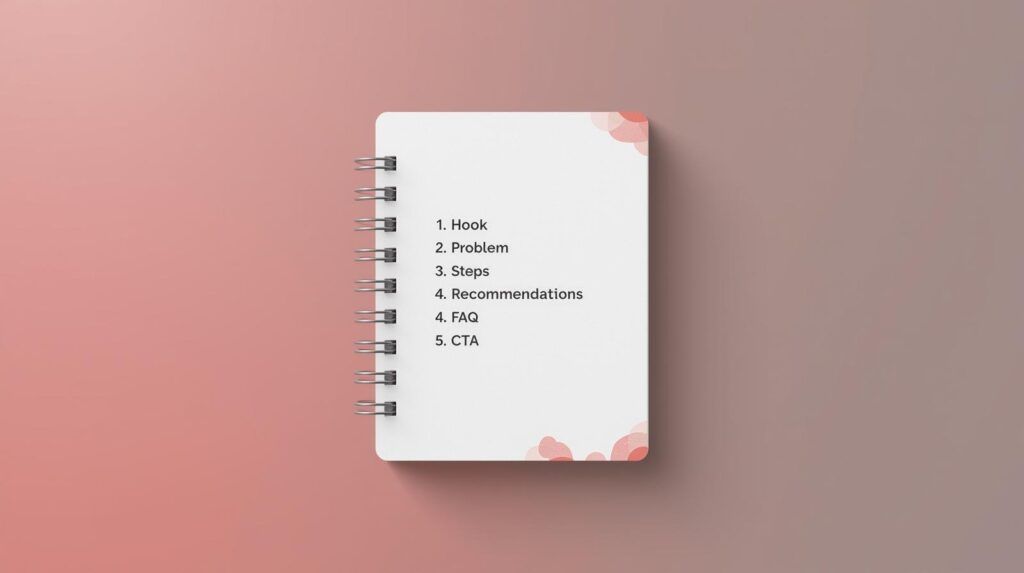
1) Hook: Promise one helpful result in plain English. Example: “Back up your phone photos in 10 minutes.”
2) Problem & Context: One short paragraph showing you understand the reader’s situation (“thousands of photos with no backup”).
3) Steps or Criteria: Write the steps or the comparison criteria as your H2/H3s.
4) Recommendations: Place the product where it genuinely helps. Add screenshots or photos.
5) FAQ: Borrow questions from “People Also Ask,” Reddit, and product reviews.
Writing that Feels Helpful (and Sells)
- Use plain words. Short sentences beat jargon.
- Show, don’t hype. Add a screenshot, quick clip, or before/after.
- Pros and cons. Honesty builds trust and long-term clicks.
- CTAs that match the moment. Ask for the next tiny step, not a leap.
- Accessibility. Big headings, readable fonts, alt text for images.
CTAs and Placements (Three is Plenty)
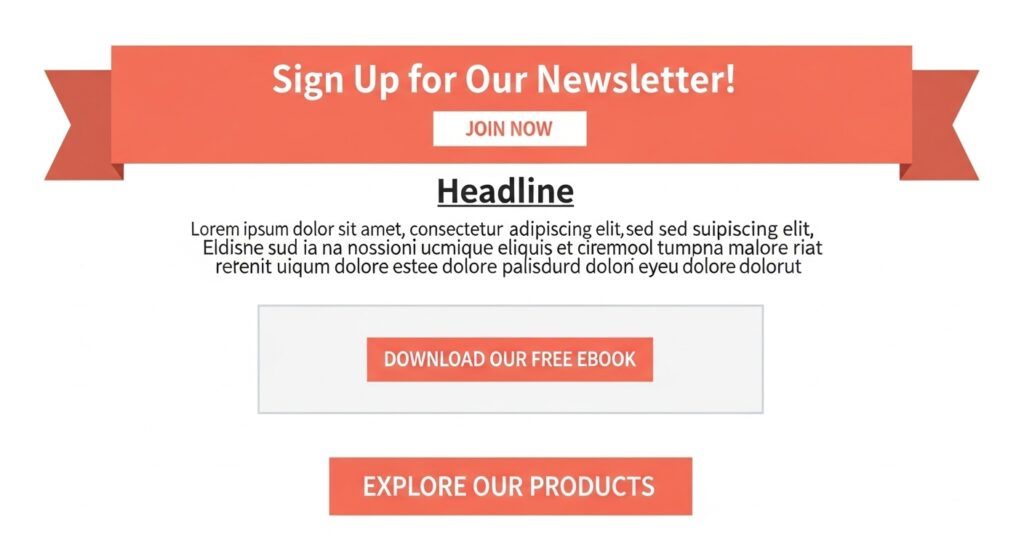
- Top ribbon: “Want the checklist? Download it free.”
- Mid-post box: “Try the tool—30-day free trial.”
- End button: “Get the plan I use.”
Compliance and Trust
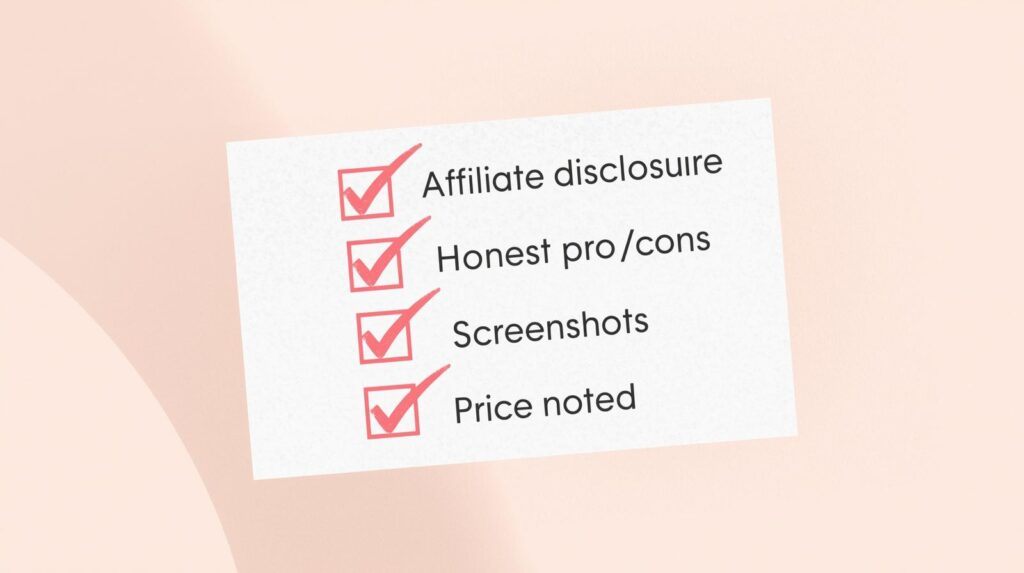
- Put a short affiliate disclosure near the top.
- Include pros and cons and who should avoid it.
- Add screenshots or your own photos.
- Note the price and any coupon details.
Worked Example (Retiree Scenario)
Idea: “Best simple scanner app for preserving old family photos.” Format = comparison. Criteria = price, quality, ease, backup. Winner = App A (easiest), Runner-up = App B (cheaper). CTAs = free trial link mid-post + end button. Lead magnet = 1-page scanning checklist.
Weekly Routine (Keep It Calm)
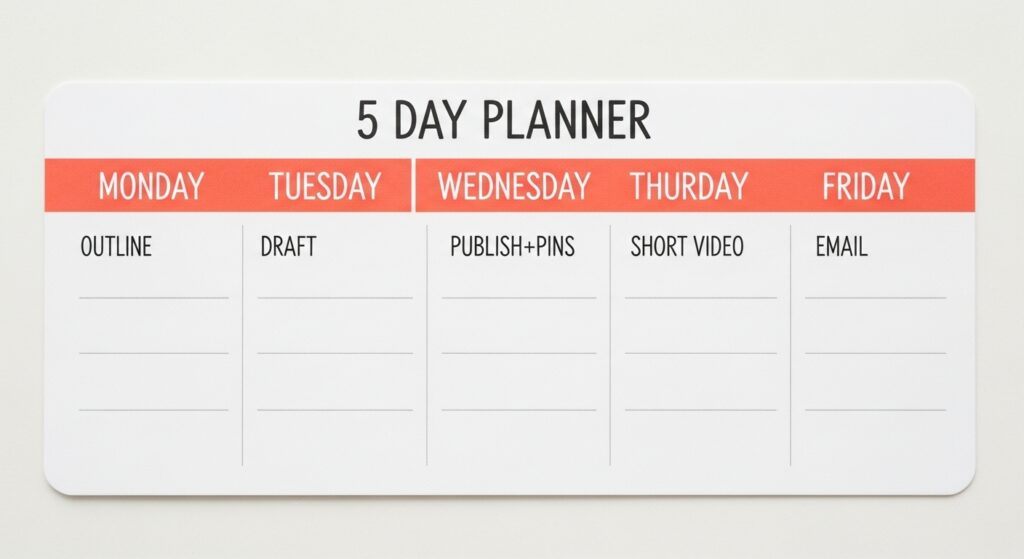
- Mon: outline and gather examples.
- Tue: draft with screenshots.
- Wed: publish; make 3 pins.
- Thu: record a 45–60 sec how-to clip.
- Fri: send a friendly email: “1 tip + 3 links.”
Turn Your Weekly Writing Routine Into Traffic and Income
Your calm weekly routine becomes much more powerful when it’s connected to a simple system: blog post → social media → email list → affiliate offers.
- Best AI Tools for Blogging: Boost Efficiency, SEO, and Engagement (2025) – Use AI gently to speed up outlines, drafts, and ideas without losing your voice.
- Social Media Affiliate Marketing: 5 Proven Steps (Beginner) – Turn each blog post into calm social posts that bring readers back to your site.
- Your First 7 Days at Wealthy Affiliate: A Simple, Step-by-Step Action Plan for Beginners – Use WA’s training to build the habit of publishing and tracking results.
Blueprints You Can Reuse (Copy, Then Fill)
Tutorial Blueprint (example: “How to back up phone photos”)
- Hook: Promise one outcome in minutes.
- Context: Why it matters for the reader.
- What you need: 2–3 items with quick links.
- Steps: Numbered, each with a screenshot and 1–2 sentences.
- Common mistakes: One short list with fixes.
- CTA: Try the tool (trial) + download the checklist.
Review Blueprint (example: “Hands-on with XYZ scanner app”)
- Who it’s for: The kinds of users who will love it.
- Setup in 3 steps: Add your screenshots.
- Pros & cons: Be honest—trust sells.
- Pricing: Note monthly vs annual and coupons.
- Alternatives: 1–2 options and who should choose them.
- Verdict + CTA: One clear sentence and a button.
Comparison Blueprint (example: “ABC vs DEF: which is simpler?”)
- Criteria: Ease, price, features, support, privacy.
- Table: Keep to 5 rows; make the winner obvious.
- Hands-on notes: One sentence per tool.
- Which should you pick? Choose A or B based on the reader’s situation.
- CTA: Try the winner; mention runner-up for edge cases.
On-Page SEO Checklist (Quick and Calm)
- Title: include the exact phrase “engaging content that converts for affiliate sales”.
- First 100 words: repeat the phrase once, naturally.
- Subheads: use variants (“high-converting formats”, “CTAs and placements”).
- Image alt text: describe what’s shown; keep under ~125 chars.
- Internal links: point to your 101 guide, validation, and starter kit.
- External links: cite one trusted source (e.g., FTC, Google).
- Schema: BlogPosting + FAQPage; match the content.
Images & Media That Help Conversions
- Show the step: A screenshot per critical step beats paragraphs of text.
- Use captions: Readers scan captions first—state the result in plain English.
- Before/after: One small comparison image communicates progress instantly.
- Short clip: A 45–60 sec clip demonstrating the “aha” step can double time-on-page.
Traffic Boosters You Can Recycle
- Pinterest: Create 3 pins per post (how-to, list, result). Link to the article and add the same CTA.
- Short video: 3 bullets: problem, quick fix, “see full steps” with your post link.
- Newsletter: Send “1 tip + 3 links” every Friday; highlight your newest post.
- Community reply: Answer one forum or group question with your steps; link the full guide.
From Draft to Publish (A Simple Flow)
- Outline with the ladder and choose a format (review/comparison/tutorial).
- Collect 3 proofs: a screenshot, a quote, a quick clip.
- Write the body first, then the intro and title.
- Add CTAs (top, middle, end) that match the reader’s stage.
- Run the on-page SEO and compliance checklists.
- Publish, pin, short video, email. Log clicks → subs → sales.
Frequently Asked Questions (FAQ)
How long should an affiliate article be to convert?
There’s no magic word count, but for most beginner-friendly reviews, comparisons, and tutorials, 1,200–2,000 words works well. The key is to fully answer the reader’s question, show how the tool works, and include proof (screenshots, small wins, before/after). A shorter but complete article will outperform a long, repetitive one.
How many CTAs should I use in one piece of content?
Three is usually enough: one near the top (for scanners), one mid-post (after you’ve taught something helpful), and one at the end (for readers who finish). Make each CTA match where the reader is in the “ladder”—early CTAs invite them to learn more, later CTAs invite them to try or buy.
Do I have to buy every product I promote?
It’s ideal to use the products you recommend, but it isn’t always required. You can still create helpful, ethical content by being transparent about your level of experience, leaning on demos, free trials, documentation, and real user reviews. Never pretend you’ve used a tool if you haven’t—your long-term trust matters more than a single sale.
Can I reuse the same content blueprint in different niches?
Yes. The review, comparison, tutorial, and checklist blueprints in this article are designed to be reusable across niches. The structure stays the same, but the examples, screenshots, and language change to fit your audience. This makes content creation faster and keeps your style consistent from post to post.
Helpful External Resources
For deeper dives into what search engines consider “helpful content,” how to write ethical reviews, and how to disclose affiliate relationships correctly, these resources are worth bookmarking:
- Google: Creating Helpful, Reliable, People-First Content – Official guidance on what makes content valuable in Google’s eyes.
- SCORE: Writing Product Reviews – Practical tips for structuring honest, reader-focused reviews.
- FTC Endorsement Guides: What People Are Asking – Clear examples of compliant affiliate disclosures and endorsements.
Conclusion: Calm Content That Still Sells
Every affiliate article becomes less stressful when you treat it as a short, repeatable ladder: promise one result, teach one clear path, recommend one tool, and invite one tiny next step. That’s all “engaging content that converts for affiliate sales” really is.
If you’d like a printable companion to keep beside you while you write, grab my free Affiliate Marketing Starter Kit for Beginners. It walks you through choosing a niche, planning helpful content, and placing affiliate links in a way that feels natural—not pushy.
And if you’d like structured training, tools, and community support while you practice these content templates, you’re welcome to explore Wealthy Affiliate. It’s a beginner-friendly platform where you can learn SEO, content writing, and monetization step by step, at your own pace.
Start with one post, one format, and one product you genuinely trust. Publish it, watch what readers click, then improve the next one. Calm, consistent content always beats rushed, “perfect” drafts that never ship.
Leave a Reply