Content Marketing for Retiree Bloggers: A Simple Strategy That Actually Works (2026)

Last updated:

Smiling retiree woman at a bright home desk with a laptop, a simple content calendar on paper beside it, and a cup of tea, representing a content marketing strategy for retiree bloggers in 2026

Content marketing can sound like one more complicated thing to learn when you are already trying to understand niches, affiliate programs, SEO, and WordPress.

Here is the reassuring truth: if you are building an affiliate blog as a retiree, you are already doing content marketing. Every helpful post you write, every honest product review you publish, every useful guide you share — that is content marketing. The question is not whether to do it. The question is how to do it more intentionally so it actually builds your audience and earns commissions.

Content marketing for a retiree affiliate blogger means creating genuinely helpful articles, guides, and resources that attract the right readers through Google search, answer their real questions, build their trust in you, and naturally lead them toward the products and services you honestly recommend. Nothing flashy. No big budget. No social media presence required. Just consistent, useful content published to a focused audience over time.

This guide covers the most effective content marketing strategies for retiree bloggers in 2026 — which ones actually work for an affiliate site, which ones you can safely skip, and how to build a simple content plan you can stick to without burning out.

TOC-Table Of Contents hide

TL;DR

  • For retiree affiliate bloggers, content marketing means publishing consistently helpful articles that attract search traffic, build trust, and recommend products readers genuinely need.
  • The most important channels are your blog (SEO), Pinterest (visual search), and your email list — in that priority order.
  • One helpful post per week, sustained for six months, will outperform any burst strategy.
  • Quality beats volume. One well-researched, specific article outperforms ten thin posts on similar topics.
  • Repurposing is your biggest time-saver — one blog post can become an email, three Pinterest pins, and a short social post.
  • You do not need social media, paid ads, or video to build a profitable affiliate blog. These are optional additions to a strong content foundation, not requirements.
Three-channel priority infographic for retiree affiliate bloggers showing blog posts as channel one, Pinterest as channel two, and email list as channel three in order of priority

What Content Marketing Actually Means for a Retiree Blogger

For a retiree building an affiliate income online, content marketing is simpler than most guides make it sound. It means publishing helpful articles that your ideal reader is actively searching for, building enough trust through those articles that readers take your recommendations seriously, and earning commissions when they act on those recommendations.

The “marketing” part happens quietly in the background. Google finds your posts and shows them to people searching for your topic. Pinterest surfaces your pins to people interested in your niche. Readers arrive, find your content genuinely useful, click your affiliate links, and make purchases. That cycle, repeated consistently over months, is how affiliate bloggers build real income.

What makes this especially well-suited to retirees is the timeline and pace. Good content marketing is slow and deliberate — exactly the opposite of the hustle-culture approach that exhausts most younger bloggers. The assets you build in month one are still earning in month twelve. A post you write this week might generate its first commission six months from now, and continue generating commissions for years afterward. This is a business model that rewards patience and consistency more than speed.

If you are still working out the foundation, read my complete affiliate marketing guide for retirees first, then come back here to build your content strategy on top of it.

The Most Effective Free Content Marketing Strategies for Retiree Bloggers

These are the channels and approaches that generate the best return for an affiliate blogger working with a modest time budget. Start with the first two. Add the third when the first two are running smoothly.

SEO Blog Posts — Your Most Important Content Asset

Your blog is the foundation of everything. Every other content channel — Pinterest, email, social media — is most effective when it points back to a strong post on your site. Blog posts are where you demonstrate expertise, place affiliate links naturally, and capture Google search traffic that keeps arriving long after you hit publish.

The most effective blog posts for affiliate bloggers answer specific questions people are already searching for. A retiree blogging about accessible gardening might publish “Best Raised Garden Beds for Seniors with Bad Knees,” “How to Start Container Gardening on a Small Patio,” or “Ergonomic Gardening Tools That Protect Your Back.” Each post targets a specific search phrase, answers a genuine question, and naturally recommends relevant products.

The key is specificity. “Best gardening tools” is too broad — it competes with major gardening publications. “Best lightweight gardening tools for retirees with arthritis” is specific enough to reach a targeted audience that a major site is less likely to serve well. Your personal experience and genuine knowledge of your audience is your competitive advantage over bigger, more generic sites.

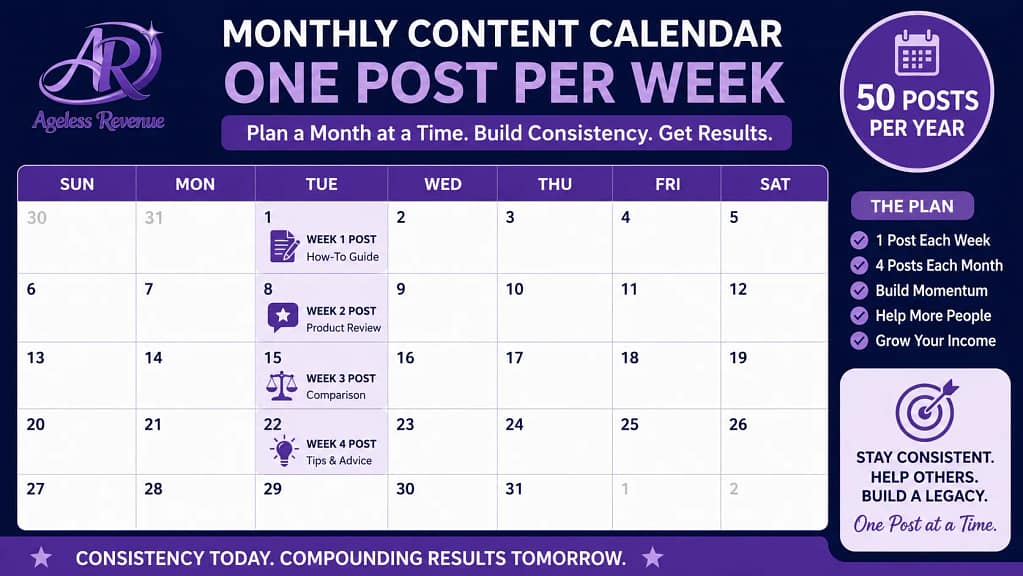
Aim for one new post per week. After six months, you will have twenty to twenty-five posts — enough for Google to start understanding your site’s topic and begin sending consistent traffic. For help choosing the right topics, read my guide to how affiliate marketing works and the role of keyword research.

Pinterest — The Best Second Channel for Retiree Bloggers

Pinterest is not social media in the traditional sense — it is a visual search engine. People use it the same way they use Google: to search for ideas, solutions, and recommendations. The difference is that Pinterest shows visual results, and a well-designed pin can bring traffic to your blog post for months or years without any paid promotion.

For retiree bloggers, Pinterest is the best second channel because it does not require a following to generate traffic. A new Pinterest account with zero followers can still surface pins to people searching relevant terms, because Pinterest ranks pins by relevance and engagement rather than follower count. This levels the playing field completely.

The workflow is simple: for every blog post you publish, create two or three Pinterest pins using Canva (free). Each pin uses a clear, searchable title (“10 Ergonomic Garden Tools for Seniors”), a clean image, and links back to your blog post. Schedule them in Canva or a free scheduler like Buffer. That is your entire Pinterest strategy for the first year.

Email Newsletter — The Audience You Own

Your email list is the most valuable long-term asset you can build alongside your blog content. Google can change its algorithm and reduce your traffic overnight. Pinterest can change its reach. Your email list cannot be taken away by any platform — when you send an email, it arrives in your subscriber’s inbox regardless of algorithms or platform changes.

For a retiree blogger, the email strategy is simple: set up a welcome email that sends automatically to every new subscriber, and then send a short email every time you publish a new post. That email does not need to be long — two or three paragraphs introducing the post and explaining why it is useful is enough. Subscribers who receive regular, helpful emails trust your recommendations more than cold Google visitors, which is why email subscribers typically convert at a higher rate than search traffic.

For getting started with email, MailerLite is free for your first 1,000 subscribers and takes about 30 minutes to set up. Read my guide on the best email marketing tools for retiree bloggers for a full comparison.

Content Marketing Strategies to Add Later

These approaches are genuinely valuable but belong in the second phase of your content strategy — after your blog, Pinterest, and email foundations are established and producing results.

Lead Magnets — A Reason to Subscribe

A lead magnet is a free resource you offer in exchange for someone’s email address. It dramatically improves your subscription rate compared to a plain “subscribe to my newsletter” prompt.

For retiree bloggers, the best lead magnets are simple and specific. A one-page PDF checklist created in Canva takes less than an hour to make and delivers immediate value. Examples that work well: “The Beginner’s Raised Garden Bed Checklist,” “The Essential Tech Setup for Retirees Working from Home,” “10 Affiliate Programs Worth Joining for Retiree Bloggers,” or “The Simple Checklist for Writing Your First Product Review.”

The topic should match your niche and solve one specific small problem quickly. Your lead magnet does not need to be elaborate — the simpler and more immediately useful, the better.

Repurposing Content — Your Biggest Time Saver

Once you have written a strong blog post, you can extend its reach significantly without writing something new. One well-researched article can become multiple pieces of content across different channels with minimal additional effort.

A single blog post can become: a short welcome email for new subscribers, three Pinterest pins targeting different keyword angles, a short summary post for a relevant Facebook group you participate in, a brief script for a simple video if you ever decide to add YouTube, and a pull-quote graphic for Instagram or social media. You wrote the content once — repurposing just reshapes and redistributes it.

This approach is particularly practical for retirees who want to publish across multiple channels without tripling their weekly workload. Write the post first, always. Then repurpose from it, never the other way around.

Guest Posts and Collaborations

Publishing a post on another blogger’s site in a complementary niche builds your authority, creates a backlink to your site (which helps your Google rankings), and introduces you to a new audience. A retiree blogger covering healthy ageing could write a guest post for a retirement lifestyle site. Someone covering craft supplies could collaborate with a blogger in the home decor space.

Guest posting works best once your own site has at least twenty published posts — it gives other bloggers something credible to link to, and your site looks established enough that the collaboration benefits both parties. Do not prioritise guest posting before your own content foundation is solid.

Community Participation

Facebook groups, Reddit threads, and niche forums in your topic area are full of people asking exactly the questions your blog posts answer. Participating genuinely — answering questions helpfully, sharing your experience honestly, linking to your posts only when they directly answer the question asked — builds your reputation and drives targeted traffic to your site.

The golden rule: give before you promote. Post ten genuinely helpful comments before you share a single link. Groups are quick to remove members who show up only to self-promote, but genuinely helpful participants often become trusted resources that group members seek out repeatedly.

Content Types That Work Best for Affiliate Bloggers

Five-card infographic showing the best content types for retiree affiliate bloggers including product reviews, comparison posts, best-of listicles, how-to guides, and resource pages
Five-card infographic showing the best content types for retiree affiliate bloggers, including product reviews, comparison posts, best-of listicles, how-to guides, and resource pages

Not all blog post formats are equally effective for affiliate income. These are the content types that generate the most traffic and conversions for retiree affiliate bloggers specifically.

Product Reviews

A genuine, first-hand product review is the highest-converting content type for affiliate blogs. When someone searches “honest review of [product name],” they are in a buying decision — they need confirmation or reassurance before purchasing. Your review, if honest and specific, reaches them at exactly the right moment.

The best reviews state the verdict in the first paragraph, cover genuine pros and cons, explain who the product is ideal for and who should look elsewhere, and use specific details that only someone who has actually used the product would know. Vague reviews that could have been written from a product listing page do not convert. Specific, personal, honest reviews do.

Comparison Posts

“Product A vs Product B” posts target readers who have narrowed their choices and need help deciding. A post comparing two ergonomic garden kneelers, two beginner watercolour sets, or two affiliate training platforms reaches a highly motivated reader who is close to purchasing. These posts work particularly well for affiliate income because the reader is already engaged in the buying decision.

Best-Of Listicles

“Best [product type] for [specific audience]” posts attract search traffic from readers in the early research phase. “Best lightweight walking shoes for women over 60,” “Best beginner sewing kits for retirees,” “Best simple cookbooks for cooking for one” — these posts rank well for specific phrases and naturally accommodate multiple affiliate links in a single article.

The key is that your specific audience qualifier (“for retirees,” “for seniors,” “for beginners over 60”) differentiates your post from generic best-of lists that target everyone and no one. Your direct audience knowledge is your competitive edge.

How-To Guides

Step-by-step guides that solve a specific problem in your niche attract search traffic and naturally mention products as part of the solution. “How to set up a raised garden bed on a budget,” “How to start watercolour painting as a complete beginner,” “How to choose an affiliate niche you will actually enjoy writing about” — these guides build trust and lead naturally to product recommendations within the steps.

Beginner Resource Pages

A “Start Here” or “Resources” page curating your best content and recommended tools gives new visitors a clear path through your site and consolidates your most important affiliate links in one place. These pages convert well because visitors who seek them out are specifically looking for guidance — they are your most motivated audience.

How to Build Your Content Marketing Plan

Six-step content marketing plan infographic for retiree bloggers showing goal setting, reader definition, channel selection, content types, calendar, and measurement

A content plan does not need to be complicated. For a retiree blogger, a simple plan you actually follow is worth far more than a sophisticated system you abandon after two weeks.

Step 1 — Set one or two clear goals

Decide what you want your content to achieve in the next three months. Realistic first-quarter goals for a new retiree blogger: publish twelve to fifteen blog posts, reach 100 monthly visitors, earn your first affiliate click, set up a welcome email sequence. One focused goal per quarter keeps your effort pointed in the right direction.

Step 2 — Know your reader

Before writing any post, be clear about who you are writing for. Write a one-sentence description of your ideal reader — for example, “I write for women aged 60 to 75 who want to start container gardening but do not know where to begin and are worried about physical limitations.” Every content decision follows from that sentence. Does this post help that person? Is this product something they would genuinely need? Is this information pitched at the right level of simplicity?

Step 3 — Choose your main channels

For a retiree affiliate blogger in 2026, the priority order is: blog posts first, Pinterest second, email list third. Everything else is optional. Do not add a fourth channel until the first three are running consistently. Adding channels too early dilutes your effort and slows your progress on all of them.

Step 4 — Choose your core content types

For the first six months, focus on three content types: one review per month of a specific product you know well, two to three how-to guides or listicles per month, and one email newsletter per week linking to your latest post. That is a complete, sustainable content strategy that will produce results within six months.

Step 5 — Create a basic calendar

A simple Google Sheet or even a paper calendar with one blog post topic per week is all the content calendar you need. Plan four to six weeks ahead so you are never wondering what to write next. When you sit down to write, the topic is already decided — you just write.

Step 6 — Measure what matters

Check three numbers weekly: website sessions (Google Analytics), affiliate link clicks (your affiliate dashboard), and email subscribers. Those three numbers tell you whether your content is attracting visitors, whether they are engaging with your recommendations, and whether you are building your owned audience. If any number is not growing, focus your next week’s effort on the channel that feeds it.

A Simple Content Marketing Plan Template

Copy this into a Google Doc and fill it in. Keep it short — one or two sentences per section. A plan you write in twenty minutes and actually use is more valuable than a twenty-page strategy document you reference once.

  • My reader: (Who exactly am I writing for?)
  • My niche: (what specific topic does my blog cover?)
  • My 90-day goal: (one specific, measurable outcome)
  • Primary channel: Blog (SEO)
  • Secondary channel: Pinterest
  • Third channel: Email list
  • Post frequency: (how many posts per week?)
  • Core content types: (reviews, how-to guides, listicles)
  • Lead magnet: (What free resource will I offer new subscribers?)
  • Affiliate programs: (Which two or three programs am I starting with?)
  • Three numbers I track weekly: sessions, affiliate clicks, subscribers

Key Principles That Make Content Marketing Work for Retiree Bloggers

Four-principle infographic for retiree affiliate bloggers showing specific beats general, helpful beats promotional, consistency beats intensity, and personal experience beats generic information

Specific beats general, always. A post targeting “retirees who want to start indoor herb gardening in a small apartment” will rank better and convert better than a post targeting “anyone who wants to grow herbs.” The more precisely you write for your actual reader, the more your content will resonate with the people who find it.

Helpful beats promotional, always. Readers who feel genuinely helped by your content trust your recommendations. Readers who feel sold to leave. The most effective affiliate content provides real value first and mentions products as natural solutions to the problems it addresses. The recommendation earns trust because the content earned it first.

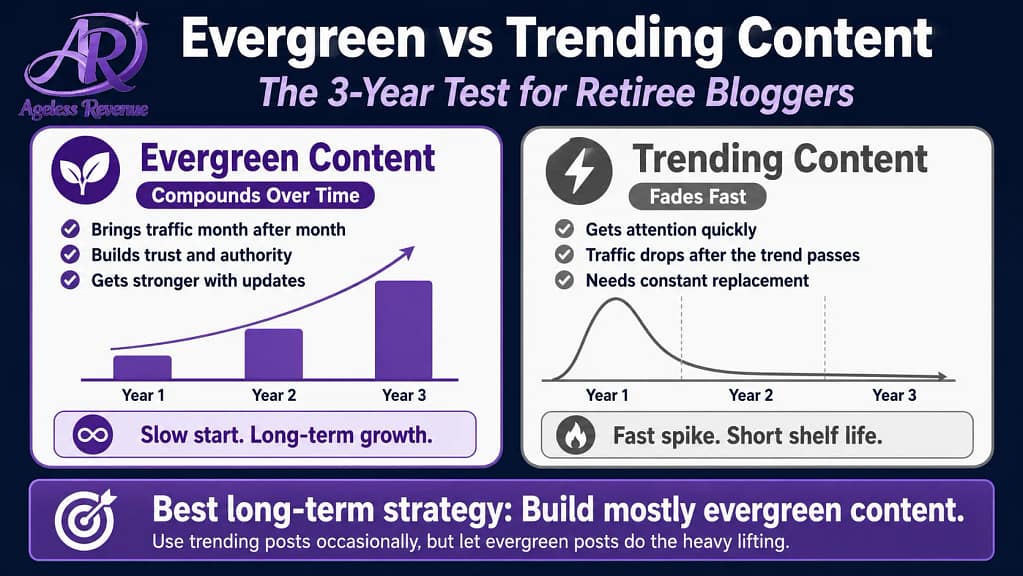
Consistency beats intensity, always. One post per week for a year produces fifty posts — a meaningful content library that Google indexes and serves to searchers regularly. Ten posts published in a burst followed by three months of silence, produce almost nothing. The compounding effect of consistent content is the most important principle in affiliate marketing, and it is the one most beginners underestimate.

Personal experience beats generic information, always. A product review written by someone who actually used the product converts infinitely better than one assembled from product listings. A gardening guide written by someone who actually gardens speaks to real readers in a way that AI-generated content never quite manages. Your genuine experience — thirty, forty, or fifty years of it — is your competitive advantage. Use it.

Best Free Tools for Retiree Blogger Content Marketing

Writing and publishing: WordPress (your blog platform), Google Docs (drafting posts before pasting into WordPress).

Keyword research: Google Search’s autocomplete suggestions and “People also ask” boxes (free), Ubersuggest free tier (three searches per day), Answer the Public free tier (two searches per day).

Graphics and pins: Canva free tier (covers everything you need for Pinterest pins and blog images).

Email marketing: MailerLite free tier (up to 1,000 subscribers, includes automation).

Analytics: Google Analytics (free, tracks your website traffic), Google Search Console (free, shows which search terms bring visitors to your site — essential for refining your content topics).

Affiliate link management: ThirstyAffiliates free version or Pretty Links free version (keeps your affiliate links organised and updatable).

You can run a complete, professional affiliate blog on all free tools. Upgrade only when a specific free tool is genuinely holding back your progress — which for most retiree bloggers, is many months away.

Frequently Asked Questions

How much content do I need before I start earning affiliate commissions?

Most affiliate programmes require at least three to five published posts before approving your application, so that is your practical minimum to get started. In terms of when you might see your first commission, most consistent bloggers see their first affiliate click within two to four weeks of publishing and their first commission within one to three months. Building toward a meaningful monthly income typically takes six to twelve months of consistent publishing.

Do I need to be on social media to make affiliate marketing work?

No. The most durable and scalable affiliate income comes from search engine traffic, not social media. SEO-optimised blog posts bring visitors while you sleep, continue working for months or years after publication, and compound over time as you add more content. Social media can supplement this, but is not required. Many successful retiree bloggers earn consistently without any social media presence at all.

How long should my blog posts be?

Long enough to genuinely answer the question, and no longer. For most affiliate blog post types — reviews, how-to guides, comparison posts, and listicles — that typically means 1,000 to 2,000 words. Thin posts under 600 words rarely rank well in competitive niches. Posts padded to 3,000 words with filler content do not rank better than well-written 1,200-word posts that say everything needed. Aim for thorough and specific rather than long.

How do I find topics to write about?

Three reliable sources: the questions your target reader is already asking (search your niche on Google and look at “People also ask”), the questions people ask in niche Facebook groups and Reddit forums, and the specific products in your niche (what would someone search before buying each one?). A running list of twenty to thirty potential topics means you never sit down to write without knowing what the post will be about.

What is the difference between content marketing and advertising?

Advertising interrupts people with a message they did not ask to see and disappears the moment you stop paying. Content marketing attracts people who are already looking for what you offer, and continues working after you publish it. A blog post you write today might generate affiliate commissions for two or three years. A paid ad generates traffic only while you are paying for it. For retirees building sustainable income on a modest budget, content marketing is almost always the more practical long-term approach.

Conclusion

Content marketing for a retiree affiliate blogger comes down to three things done consistently: writing helpful posts that answer real questions in your niche, publishing them on a regular schedule your reader can count on, and recommending products honestly within that content.

The tools are free. The strategy is simple. The challenge is patience — showing up week after week during the months when the results are not yet visible. That patience is exactly what most younger, faster-moving bloggers cannot sustain, and it is precisely what many retirees are uniquely positioned to provide.

Start with one post this week. Add one more next week. Keep going.

Your Next Step

If you do not yet have your affiliate blog set up, start with how to start your first affiliate site — it walks through every technical step in plain English. If your site is live but you are not sure which products to recommend, read my guide on starting affiliate marketing with no experience. And if you want a complete platform that gives you training, hosting, and keyword tools in one place, start your free Wealthy Affiliate account here.

Leave a Comment