Of all the tools available to an affiliate blogger, email is the one most beginners delay too long. It is easy to focus on traffic first — and traffic does matter — but an email list is the asset that makes everything else more durable. When Google changes its algorithm or Pinterest reduces organic reach, the bloggers who have an email list keep their audience. The ones who do not start again from zero.
Email marketing for retiree bloggers does not need to be complicated. You do not need elaborate automation sequences, expensive software, or a large list to see results. You need a simple way for readers to sign up, a reason for them to do so, and a regular email that feels genuinely useful — not promotional.
This is the complete hub for everything Ageless Revenue has written about email marketing. Whether you are choosing your first email platform or looking to grow your existing list, use the sections below to find exactly what you need.
🎁 Free: The Affiliate Marketing Starter Kit
Includes an email welcome sequence template and a lead magnet checklist to help you grow your first list. Free, no email required.
Quick Summary
What This Guide Covers
- Why email is the most important long-term asset for an affiliate blogger
- How to choose the right email platform without overspending
- How to grow your list from zero using simple lead magnets
- What to send, how often, and how to write emails people actually open
- Links to every detailed guide so you can go deeper on any step
Why Email Is the Most Valuable Asset You Can Build
Your blog depends on platforms you do not control. Google can update its algorithm and move your posts from page one to page three overnight. Pinterest can reduce the reach of organic pins. Social media platforms change their rules constantly. None of those things can touch your email list — because it belongs to you.
Email also converts at a significantly higher rate than cold traffic. A reader who has voluntarily given you their email address already trusts you enough to invite you into their inbox. When you recommend something genuinely useful in an email, they are far more likely to click and buy than a stranger arriving from a Google search for the first time.
For retirees, email has one additional advantage: it rewards consistency over volume. A list of 500 engaged subscribers who open your emails regularly is worth far more than 10,000 passive followers on social media. The right time to start building your list is now — even if you only have a handful of posts published.
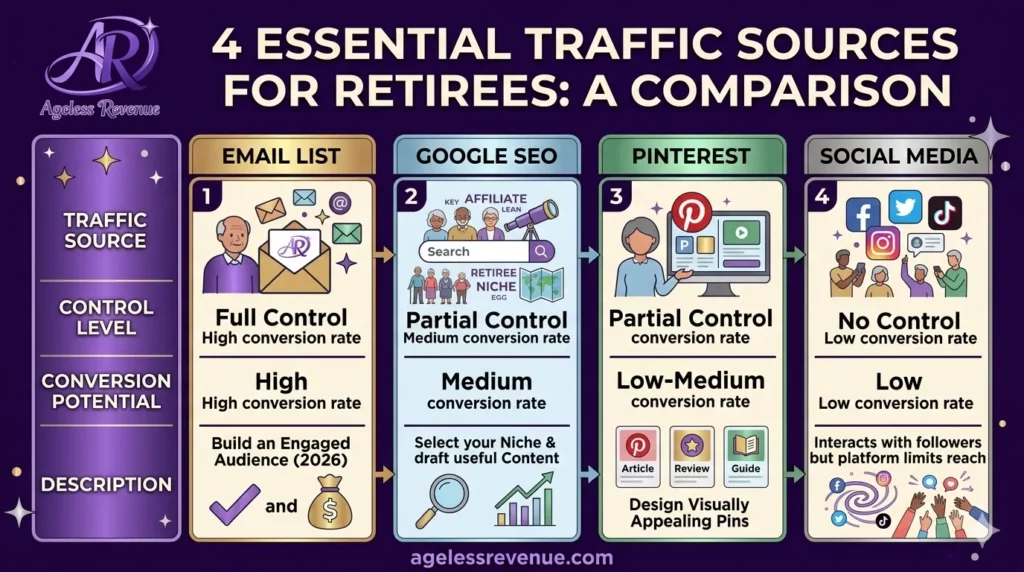
| Traffic Source | You Control It? | Conversion Rate | Affected by Algorithms? |
|---|---|---|---|
| Email List | ✓ Yes — fully | High | No |
| Google SEO | Partially | Medium | Yes — significantly |
| Partially | Low–Medium | Yes | |
| Social Media | ✗ No | Low | Yes — severely |
Step 1 — Choose the Right Email Platform
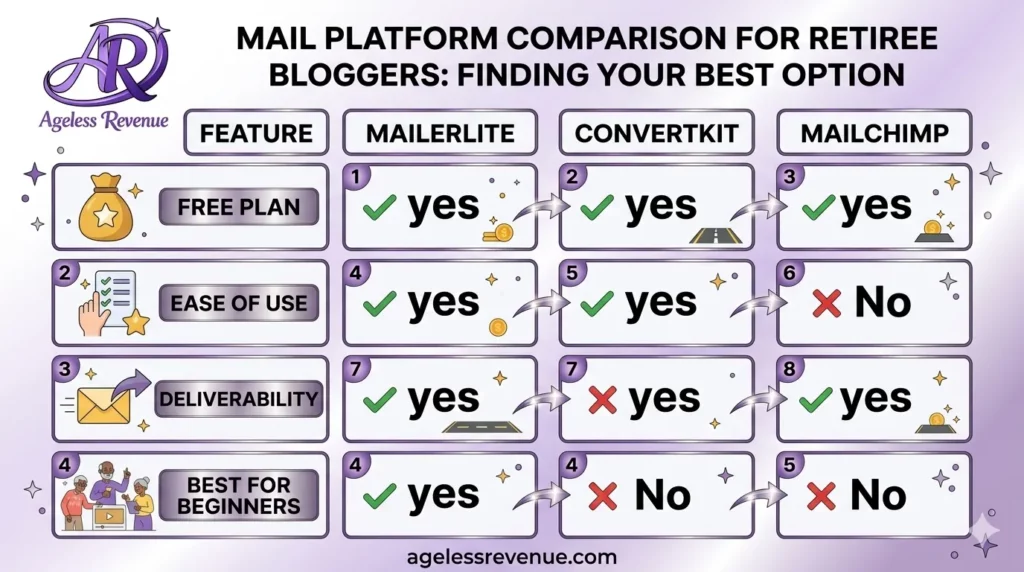
Your email platform is the software that stores your subscribers, sends your emails, and tracks who opens and clicks. For retiree bloggers starting out, the most important features are a genuinely useful free plan, a simple interface, and reliable deliverability — meaning your emails actually land in inboxes rather than spam folders.
The platform I recommend to most retirees starting out is MailerLite. It is free for up to 1,000 subscribers, has a clean drag-and-drop email builder, includes landing pages and signup forms, and has some of the best deliverability rates in the industry. You can run your entire email strategy for free until you reach 1,000 subscribers.
Other solid options include ConvertKit (strong for creators, slightly more complex) and Mailchimp (widely known, but the free plan has become more restrictive). The important thing is to pick one and start, not to spend weeks comparing platforms that all do essentially the same thing at the beginner level.
★ Start Here
The Best Email Marketing Software for Retiree Bloggers: Full Comparison
A detailed side-by-side comparison of the top platforms — free plans, pricing, ease of use, deliverability, and which is best for a retiree starting from zero.
Get the Free Email Welcome Sequence Template
A 3-email welcome sequence template included in the free Starter Kit — so new subscribers get a warm, helpful introduction to your blog from day one. No email required to download.
Step 2 — Give People a Reason to Subscribe
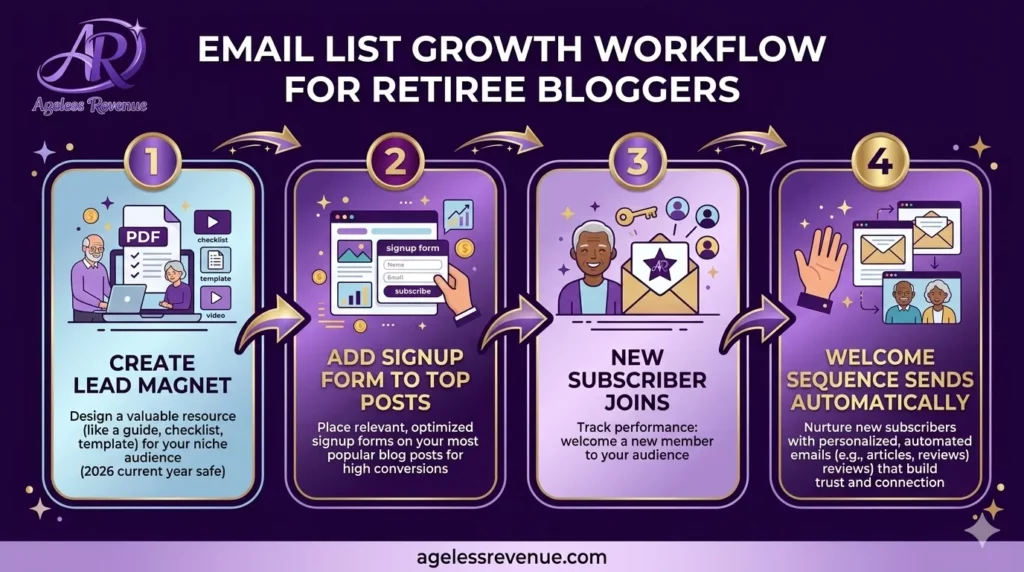
A signup form that says “subscribe to my newsletter” converts at about 1–2%. A signup form that offers something specific and useful in exchange for an email address converts at 5–15%. That difference compounds significantly over time.
A lead magnet is simply something free you offer in exchange for an email address. The best lead magnets for retiree bloggers are simple and immediately useful: a one-page checklist, a short guide, or a template. The lead magnet should connect directly to your blog’s main topic. The more specific and immediately useful, the higher your conversion rate.
Once you have a lead magnet, place the signup form in three locations: at the top of your most-trafficked posts (right below the introduction), in the middle of long-form posts (after the reader is already engaged), and in a sticky sidebar or footer if your theme supports it.
Read Next
Email List Growth Strategies for Retiree Bloggers
Practical lead magnet ideas, signup form placement tips, and low-effort tactics that grow a real, engaged list from scratch.
Read Next
Email List Segmentation for Beginners
How to organise your list so subscribers receive emails that match their interests — without complex software or advanced skills.
Step 3 — What to Send and How Often
For retiree bloggers, a simple rhythm works well: one email per week or every two weeks. Each email should feel like a note from a knowledgeable friend — not a marketing brochure. Share a tip, reference a new post, answer a question a reader asked, or recommend something you genuinely use.
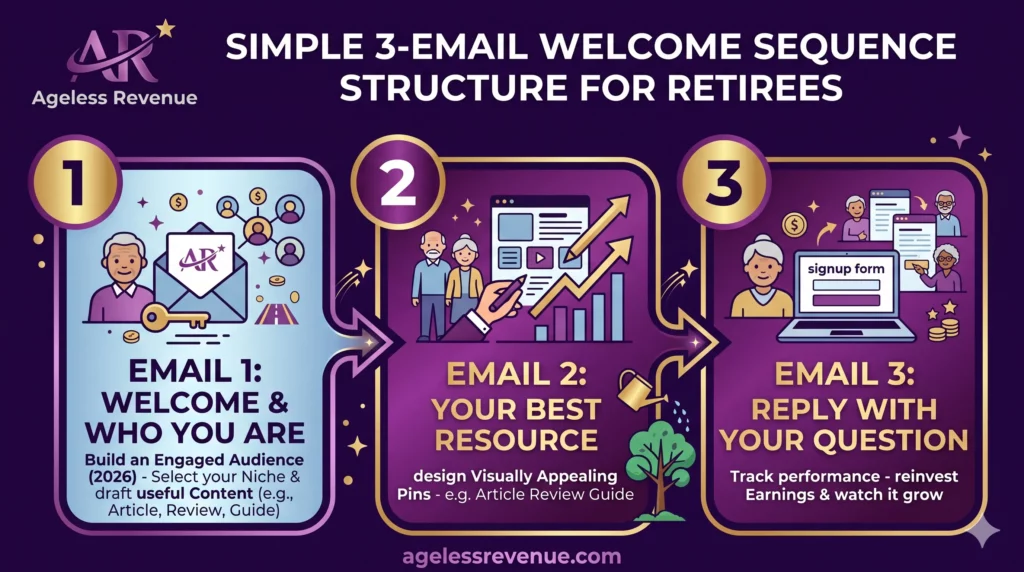
Your welcome sequence is the most important series of emails you will ever write — because every new subscriber receives it automatically. A simple three-email welcome sequence covers: email one (who you are and what to expect), email two (your single most useful blog post or resource), and email three (a gentle invitation to reply with their biggest question).
Open rates for a well-managed niche list typically run between 30 and 50 percent — far higher than the 1–3 percent organic reach on most social media platforms. That gap is why email, even with a small list, tends to outperform social media for conversions.
Read Next
Email Deliverability: Make Sure Your Emails Actually Arrive
Why emails end up in spam and the simple technical and content steps that keep yours landing in the inbox.
Read Next
Email Automation for Small Blogs: Set It Up Once, Let It Run
How to set up a simple automated welcome sequence so every new subscriber gets your best content — even while you are away from the desk.
Step 4 — Keeping Your Emails Out of Spam
Even a perfectly written email is worthless if it lands in the spam folder. The most important steps for beginners: use a custom email address from your domain (yourname@yourdomain.com rather than a Gmail address), complete the DNS authentication records your email platform recommends when you set up your account (SPF, DKIM, and DMARC), and only email people who have explicitly signed up to hear from you.
Beyond the technical setup, the best deliverability protection is content quality. Emails that people open, read, and click are signals to email providers that your messages are wanted. The most effective spam filter is a subscriber who looks forward to your emails.
Read Next
The Complete Email Deliverability Guide for Retiree Bloggers
SPF, DKIM, DMARC, and domain warming explained in plain English — plus the content habits that keep your emails landing in inboxes.
Frequently Asked Questions About Email Marketing
When should I start building my email list?
As soon as your first post is published. There is no minimum traffic threshold required before starting an email list. Even if you receive only ten visitors per day, some of those visitors may subscribe and become your most loyal long-term readers. The only wrong time to start your list is later.
How often should I email my list?
Once per week or every two weeks is a sustainable rhythm for most retiree bloggers. Consistency matters more than frequency. If life gets busy, it is fine to drop to monthly rather than disappearing for months and reappearing with an apology.
Can I include affiliate links in my emails?
Yes, with important caveats. Always check the terms of each affiliate program. Amazon Associates does not allow affiliate links in emails. Programs like ShareASale, Impact, and Wealthy Affiliate typically permit email promotion with proper disclosure. Always include a clear affiliate disclosure in any email containing sponsored links.
What is a good open rate for a retiree blogger’s email list?
Industry averages for small niche blogs run between 30 and 50 percent. If your open rate drops below 20 percent consistently, it usually signals that subject lines are not compelling enough, you are emailing too infrequently, or you have inactive subscribers who need to be removed. A clean, engaged list of 300 subscribers at 45 percent open rate outperforms a list of 3,000 with a 5 percent open rate every time.
Ready to Build Your Email List?
Download the free Starter Kit — includes a 3-email welcome sequence template and a lead magnet checklist so you can start growing your list today. No email required.