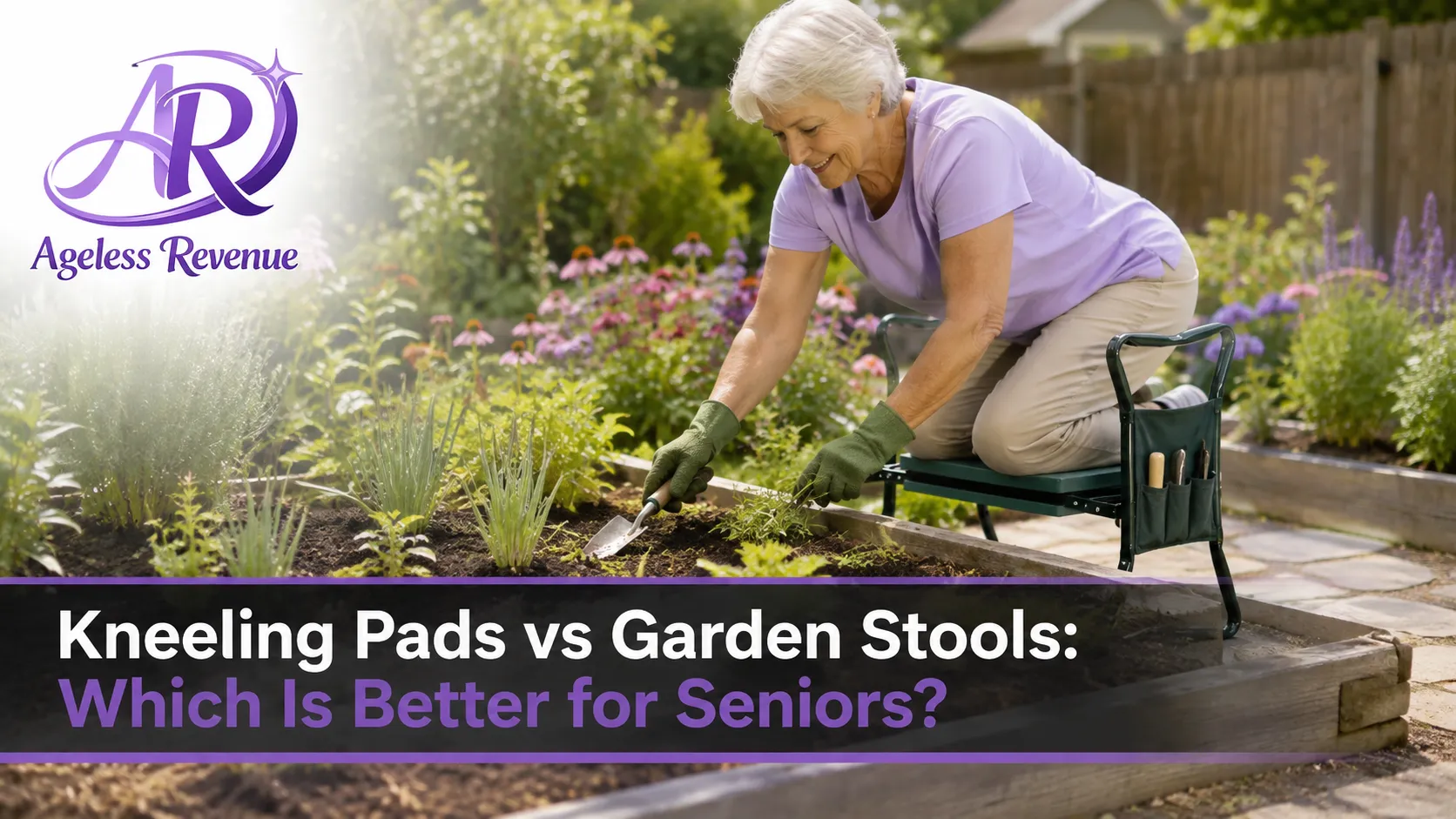
Kneeling Pads vs Garden Stools: Which Is Better for Seniors?
Affiliate Disclosure: This post contains Amazon affiliate links. As an Amazon Associate, I earn from qualifying purchases. I only recommend products I’d genuinely suggest to a friend.
If getting down to ground level in the garden — and getting back up again — has become the real obstacle to gardening, you don’t have to choose between giving up low-level tasks or suffering through them. The kneeling pad vs garden stool decision comes down to exactly one question: does your discomfort come from the ground itself, or from the up-and-down motion of getting there?
This guide breaks down which option actually solves your specific problem, and a few picks worth considering either way.
TL;DR
Kneeling Pad vs Garden Stool: What You Need to Know
- Kneeling pads solve hard, cold, or wet ground — they don’t reduce how much bending or how many times you stand back up.
- Garden stools solve the up-and-down motion itself, letting you sit at a working height instead of kneeling or bending at all.
- Combo kneeler-seat products flip between both modes, which is genuinely useful if your needs vary by task.
- Weight capacity and stability matter more on stools than most buyers expect — always check the rated capacity before buying.
- Expect to pay $20–$40 for a solid kneeling pad and $30–$60 for a stable garden stool or combo unit.
The Question That Actually Decides This
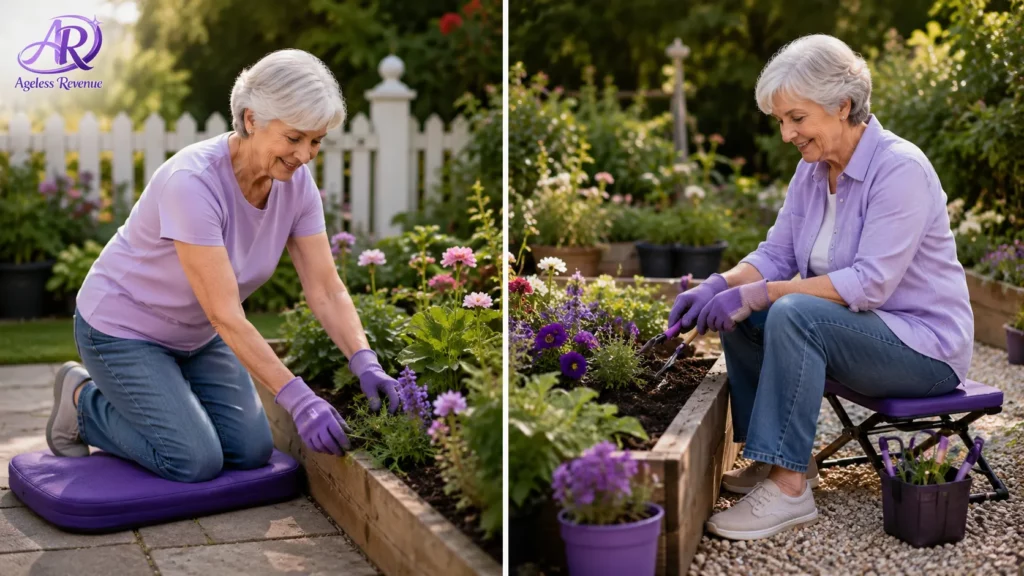
Before comparing features, it helps to get specific about what’s actually uncomfortable. If your knees or hips hurt from direct contact with hard or cold ground, but getting up and down isn’t the main problem, a kneeling pad solves that directly. If the real struggle is the repeated motion of lowering yourself down and pushing back up — which is often harder on the body than the kneeling itself — a garden stool solves that instead, since you never lower all the way to ground level.
Many people assume they need a kneeling pad because “that’s what gardeners use,” without realizing a stool would solve their actual discomfort more completely.
What a Kneeling Pad Actually Solves
A good kneeling pad is simply a firm, cushioned mat that protects your knees from hard, cold, or wet ground contact. The best ones use a dense, closed-cell foam that doesn’t compress flat under weight and resists absorbing moisture from wet soil.
Some kneeling pads include a folding frame with side handles, which double as support to push off from when standing back up — a small feature that makes a real difference if grip strength or knee stability is a concern. Without that handle support, you’re relying entirely on unassisted knee and hip strength to return to standing, which is exactly the motion many people are trying to avoid.
What a Garden Stool Actually Solves
A garden stool removes the kneeling motion from the equation entirely. You sit at a low working height — typically 12 to 18 inches — and work from a seated position without ever lowering yourself to the ground.
The tradeoff is reach. A stool puts you slightly further from ground-level soil than kneeling does, which can matter for very low tasks like planting bulbs at depth. For weeding, light planting, and most maintenance tasks, the seated height is close enough that this rarely matters in practice.
Combo Kneeler-Seat Products: The Best of Both, With One Caveat
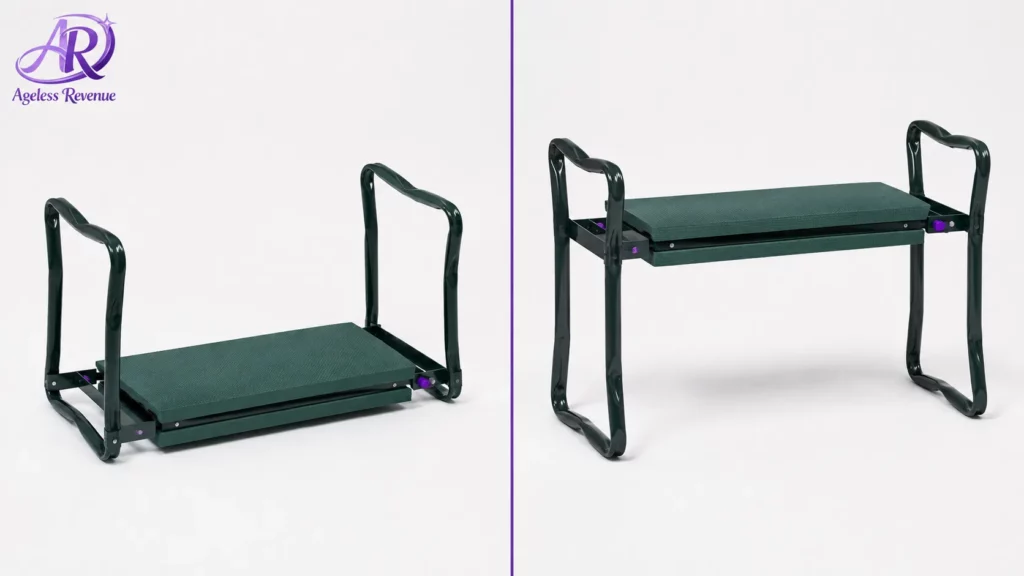
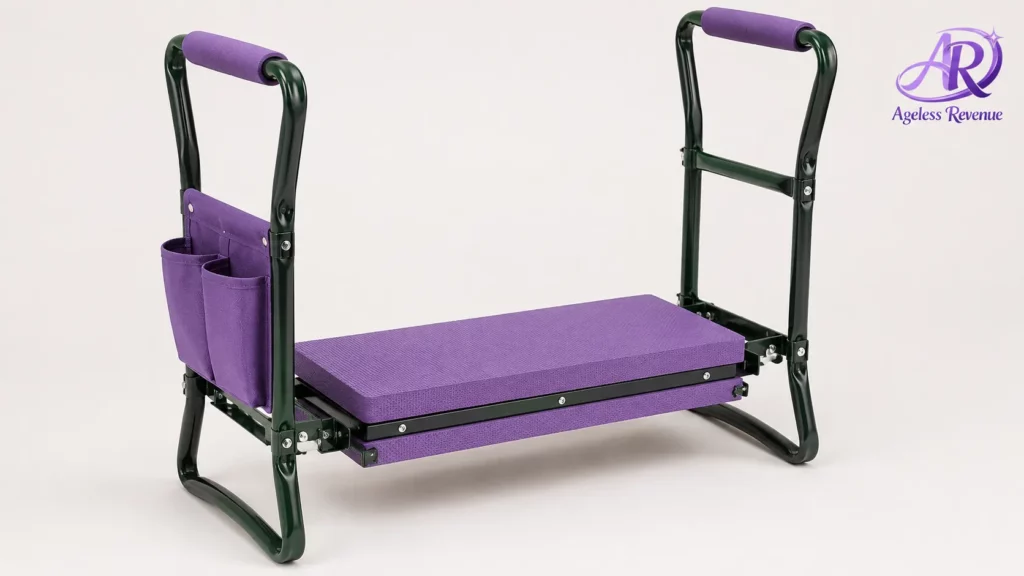
The most popular product in this category is a folding kneeler-seat combo — a padded bench that flips over to become a cushioned kneeling pad, with side handles that double as both a standing aid and a stool armrest.
This is genuinely the right answer for a lot of people, since gardening tasks vary throughout a session — some low, some at working height. The caveat is that combo units are usually less specialized at either function than a dedicated stool or a dedicated kneeling pad; the cushioning is often thinner than a purpose-built kneeling pad, and the seat height is fixed rather than adjustable like some standalone stools.
Stability and Weight Capacity: The Detail Most Buyers Skip
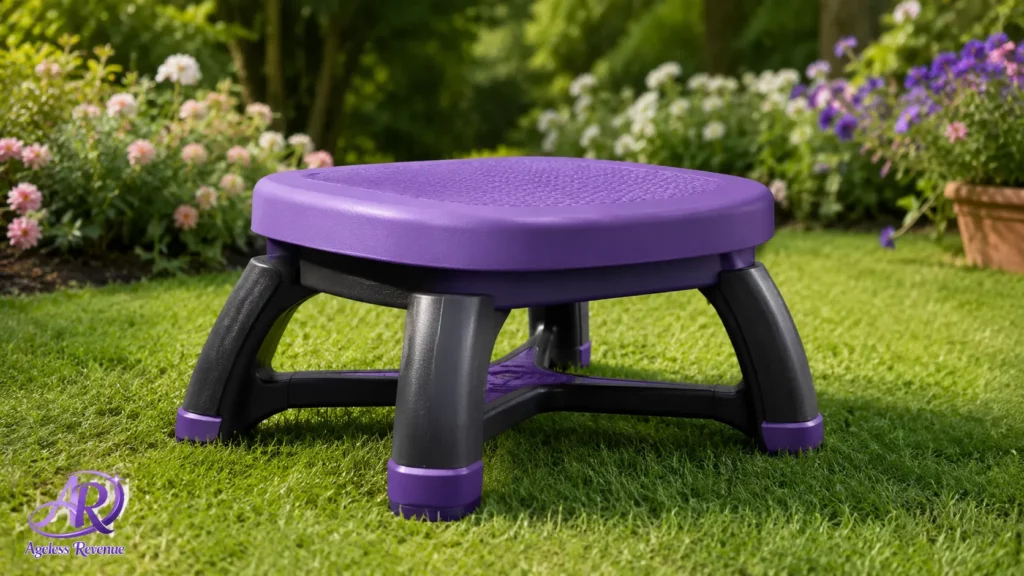
This matters more than most people expect before buying, and it’s worth checking specifically rather than assuming any garden stool will hold steady on real ground.
Look for a wide, low base — narrow-legged stools can tip on uneven soil or grass, which is a real fall risk rather than a minor inconvenience. Check the manufacturer’s stated weight capacity directly rather than assuming; capacities vary widely between models, from around 250 pounds on lighter combo units to 300+ pounds on sturdier dedicated stools.
A Few Specific Options Worth Considering
For a dedicated, high-density kneeling pad: Closed-cell foam kneeling pads without a frame are the simplest, most affordable option, and work well if standing back up isn’t the main difficulty — just protecting your knees from the ground.
For the up-and-down problem specifically: A rotating or swivel garden stool, with a wide low base and a rated capacity of 300+ pounds, solves the repeated-motion problem most directly.
For genuine flexibility between tasks: A folding kneeler-seat combo with handles gives you both modes in one product, worth the modest tradeoff in specialization if your gardening tasks vary in height throughout a session.
For rolling mobility between garden areas: A wheeled garden seat with a rolling base lets you scoot between planting rows without standing up repeatedly — useful for longer sessions covering more ground.
Prices in this category typically run $20 to $40 for a solid standalone kneeling pad, and $30 to $60 for a stable stool or combo unit — always check current pricing and weight capacity ratings before buying.
The Arthritis Foundation has general joint-protection guidance that applies directly to minimizing repeated kneeling and standing motions during activities like gardening.
The Hospital for Special Surgery also publishes guidance on assistive devices and joint protection more broadly, useful background if knee or hip discomfort is part of a wider joint-health picture.
Frequently Asked Questions
Do I need both a kneeling pad and a garden stool? Not necessarily — it depends on which problem you’re actually solving. If ground discomfort and the up-and-down motion are both issues, a combo kneeler-seat unit covers both without buying two separate products.
Are garden stools stable on uneven ground? Stability varies significantly by design. Look for a wide, low base rather than narrow legs, and check the manufacturer’s weight capacity rating directly before buying, since this varies more than most buyers expect.
What’s the actual difference in comfort between kneeling and sitting? Kneeling still requires lowering yourself down and pushing back up, even with a cushioned pad. A stool removes that motion entirely by keeping you at a seated working height throughout the task.
Can I use a kneeling pad without a frame? Yes — a simple foam pad works well if getting up and down isn’t your main difficulty, just cushioning against hard or cold ground. If standing back up is the harder part, a framed pad with handles or a stool is the better fit.
How much weight can these products typically hold? This varies by model, from around 250 pounds on lighter combo units to 300+ pounds on sturdier dedicated stools. Always check the specific product’s rated capacity rather than assuming.
Will a garden stool work for planting at real depth, like bulbs? It can be a bit more limited for very low, deep tasks compared to kneeling directly on the ground. For weeding, light planting, and general maintenance, the seated height is close enough that this rarely becomes a practical problem.
The Bottom Line
The right choice here isn’t about which product is generally “better” — it’s about correctly identifying whether your discomfort comes from ground contact or from the repeated motion of getting up and down. Answer that honestly, and the right tool becomes obvious.
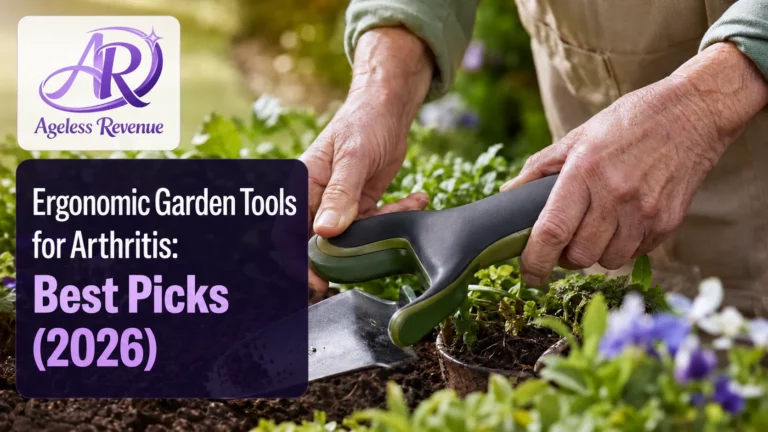
Once your posture is solved, tool comfort is the next piece. See our full ergonomic garden tools guide for arthritis to round out a gardening setup that works with your body instead of against it.