
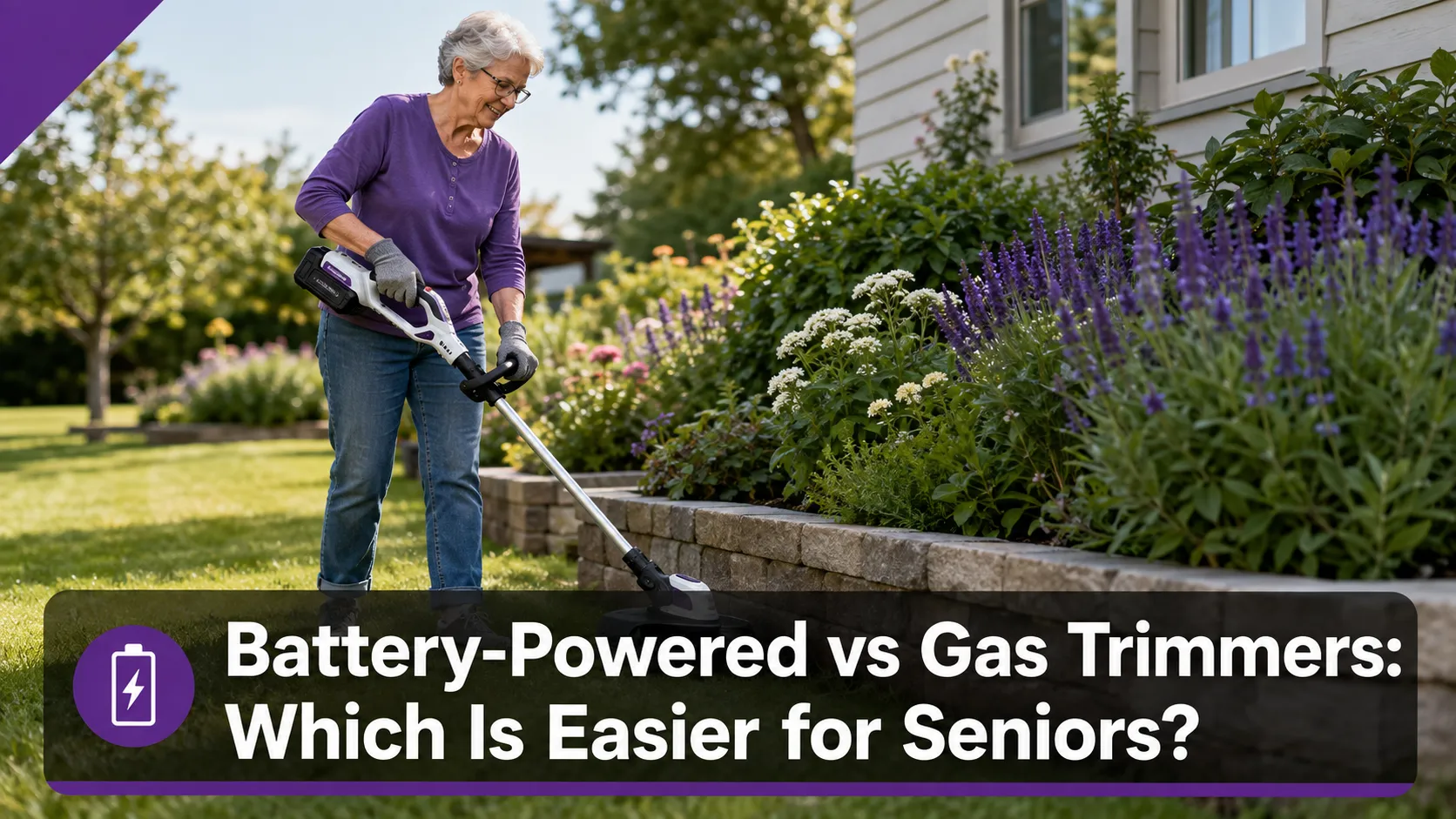
Battery-Powered vs Gas Trimmers: Which Is Easier for Seniors?
Affiliate Disclosure: This post contains Amazon affiliate links. As an Amazon Associate, I earn from qualifying purchases. I only recommend products I’d genuinely suggest to a friend.
If pulling a starter cord has become a genuine physical struggle, or the weight and vibration of a gas trimmer leaves your hands aching afterward, you’re not imagining the difference — a battery-powered trimmer is a meaningfully different tool to operate, not just a quieter version of the same one. The battery vs gas trimmer for seniors question comes down to starting effort, weight, vibration, and how much yard you’re actually covering.
Here’s how to think through the decision, and a few specific options worth considering.
Understanding the Battery vs Gas Trimmer for Seniors
When considering the battery vs gas trimmer for seniors, it’s essential to evaluate personal preferences and the specific yard work needs.
TL;DR
- Starting a gas trimmer requires real arm and shoulder strength for the pull cord — battery trimmers start with a single trigger press.
- Battery trimmers are typically 2 to 4 pounds lighter than comparable gas models, which matters over a full trimming session.
- Vibration is significantly lower on battery models, an important factor for anyone managing arthritis or reduced grip strength.
- Gas trimmers still win on runtime for very large properties — battery life is the real limiting factor to consider, honestly.
- Battery trimmers typically cost more upfront but save money over time with no gas, oil, or engine maintenance.
Starting the Trimmer: The First Real Difference
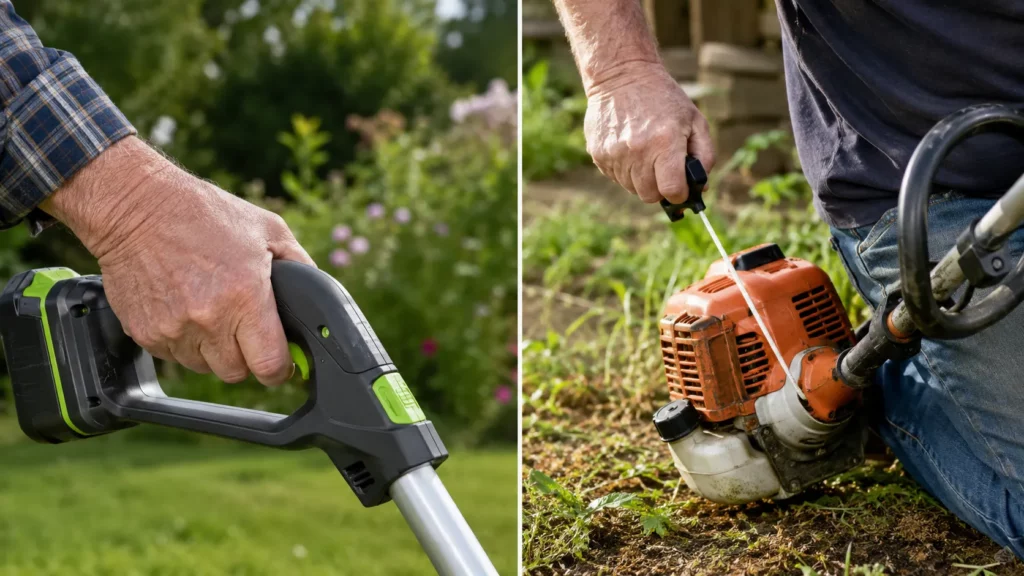
This is where the two tools diverge most dramatically. A gas trimmer requires pulling a starter cord — sometimes several times — with enough force and speed to turn over a small engine, a motion that combines grip strength, shoulder mobility, and a fair amount of arm force in a short burst.
A battery-powered trimmer starts with a trigger press, full stop. There’s no cord, no priming bulb, no choke lever to manage. For anyone with shoulder arthritis, rotator cuff issues, or general reduced upper-body strength, this single difference can be the deciding factor before any other feature is even considered.
Weight: Small Numbers That Add Up Over a Session
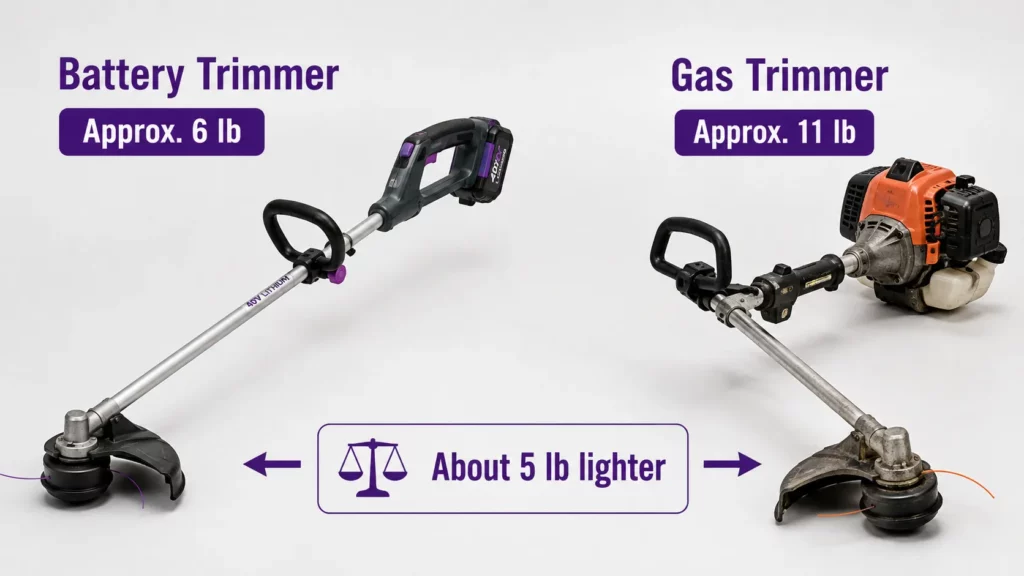
A gas trimmer typically weighs 10 to 13 pounds fully fueled, including the engine, fuel tank, and cutting head. A comparable battery trimmer usually weighs 7 to 10 pounds with the battery installed — a difference of just a few pounds that becomes much more noticeable over a 20- or 30-minute trimming session held at arm’s length.
If your yard requires more than a few minutes of continuous trimming, that weight difference translates directly into arm and shoulder fatigue, which matters for injury prevention as much as comfort.
Vibration: The Difference You Feel in Your Hands After, Not During
Gas engines vibrate constantly during operation, and while modern anti-vibration mounting has improved this, it’s still noticeably present through the handle and into your hands and wrists. Battery-powered trimmers, with no combustion engine, vibrate significantly less — often barely noticeable by comparison.
This matters most for anyone with arthritis, carpal tunnel, or reduced grip strength, since sustained vibration exposure can trigger or worsen joint discomfort, sometimes not becoming apparent until an hour or two after you’ve put the tool down.
Runtime and Yard Size: Where Gas Still Has an Honest Advantage
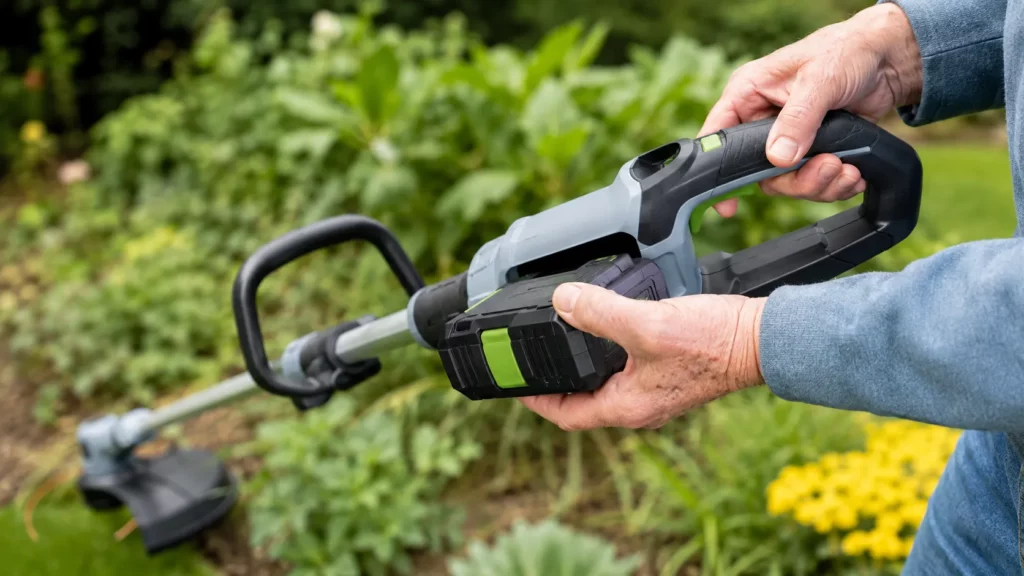
This is the one area where gas trimmers genuinely outperform battery models, and it’s worth being honest about rather than glossing over. A full tank of gas typically runs 30 to 45 minutes continuously, and refueling takes seconds. A battery charge typically provides 20 to 40 minutes of runtime depending on the model and battery size, and a full recharge takes anywhere from 30 minutes to several hours.
For a small to medium yard, a single battery charge is usually more than sufficient. For a larger property requiring extended continuous trimming, either a second battery (swapped mid-session) or a gas trimmer remains the more practical choice.
Maintenance: The Ongoing Cost Nobody Mentions Upfront
Gas trimmers require ongoing maintenance that battery models simply don’t: mixing fuel and oil at the correct ratio, replacing spark plugs and air filters periodically, and dealing with a carburetor that can gum up if the trimmer sits unused for a season, which is a common problem for occasional-use gardeners.
Battery trimmers have essentially no engine maintenance — no fuel mixing, no spark plugs, no carburetor issues. The battery itself will eventually need replacement after several years of use, but that’s a single, predictable cost rather than an ongoing maintenance routine.
A Few Specific Options Worth Considering
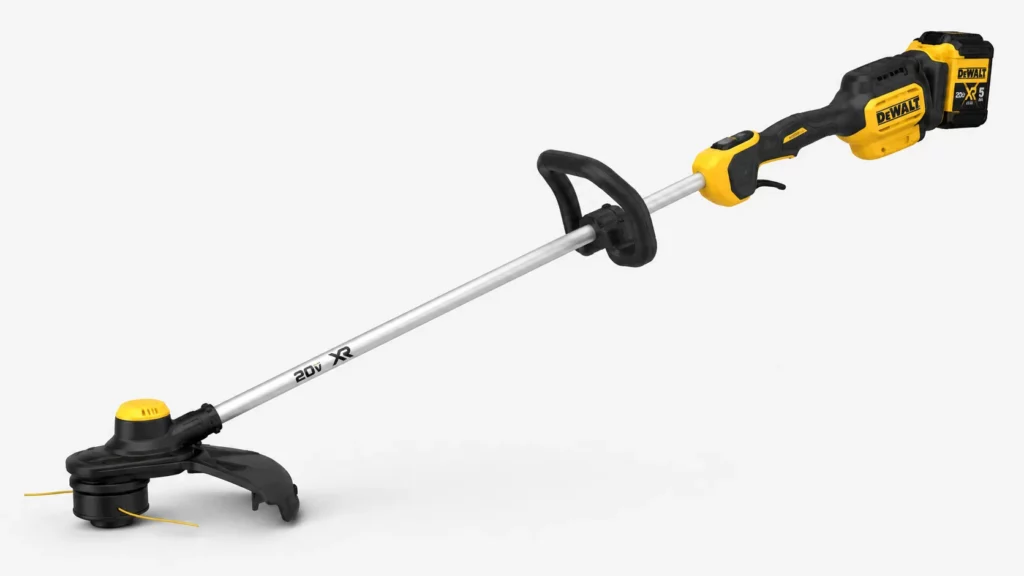
For the lightest, easiest-starting option: Battery-powered trimmers from EGO and Ryobi’s 40V and 18V lines are widely reviewed as easy-starting and comfortable for extended use, with tool-free line replacement as a common feature worth prioritizing.
For maximum runtime if your yard is large: A gas trimmer with a 4-stroke engine (rather than 2-stroke) avoids the fuel-mixing step entirely while still providing extended continuous runtime, a reasonable middle ground if battery life is a genuine concern for your property size.
For a second-battery backup: If you choose battery power for a larger yard, buying a second battery pack to swap mid-session is usually more cost-effective than buying a completely separate gas trimmer as backup.
For minimal vibration specifically: Look for battery trimmers specifically reviewed for low vibration and comfortable grip design — this varies more between models than most spec sheets make obvious, so checking user reviews specifically for this factor is worth the extra step.
Battery trimmers typically cost more upfront (often $100–$200 including a battery) than a comparable gas model, but save money over time with no fuel, oil, or engine maintenance costs.
Beyond the physical usability differences, it’s worth noting that the EPA regulates emissions from small gasoline engines like trimmers, and battery-powered alternatives produce no exhaust emissions at all — a secondary consideration for anyone weighing the two options. The Arthritis Foundation also notes that minimizing repetitive vibration exposure is a reasonable joint-protection strategy, relevant to the vibration difference between gas and battery tools.
Frequently Asked Questions
Is a battery trimmer powerful enough for thick weeds and overgrowth? Modern battery trimmers in the 40V+ range handle most residential trimming tasks, including moderately thick growth, comparably to gas models. For very heavy, overgrown clearing, a gas trimmer still has a slight edge in raw cutting power.
How long does a battery trimmer’s battery actually last (in years, not per-charge)? Most lithium-ion trimmer batteries last 3 to 5 years of regular seasonal use before capacity noticeably declines, at which point a replacement battery (not a whole new trimmer) is usually all that’s needed.
Do I need to winterize a battery trimmer like I would a gas one? No — battery trimmers avoid the fuel-related winterizing gas trimmers require (draining or stabilizing fuel before storage). Simply store the battery partially charged in a cool, dry place for the off-season.
Is starting effort really that different, or is this overstated? For most healthy adults, it’s a minor difference. For anyone with shoulder, arm, or grip limitations, the difference between a trigger press and a forceful pull-cord motion is genuinely significant and often the deciding factor.
Which is quieter? Battery trimmers are significantly quieter than gas models, both for the operator and for neighbors — a real consideration if you trim during early morning or evening hours.
Are battery trimmers actually cheaper over time? Usually, yes, once you account for the ongoing cost of gas, oil, spark plugs, and air filters over several years of gas trimmer ownership. The upfront cost is typically higher, but total cost of ownership tends to favor battery models for most residential users.
The Bottom Line
For most retirees maintaining a typical residential yard, a battery-powered trimmer solves the two biggest physical barriers — starting effort and weight — without a meaningful tradeoff for most yard sizes. Gas remains the more practical choice only if your property genuinely requires extended, continuous trimming beyond what a battery charge (or a spare battery) comfortably covers.
Pairing the right trimmer with a garden layout that needs less trimming overall is worth considering too. See our raised garden bed guide for seniors if reducing the total maintenance footprint of your yard is part of the goal.