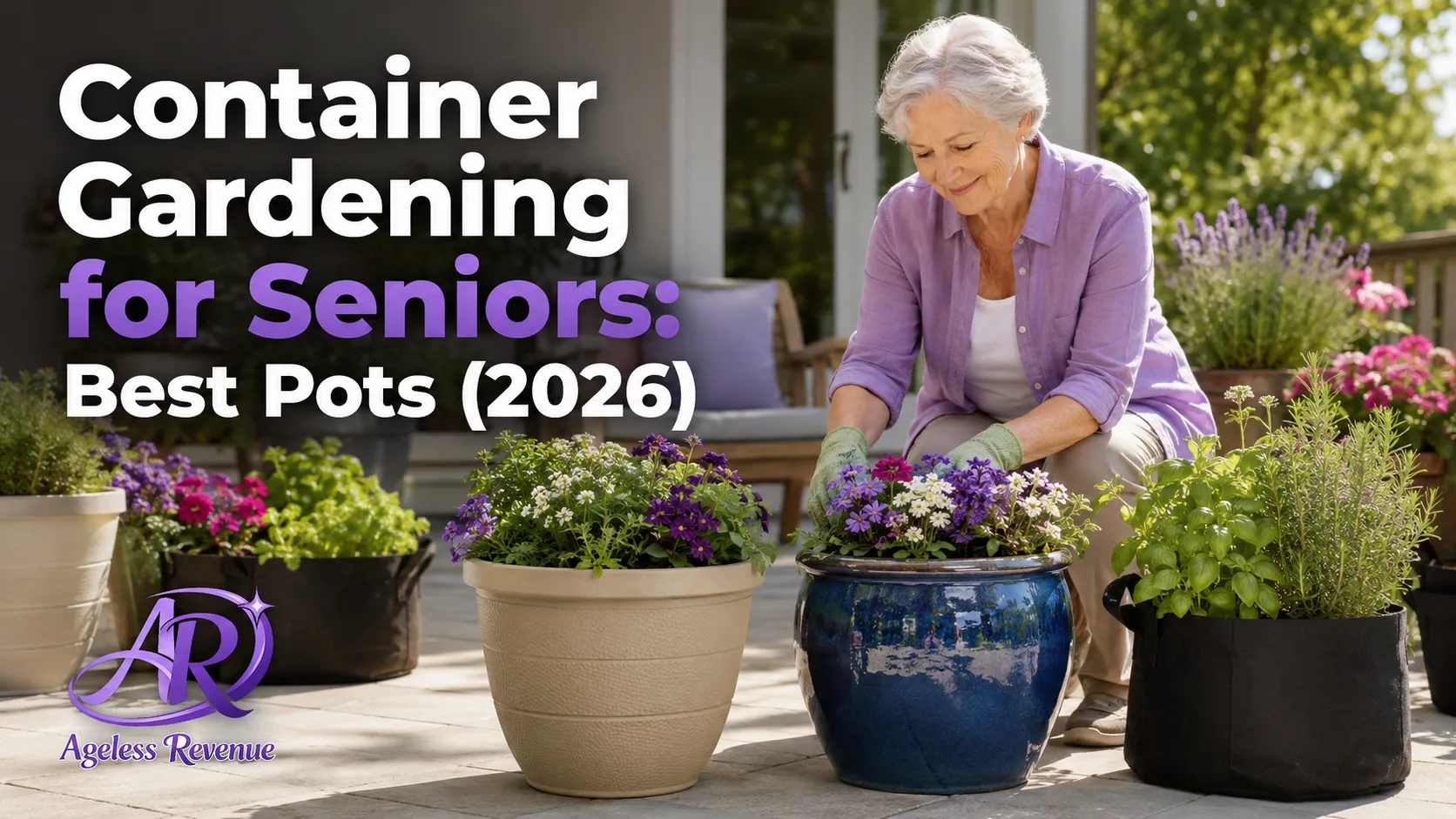
Container Gardening for Seniors: Best Pots and Planters
Affiliate Disclosure: This post contains Amazon affiliate links. As an Amazon Associate, I earn from qualifying purchases. I only recommend products I’d genuinely suggest to a friend.
You don’t need a big yard, a strong back, or years of gardening experience to grow something beautiful — container gardening for seniors makes it possible to garden meaningfully on a patio, balcony, porch, or even a sunny windowsill. The right pots and planters remove nearly every physical barrier that makes traditional in-ground gardening difficult.
Here’s what actually matters when choosing containers, and a few specific options worth considering.
TL;DR
Container Gardening for Seniors: Benefits and Best Practices
- Container weight matters as much as size — lightweight resin and fabric options are far easier to move and manage than traditional terra cotta or ceramic.
- Self-watering containers with a built-in reservoir dramatically cut down on daily watering, which matters if bending to water at ground level is difficult.
- Drainage is non-negotiable — a container without proper drainage holes will eventually drown its own plants, regardless of how well you water it.
- Elevated stands and rolling plant caddies solve the height and mobility problem without needing a full raised bed.
- A well-chosen container setup can cost as little as $20–$40 per pot, making it one of the most affordable ways to start gardening again.
Weight: The Factor That Determines How Much You’ll Actually Use Your Containers
An empty terra cotta or ceramic pot is already heavy — filled with moist soil, it can become genuinely difficult to lift, move, or reposition for sunlight, which matters enormously if you plan to chase the sun through the seasons or bring plants in for winter.
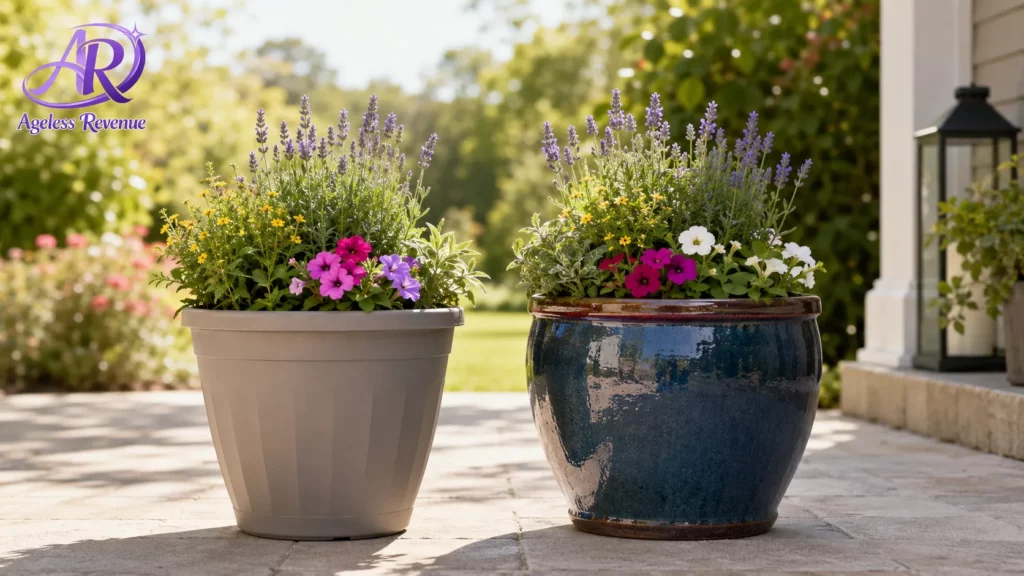
Lightweight resin, fiberglass, or high-quality plastic planters look similar to their heavier counterparts but weigh a fraction as much, both empty and filled. Fabric grow bags go even further in the lightweight direction, and fold flat for storage when not in use — a genuine practical advantage if storage space is limited.
If a raised bed might suit your space better than containers, see our full raised garden bed guide
Self-Watering Containers: The Feature That Solves the Bending Problem
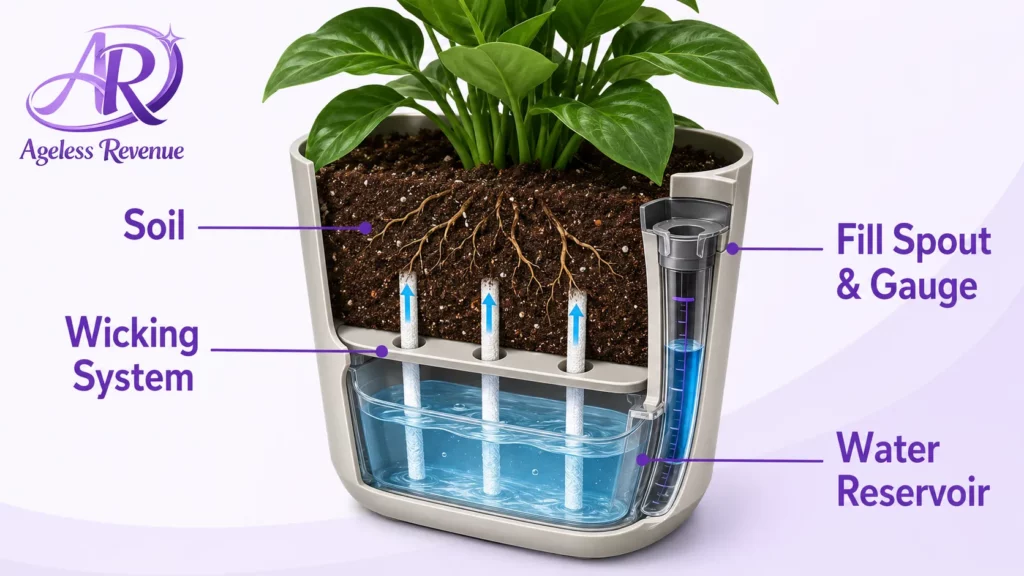
Watering is one of the most repetitive tasks in gardening, and for anyone who finds bending down to water at ground level uncomfortable, a self-watering container changes the entire experience.
These containers include a built-in water reservoir at the base, with a wicking system that draws water up to the roots as needed and a fill spout or gauge at a convenient height — meaning you can water once every several days rather than daily, and do it standing up rather than bending to soil level. This single feature is worth prioritizing above almost any other, especially for anyone managing back or knee discomfort.
Drainage: The Non-Negotiable Detail
It’s tempting to be drawn in by a beautiful decorative pot without checking for drainage holes, but this is one detail that genuinely cannot be skipped. A container without proper drainage will eventually let water pool at the bottom, drowning roots and leading to root rot, regardless of how carefully you water.
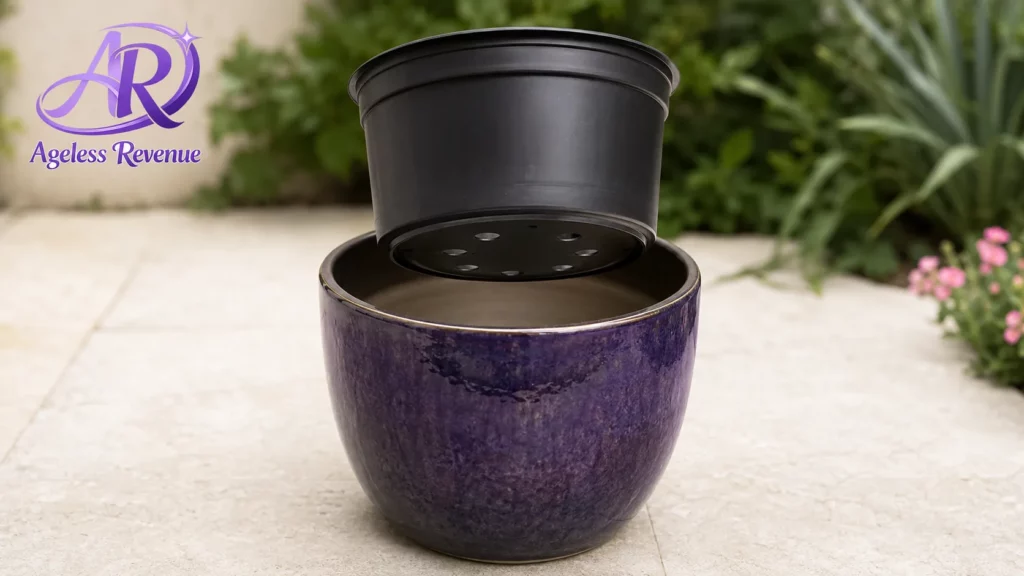
If you fall in love with a decorative pot that lacks drainage holes, the workaround is a “pot within a pot” — plant in a plain plastic nursery container with drainage, then set that inside the decorative pot, lifting it out to drain fully after watering. It’s an extra step, but it lets you use containers you’d otherwise have to skip entirely.
Elevated Stands and Rolling Caddies: Solving Height Without a Full Raised Bed
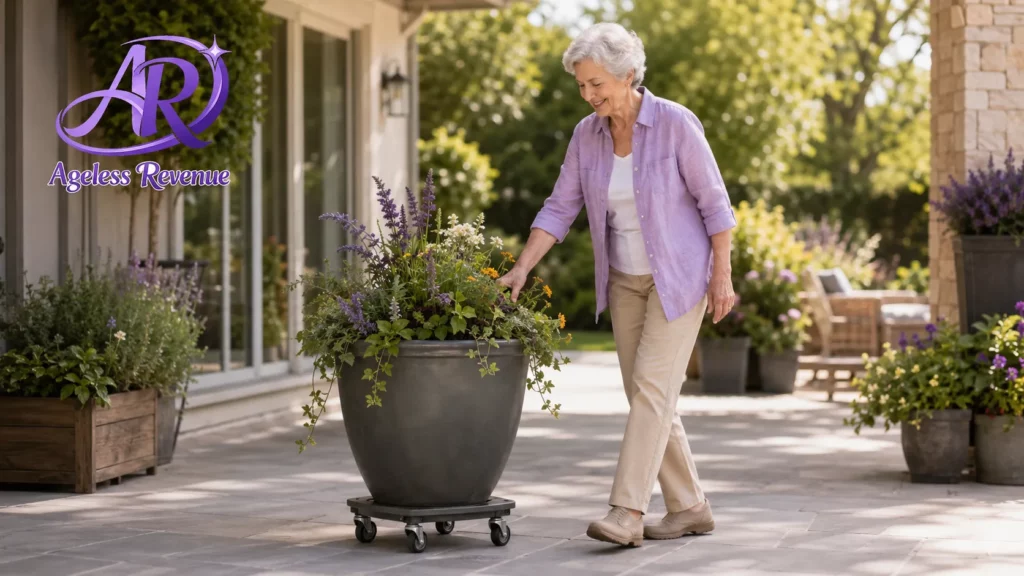
If a full raised garden bed feels like more commitment than you want, an elevated plant stand or rolling caddy achieves a similar height benefit for individual containers, at a much lower cost and with far more flexibility.
A plant stand simply lifts a container up to a more comfortable working and viewing height — useful on a patio or balcony where a full raised bed isn’t practical or allowed. A rolling caddy goes further, adding wheels underneath a container so you can reposition a heavy, filled pot to chase sunlight through the day or season without lifting it at all.
Size and Depth: Matching the Container to What You Want to Grow
Container size needs to match root depth requirements, or plants will struggle regardless of how well you care for them otherwise.
Herbs and shallow-rooted greens do well in containers as small as 8 to 10 inches deep. Tomatoes, peppers, and most flowering annuals need at least 12 to 14 inches of depth and a container holding several gallons of soil to thrive through a full season. Root vegetables like carrots need the deepest containers of the common options, generally 14 to 16 inches minimum.
Not sure what to plant in your containers this season? See our full beginner gardening guide.
Material Beyond Weight: What Actually Lasts Outdoors
Beyond weight, container material affects how well it holds up to weather and how much it retains moisture.
Glazed ceramic holds moisture well and looks attractive, but is heavy and can crack in freezing temperatures if left outside year-round. Resin and fiberglass composites resist cracking and fading far better across seasons, while staying lightweight. Fabric grow bags breathe well, preventing the root overheating that can happen in dark plastic pots during hot weather, though they dry out faster and need more frequent watering as a result — a genuine tradeoff worth knowing before you choose.
A Few Specific Options Worth Considering
For low-maintenance, low-effort watering: Self-watering resin planters with a built-in reservoir and water-level gauge are widely available and consistently among the most-recommended options for anyone who wants to minimize daily watering tasks.
For maximum lightness and flexibility: Fabric grow bags in the 5- to 15-gallon range are inexpensive, fold flat for storage, and work well for vegetables and larger annuals, provided you’re comfortable with slightly more frequent watering.
For a patio or balcony with limited floor space: Vertical tiered planter stands maximize growing area in a small footprint, a good option for herbs and shallow-rooted greens specifically.
For repositioning heavy containers easily: A rolling plant caddy, sized to match your largest container, removes the need to lift a full, heavy pot at all when chasing sunlight or bringing plants in for the season.
A solid container setup can be built for as little as $20 to $40 per pot, making this one of the most affordable ways to start (or restart) gardening, especially compared to a full raised bed installation.
NC State Extension’s guide to accessible gardening covers container gardening alongside raised beds and garden tables, with useful guidance on choosing container height and placement for physical comfort. And per the National Institute on Aging, light regular activity like tending a container garden supports balance and mood in older adults — one more reason it’s worth setting up a system you’ll actually keep using.
Frequently Asked Questions
Is container gardening a real alternative to a raised garden bed, or just a smaller version? It’s a genuine alternative with its own advantages — lower cost, complete portability, and the ability to garden even without any yard space at all, on a balcony or patio. A raised bed suits larger-scale growing; containers suit flexibility and smaller spaces.
Do self-watering containers really reduce how often I need to water? Yes, generally to once every several days rather than daily, since the built-in reservoir provides a steady water supply the plant draws from as needed. Exact frequency still depends on plant type, container size, and weather.
What size container do I need for tomatoes or peppers? Look for at least 12 to 14 inches of depth and a container holding several gallons of soil — anything smaller will likely restrict root growth and reduce how productive the plant can be through a full season.
Can I use decorative pots that don’t have drainage holes? Not directly for planting — but you can use the “pot within a pot” method, planting in a plain container with drainage holes and setting that inside the decorative pot, then lifting it out to drain after watering.
What’s the lightest container material available? Fabric grow bags are generally the lightest option, both empty and filled, and fold flat for storage. Resin and fiberglass composites are the lightest rigid option if you prefer a more traditional pot shape.
Do containers need to be brought inside for winter? It depends on the material and your climate — glazed ceramic can crack in freezing temperatures if left outside, while resin and fiberglass composites generally tolerate winter weather better. Fabric bags can typically be emptied and stored flat for the season.
The Bottom Line
Container gardening removes nearly every physical barrier that makes traditional gardening difficult, without requiring a big investment or a large space. Prioritize weight, self-watering capability, and proper drainage, and you’ll have a setup that’s genuinely enjoyable to maintain.
Ready to think bigger? See our full raised garden bed guide for seniors if you find yourself wanting more growing space than containers alone can offer.