SEO for Social Media Marketing: 10 Proven Techniques to Boost Your Website Traffic
SEO and social media marketing are often treated as separate worlds, but they’re far more powerful when they work together. Search engines help people discover you when they’re actively looking for answers. Social platforms help you build relationships, visibility, and brand recognition. When you use SEO thinking in your social media strategy, every post, profile, and link works harder for you.
Instead of guessing what to post or hoping something “goes viral,” SEO for social media marketing gives you a practical framework. You choose topics based on real search demand, use language your audience already types into search bars, and send people to optimised pages on your site that convert traffic into subscribers, leads, or sales.
If you want to see how social strategy fits into the bigger picture, pair this guide with Social Media Affiliate Marketing. This way, you’ll have both the high-level plan and the search-focused tactics to back it up.
Affiliate disclosure: This post contains affiliate links. If you buy through them, I may earn a small commission at no extra cost to you.
The 80/20 Rule: Focus Your SEO Efforts Where Social Media Responds

The 80/20 rule, also known as the Pareto Principle, says that roughly 80% of your results come from about 20% of your efforts. In SEO for social media, that means a small number of posts, topics, and platforms are probably responsible for most of your traffic.
Instead of trying to be everywhere with everything, you zoom in on what’s already working. Which social posts send the most traffic to your website? Which blog posts or landing pages get shared or saved the most? Which keywords, hashtags, or topics generate the best engagement?
Use your analytics to identify that “golden 20%.” In Google Analytics and your social insights, look for top landing pages from social traffic, top social posts by clicks and saves, and top referral platforms (Pinterest, Facebook, Instagram, YouTube).
Once you know your winners, double down. Expand those topics into new posts, refresh the original content, create spin-off videos, carousels, or Stories, and keep linking back to your best-performing, SEO-optimised pages. This is exactly how many brands grow traffic without burning out: they stop trying to do everything and instead create more of what already works.
Why So Much Content Gets No Traffic (and How Social SEO Fixes That)
A huge percentage of content on the web gets little or no traffic from Google. Often it’s not because the topics are bad, but because the content doesn’t truly match what people are searching for, or it lives in a “lonely corner” of a site with no links, no shares, and no ongoing promotion.
SEO for social media marketing helps you avoid that fate by using real search terms from your audience in your headlines, captions, and hooks; linking your social posts to specific, relevant pages instead of just your homepage; and turning your best content into ongoing campaigns instead of one-time posts.
Instead of just publishing and hoping, pair each important article or page with a small “social promotion plan.” For example: announce the article with a main post and an eye-catching image, follow up with 2–3 micro-posts pulling out key tips or quotes, create a short video or Reel summarising the core idea, and pin or feature the post on your profile for a week.
When you keep sending traffic and engagement signals to your SEO-focused content, you give it many more chances to be discovered, linked to, and ranked.
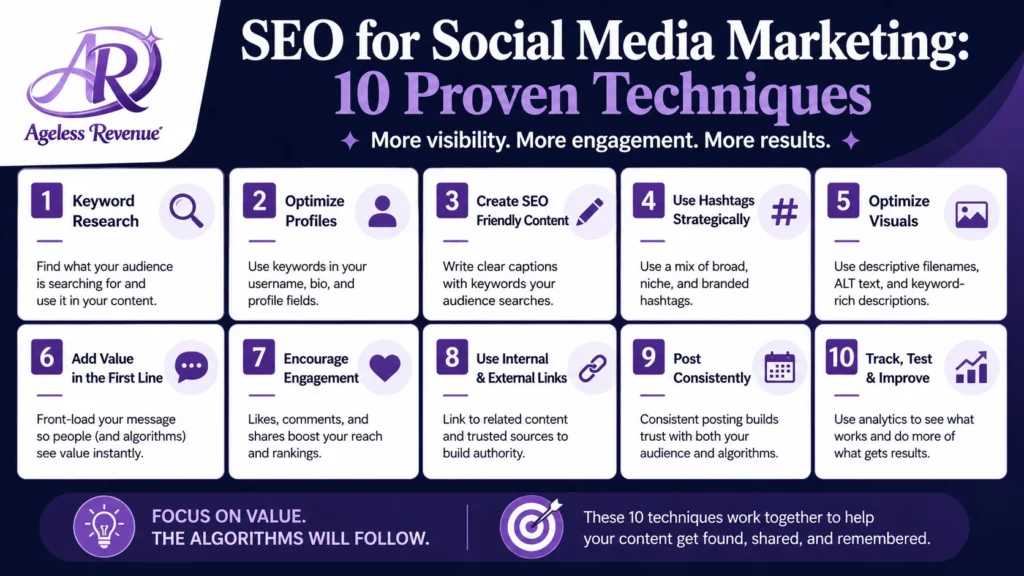
10 Proven SEO Techniques for Social Media Marketing
1. Start With Audience and Keyword Research
SEO always begins with understanding what people are searching for. For social media, this means listening to the words your audience uses in comments, emails, and DMs; typing topics into each platform’s search bar and noting the suggested phrases; and using a dedicated keyword tool, such as Wealthy Affiliate’s Jaaxy, to find long-tail phrases connected to your niche.
Make a list of 10–20 core keywords and questions your audience cares about. Use these in your blog post titles and subheadings, your social captions and hooks, and your video titles and descriptions on YouTube, Instagram, TikTok, and Pinterest.
If you’re still getting comfortable with keyword basics, Getting Started With Affiliate Marketing as a Retiree offers a solid foundation that you can apply to SEO, content, and social strategy.
2. Optimize Your Social Profiles Like Mini Homepages
Your social profiles are often the first thing people see when they discover you. Treat them like mini SEO-optimised homepages. Make sure your profile contains a clear value statement using one or two main keywords, a link to a focused, relevant page rather than just your generic homepage, and contact info or a lead magnet that matches your main topics.
Search engines index many social profiles, and social platforms themselves have powerful internal search. When you use the right phrases in your name, handle, and bio, you make it easier for people to find you wherever they search.
3. Match Every Social Post to a Specific URL
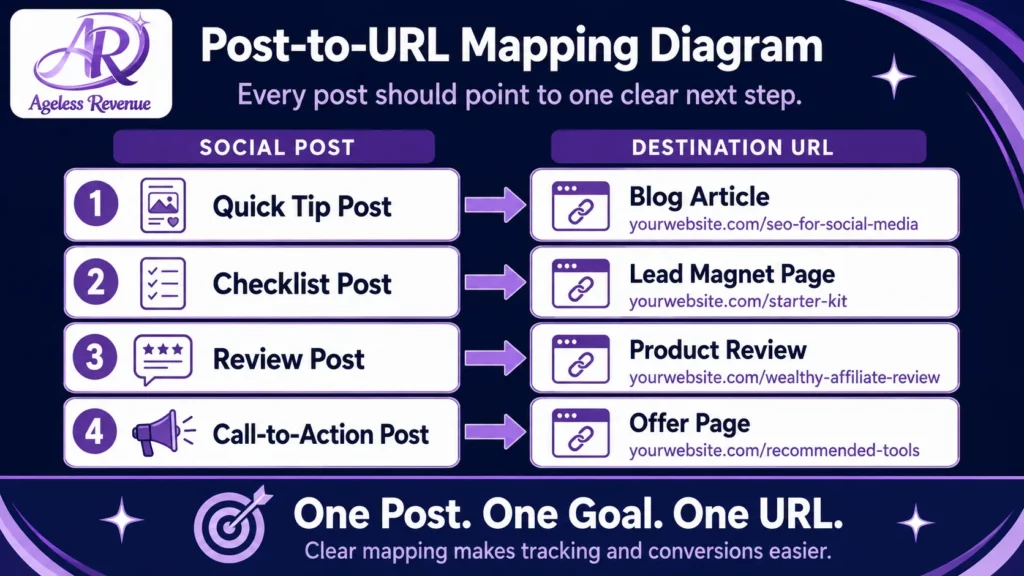
Random posts with no clear next step waste attention. A post that ties to a specific page on your site helps both SEO and conversions.
For your main content pieces — guides, reviews, or tutorials — create a simple rule: every important page gets its own mini “social campaign.” For example, if you publish a guide on social affiliate strategies like Social Media Affiliate Marketing Best Practices, plan multiple posts that all point back to that URL over several weeks.
This repeated linking sends consistent traffic to the same URL (giving Google more engagement data), makes it easier to measure which posts drive the most clicks, and reinforces the topic you want that page to rank for.
4. Use SEO-Friendly Captions and Hooks
Hooks are where SEO and social scroll behaviour meet. A strong hook uses the keyword or topic your audience searches for, a clear benefit or outcome, and simple, conversational language. Examples: “Struggling to turn social media into real website traffic? Try these 3 SEO tweaks.” Or: “SEO for social media marketing doesn’t have to be complicated. Start with your profile bio.”
Use your core keyword once in the first line where it fits naturally. Then speak directly to the problem or transformation your audience cares about.
5. Make Your Images and Video Descriptions Discoverable
Images and videos are often shared more than text alone — but they also need SEO attention. Give every image a descriptive file name and alt text on your website. Use keywords in YouTube video titles, descriptions, and tags. Add on-screen text that includes key phrases, which also helps with accessibility.
Platforms like Pinterest and YouTube behave like search engines, so SEO principles apply directly. A well-optimised pin or video can keep sending website traffic for months or years.
6. Repurpose High-Performing Content for New Social Formats
When a blog post or video performs well in search, that’s a signal: people care about that topic. Use it as a “content hub” for social media.
From one strong article you can create short tips for carousels or text posts, a summary video or Reel, quote graphics with key lines or stats, and a Q&A session answering comments and follow-up questions. Each of these social pieces can link back to the original SEO-optimised page, reinforcing its authority and keeping traffic flowing.
7. Build Credibility With Social Proof and User-Generated Content
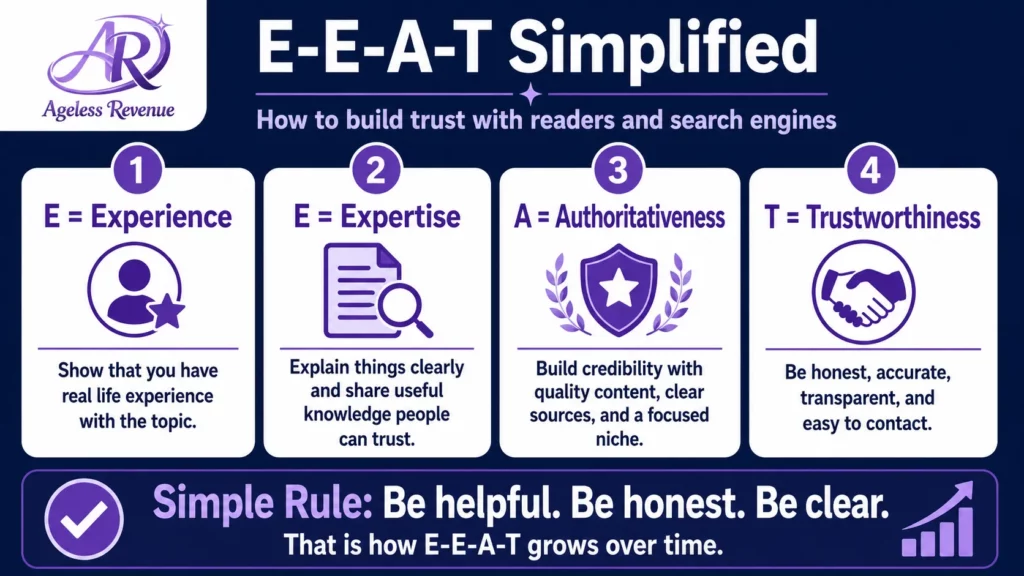
In classic SEO, we talk about experience, expertise, authoritativeness, and trustworthiness. Social media is a perfect place to showcase that: share screenshots of positive comments, DMs, or reviews; repost user-generated content where people use your advice or products; and highlight case studies and before/after stories.
When these stories live on both your social feeds and your website, they strengthen your credibility signals. People who discover you on social are more likely to click through to your site — and stay — if they see real-world proof of your results.
8. Connect Your Social Strategy to a Solid SEO Foundation
Even the best social posts won’t help much if your website is slow, confusing, or hard to navigate. Make sure your site supports what you promote on social through three things: content (make sure the pages you link to are clear, valuable, and easy to read), code (use fast hosting, mobile-friendly design, and clean structure so pages load quickly when people click from social apps), and credibility (display consistent branding, an About page, contact details, and trust signals like testimonials).
9. Track the Right Metrics Across SEO and Social
SEO for social media marketing is a long game, so you’ll want to track both search and social metrics: which posts send the most clicks to your site, which pages get the most traffic from social, how long social visitors stay on your site, and which platforms bring the best subscribers or customers.
Use your website analytics alongside social dashboards to spot patterns. Over time, this helps you answer key questions like “Is Instagram or Pinterest better for my niche?” and “Which topics actually drive results?”
10. Learn From Social SEO Experts and Keep Experimenting
The rules and features on each platform change constantly, but the principles stay the same: understand your audience, create helpful content, and make it easy to discover and share.
It’s worth occasionally reviewing expert resources and testing one or two new tactics at a time. You don’t need to implement everything at once — small experiments add up.
Frequently Asked Questions
What does SEO for social media marketing actually mean?
SEO for social media marketing means using search-friendly strategies in your social profiles, posts, and the content you link to so people can discover you more easily — both on search engines and within the search features of each social platform.
Does social media activity directly affect my Google rankings?
Likes and shares don’t automatically boost rankings, but they can indirectly help SEO. Great social content leads to more people visiting your site, linking to your content, and searching for your brand by name — all of which support long-term search visibility.
Should I use the same keywords on my website and my social media posts?
Yes, it usually helps to keep a consistent core set of keywords across your website and social media, while adapting the wording to fit each platform. This reinforces what you want to be known for and makes your brand more recognisable wherever people find you.
How can I find good keywords for social media SEO?
Start with your audience’s language. Pay attention to the phrases they use in comments and questions, then plug those into a keyword tool and your social search bars to see related terms. Look for long-tail, conversational phrases you can naturally weave into headlines, descriptions, and captions.
How long does it take to see results from SEO for social media marketing?
Results aren’t instant, but small improvements can show up within weeks. As you consistently optimise your profiles, captions, and content — and keep linking back to strong pages on your site — you’ll typically see more steady traffic and engagement building over several months.
Conclusion: Let SEO and Social Media Work Together
SEO for social media marketing isn’t about gaming algorithms or posting non-stop. It’s about understanding what your audience is searching for, optimising your profiles and posts around those needs, linking consistently to strong, helpful content on your website, building credibility with real stories, engagement, and social proof, and using data to double down on what works and quietly drop what doesn’t.
When you combine a focused SEO strategy with smart social media marketing, each post has a purpose and every click has somewhere valuable to land. Start with one or two techniques from this guide and layer on more over time. The goal isn’t perfection — it’s steady, sustainable growth in the right direction.
For next steps, keep building your foundations with Getting Started With Affiliate Marketing as a Retiree and explore how to turn your social visibility into income with Social Media Affiliate Marketing Best Practices.
For a structured platform that includes the Jaaxy keyword tool and training to put these techniques into practice, try Wealthy Affiliate free →
This post contains affiliate links. If you buy through them, I may earn a small commission at no extra cost to you.