How To Monetize Social Media Channels in 2026 (Beginner-Friendly Guide for Retirees)
Social media in 2026 isn’t just for family updates, cute pet videos, or sharing vacation photos. It has become a real marketplace — where everyday people can earn income by teaching, recommending, reviewing, entertaining, or simply sharing what they know.
The good news? You don’t need to be a “tech person” or a full-time influencer to monetise. Many retirees do best with a calm, helpful approach: choose one topic you enjoy, share consistent value, and build trust over time.
The even better news? You don’t have to rely on just one income method. In fact, the smartest creators and affiliate marketers use multiple, small income streams that work together — so if one changes (like an algorithm update), you’re not starting over.
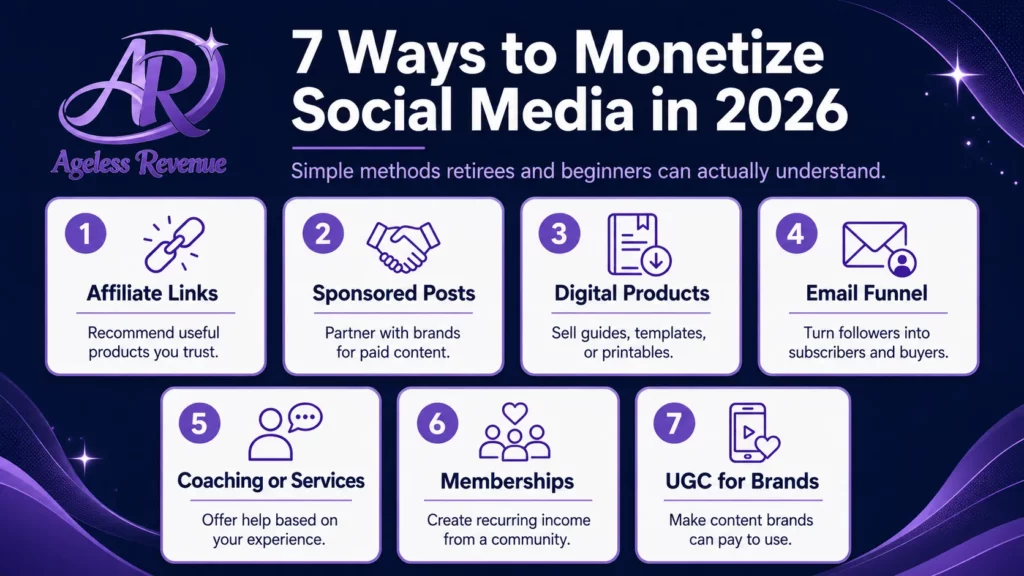
In this guide, you’ll learn a simple, retiree-friendly way to monetize social media channels in 2026 using platform tools, affiliate marketing, brand partnerships, your own products and services, and licensing — without overwhelm.
New to affiliate marketing? Start here first: Getting Started With Affiliate Marketing as a Retiree.
Affiliate disclosure: This article contains affiliate links. If you buy through them, I may earn a commission at no extra cost to you.
TL;DR
If you want to monetise social media in 2026 without getting overwhelmed:
Additionally, understanding how to effectively monetize social media channels can greatly enhance your ability to generate income from your online presence.
- Pick one platform to focus on (for 60–90 days)
- Pick one audience and one helpful topic (example: “simple online income for retirees”)
- Start with one primary income stream (affiliate marketing is often easiest)
- Add a second stream once you’re consistent (subscriptions, sponsorships, or a small digital product)
- Use simple disclosures and stay compliant with FTC guidance on endorsements and reviews
- Track just a few numbers each week (reach → clicks → conversions)
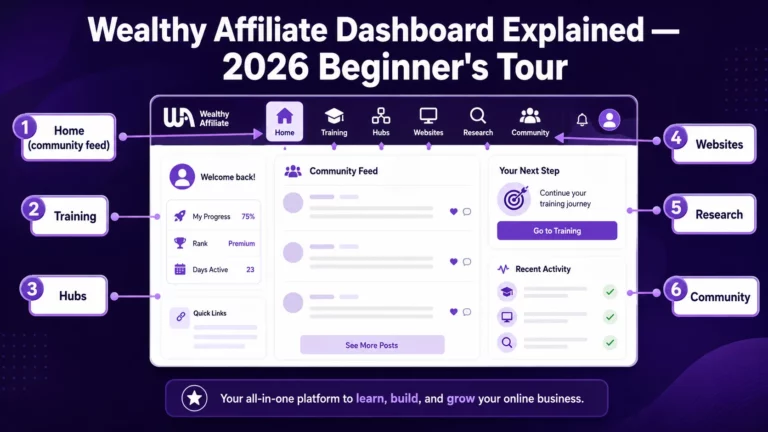
If you want a structured way to learn affiliate marketing and build a website that supports your social media efforts, check out Wealthy Affiliate and read my Wealthy Affiliate Review first.
Step 1: Choose a “Monetisation-Friendly” Foundation
Before we talk tools and tactics, let’s make sure you have the foundation that makes monetisation easier.
1) Pick a clear audience. You’ll earn faster when people immediately understand who you help. Examples: “retirees starting online income,” “beginner-friendly tech tips,” “simple wellness for stiff joints,” “budget-friendly travel after 60.”
2) Choose a simple content lane. Pick one problem you enjoy helping with. You can always expand later. Content lanes that monetise well: how-to tutorials, product comparisons, checklists and starter kits, reviews with real-world pros and cons, and mistakes to avoid (these build trust fast).
3) Use E-E-A-T the easy way. Experience: “Here’s what I tried.” Expertise: “Here’s the simple way to do it.” Authority: “People come back, save, share, ask questions.” Trust: “I’m honest, consistent, and I disclose.”
Your goal in 2026 isn’t to be the loudest. It’s to be the most helpful for a specific group.
Step 2: Leverage Platform-Native Monetisation Tools
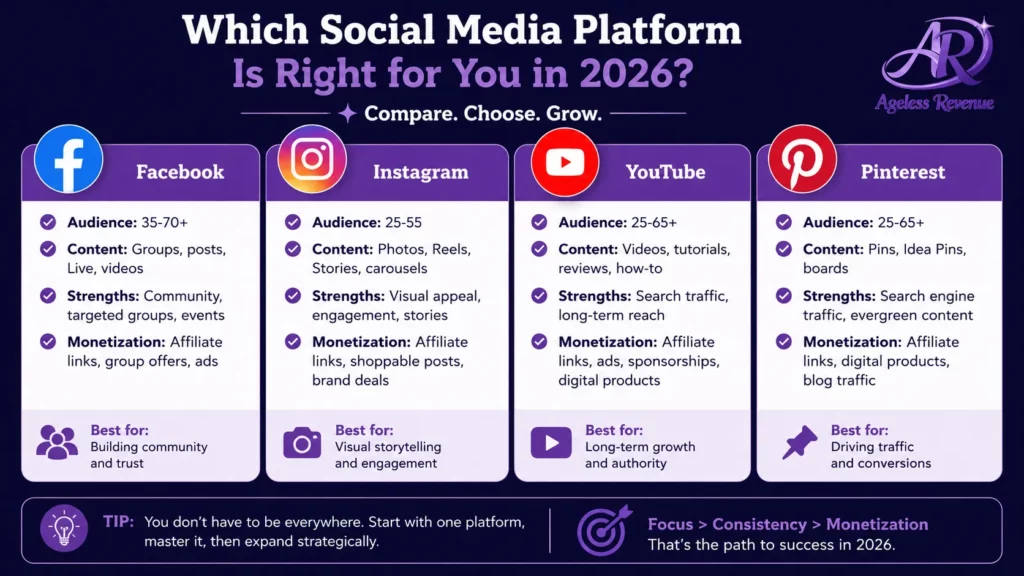
Most major platforms now offer built-in monetisation tools. These are attractive because the platform handles a lot of the payment infrastructure.
YouTube: ads + memberships + more. YouTube monetisation is often the most stable long-term because videos can keep getting views for years. You typically monetise through the YouTube Partner Program (YPP). Beginner tip: you don’t need to be on camera. Screen recordings, voiceovers, slides with narration, and hands-only demos all work.
Instagram: subscriptions + bonuses (varies). Instagram has subscription-style tools in some regions that let followers pay for exclusive content. It works well if you already have a small but loyal audience. Beginner tip: subscriptions work best with something simple and repeatable, like a weekly beginner Q&A or a monthly checklist.
Facebook: Stars + community monetisation. Facebook has “fan support” tools like Stars in eligible areas and is strong for retirees because community-building feels natural there, especially via groups. Beginner tip: if you prefer typing to video, Facebook can still monetise well through helpful posts, group discussions, and optional live Q&A sessions.
TikTok: creator rewards + gifts (varies by region). TikTok’s monetisation programmes have changed over time and availability depends on location and account eligibility. Beginner tip: TikTok rewards consistency and clarity — “one tip per video” often beats complicated content.
Step 3: Diversify With Affiliate Marketing
If you want the most beginner-friendly monetisation method, affiliate marketing is usually it — because you don’t need platform eligibility, brand deals, or thousands of followers.
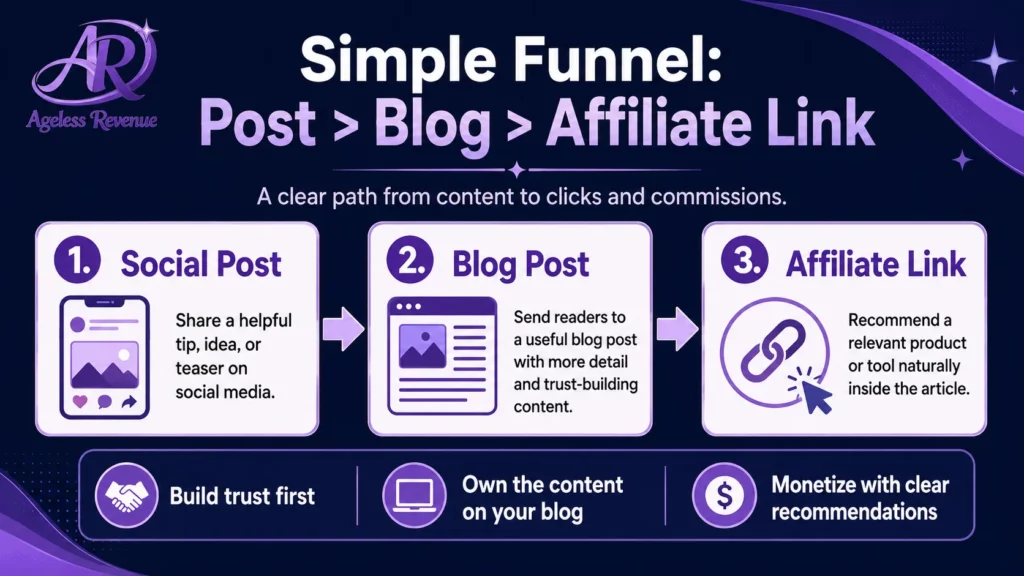
How affiliate marketing fits social media. You create helpful content, then recommend tools or products that solve the problem you’re talking about. People click your tracking link, and you earn a commission if they buy.
To build your affiliate foundation, use Starting Affiliate Marketing With No Experience and How to Build Your First Affiliate Website.
A smart “social to website” system. Instead of dropping affiliate links everywhere, do this: post helpful content on social media, point people to a related blog post on your website, and place affiliate links inside the blog post (with disclosure). This works because your website gives you more space to explain, lets you build email subscribers, and makes your content less at the mercy of platform changes.
Where Wealthy Affiliate fits. If your topic is “affiliate marketing for beginners,” one of the simplest offers to recommend is a step-by-step training platform. You can learn the full system — website, content, and traffic — with Wealthy Affiliate. If you want the honest breakdown first, read my Wealthy Affiliate Review.
Step 4: Add Sponsored Content
Sponsored posts can pay well, but they’re easiest once you can show consistent posting, audience engagement, and a clear niche.
What brands actually pay for: awareness (reach), trust (your recommendation), and conversions (sales or signups).
Retiree-friendly sponsorship formats. You don’t have to do flashy ads. Sponsored content can be a calm tutorial using the product, a “day-in-the-life” post, a review with honest pros and cons, or a simple demo.
How to avoid the biggest sponsorship mistake. Don’t say yes to products you wouldn’t recommend. One mismatched sponsorship can damage trust faster than it earns money.
Step 5: Create Income With Your Own Products and Services
If you want more control over your income, your own products or services are powerful — because you set the price, keep the customer relationship, and build a real asset.
Easy digital products for beginners. Great “first products”: printable checklists, planners, simple templates (social captions, content calendars), short eBooks, and very short, very focused mini-courses. Best practice: build your first product from questions people already ask you.
Services that retirees often do well with. If you like helping people directly: 1:1 coaching calls (beginner-friendly guidance), small group workshops, or “setup help” sessions (Pinterest setup, blog basics, etc.).
Step 6: Direct Fan Support
Many creators now use “fan support” models: memberships and subscriptions, donations and tips, or paid communities. This method works best when your audience feels like they “know you” and trust you.
Retiree-friendly membership ideas: monthly “office hours” Q&A, a weekly accountability thread, a resource library (checklists and tutorials), or an optional member-only live workshop.
Step 7: Content Licensing
Licensing is when someone pays to use your content — photos, videos, graphics, or even short clips. What can be licensed? Original photos (travel, lifestyle, hobbies), short video clips (hands-only demonstrations, scenic clips, product usage), and educational assets (diagrams, illustrations — if original).
How to make licensing easier: keep files organised (folders and filenames), track where your content is used and what rights you granted, and use simple agreements covering scope, duration, and payment. Licensing is especially attractive because it can pay you again for work you’ve already created.
A Simple 30-Day Plan to Monetise Your Social Media
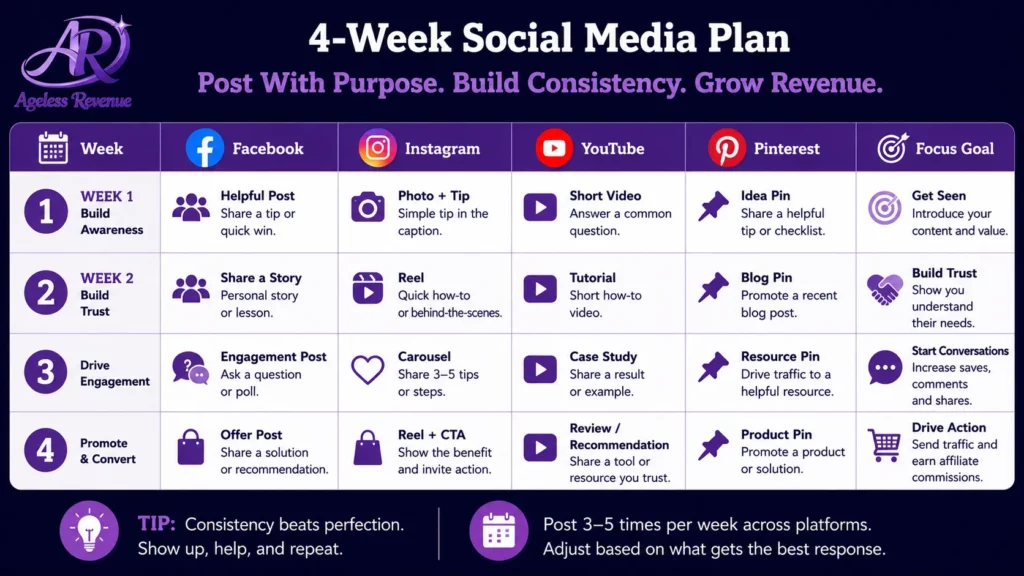
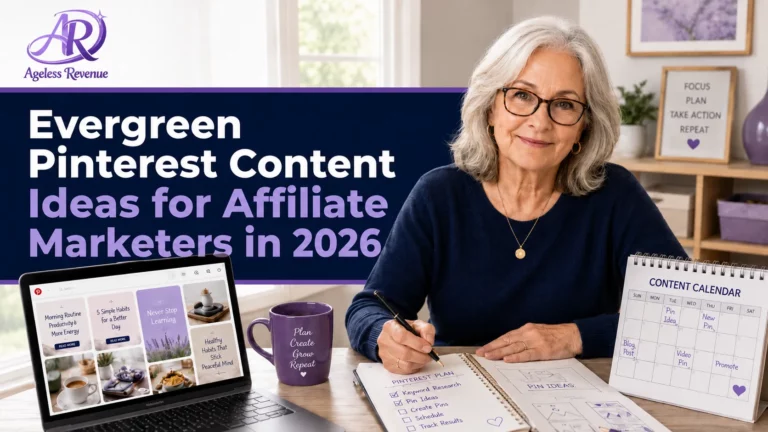
Week 1: Setup and clarity. Choose one platform. Update your bio (who you help and the result). Create one “Start Here” post and pin it.
Week 2: Content rhythm. Post 2 helpful tips. Post 1 story or lesson learned. Ask 1 simple question for engagement.
Week 3: Add your first monetisation layer. Pick one: add your first affiliate recommendation, or create a simple freebie that leads to an email list.
Week 4: Improve what’s already working. Repeat the best-performing post style. Create one “best for beginners” post. Track clicks and conversions.
If you want a ready-made system that ties social, website, and affiliate income together, start with Social Media Affiliate Marketing.
What to Track (So You Grow Income Without Guessing)
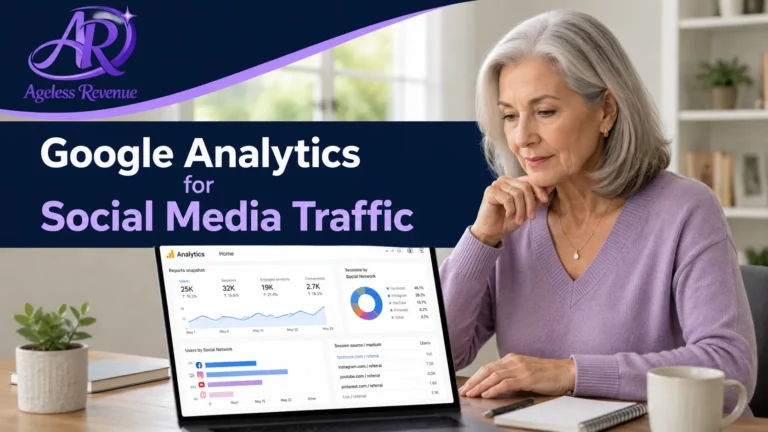
You only need a few numbers: reach (how many people saw it), engagement (comments, saves, shares), clicks (did they take action?), conversions (did clicks turn into sales?), and revenue (what’s worth repeating?).
A weekly habit that works: look at your top 3 posts, identify what they have in common (topic, format, hook), and make 2 more posts like that next week.
Frequently Asked Questions
Do I need a big following to monetise in 2026?
No. A small audience that trusts you can convert better than a large, uninterested one.
What’s the easiest monetisation method for beginners?
Affiliate marketing is often the simplest starting point because you can begin with a small audience and no platform eligibility requirements.
Can I monetise without showing my face?
Yes. You can do voiceovers, screen recordings, slides, photos, or hands-only demos.
How do I stay compliant with affiliate links and sponsorships?
Use clear disclosures and keep them obvious, following FTC guidance on endorsements, influencers, and reviews.
Which platform is best for retirees?
Many retirees find Facebook and YouTube easiest for trust-building, while Pinterest can be great for calm, evergreen traffic. The best platform is the one you’ll use consistently.
Conclusion
Monetising social media in 2026 is less about “going viral” and more about building a stable system: choose a platform, serve a clear audience, build trust with consistent value, start with one income stream, then add a second and third over time.
If affiliate marketing is your main path — especially for retirees who want a calmer approach — I recommend pairing social media with a simple website so you’re building a long-term asset. If you want step-by-step training, tools, and community support, explore Wealthy Affiliate and begin at your own pace.
This article contains affiliate links. If you buy through them, I may earn a commission at no extra cost to you.