Email Marketing for Retiree Bloggers: The Complete Guide (2026)
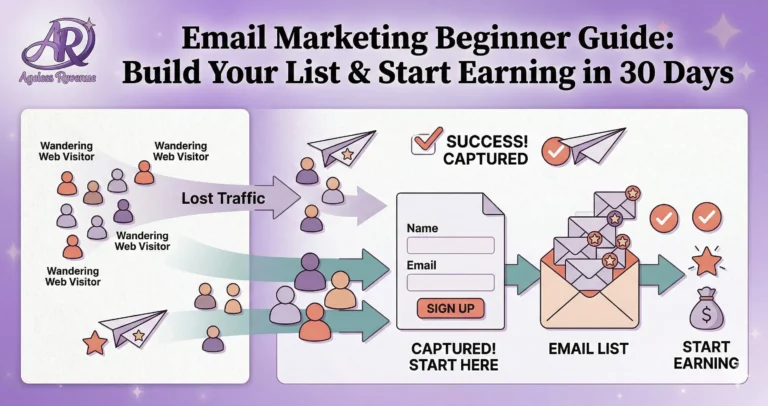
Of all the traffic sources available to an affiliate blogger, email is the only one you fully own. This is especially true for those focusing on email marketing for retiree bloggers.
Google can change its algorithm and reduce your search traffic overnight. Pinterest can adjust how it surfaces pins. Facebook can limit organic reach. Your email list cannot be taken away from you. The subscribers who chose to hear from you are yours — regardless of what any platform decides tomorrow.
For retiree bloggers building long-term affiliate income, this matters more than it does for younger bloggers with time to rebuild from platform disruptions. Email is the most stable, highest-converting, and most personal channel available to you. This guide shows you exactly how to use it.
Understanding email marketing for retiree bloggers is crucial for success in this evolving landscape.
Affiliate disclosure: This post contains affiliate links. If you buy through them, I may earn a small commission at no extra cost to you.
TL;DR
- Email is the only traffic source you fully own — start building your list from day one.
- MailerLite is the right email platform for most retiree bloggers — free for 1,000 subscribers.
- A lead magnet (free resource in exchange for an email address) accelerates list building significantly.
- A 4-email welcome sequence builds trust before you send any affiliate recommendations.
- Email affiliate recommendations convert at a higher rate than any other channel.
- Send consistently — one email per week or fortnight — rather than in sporadic bursts.
Why Email Matters More Than Social Media for Retiree Affiliate Bloggers
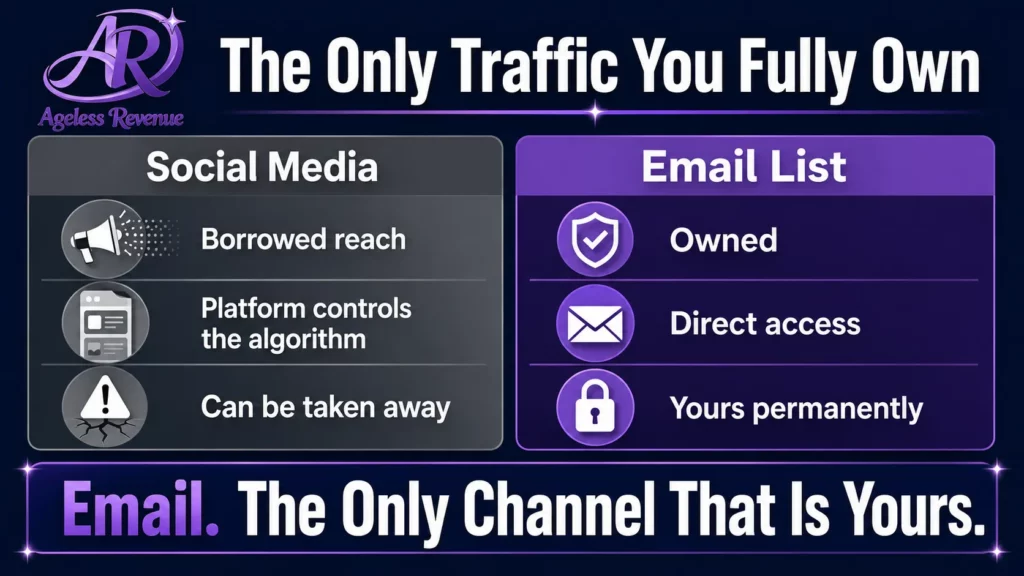
Social media reach is borrowed. When you build a following on Pinterest, Facebook, or any other platform, you are building on land you do not own. The platform sets the rules, controls the algorithm, and can change both at any time.
Email is different. When someone gives you their email address, they have made an active, personal choice to hear from you. They typed their address into a form, confirmed their subscription, and told their inbox provider that your emails are welcome. That level of intentional consent produces a reader relationship that no social media platform can replicate.
The numbers bear this out. Email typically converts at 2–5% for affiliate recommendations. Social media converts at under 1%. A list of 500 engaged subscribers in a specific niche will generate more affiliate income than 5,000 casual social media followers.
For retiree bloggers specifically, email has another advantage: the demographic. Adults over 60 check email consistently and regularly. They are not chasing trends across seven platforms. They open emails from sources they trust. Build that trust, and email becomes your most reliable affiliate revenue channel.
Email Marketing for Retiree Bloggers: Key Strategies
Step 1: Choose Your Email Platform
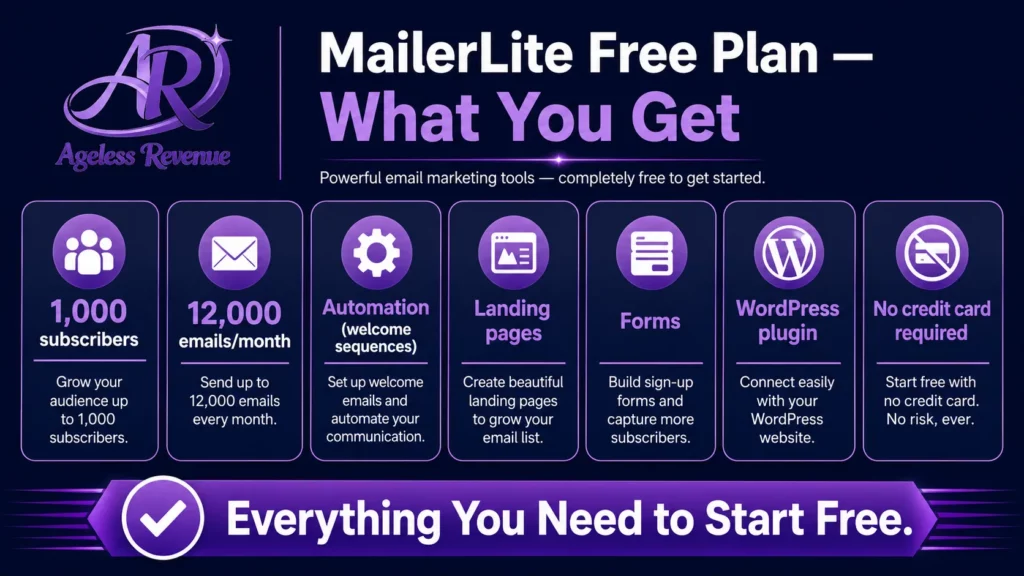
The right email platform for a beginner retiree blogger is MailerLite.
It is free to 1,000 subscribers. It has a genuinely simple drag-and-drop email builder that most retirees find intuitive within one or two sessions. It includes landing pages, opt-in forms, and automation — the welcome sequence that sends automatically to every new subscriber — all on the free plan.
The free plan covers everything you need for the first year of list building. Upgrade only when you reach the subscriber limit or need a specific feature.
How to get started:
- Go to mailerlite.com and create a free account
- Confirm your email address and complete the profile setup
- Create your first subscriber group (call it something like “Main List” or your blog name)
- Install the MailerLite plugin in WordPress for easy form embedding
For a full comparison of email platforms specifically for retiree bloggers, read Best Email Marketing Software for Retiree Bloggers.
Step 2: Create a Lead Magnet
A lead magnet is something genuinely useful that you offer for free in exchange for an email address. It is the most reliable way to grow your list beyond the small number of readers who would subscribe with no incentive.
The lead magnet does not need to be long or complex. In fact, shorter and more specific works better. A 10-page ebook on a broad topic converts less well than a one-page checklist solving a specific problem.
Lead magnet ideas that work for retiree affiliate bloggers:
A checklist: “The 10-Point Checklist Before You Buy a Raised Bed Kit” — immediately useful, quick to create, highly specific to your niche audience.
A comparison chart: “ChatGPT vs Claude vs Grammarly: Quick Reference Guide for Retiree Bloggers” — saves the reader research time on a decision they need to make.
A beginner guide: “Getting Started with Pinterest for Affiliate Bloggers: 5 Things to Do This Week” — actionable, short, gives value immediately.
A resource list: “The 8 Free Tools I Use to Run My Affiliate Blog” — curated, saves research time, works well for any niche.
The format principle: the best lead magnet is the most specific answer to the question your ideal reader is most likely searching for. Not a broad overview — a targeted solution.
For a complete guide to growing your list with lead magnets, read Email List Growth Strategies for Retiree Bloggers.
Step 3: Add Opt-In Forms to Your Blog
Your lead magnet does not attract subscribers on its own — your opt-in form does. The form is what captures the email address and delivers the lead magnet.
Where to place opt-in forms:
End of every blog post — readers who reach the end of your post are your most engaged visitors. An opt-in offer at the end converts at a higher rate than anywhere else on a content page.
Sidebar — visible on every page of your site. Use a simple form with one or two fields (first name and email) and a clear benefit statement rather than just “subscribe to my newsletter.”
A dedicated landing page — a standalone page with no navigation menu, focused entirely on the lead magnet offer. Use this URL when you share your opt-in offer on Pinterest or in guest posts.
In-content (mid-post) — a brief offer embedded naturally within a relevant section of a longer post. Not intrusive, but visible to readers who are engaged enough to read past the halfway point.
What to write on your form: lead with the benefit, not the mechanism. “Get the free raised bed checklist” converts better than “Subscribe to my newsletter.” The reader cares about what they receive, not about the act of subscribing.
Step 4: Set Up a Welcome Sequence
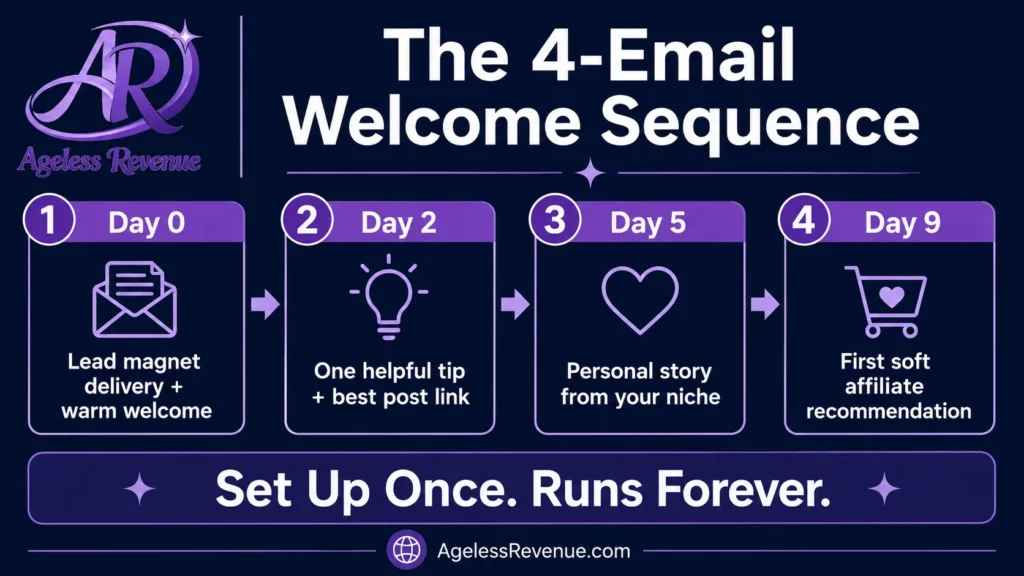
A welcome sequence is a series of emails that are sent automatically to every new subscriber over their first week or two. It is the most important automation in email marketing and the one that most beginner bloggers skip.
Without a welcome sequence, a new subscriber receives their lead magnet and then nothing until your next broadcast email — which might be weeks away. By then, they have forgotten who you are.
With a welcome sequence, every new subscriber receives a warm, consistent introduction to you and your blog, regardless of when they subscribed.
A four-email welcome sequence that works:
Email 1 — Immediately on signup: Deliver the lead magnet. Add a warm, personal welcome note — two or three sentences about who you are and what the blog is about. Keep it brief and conversational.
Email 2 — Day 2: One specific helpful tip from your niche. Link to your most useful blog post. No affiliate links in this email — this is pure value.
Email 3 — Day 5: A brief personal story relevant to your niche. The moment you started gardening after retirement. The first time you tried to navigate a tech tool, what happened? Something that makes you a real person to the subscriber, not just a content source.
Email 4 — Day 9: Your first soft affiliate recommendation. Mention one product you genuinely use and recommend, explain briefly why, include your affiliate link with a clear disclosure, and link to the full review on your blog.
Set this sequence up once in MailerLite’s automation builder. Every subscriber receives it automatically. This is your relationship foundation — built without any ongoing effort once it is created.
Step 5: Send Regular Broadcasts
Once your welcome sequence is set up, send a regular broadcast email — a one-time email to your whole list, not an automated sequence.
Frequency: Weekly or fortnightly is the right range for most retiree bloggers. Weekly keeps your name in the inbox consistently. Fortnightly is sustainable if weekly feels like too much pressure. Monthly is too infrequent — subscribers forget who you are between emails.
Content: Each broadcast should have one clear focus. A link to your latest blog post. A seasonal recommendation with an affiliate link. An answer to a question a reader sent you. A personal update from your niche. One thing, explained well, with one clear action for the reader to take.
Format: plain text emails often outperform designed templates because they feel more personal and less like marketing material. A brief, conversational email that reads as a note from a trusted friend converts better than a polished newsletter layout for a personal affiliate blog.
Subject lines: Be specific and honest. “The garden kneeler I’ve been using for 18 months (honest review)” converts better than “This month’s update” or “I have exciting news!” Readers open emails when they know what they are going to get.
Using Email for Affiliate Revenue
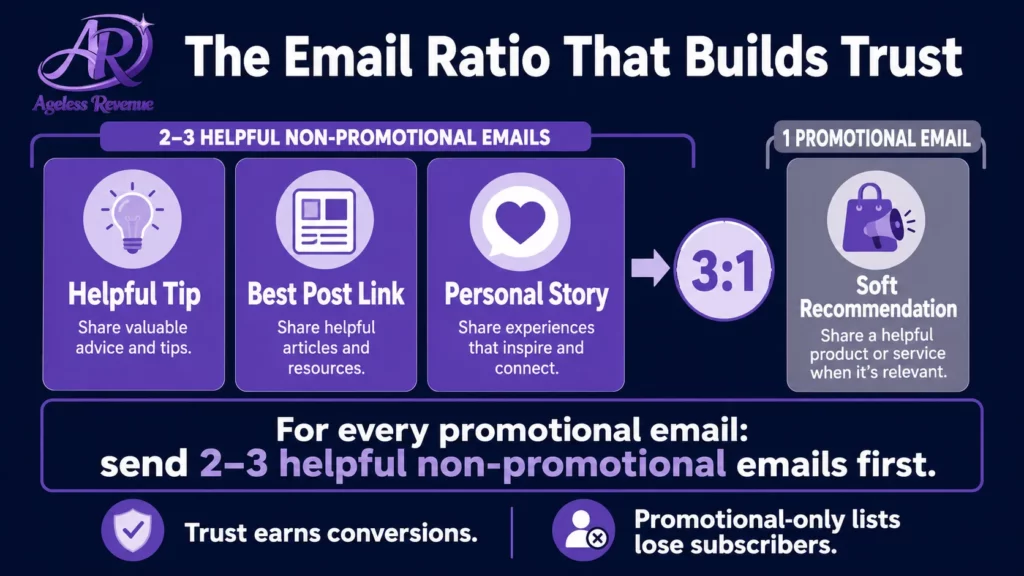
Email is your highest-converting affiliate channel because subscribers have already established trust with you. Use it carefully.
The ratio that works: for every email that contains an affiliate recommendation, send two or three that are purely helpful with no commercial intent. Subscribers who receive nothing but affiliate recommendations unsubscribe. Subscribers who receive consistent, genuine value act on your recommendations when you make them.
How to write affiliate recommendations in an email:
Start with the context — why this product is relevant right now, what problem it solves. Share your specific personal experience briefly. State your recommendation clearly. Include your affiliate link with a short disclosure. Link to the full review on your blog for readers who want more detail.
Example: “I’ve been using the same garden kneeler for 18 months now, and it has made more difference to my raised bed garden than anything else I’ve tried. Full honest review on the blog if you want the details — including the one thing I wish it did differently. [Read the review →](affiliate link)”
This is how email affiliate recommendations earn trust and commissions simultaneously.
Frequently Asked Questions
When should I start building my email list?
From the day you publish your first blog post, even before you have significant traffic. The mechanics of list building take time to set up, and your early readers are often your most engaged. Missing the chance to capture their email address by not having a form in place is a cost you cannot recover.
How many subscribers do I need before email generates meaningful affiliate income?
A focused, engaged list of 200–300 subscribers in a specific niche can generate meaningful affiliate income if the trust level is high and the recommendations are relevant. Volume matters less than engagement and relevance.
What should I do if my open rates are low?
Check your subject lines first — a vague subject line is the most common cause of low open rates. Then check your sending frequency — if you send too rarely, subscribers forget who you are before the next email arrives. Finally, check your list hygiene — a list with many inactive subscribers will always have lower open rates than a clean, engaged list.
How do I grow my list faster?
The fastest ethical list growth comes from a combination of a highly specific lead magnet, opt-in forms in high-traffic locations on your blog, and Pinterest traffic, driving readers to a dedicated landing page for your lead magnet. For more details, read Email List Growth Strategies for Retiree Bloggers.
Your Next Step
If you do not yet have an email list, set up your MailerLite account today. Create one simple lead magnet — a checklist is enough to start. Add an opt-in form to the end of your three most-visited blog posts. Write your four-email welcome sequence. That is the entire foundation.
For a complete structured path that covers email marketing alongside affiliate training, keyword tools, and hosting, try Wealthy Affiliate free →
This post contains affiliate links. If you buy through them, I may earn a small commission at no extra cost to you.