

Link Building for Beginner Affiliate Bloggers: What Actually Works (2026)
Link building for beginner affiliate bloggers has a reputation for being complicated, technical, and time-consuming. Most of the advice online is written for professional SEO agencies managing large sites with significant budgets. Very little of it is written for a retiree running a one-person affiliate blog.
Link building for beginner affiliate bloggers is crucial for establishing your online presence.
Learning the ins and outs of link building for beginner affiliate bloggers can take your blog to the next level.
Link building for beginner affiliate bloggers focuses on creating high-quality content that naturally attracts backlinks.
Understanding link building for beginner affiliate bloggers is essential for success in the affiliate marketing space.
This guide strips link building back to what actually matters for a beginner affiliate blogger — the practical, legitimate approaches that build authority over time without risking penalties or wasting effort on tactics that no longer work.
Affiliate disclosure: This post contains affiliate links. If you buy through them, I may earn a small commission at no extra cost to you.
TL;DR
- A backlink is a link from another website to yours — Google treats these as votes of trust.
- Quality matters far more than quantity — one link from a relevant, trusted site beats 100 from an irrelevant one.
- Internal links (between your own posts) are the highest-return link building activity for new bloggers.
- Creating genuinely useful content is the most sustainable way to earn backlinks.
- Guest posting on relevant blogs is the most reliable active outreach strategy for beginners.
- Avoid any service that promises large numbers of backlinks quickly — these carry significant penalty risk.
What a Backlink Actually Is (And Why It Matters)
When another website links to one of your blog posts, that link is called a backlink. Google treats backlinks as votes of confidence — when a trusted, relevant site links to your content, it signals that your content is worth reading.
Not all backlinks carry equal weight. A link from a well-established blog in your specific niche carries significantly more weight than a link from an unrelated directory. One genuinely relevant backlink from a real blogger in your topic area will do more for your rankings than fifty links from generic websites.
For a new affiliate blog, building a large backlink profile is not the most urgent priority — consistent content creation and keyword targeting have a more direct effect on early rankings. But over time, as your site grows, backlinks become an increasingly important signal that determines how well your posts rank against established competitors.
The Link Building That Matters Most: Internal Links
For link building for beginner affiliate bloggers, establishing relationships with other bloggers is key.
Effective link building for beginner affiliate bloggers emphasizes the quality of backlinks over quantity.
Investing time in link building for beginner affiliate bloggers will yield long-term benefits for your site.
Link building for beginner affiliate bloggers should be part of your overall SEO strategy.
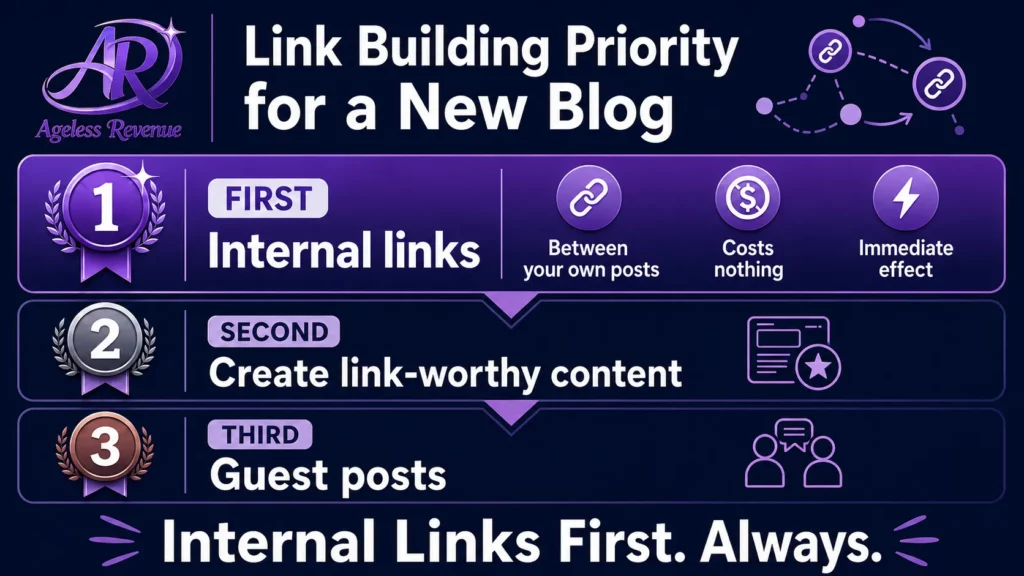
Before focusing on links from other websites, make sure your internal link structure is strong. Internal links — links from one of your own posts to another post on your site — are entirely within your control, cost nothing, and produce measurable results quickly.
Focusing on link building for beginner affiliate bloggers will enhance your credibility online.
Using social media can complement your link building for beginner affiliate bloggers efforts.
Link building for beginner affiliate bloggers is a gradual process that requires patience and consistency.
Consider using tools that assist in link building for beginner affiliate bloggers.
Effective tracking of your backlinks is vital in link building for beginner affiliate bloggers.
Essential Strategies for Link Building for Beginner Affiliate Bloggers
Every post you publish should link to 2–4 related posts on your site using descriptive anchor text. “Read our guide to lightweight garden tools for seniors” is better anchor text than “click here.” The anchor text tells Google what the linked post is about, which reinforces your keyword targeting.
Your most important posts — pillar content, best-performing articles — should receive the most internal links from other posts. When you publish a new post, go back to two or three older posts and add a link to the new one where it fits naturally.
Strong internal linking keeps readers on your site longer, improves engagement metrics that Google notices, and distributes authority across your content. It is the link building activity with the highest return for the effort invested, and it should be your first priority.
Creating Content Worth Linking To
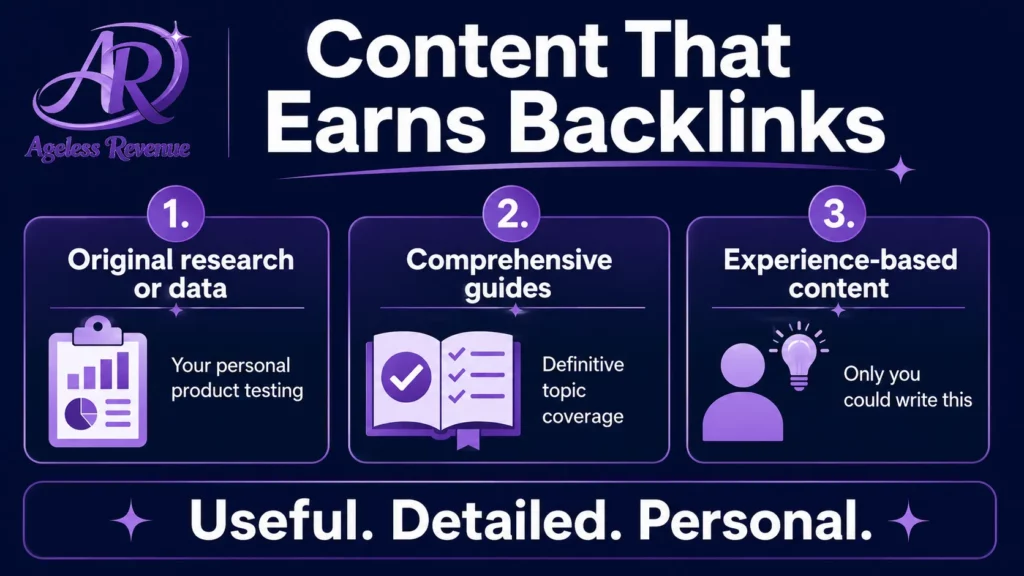
The most sustainable way to earn backlinks from other websites is to create content so useful, specific, and well-researched that other bloggers in your niche naturally link to it when they write about related topics.
The content types that earn the most natural backlinks:
Original research or data. If you survey your readers, test multiple products side by side, or compile data that does not exist elsewhere, other bloggers will cite and link to your findings. This does not need to be formal research — a comparison of five garden kneelers tested over three months by someone with arthritis is original data that no other blog has.
Comprehensive guides. A definitive, thorough guide on a specific topic in your niche — one that covers the subject more completely than anything else available — earns links from bloggers who want to point their readers to the best resource. These take more effort to create but earn links passively over time.
Specific, experience-based content. Content that only you could have written — based on your specific personal experience — is inherently unique. Other bloggers cannot create it themselves, which makes them more likely to link to it rather than replicate it.
Guest Posting — The Most Reliable Active Strategy
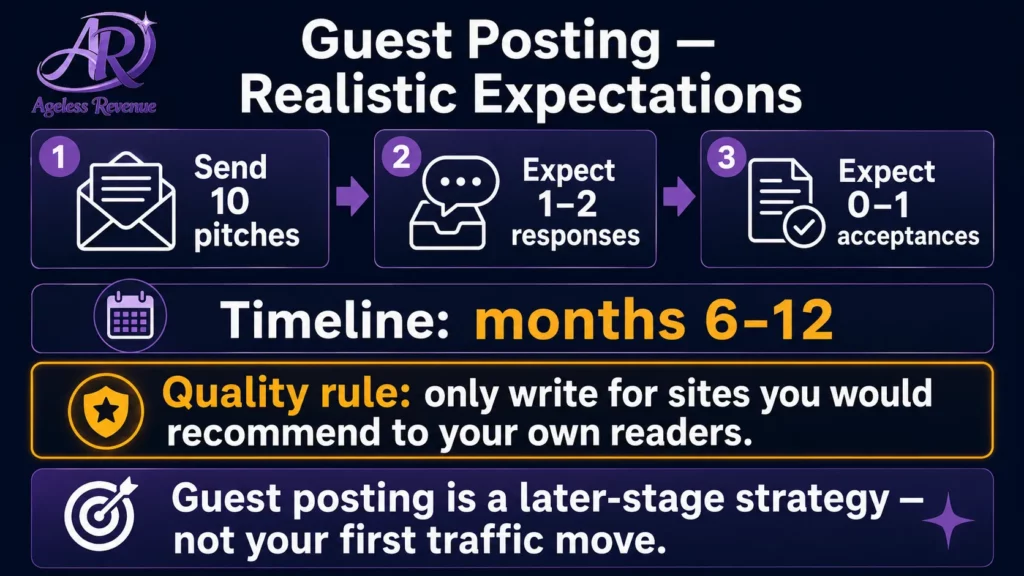
Guest posting means writing an article for another blog in exchange for a link back to your site. It is one of the most reliable ways to build genuine, relevant backlinks when done properly.
How to find guest posting opportunities:
Search Google for: “[your niche] + write for us” or “[your niche] + guest post” or “[your niche] + contribute.” Look for blogs in your specific topic area that are actively publishing content and have an engaged audience — these links carry more weight than links from inactive sites.
What to offer:
Be mindful of the types of sites you pursue for link building for beginner affiliate bloggers.
Returning to previously unlinked mentions can boost your link building for beginner affiliate bloggers efforts.
Utilize your existing network for assistance in link building for beginner affiliate bloggers.
Approach smaller, focused niche blogs rather than large general sites. Your pitch should offer a specific article idea that is genuinely useful to their audience — not a vague offer to “write about gardening.” Explain briefly why you are qualified to write the piece. Keep the pitch short.
What to expect:
Remember, effective link building for beginner affiliate bloggers can significantly enhance your blog’s visibility.
Stay away from black hat techniques when engaging in link building for beginner affiliate bloggers.
Long-term strategies are essential for successful link building for beginner affiliate bloggers.
Pursue organic growth in your link building for beginner affiliate bloggers efforts.
Most outreach does not receive a response. That is normal. A 10–20% response rate is realistic, and a 5–10% acceptance rate from responses is typical. Persistence matters more than persuasion.
Focus on creating relationships that support your link building for beginner affiliate bloggers journey.
Regularly assess your link building for beginner affiliate bloggers progress to stay on track.
The quality rule:
Expand your knowledge of SEO, including link building for beginner affiliate bloggers.
Only write guest posts for sites you would genuinely recommend to your own readers. A link from a quality, relevant site is worth many times more than a link from a low-quality site — and publishing on low-quality sites can harm your reputation with readers.
Reclaiming Unlinked Mentions
As your blog grows and you publish more content, other bloggers and websites may mention your blog, your content, or your name without linking to your site. These unlinked mentions are backlink opportunities.
Use Google Alerts (free) to monitor mentions of your blog name and your own name. When you find an unlinked mention, politely reach out to the site owner and ask whether they would be willing to add a link. Most are happy to do so — adding a link requires minimal effort for them and completes the reference they have already made.
What to Avoid
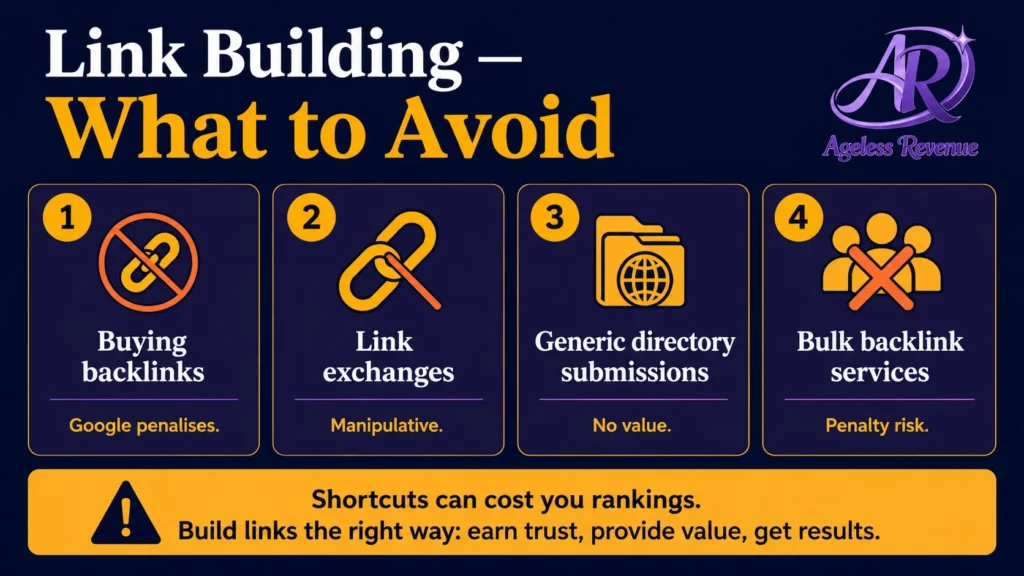
Buying backlinks. Google explicitly penalises paid link schemes. Sites that sell backlinks are typically networks of low-quality sites that Google has identified and discounted or penalised. The short-term ranking boost from bought links is consistently followed by ranking penalties that are difficult to recover from.
Link exchanges. “I’ll link to you if you link to me.” Google treats arrangements between unrelated sites as manipulative. Genuine editorial links — links that someone chose to add because your content is useful — are what Google rewards.
Directory submissions. Submitting your site to generic web directories was a valid strategy in 2005. Today, most directory links carry no weight, and some carry negative signals. The exception is highly specific, well-maintained directories in your exact niche — these can be worth pursuing.
High-volume backlink services. Any service that promises to build hundreds or thousands of backlinks for a low monthly fee is selling links from networks that Google has identified or will identify. The risk is not worth the reward.
Link building for beginner affiliate bloggers is an ongoing process that evolves with your blog.
Ultimately, link building for beginner affiliate bloggers should align with your content strategy.
Stay updated on trends in link building for beginner affiliate bloggers to maximize your results.
A Realistic Link Building Approach for Retiree Bloggers
For most retiree bloggers, a simple approach works best:
Months 1–6: Focus almost entirely on content creation and internal linking. Publish consistently, link your posts to each other well, and let Google discover and index your content. This foundation matters more than any external link building at this stage.
Months 6–12: Begin identifying 3–5 blogs in your niche where you could write a guest post. Pitch one article per month. Set up Google Alerts for your blog name and follow up on unlinked mentions.
Year 2+: Evaluate which of your posts are ranking on page two or three of Google for their target keyword. These posts are close to ranking well and are the best candidates for focused link building — a few quality backlinks can push them onto page one.
Frequently Asked Questions
How many backlinks do I need to rank on Google?
There is no minimum number. Relevance and quality matter more than quantity. A new post from a trusted site in a low-competition niche can rank well with zero external backlinks, especially if your internal link structure is strong. For more competitive keywords, even a handful of relevant, quality backlinks can make a significant difference.
How long does it take for backlinks to affect my rankings?
Google typically processes new backlinks within a few weeks to a few months. The ranking improvement from a quality backlink is usually gradual rather than immediate.
Is it worth hiring someone to build links for me?
Be very cautious. Most cheap link building services use tactics that carry penalty risk. If you consider hiring for link building, look for someone who focuses on genuine outreach and guest posting — not bulk link packages.
Should I worry about bad backlinks pointing to my site?
For a new blog, the chance of harmful backlinks from competitors is very low. If you notice a pattern of spammy backlinks in your Google Search Console, you can use Google’s Disavow tool to tell Google to ignore them. This is rarely necessary for beginner affiliate blogs.
Your Next Step
Start with your internal links today. Open your five most recent blog posts and check that each one links to at least two related posts on your site. Then identify one older post that deserves more internal links from newer content and add them.
For a complete guide to building the traffic that makes link building matter, read Getting Traffic to Your Affiliate Blog.
For a structured path with training, keyword tools, and community support, try Wealthy Affiliate free →
This post contains affiliate links. If you buy through them, I may earn a small commission at no extra cost to you.