Effective Content Marketing Tips To Increase Organic Traffic: The 2025 Playbook
Content marketing tips to increase organic traffic are no longer just a buzzword; they are the operational backbone of modern digital growth. At its core, it is the art of creating and sharing valuable, relevant content to attract and engage a clearly defined target audience. It is key to building relationships by providing solutions rather than just a sales pitch. Through quality content, you transform from a faceless vendor into a trusted resource and industry authority.
The holy grail of this effort is organic traffic. This refers to visitors who land on your website through unpaid avenues, primarily search engines like Google or Bing. Unlike paid traffic, where visibility vanishes the moment you stop paying for ads, organic traffic is sustainable. It is the digital equivalent of owning a store in the best part of town—people walk in because they are genuinely interested in what you have, not because you shouted at them with a megaphone.
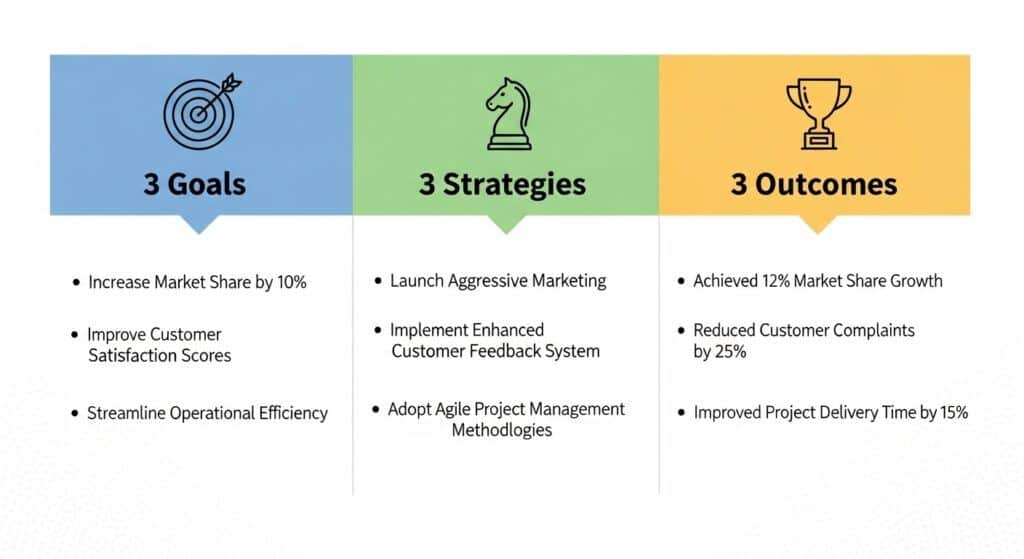
To navigate this landscape, we must move beyond basic blogging and look at frameworks that drive results. The 3-3-3 Rule is your secret sauce here. It involves setting three goals (e.g., traffic growth, lead generation, brand awareness), leveraging three strategies (e.g., SEO blogging, video marketing, social distribution), and expecting three outcomes (e.g., higher authority, lower customer acquisition costs, deeper loyalty).
However, strategy means nothing without trust. Crafting content that places your audience first means answering their questions and solving their challenges. When you integrate Google’s E-E-A-T principles—Experience, Expertise, Authoritativeness, and Trust—you build a fortress of credibility that algorithm updates cannot shake.
TL;DR: Effective content marketing tips to increase organic traffic in 2025 all come down to clear goals, search intent, topic clusters, and consistent refreshes of your best-performing content.
- Use the 3-3-3 Rule: three main goals, three key strategies, and three measurable outcomes for your content.
- Build topic clusters instead of random posts, so search engines see you as an authority on entire themes.
- Write for search intent first, then keywords: match what users actually want to do or learn.
- Support your blog with platform-native social content that drives people back to pillar articles.
- Refresh decaying content regularly with updated data, better visuals, and clearer structure.
- Rely on free tools (GA4, Search Console, AWT, Canva, AnswerThePublic) to guide your next moves instead of guessing.
If you’re using the 3-3-3 Rule, these guides will help you tighten the SEO side of your content plan:
Contents
- 1 Strategies to Boost Organic Search Traffic Through SEO
- 2 Helpful External Resources for Content Marketing & SEO
- 3 Enhancing Social Media Presence to Drive Organic Traffic
- 4 Leveraging Content Marketing for Traffic Growth
- 5 Practical Insights and Free Tools to Elevate Your Traffic Game
- 6 Conclusion
- 7 Next Steps: Turn Your Content into Calm, Consistent Traffic
- 8 ❓ Frequently Asked Questions (FAQ)
- 8.1 Q1: How long does it take to see results from organic content marketing?
- 8.2 Q2: What is the most important factor for ranking in 2025?
- 8.3 Q3: Do I need to post every day to get organic traffic?
- 8.4 Q4: Can I do content marketing with no budget?
- 8.5 Q5: How do I find topics my audience actually cares about?
Strategies to Boost Organic Search Traffic Through SEO
Organic search traffic is gold for anyone looking to scale online, and SEO (Search Engine Optimization) is the mechanism that mines that gold. But SEO in 2025 isn’t just about keywords; it’s about user experience and semantic relevance.
1. Master Search Intent, Not Just Keywords
Kick things off with keyword optimization, but dig deeper. It’s not enough to identify what people are searching for; you must understand why they are searching for it. This is called Search Intent.
- Informational Intent: The user wants to learn (e.g., “how to increase traffic”). Create “How-to” guides.
- Transactional Intent: The user wants to buy (e.g., “buy SEO software”). Create product pages.
- Commercial Investigation: The user is comparing options (e.g., “Ahrefs vs. Semrush”). Create comparison posts.
If your content doesn’t match the intent, Google won’t rank it, no matter how many keywords you sprinkle in.
2. The Topic Cluster Model (Hub and Spoke)
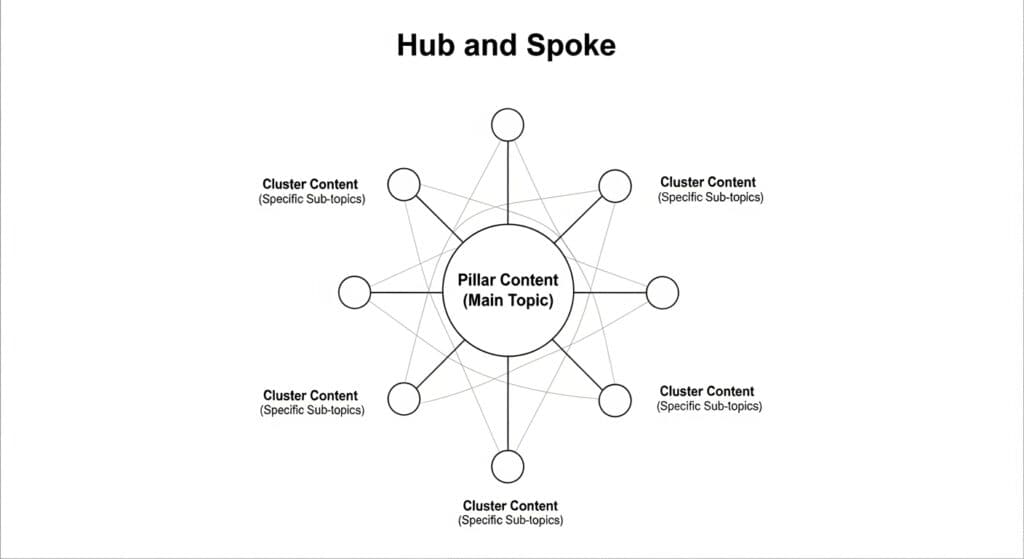
One of the most effective ways to build authority is moving away from random blog posts and toward Topic Clusters.
- The Pillar Page (Hub): Create a comprehensive, long-form guide on a broad topic (like this article on “Content Marketing”).
- Cluster Content (Spokes): Write smaller, specific articles that answer related questions (e.g., “How to do keyword research,” “Best content marketing tools”).
- Internal Linking: Link all the cluster pages back to the pillar page, and link the pillar page out to the clusters. This structure signals to search engines that you are a subject matter expert on the entire topic, not just a single keyword.
3. The 5 C’s Framework – Part of content marketing tips to increase organic traffic
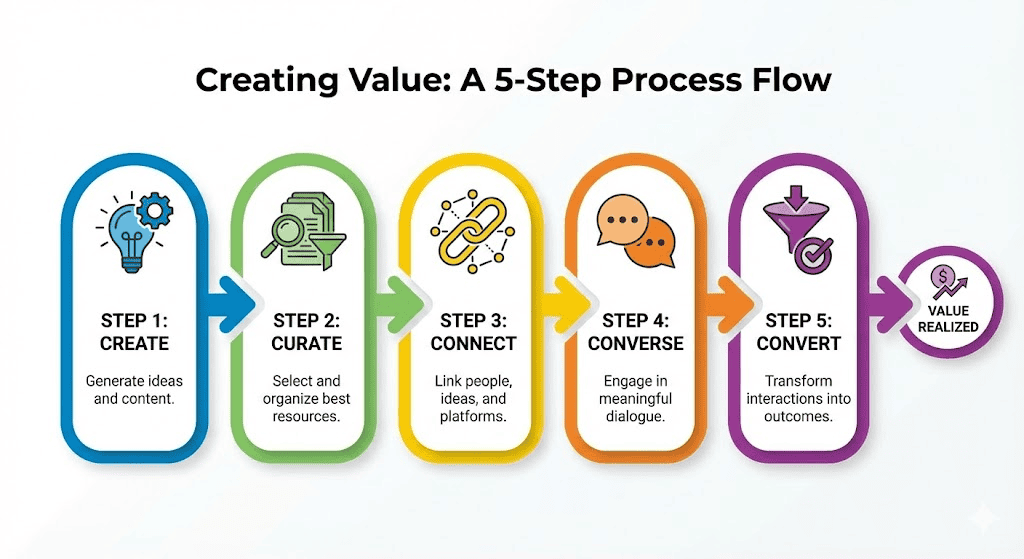
To ensure your content hits the mark every time, use the 5 C’s of content marketing as your checklist:
- Create: Produce original, high-quality content.
- Curate: Gather insights from other experts to add depth.
- Connect: Link your content to current trends or pain points.
- Converse: Write in a way that invites discussion (comments, shares).
- Convert: Always have a purpose—move the reader to the next step.
4. Technical Basics: The Foundation of Ranking
Beginner at SEO? Start with on-page optimization. Craft catchy title tags and meta descriptions—these are your “ad copy” in the search results. Ensure your pages load fast; Core Web Vitals are a ranking factor. If your site takes 5 seconds to load, users will bounce back to Google, signaling that your page is low quality.
Helpful External Resources for Content Marketing & SEO
Enhancing Social Media Presence to Drive Organic Traffic
Social media platforms are the bustling marketplaces of the digital world. While social links are often “no-follow” (meaning they don’t directly pass SEO authority), the traffic signals and brand mentions they generate indirectly impact your organic search performance.
The 7 A’s of Social Content Marketing Tips
As you adapt content for each platform, these resources can help you create visuals and posts that attract the right visitors back to your site:
To make a splash, apply the 7 A’s Framework:
- Aim: Define the goal of the post (Education? Entertainment? Sales?).
- Audience: Speak their language. LinkedIn demands professionalism; TikTok demands authenticity.
- Action: What should they do? (Like, Share, Click Link in Bio).
- Awareness: Use hashtags and trending audio to reach non-followers.
- Attraction: Use high-quality visuals. Stop the scroll.
- Access: Ensure the content is accessible (captions on videos, alt text on images).
- Analytics: Check what worked. If memes drive traffic, make more memes. If data charts drive traffic, become a data source.
Platform-Native Content Strategy
You cannot simply copy-paste the same message across all channels.
- LinkedIn: Focus on thought leadership, “zero-click” content (text-heavy posts that provide value without forcing a click), and industry insights.
- Instagram/TikTok: Focus on short-form video (Reels/Shorts). These platforms currently offer the highest organic reach. Use them to “tease” the long-form content on your site.
- Pinterest: Often overlooked, Pinterest is a visual search engine. Infographics here can drive massive traffic to blog posts for years after publishing.
Consistency is Key
Creating a consistent posting schedule is crucial. The algorithms favor accounts that keep users on the platform. Use scheduling tools like Buffer, Hootsuite, or Later to plan your content batches. This ensures you remain visible even when you are busy running the business.
Leveraging Content Marketing for Traffic Growth
Content marketing is a powerhouse for driving traffic when done right. It’s not just about putting words on a page but about creating a narrative that resonates.
Storytelling as a Differentiator
In an era of AI-generated content, human storytelling is your competitive advantage. AI can write a definition of “marketing,” but it cannot share a personal story about how a marketing failure cost you $5,000 and what you learned from it.
- Case Studies: Show, don’t just tell. Share real results.
- User-Generated Content (UGC): Share stories from your customers. It builds social proof and community.
The “Content Refresh” Strategy
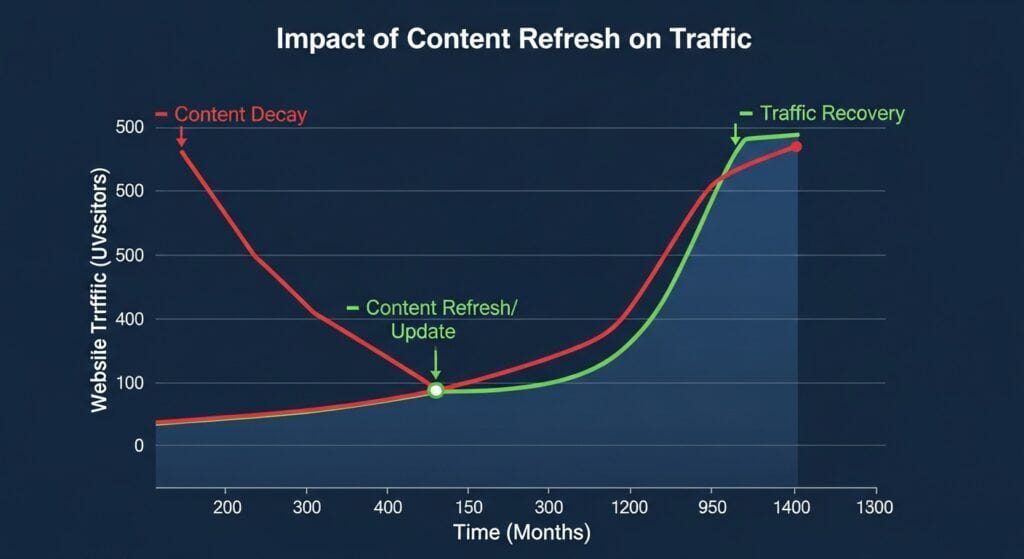
One of the most overlooked strategies for traffic growth is refreshing old content. Content Decay is real; articles that ranked #1 two years ago might have slipped to #8.
- Go to Google Analytics or Search Console.
- Find articles that have lost traffic over the last 6 months.
- Update the statistics, add new sections, improve the visuals, and change the “Last Updated” date.
- Google loves “freshness,” and you can often reclaim rankings with 20% of the effort required to write a new post.
Virality and Trend Jacking
Virality isn’t a strategy, but you can increase your odds. Newsjacking involves taking a trending news topic and injecting your brand’s perspective into it. If a new Google update is announced, be the first to write a guide on “How to Survive the New Update.” Speed matters here.
Practical Insights and Free Tools to Elevate Your Traffic Game
Boosting your online presence doesn’t have to break the bank. You can build a six-figure traffic stream using entirely free tools if you know how to use them.
The Essential Toolkit
1. Google Analytics 4 (GA4) This is non-negotiable. GA4 tells you who is visiting, where they are coming from, and what they are doing.
- Pro Tip: Look at the “Landing Page” report to see which articles are your entry points. Optimize these pages for higher conversions (email signups or sales).
2. Google Search Console (GSC) This is the most accurate source of truth for your SEO.
- Pro Tip: Look for keywords where you rank in positions 4–10. These are “striking distance” keywords. Improve those specific pages, and you can jump to the top 3 spots quickly.
3. Ahrefs Webmaster Tools (AWT) While the full Ahrefs suite is expensive, AWT is free. It offers a “Health Score” for your site, identifying broken links (404 errors) and missing meta tags. It also shows you basic backlink data so you can see who is linking to you.
4. Canva Visuals keep users on the page longer (Dwell Time), which sends positive SEO signals. Use Canva to create custom featured images, infographics, and charts. Avoid generic stock photos whenever possible.
5. AnswerThePublic This tool visualizes search questions. Type in “Content Marketing,” and it will show you a web of questions like “how content marketing works” or “why content marketing fails.” These are perfect headings for your FAQ sections.
A Holistic Approach
Finally, a holistic content strategy ties all these elements together. It’s not just about SEO, or just about Social Media, or just about Email. It is about creating an ecosystem.
- Write the blog post (SEO).
- Break it down into a Twitter thread and a LinkedIn carousel (Social).
- Send it to your newsletter list (Email).
- Update it in 6 months (Maintenance).
By consistently executing this cycle, adapting based on data, and maintaining high E-E-A-T standards, you create a compounding traffic machine that grows stronger over time.
When you’re ready to turn this toolkit into a calm, long-term traffic strategy, these guides will help you connect the dots:
Conclusion
Increasing organic traffic through content marketing is not a sprint; it is a marathon run at a sprinter’s pace. It requires a blend of creativity, technical SEO knowledge, and persistent analysis. By adopting frameworks like the 3-3-3 Rule and the 5 C’s, and by utilizing the right tools, you move from “guessing” to “executing.”
Remember, the internet is noisy. To be heard, you don’t need to shout louder; you need to speak more clearly, directly to the needs of your audience. Start today by auditing your current content, defining your topic clusters, and committing to consistency. The traffic will follow.
Next Steps: Turn Your Content into Calm, Consistent Traffic
You don’t need to overhaul everything overnight. Start by choosing one pillar topic, one topic cluster, and one or two key metrics in GA4 or Search Console to watch. Let those guide what you publish and what you refresh next.
If you’d like help connecting your content marketing efforts to a simple, beginner-friendly income plan, you can download my free Affiliate Marketing Starter Kit for Beginners . It’s written especially for retirees and ageless beginners and shows how blog content, email, and affiliate offers can work together without overwhelm.
For structured training, tools, and a supportive community while you build your content library, you can also learn inside Wealthy Affiliate . Their step-by-step lessons pair well with the 3-3-3 framework in this guide and can help you stay consistent.
This week, choose one small, specific action: update an older post, outline a new topic cluster, or create a single infographic for a high-traffic article. Over time, these quiet, steady actions are what turn content marketing into real organic traffic.
❓ Frequently Asked Questions (FAQ)
Q1: How long does it take to see results from organic content marketing?
A: SEO is a long-term game. Generally, it takes 3 to 6 months to see initial traction and 6 to 12 months to see significant ROI. However, this timeline can be accelerated by targeting low-competition long-tail keywords and aggressively promoting content on social media.
Q2: What is the most important factor for ranking in 2025?
A: While there are over 200 factors, Content Quality (E-E-A-T) and Search Intent alignment are paramount. Google wants to rank content that is helpful, authoritative, and written by experienced creators. Technical factors like page speed and mobile-friendliness are prerequisites, but quality content wins the race.
Q3: Do I need to post every day to get organic traffic?
A: No. For your website/blog, consistency and quality matter more than frequency. One incredible, comprehensive guide published once a week will outperform five shallow, 300-word posts. For social media, higher frequency is generally better, but never at the expense of quality.
Q4: Can I do content marketing with no budget?
A: Absolutely. You can use free tools like Google Trends, Google Search Console, and Canva. The investment required is time. You will need to write the content, create the graphics, and do the outreach yourself, but financial investment is not a barrier to entry.
Q5: How do I find topics my audience actually cares about?
A: Don’t guess; look at the data. Use Google Autosuggest (start typing in Google and see what pops up), look at “People Also Ask” boxes, read comments on your competitors’ blogs, and check forums like Reddit or Quora within your niche to see what questions people are asking.