
New here? Start with Affiliate Marketing 101, grab the Starter Kit, validate ideas with this guide, and learn to start your first affiliate site.
Profitable online businesses to start in 2025 don’t require big budgets or complicated tech—especially for retirees who prefer steady progress over hustle culture. Below you’ll find 50 beginner-friendly ideas, simple selection criteria, a quick validation method, and a seven-day plan to move from “thinking about it” to taking clear, confident steps. Use this as a menu: choose three you like, validate one, and give it a fair, focused try.
TL;DR – Profitable Online Businesses to Start in 2025
- This guide lists 50 profitable online businesses to start in 2025 that work especially well for retirees who want calm, steady progress.
- Use the selection criteria first: low startup cost, beginner-friendly skills, flexible time, and real demand you can see in the world.
- Do not try to build five ideas at once. Pick three you like, test one gently with a tiny landing page and small audience, and give it 30 focused days.
- Combine this list with simple market research, validation, and a 1-page plan so you build on evidence—not just enthusiasm.
How to Use This List (Selection Criteria)
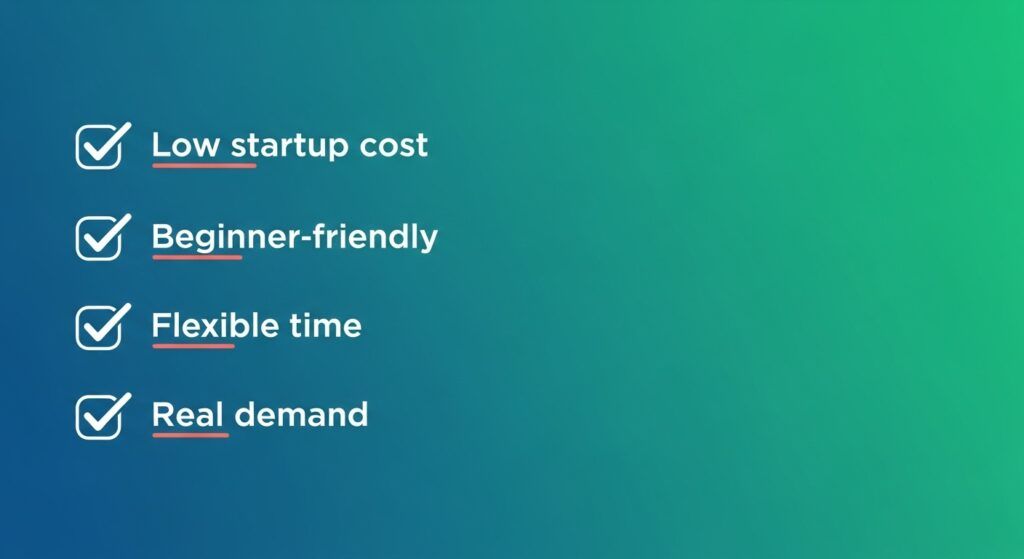
Low startup cost: Target ideas that start for under $200 so you can test without stress. Beginner-friendly: Favor skills you can learn through free tutorials and practice. Flexible time: A weekly rhythm beats daily grind. Real demand: Choose niches where people are already searching, asking, or buying—proof of life matters.
Once you have your favorite ideas that fit these criteria, these guides will help you narrow them down and test them calmly:
- Business Idea Questions: 25 Essential Checks for Beginners (2025) — score your top ideas before you commit.
- The Best Ways To Conduct Market Research For Your Online Business — look for real questions, reviews, and searches behind each idea.
- How To Validate Your Online Business Idea: A Step-by-step Guide — run one tiny test so you don’t overbuild something people don’t want.
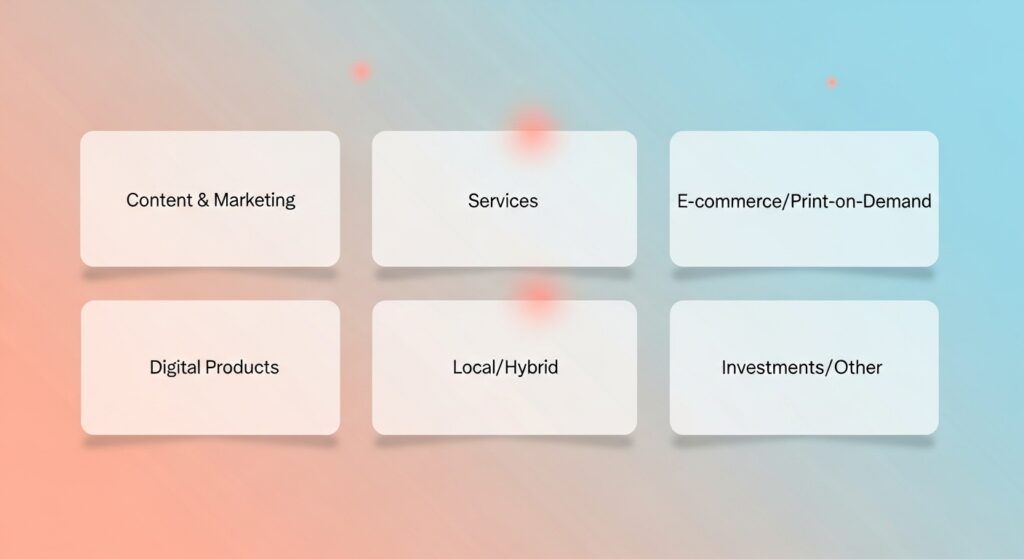
Top 50 Profitable Online Businesses to Start in 2025
Each idea includes a quick “why it works” for beginners and a first step to try this week.
Content & Marketing
- Affiliate blog — Write helpful guides that solve specific problems, then recommend tools you trust. First step: publish a “how to choose” article in a tiny niche (e.g., garden kneelers for seniors).
- Newsletter (sponsored) — Curate useful links for a focused audience and charge small sponsorships after 200–500 subscribers. First step: pick a weekly theme and invite signups with a simple lead magnet.
- Review site — Compare products with plain-English pros/cons and a clear verdict. First step: create a 3-product comparison table and a “best for beginners” badge.
- Top-10 listicles hub — Roundups rank well when they’re honest and updated. First step: publish one list, add a reminder to refresh it monthly.
- Pinterest niche site — Visual summaries that point to your posts. First step: design 3 fresh pins for one article with different headlines.
- YouTube “how-to” channel — Short, practical demos convert. First step: record a 60-second tip on your phone and write a simple description with one resource link.
- Podcast with show notes — Interviews or short solo tips; monetize with affiliates and sponsors. First step: record a 5-minute episode answering one common question.
- Course summary blog — Explain complex ideas simply and link to tools/templates. First step: write a “plain-English summary” post for a popular topic.
If you are most drawn to content, newsletters, or affiliate-style ideas from this list, these articles will help you turn them into a simple plan:
- Affiliate Marketing 101: Beginner’s Guide for Retirees (Step-by-Step) — see how affiliate blogs, review sites, and newsletters earn calmly.
- Top 10 Online Business Ideas Perfect For Retirees (2025) — compare these 50 ideas with a shorter, beginner-focused list.
- Engaging Content that Converts for Affiliate Sales: Step-by-Step Guide (2025) — turn your chosen idea into helpful posts that can gently earn.
Service-Based (Remote-friendly)
- Proofreading — Continuous demand from bloggers and authors. First step: offer a free 500-word sample to 3 prospects.
- Simple web setup (WordPress) — Install theme and create 5 key pages. First step: build one demo site with a flat-fee package page.
- Logo & brand kits (Canva) — Template-driven deliverables. First step: create 3 sample kits and post them on a portfolio page.
- Pin/Carousel design — Batch 10–20 assets for creators. First step: design a starter pack and outreach to 5 bloggers.
- Email newsletter setup — Welcome series and monthly template. First step: create a two-email “getting started” sequence.
- Transcription/Captioning — Podcasters and YouTubers need it. First step: price per audio minute; caption one sample clip.
- Virtual assistant — Pick a niche (creators/coaches/shops). First step: list 5 tasks you do well and sell a 10-hour bundle.
- Simple SEO tune-ups — On-page basics and internal links. First step: audit one blog post; show before/after results.
- Lead magnet creation — Checklists/worksheets that convert. First step: build a 1-page PDF and sell a small bundle.
- Editing short video clips — Repurpose long videos to Shorts/Reels. First step: cut 3 clips for a creator and pitch a monthly plan.
E-commerce & Print-on-Demand
- Print-on-demand tees/mugs — Evergreen sayings for micro-niches. First step: launch 6 designs, test 2 audiences.
- Etsy digital downloads — Planners, wall art, trackers. First step: publish 3 quality listings with styled mockups.
- Template shop (Canva) — Resumes, media kits, social packs. First step: build a small “starter bundle.”
- Low-content books — Notebooks or logs via KDP. First step: publish one themed journal and gather feedback.
- Micro-brand merch — Small, passionate audiences. First step: name the micro-brand and open a simple storefront.
- Bundle reseller — Buy resell rights; package better. First step: assemble a value stack with clear bonuses.
- Curated gift boxes (dropship) — Hobby-themed sets. First step: create 2 boxes and test one landing page.
- Personalized photo products — Memorial/celebration gifts. First step: offer 3 styles with quick turnaround.
Digital Products & Coaching
- Mini-courses — 60–90 minutes on one focused skill. First step: outline 5 lessons and pre-sell 10 seats.
- Checklists & planners — Printable or fillable PDFs. First step: make a clean 1-page checklist; upsell the full planner.
- Email challenges — A 7-day sequence with one outcome. First step: write day 1 and a simple opt-in page.
- Coaching calls — Package as three 45-minute sessions. First step: publish a “Clarity Call” page with outcomes.
- Community membership — Q&A + templates. First step: host one free session to seed paying members.
- Stock photos — Niche packs (e.g., seniors using tech). First step: shoot 20 photos and bundle them.
- Music/voiceover snippets — License to creators. First step: produce 5 short tracks and list on a marketplace.
- Recipes/meal plans — Clear disclaimers as needed. First step: create a 7-day sample plan with grocery list.
Local / Hybrid (Online-first marketing)
- Local directory site — Charge for featured listings. First step: publish 10 listings for free, then offer upgrades.
- Neighborhood newsletter — Sponsors + promos. First step: send a pilot issue to 100 locals.
- Event roundups — Ticket affiliates + local ads. First step: create a monthly events page and invite submissions.
- Tourist guide site — Maps, partners, bookings. First step: build a “48 hours in…” guide with affiliate links.
- Online classes for locals — Crafts, genealogy, gardening. First step: host a 60-minute Zoom and sell the replay.
- Senior tech help (remote) — Setup devices, backups. First step: offer a fixed-price “setup package.”
- Photo scanning & restoration — Ship-in service. First step: show before/after samples on one landing page.
- Resume/LinkedIn makeovers — Flat-fee package. First step: create a simple 2-tier pricing page.
Investments & Other
- Domain flipping (small scale) — Research, hold, sell. First step: buy 1–2 value domains and list them.
- Website flipping (starter sites) — Improve and resell. First step: acquire a small site and add 5 quality posts.
- Micro-SaaS ideas — Tiny tools for one problem. First step: wireframe the interface and open a waitlist.
- Plugin/theme tweaks — Simple add-ons sell. First step: make one niche feature and release a free lite version.
- Data cleanup services — Spreadsheets, contacts. First step: offer a “1-file tune-up” service tier.
- Template marketplaces — Sell your layouts. First step: list a 10-template bundle with screenshots.
- Voice prompts & scripts — For videos/podcasts. First step: create 5 scripts and a usage license note.
- Virtual tours — Photos + simple narration. First step: record a sample tour and pitch 5 local businesses.
Validate Before You Commit
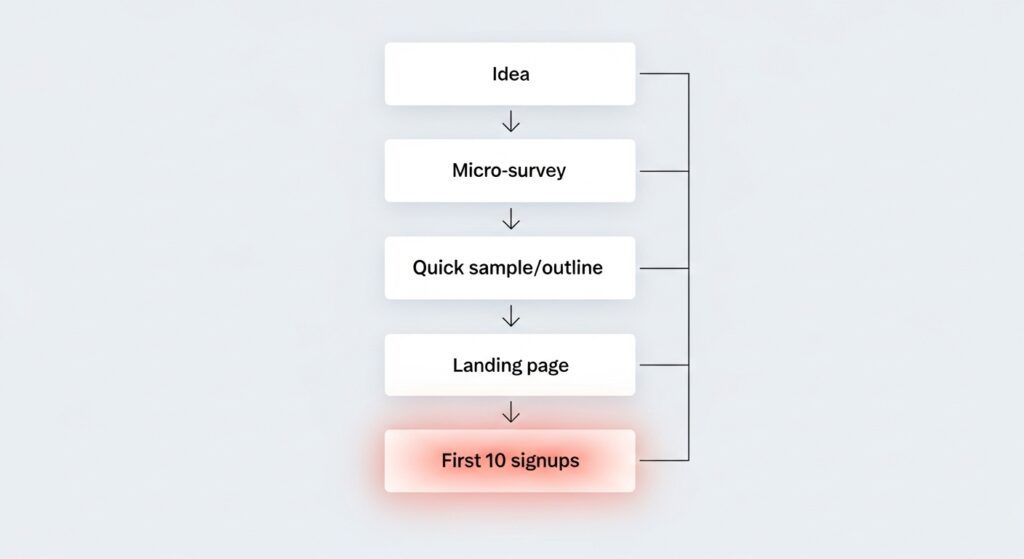
- Micro-survey (10 minutes): ask 3 questions: biggest problem, current tools, budget range. Post in one relevant group.
- Quick sample: make an outline, template, or 60-second demo video to show you can help.
- One-page landing page: headline, one benefit, what’s inside, and a single call-to-action (signup or “learn more”).
- Share in one community: give value first (a tip or mini checklist), then link to the page.
- Review results: if you see clicks/signups, continue; if not, adjust the headline or problem statement and retest.
When you are ready to validate one idea from this list, these guides will support each part of the process:
- The Best Ways To Conduct Market Research For Your Online Business — deepen Step 1 with simple, free tools.
- How To Validate Your Online Business Idea: A Step-by-step Guide — follow a full example of micro-surveys, tiny offers, and go/no-go decisions.
- Online Business Plan Template: Simple 1-Page Guide (2025) — write a one-page plan once you see promising signals.
7-Day Action Plan
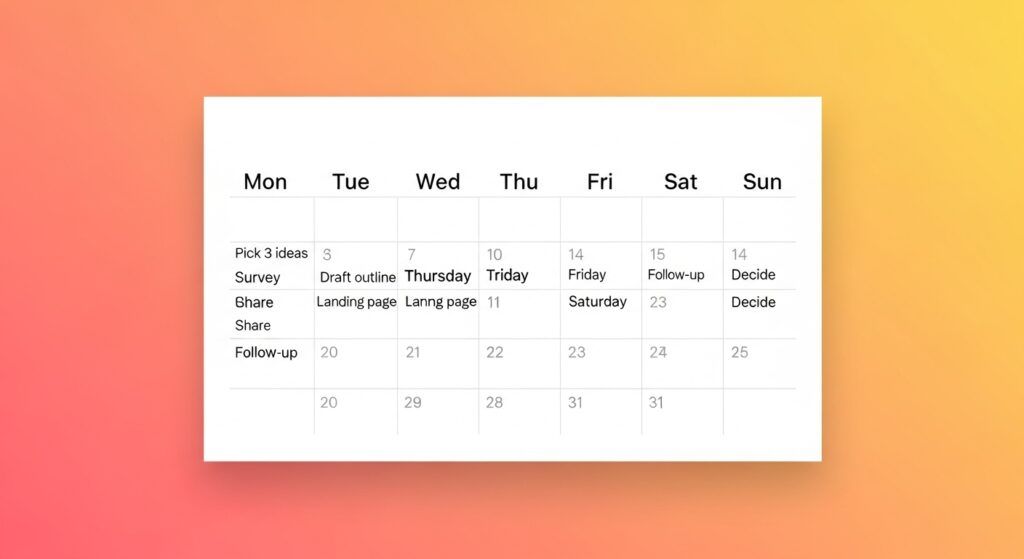
- Day 1: Choose 3 ideas you like; pick 1 to test first.
- Day 2: Draft the 3-question micro-survey and post it.
- Day 3: Create your sample (outline/template/short video).
- Day 4: Build a basic landing page with one clear benefit.
- Day 5: Share in one group/community; answer questions.
- Day 6: Follow up with a helpful tip and invite feedback.
- Day 7: Review the numbers; decide: pursue, pivot, or park.
Monetization Ladder
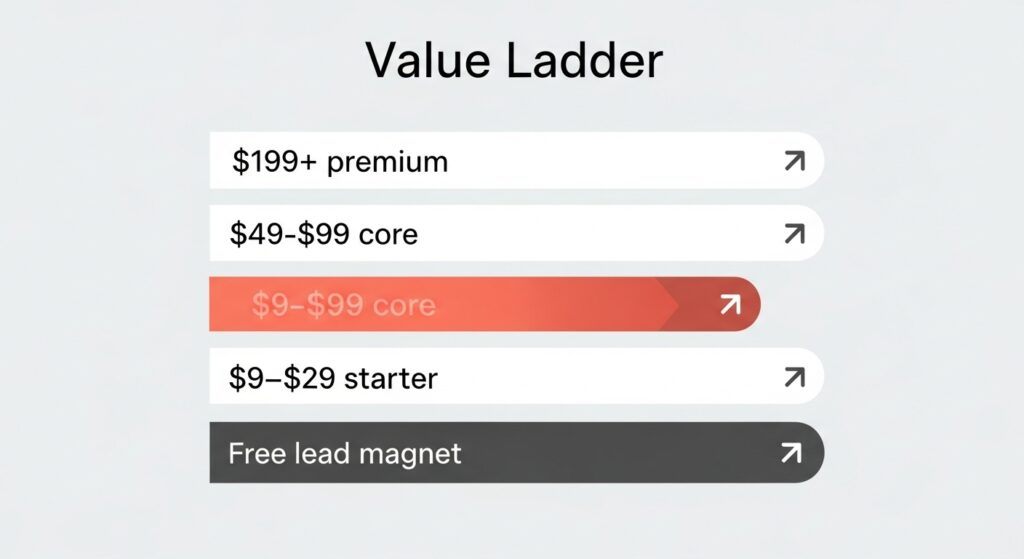
Think in steps, not leaps. Start with a free, helpful resource to build trust. Offer a low-priced starter product or service, then a core package where most buyers land. Add a premium option later for those who want more access or customization. This approach keeps you from over-building and lets real demand shape your offers.
Essential Tools (Simple Stack)
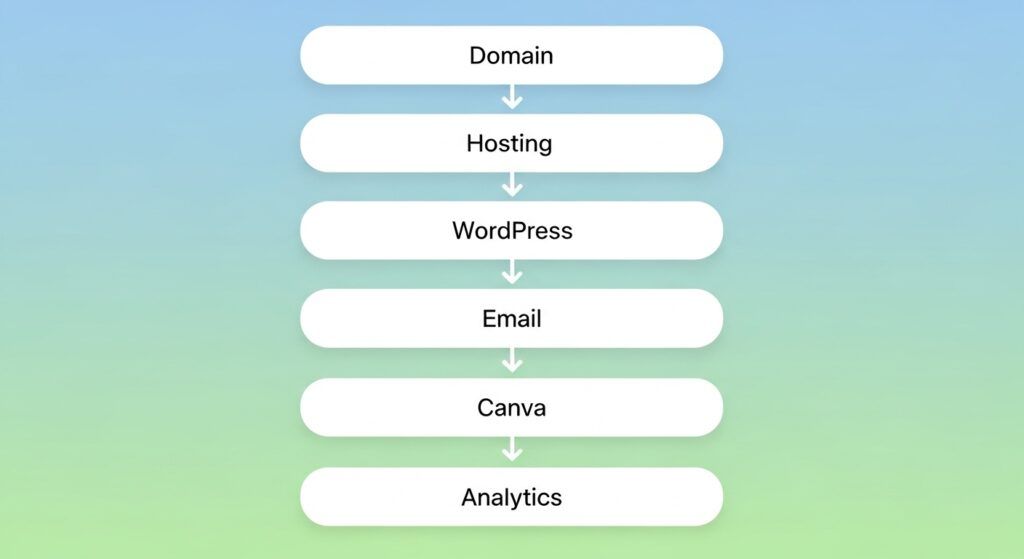
- Domain & Hosting: choose a short domain; pick reliable hosting with one-click WordPress.
- Theme & pages: clean theme; publish Home, About, Contact, Blog, and a simple Resources page.
- Email: start a list early (welcome email + monthly update).
- Graphics: use Canva templates in your brand colors to save time.
- Analytics/Search Console: connect both so you can see what’s working.
What to Measure (and What to Ignore)
In the first month, ignore vanity metrics. Track three numbers: clicks to your landing page, signups (or inquiries), and sales (or booked calls). Each week, note your best-performing asset and make one more like it. Remove the formats that never move the numbers.
Common Pitfalls (and Easy Fixes)
- Trying to do 5 ideas at once: pick 1 and give it 30 focused days.
- Over-building before validating: launch a simple version first.
- Hiding the call-to-action: make the next step obvious on every page.
- Neglecting updates: refresh top posts monthly; add new examples.
- Skipping email: even 1 email/month compounds trust and clicks.
FAQs: Profitable Online Businesses to Start in 2025
How many ideas from this list should I try at once?
Two or three is plenty to explore on paper, but only one should get your full 30-day focus. Use the selection criteria first, then pick the idea that feels simplest to start with your current energy and skills.
What if I like several ideas but don’t know which one will earn?
That is normal. Use a short market research session and one tiny validation test for your top choice. If it shows no signs of interest after honest effort, move to your second choice. The goal is calm experiments, not pressure to “get it right” instantly.
How much money do I need to start one of these businesses?
Many of the ideas on this list can be tested for under $200—and some for much less. Focus on expenses that directly support your first test: a simple website, basic tools, or a small batch of products or designs.
Can I use AI to help with any of these ideas?
Yes. AI can help with outlines, drafts, and simple research, especially for content, visuals, and planning. You stay in charge of judgment, examples, and final edits so the work still feels like you.
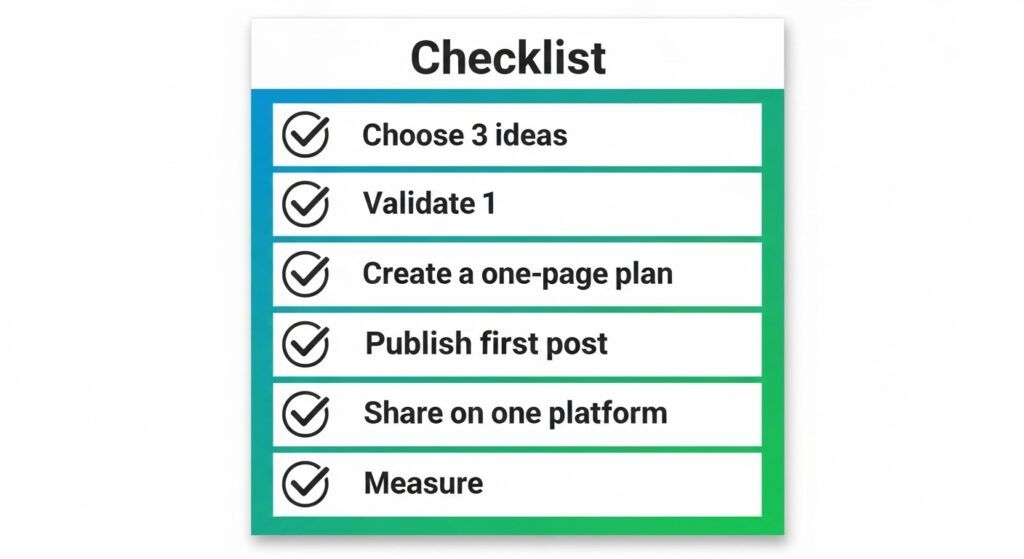
Final Checklist
From Long Lists to One Clear Next Step
Lists of profitable online businesses can feel exciting—and overwhelming. The real progress starts when you choose one idea, design a tiny test, and give it a fair chance to teach you something.
- Use the criteria in this guide to filter ideas that truly fit your budget, energy, and skills.
- Pick three favorites on paper, then commit to validating just one idea for the next 30 days.
- Let real responses—clicks, signups, and small sales—tell you what to improve or try next.
You do not need the “perfect” idea to begin. You just need one honest, workable idea that you are willing to explore calmly and consistently.
If you would like a printable checklist to help you move from this list to your first simple plan, download my free Affiliate Marketing Starter Kit for Retirees. It turns your chosen idea into a step-by-step workflow you can follow without overwhelm.
Helpful External Resources
- Google Trends — check demand before you build.
- Canva — create consistent visuals quickly.
- Google Search Console — index your site and monitor queries.

There’s a lot of value in seeing such a wide range of online business ideas gathered in one place, especially for those of us planning a pivot or side hustle in 2025. One question I had – how would you recommend narrowing down this list if someone has limited startup capital but strong skills in writing or design? Also, with AI reshaping so many digital industries, which of these business models do you think are most “future-proof” or adaptable over the next five years? It would be interesting to know if you have personal favorites or predictions on which of these will really take off.
I’ve tried a few of these online businesses with great success.
Print on demand
Affiliate marketing
ecommerce store
Drops hipping
Most of these modules can be done with a limited budget.
This was such a motivating and eye-opening list. There are so many possibilities I hadn’t considered before! I appreciate how you included a mix of service-based and product-based businesses, which makes it easy for people with all kinds of skill sets to find a fit. The brief descriptions were really helpful for getting a quick sense of each idea. Out of curiosity, which of these do you think offers the quickest path to profitability for someone starting with limited funds?
Hi Marlinda,
Thank you so much for your lovely comment! I’m really glad the list sparked some new ideas for you—that was exactly my goal. I wanted to make sure there was something for everyone, no matter their background or resources.
Great question about quick paths to profitability! For someone starting with limited funds, service-based businesses often offer the fastest return—things like freelancing, virtual assistance, or coaching/consulting—because they usually require more time and skill than upfront investment. That said, digital products (like eBooks or mini-courses) can also be low-cost to create and scale well over time.
Wishing you lots of success as you explore your options—I’d love to hear which one you decide to pursue!
Warmly,
Gila