
Last Updated on 3 months ago by Gila
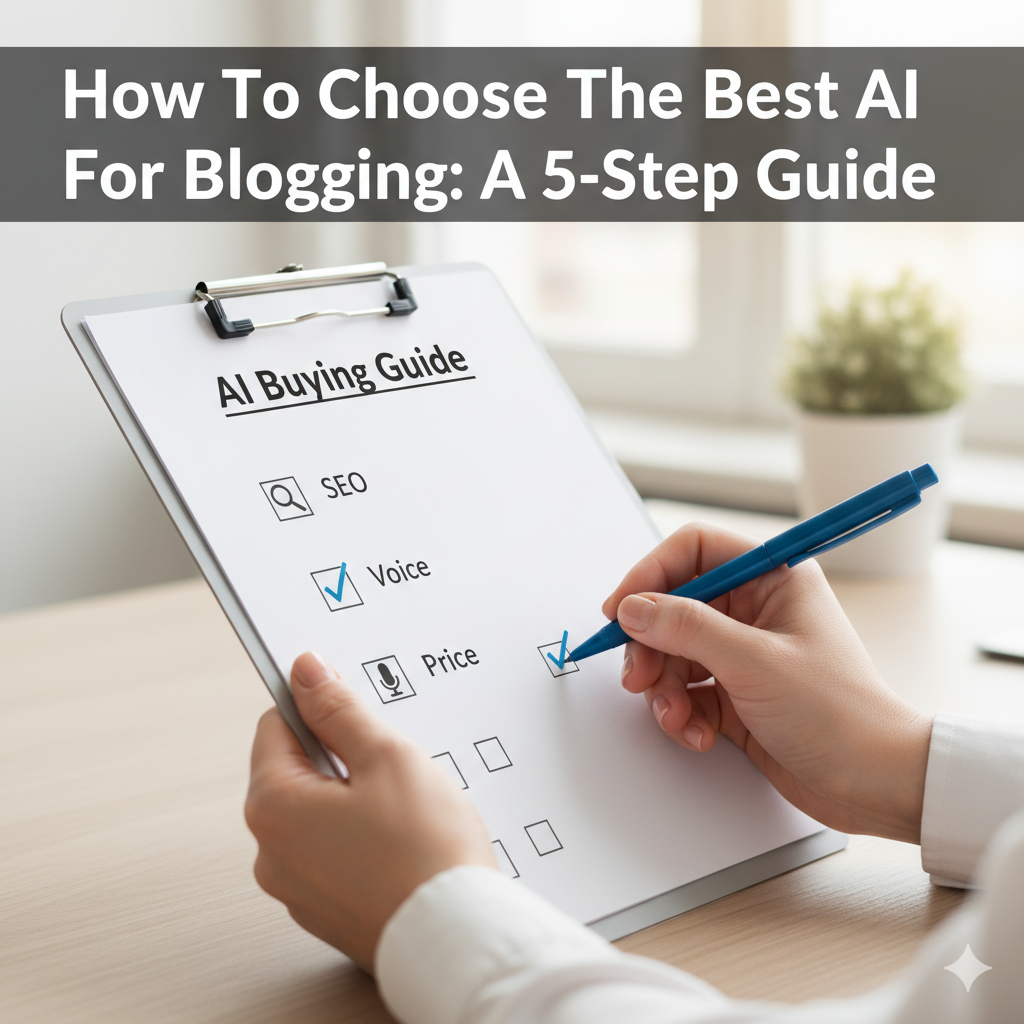
Choosing the Right AI: A Buying Guide for Bloggers
Primary Keywords: How To Choose The Best AI For Blogging, How To Choose Ai For Blogging
Secondary Keywords: AI Writing Software Buying Guide, AI Tools Evaluation Checklist
Schema Recommendation: HowTo and FAQPage
Introduction: The Critical Decision Point
You’ve seen the power of AI tools (Article 1 & 2) and understand the workflow (Article 3). But facing dozens of platforms—all promising to be the “best”—how do you determine how to choose the best AI for blogging that fits your specific needs?
The right choice isn’t the most expensive tool, but the one that seamlessly integrates with your content goals, budget, and E-E-A-T strategy. The fundamental question is: Are you replacing a copywriter, an SEO strategist, or an editor?
This guide provides a comprehensive checklist and a step-by-step process for evaluating AI writing software in 2025, ensuring you make an investment that pays off in traffic and authority.
TL;DR: The best AI for blogging is the one that fits your workflow, protects your E-E-A-T, and supports SEO—not just the most expensive tool.
- Step 1: Decide your main goal (SEO posts, ideas, email copy, etc.).
- Step 2: Check brand voice training and how well it keeps your tone.
- Step 3: Look for real-time SEO scoring and WordPress/Docs integration.
- Step 4: Demand originality checks and easy fact-checking.
- Step 5: Match the price, seats, and support with where your blog is heading.
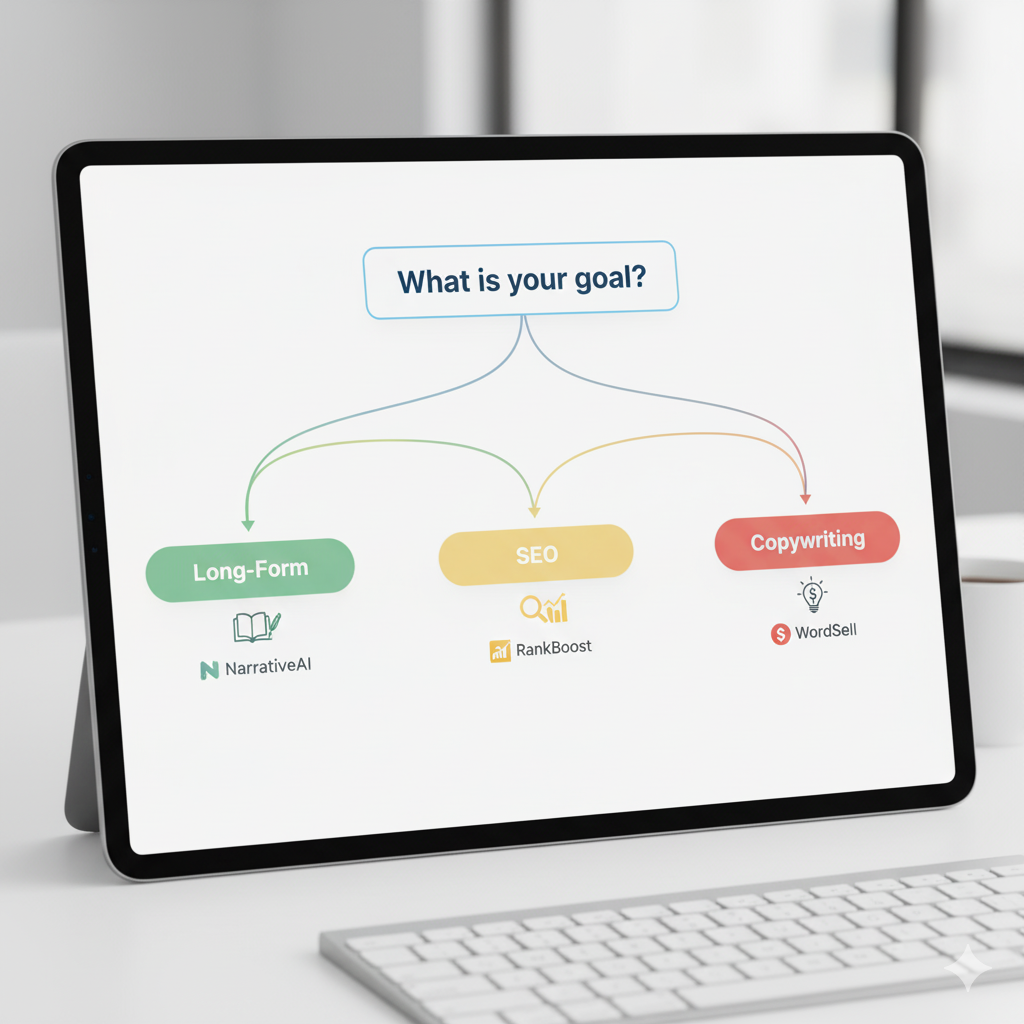
Step 1: Define Your Core Content Goal (Workflow Fit)
Before looking at features, identify the primary problem you need AI to solve. This decision dictates whether you need a generalist or a specialist tool.
| Core Content Goal | What You Need | Recommended Tool Type (See Article 1) |
| High-Volume Long-Form Content | A strong long-form editor, robust content templates, and minimal initial setup. | Generalists (Jasper, Writesonic) |
| Ranking & SEO Authority | Real-time content scoring, SERP analysis, and content brief generation. | SEO Specialists (Frase, Surfer) |
| Short-Form & Conversion Copy | Abundant templates for ads/emails, performance prediction scores, and rapid ideation. | Copywriting Specialists (Anyword, Copy.ai) |
| Research & Idea Exploration | Large language model (LLM) with a vast context window and internet access for real-time data. | LLMs (Claude, ChatGPT Plus) |
Key Takeaway: If you primarily write blog posts for SEO, a tool like Frase or Jasper (with SEO integration) will provide better ROI than a tool optimized purely for social media captions.
Need Help Clarifying Your Blogging Workflow First?
Picking AI is much easier when you know what kind of content you’ll publish and how it fits into your overall business plan. These guides walk you through that step:
- Best AI Tools for Blogging: Boost Efficiency, SEO, and Engagement (2025) – See how AI can plug into each part of your content workflow.
- AI-Powered Content Strategies for Bloggers in 2025 – Turn your goals into a realistic publishing plan.
- AI Content Generation for Blogs: The Complete 7-Step Guide – Walks through a full AI-assisted creation process from blank page to final draft.
Step 2: Evaluate E-E-A-T and Brand Voice Capabilities
In 2025, this is the most critical evaluation step. The tool must help you maintain your unique authority.
Criteria 2.1: Brand Voice Training
Can the AI tool be trained on your existing content, style guide, and tone?
- Low-Level: Basic tone presets (e.g., “Friendly,” “Professional”). (Rytr, Writesonic basic tiers)
- High-Level: Dedicated Brand Voice features that use proprietary models to analyze your content and audit new drafts for consistency. (Jasper, advanced Copy.ai tiers)
- Why it Matters: A strong Brand Voice feature means less time editing and refining the AI’s output, saving hours of human labor (Article 3, Step 5).
Criteria 2.2: Input Flexibility and Context Window
Can the AI handle your most complex, proprietary content?
- The Test: Can you feed the AI an entire 5,000-word e-book, your internal product docs, or an hour-long interview transcript, and ask it to write a 1,500-word blog post summary while maintaining the original context?
- What to Look For: Tools running on the latest LLMs (GPT-4o, Claude 3.5) often feature a larger Context Window (ability to “remember” more text at once).
Step 3: Assess SEO and Technical Features
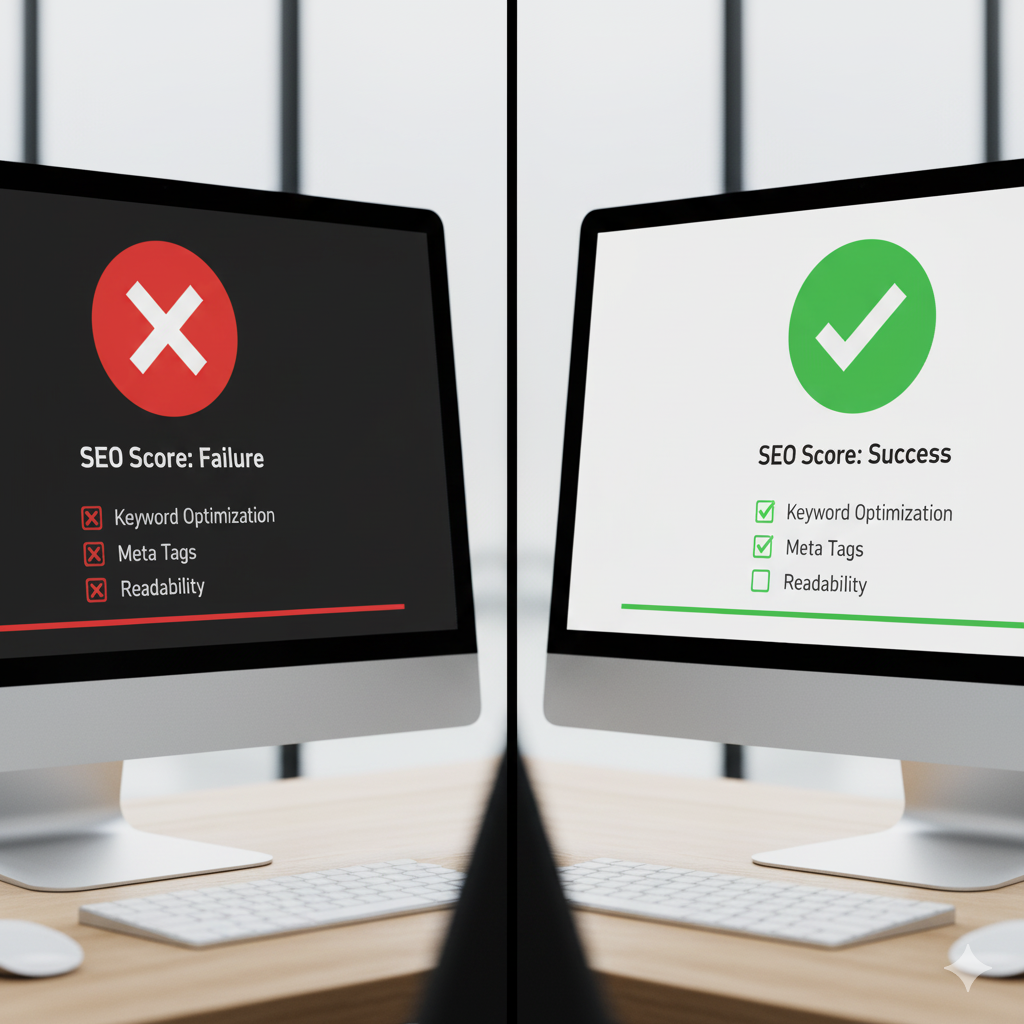
Since a primary goal of any blog is organic traffic, the tool’s SEO DNA is non-negotiable.
Criteria 3.1: Real-Time Optimization Score
Does the tool provide a live score as you write, suggesting keywords, word count, and heading changes based on SERP analysis?
- Look For: Direct integrations with SEO analysis platforms (e.g., Jasper’s integration with Surfer SEO, or Frase’s built-in scoring).
- Benefit: This integrates the Final On-Page SEO Optimization (Article 3, Step 6) into the drafting phase, cutting the post-draft editing time by half.
Criteria 3.2: Topic Cluster and Entity Mapping
Can the tool help you map a Pillar Page and its Cluster Content?
- Look For: Features that generate semantic keywords (related entities) rather than just volume keywords. This shows the tool supports an advanced Entity-Based SEO strategy (Article 4, Pillar 3).
Criteria 3.3: Integration with Your CMS
Does the tool offer a Chrome extension or direct integration with WordPress, Webflow, or Google Docs? Seamless integration reduces friction and ensures your AI Content Workflow is smooth (Article 3).
Connect Your AI Tool to a Simple SEO System
Once you’ve chosen an AI platform, plug it into a basic SEO routine so every article has a clear job and a chance to rank.
- How To Conduct Keyword Research For Maximum SEO Impact: The Definitive 2025 Guide – Choose the right keywords before you ask AI to draft.
- Mastering Google Analytics for SEO: The Definitive 2025 Performance Guide – Measure what your AI-assisted content actually does.
- Top 5 Link Building Strategies to Radically Improve Your Search Rankings (2025) – Support your best posts with simple, calm link building.
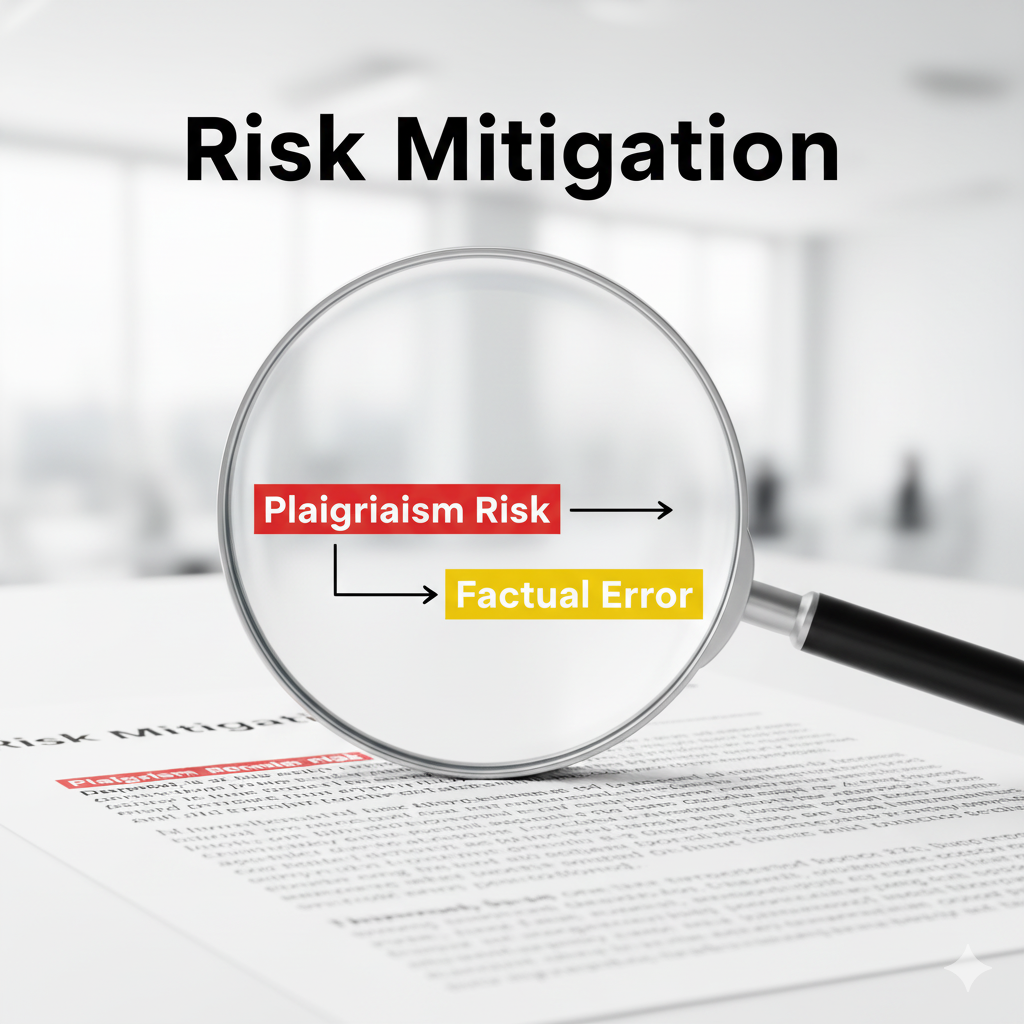
Step 4: Quality Assurance and Risk Mitigation
Before you hit publish, you need confidence that the content is original and accurate.
Criteria 4.1: Plagiarism and Originality Checking
AI models synthesize information, which occasionally results in content that is too similar to the source material.
- The Must-Have: Built-in plagiarism checking or a transparent integration with an external checker (e.g., Copyleaks, Originality.ai).
- The Risk: Publishing content that is flagged as plagiarized can result in severe SEO penalties and damage your authority.
Criteria 4.2: Fact-Checking and Real-Time Data Access
AI “hallucination”—creating confident-sounding but false facts—is a common flaw.
- The Test: Tools that are connected to the live internet and automatically cite sources (like Claude or Writesonic’s Chatsonic feature) are safer for factual accuracy than tools trained on static, older data.
- Your Veto: Even with the best tools, you must always perform a human fact-check (Article 3, Step 4).
Step 5: Budget, Scalability, and Support
Your final decision must align with your growth trajectory and financial reality.
- Budgeting: Most tools offer a free or very cheap entry point (ChatGPT, Writesonic Free Tier, Rytr). Start there. If you need advanced SEO features or Brand Voice, expect to pay $40-$100+ per month.
- Scalability: If you plan to hire a team, choose a platform that offers team seats, role-based permissions, and collaboration features (Jasper, Hootsuite).
- Support & Community: For a complex strategy, choose a platform with an active community and excellent customer support, where you can find best practices and troubleshooting advice.
Turn Your AI Choice Into a Calm, Complete Blogging System
With your AI tool chosen, the next step is to connect it to a simple business model and long-term content plan.
- Affiliate Marketing 101: Beginner’s Guide for Retirees – See how AI-assisted content fits into a real monetization model.
- Pros and Cons of Different Online Business Models (2025 Essential Guide) – Choose the model that matches your personality and time.
- From “What’s a Niche?” to First Sale: A 90-Day Step-by-Step Guide – A practical roadmap for turning tools and training into your first commissions.
Helpful External Resources for Evaluating AI Writing Tools
- AI Tools Directory – Browse and compare AI writing platforms
- Google Search Central – Creating Helpful, Reliable, People-First Content
- Jasper – Guide to Choosing AI Writing Software
- Originality.ai – Understanding AI Detection & Plagiarism Checks
Use these as neutral reference points while you test different AI tools against the checklist in this guide.
Conclusion: The Final Buying Checklist
Choosing the best AI tool is less about selecting one “winner” and more about picking the tool that creates the perfect hybrid workflow.
| Final Action | If You Need… | Pick This Tool Type |
| Start Cheap & Brainstorm | Idea generation, first outlines, experimentation. | ChatGPT / Claude (Plus Tiers) |
| Dominate SEO Rankings | Long-form drafting, Brand Voice consistency, and team collaboration. | Frase / Surfer SEO |
| Scale Branded Content | Long-form drafting, Brand Voice consistency, team collaboration. | Jasper / Writesonic |
Final Thoughts: One Tool, One Workflow, One Calm Next Step
There is no single “best AI for blogging” for everyone. The right tool is the one that fits your current workflow, protects your E-E-A-T, and helps you publish helpful content faster without turning your blog into a factory. Start simple, test against your real topics, and let the data (not the hype) guide your decision.
If you’d like printable checklists and calm, step-by-step prompts to use with any AI tool you choose, grab my free Affiliate Marketing Starter Kit for Beginners. It walks you through choosing a niche, planning content, and placing affiliate links in a way that feels honest and reader-first.
And if you’d like structured lessons, hosting, and built-in AI writing tools under one roof, you’re welcome to explore Wealthy Affiliate. It’s a beginner-friendly platform where you can learn SEO, content strategy, and AI-assisted workflows at your own pace, with a supportive community around you.
Pick one AI tool, run it through the 5 steps in this guide, and use it on your very next blog post. Then review: Did it save you time? Did it keep your voice intact? If the answer is yes, you’ve found your match.
Use this guide to test a few tools against your personal checklist. Your final choice is the tool that saves the most time in your specific context, allowing you to focus your human expertise on the content that truly builds authority.
Frequently Asked Questions (FAQ)
| Question | Answer |
| How important is a tool’s “Brand Voice” feature? | Highly important for long-term strategy. It ensures content consistency across multiple articles and authors. It cuts down human editing time needed to conform a draft to your unique tone, which is vital for E-E-A-T. |
| What does “AI hallucination” mean, and how do I avoid it? | AI hallucination is when the model generates false information or statistics with high confidence. Avoid it by using tools connected to the real-time internet (like Claude) and by performing a mandatory human fact-check on all generated claims. |
| Should I pay for an AI tool if I can use ChatGPT for free? | Yes, if you need specialization. Free tools are great generalists, but premium tools offer specialization like real-time SEO scoring (Frase, Surfer) or advanced brand voice (Jasper) that provide a tangible competitive advantage. |
| What is the first thing I should test in any new AI tool? | Test its ability to handle your most complex or niche topic while maintaining your desired tone. If it fails on your core topic, it’s not the right fit for your business. |