
Last Updated on 3 months ago by Gila
AI-Driven Email Segmentation Strategies: Using Machine Learning for Hyper-Personalization
Introduction:
The biggest competitive advantage in the inbox is predictive relevance.
Traditional, rule-based segmentation (demographics, clicks) is reactive—it only responds to what a customer did. AI-driven email segmentation is proactive—it predicts what they are about to do. By leveraging machine learning, marketers analyze billions of data points in real-time to create micro-segments that are dynamic, hyper-personalized, and incredibly profitable.
This guide moves beyond the basics to detail the advanced strategies, showcase real-world results, and prepare you to use AI to transform your email list from a static database into a revenue-driving engine.
TL;DR: AI-driven email segmentation uses machine learning to predict what each subscriber is likely to do next, so you can send fewer, smarter, more profitable emails.
- Traditional segmentation is reactive; AI segmentation is proactive and predictive.
- Propensity models score each subscriber’s likelihood to purchase, churn, or engage.
- Unsupervised clustering discovers non-obvious micro-segments you’d never spot manually.
- Send time optimization (STO) and frequency capping happen at the individual subscriber level.
- Real-time, dynamic segments update within seconds as people browse, click, or buy.
- Clean, well-integrated data (including zero-party data) is essential—bad data in means bad segments out.
Part 1: AI vs. Traditional Segmentation: The Predictive Shift
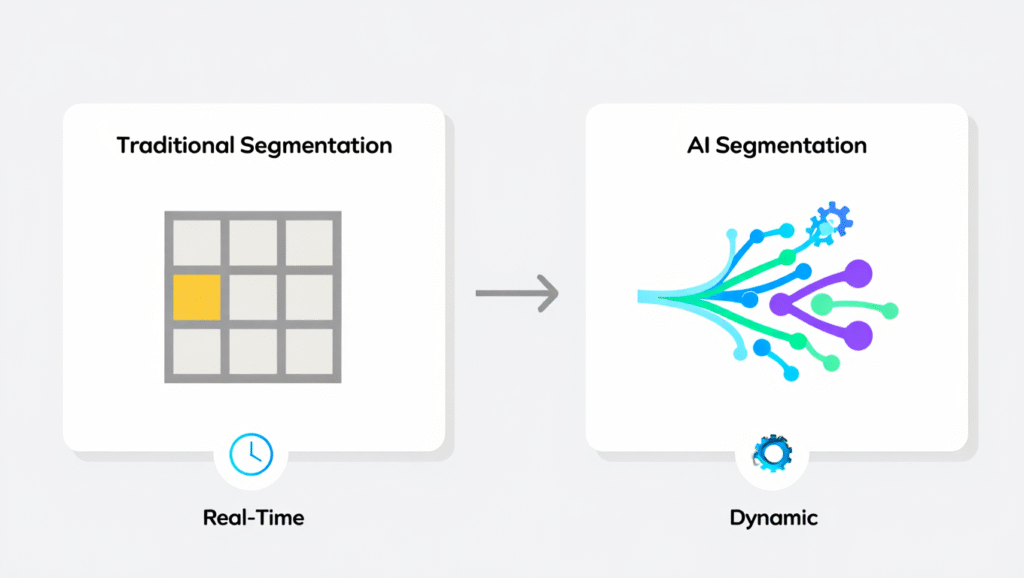
The shift to AI is not about if you segment, but how precisely and how often your segments update.
New to segmentation and want a gentler starting point before diving into AI?
| Factor | Traditional Segmentation (Manual/Static) | AI-Driven Segmentation (Dynamic/Predictive) |
| Segmentation Logic | Static rules defined by marketers (e.g., “Customer in NYC and bought Product X”). | Unsupervised Clustering: AI discovers hidden patterns across hundreds of variables (device, time, content affinity). |
| Update Frequency | Daily, weekly, or manual export/import. | Real-Time: Segments update within seconds of a subscriber’s action (e.g., viewing a product page). |
| Primary Goal | Reactive: Responds to past actions (e.g., a 24-hour abandoned cart reminder). | Proactive: Forecasts future actions (e.g., Churn Risk alert before a subscriber goes silent). |
| Personalization | Limited to merge tags (name, city). | Hyper-Personalization: Dynamic content blocks (product recommendation, offer discount) unique to the individual. |
Part 2: Advanced AI Segmentation Techniques and Tools
AI enables strategies that were previously reserved for multi-million dollar data science teams. These are the most valuable techniques used in 2025:
1. Propensity Modeling: Forecasting Future Intent
This is the heart of predictive segmentation. AI assigns a Propensity Score to every subscriber for specific outcomes.
- Propensity to Purchase: Targets subscribers with a high score to receive an immediate incentive.
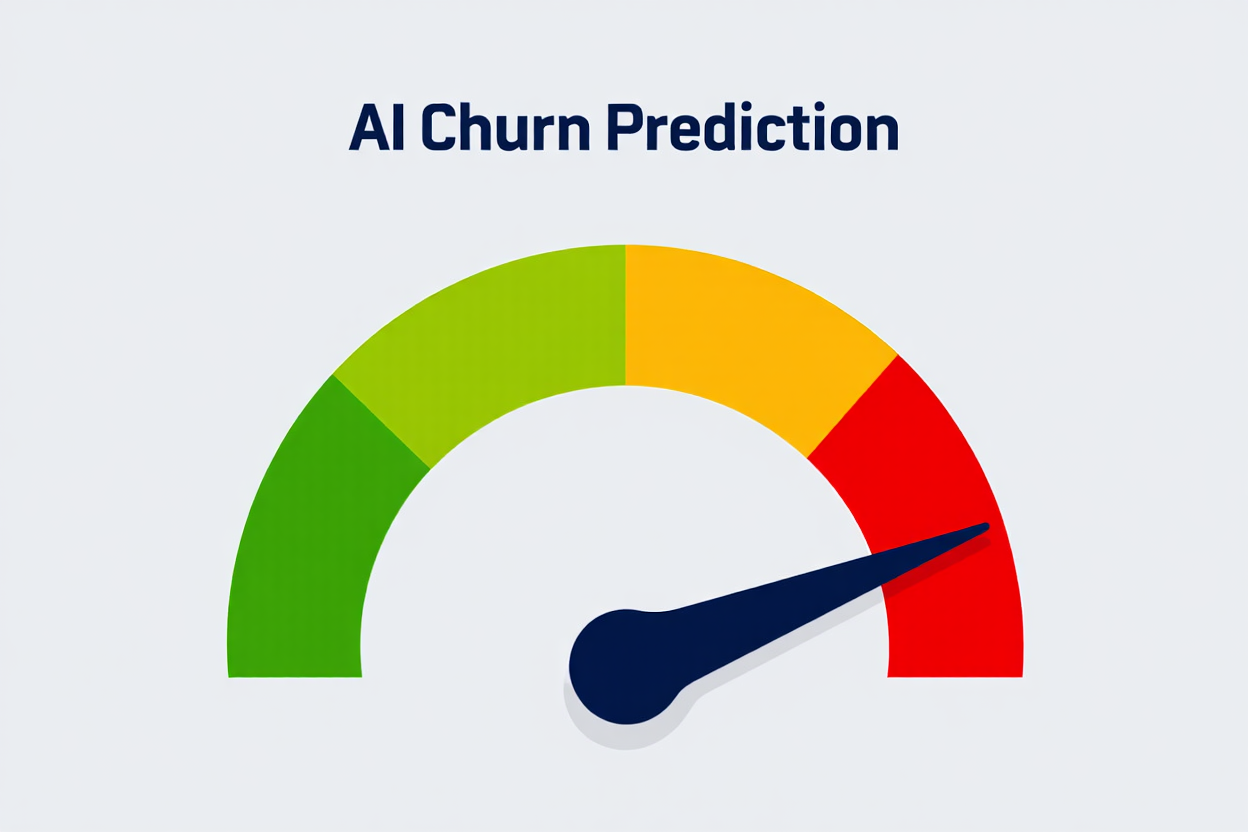
- Propensity to Churn: Identifies the “At-Risk” segment (who is likely to unsubscribe or stop buying in the next 30 days) so you can intervene with a special offer or survey.
- Propensity to Engage: Predicts who is likely to open your next email, allowing you to focus frequency on high-value users.
2. Micro-Segmentation via Unsupervised Learning
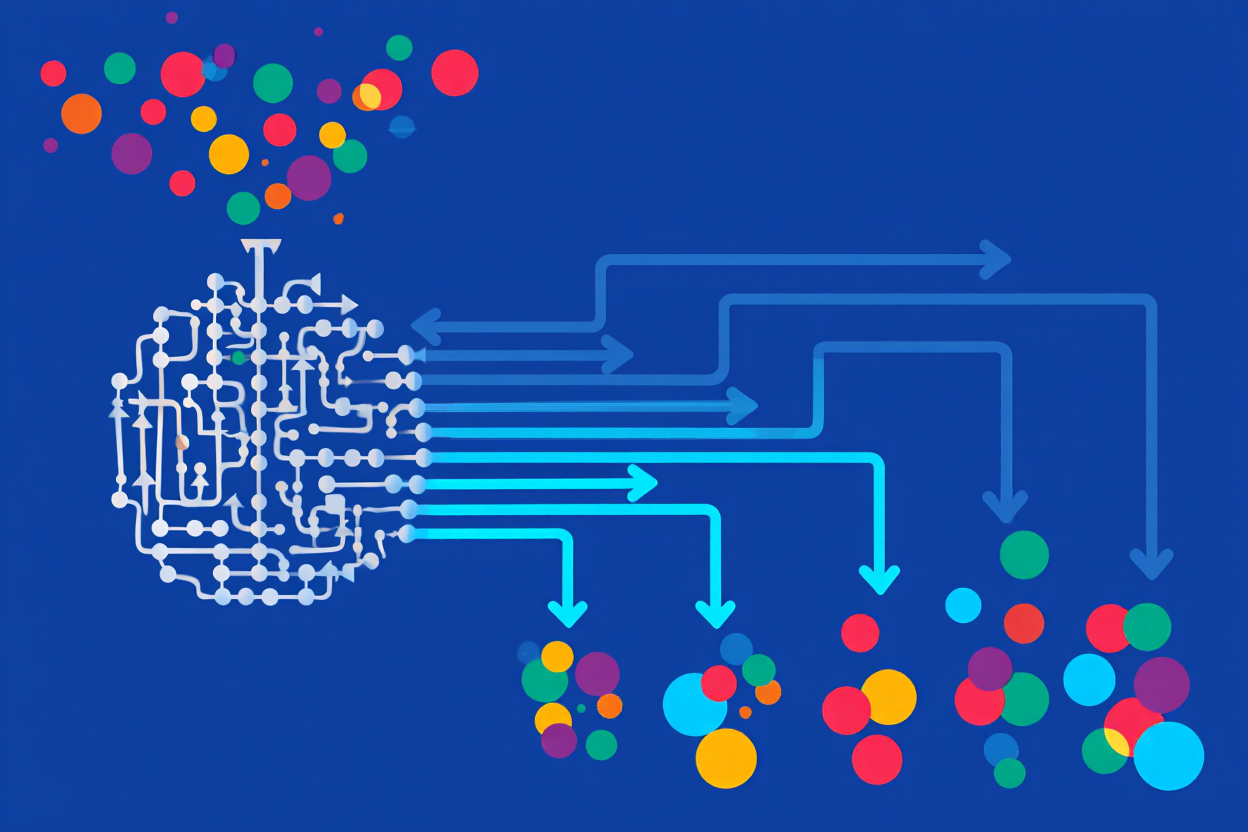
Instead of using your predefined rules (like age or location), the AI uses clustering algorithms (like K-Means) to find non-obvious groupings.
- Example: AI might discover a micro-segment of “Late-Night Browsers who buy accessories, but only after viewing pricing pages on a mobile device.” This highly specific segment can be targeted with a tailored late-night mobile accessory offer.
3. Send Time Optimization (STO) and Frequency Capping
AI makes Send Time Optimization hyper-individualized.
- STO: The AI analyzes each subscriber’s personal open history and schedules the email for the exact minute they are personally most likely to engage.
- Frequency Capping: AI detects early signs of subscriber fatigue and automatically reduces the send frequency for that user, preventing an unsubscribe and protecting your sender reputation.
⚡ Quick-Answer Summary: Part 2
Question: What is the biggest advantage of AI-driven email segmentation over traditional methods?
Answer: The biggest advantage is Predictive Analytics. AI moves you from being reactive (responding to an abandoned cart) to being proactive (predicting the customer is about to stop opening your emails altogether), allowing you to intervene effectively and directly impact Customer Lifetime Value (CLV).
Want to see how these AI techniques fit into your broader email strategy?
Part 3: Real-World Results and The Data Challenge
The results of leveraging AI are not theoretical; they are proven across various industries.
Case Studies: Conversion Rate Impact
Businesses implementing AI for segmentation are reporting significant metric improvements:
- Conversion Rates: Up to 82% increase in conversion rates when using dynamically segmented and personalized emails.
- Revenue: Brands see a 760% increase in revenue when campaigns are highly segmented and optimized by AI.
- Open Rates: Tools using AI-powered Send Time Optimization have increased open rates by 20-30% simply by delivering the message at the optimal time for the recipient.
The Data Challenge: GIGO (Garbage In, Garbage Out)
The biggest barrier to effective AI is data quality. If the data flowing into your machine learning model is inaccurate, incomplete, or siloed, the segments will be flawed.
- Focus on Integration: Ensure your CRM, e-commerce platform (Shopify/WooCommerce), and email tool are perfectly integrated to provide the AI with a complete customer view.
- Zero-Party Data is Key: Use surveys, preference centers, and quizzes to gather data directly from the user. This is the gold standard for AI input.
Want to see how these AI techniques fit into your broader email strategy?
Helpful External Resources on AI-Driven Segmentation
- Mailchimp: AI Customer Segmentation Strategies – A clear overview of how AI-powered customer segmentation works and why it matters.
- Mailchimp: Segmentation Tools Overview – See how modern ESPs use predictive segments and behavioral data in practice.
- Mailchimp: How AI Predictions Drive Business Insights – Explains predictive modeling, CLV predictions, and AI-driven customer groups.
Part 4: Frequently Asked Questions (FAQ)
This section provides concise answers to common questions about AI implementation.
Q: How does AI predict subscriber churn?
A: AI analyzes factors like recent opens, website visits, time spent on-site, and customer service interactions. It learns the pattern of a typical “fading” customer, assigns a Churn Risk Score, and alerts the marketer before the customer becomes completely inactive.
Q: Can I use AI segmentation with my current Mailchimp or Klaviyo account?
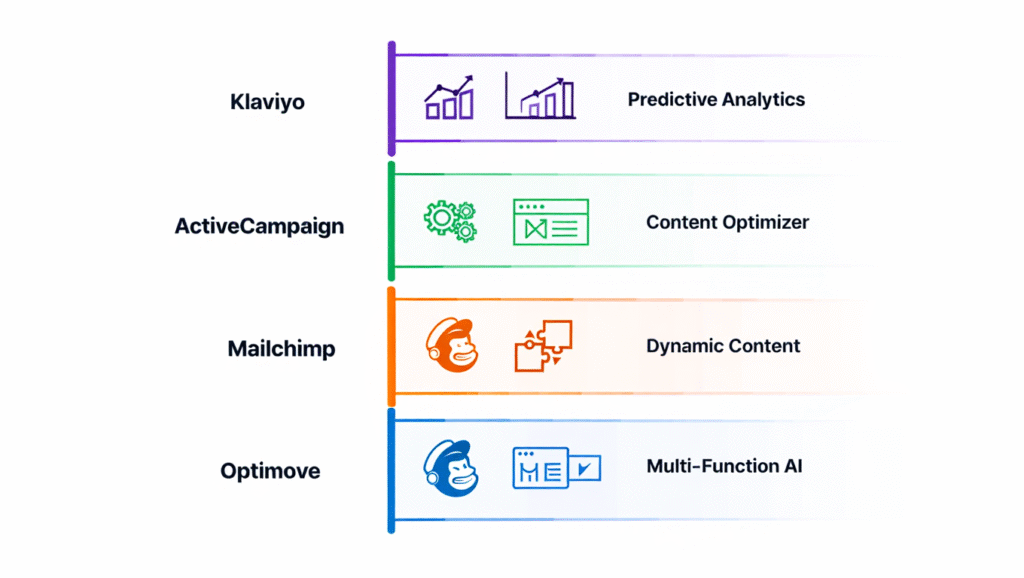
A: Yes. Major platforms like Klaviyo (for e-commerce CLV and churn prediction) and Mailchimp (for content optimization and predictive segments) have integrated these AI features into their standard paid plans. You don’t need a separate tool to begin.
Q: What is the difference between a static and a dynamic segment?
A: A static segment is fixed (e.g., “All customers who bought last year”). A dynamic segment updates constantly. If you create a “Highly Engaged” dynamic segment, a customer automatically joins when they open five emails and leaves when they don’t open one for 60 days. AI focuses on creating and managing these dynamic segments.
Q: Is AI email segmentation expensive for small businesses?
A: Basic AI features like optimized send-time and subject line suggestions are now standard in most mid-tier plans (around $50-$100/month). The high-end, custom predictive models are typically reserved for enterprise platforms, but entry-level tools have made the core benefits accessible.
Next Steps: Bring AI Segmentation Into Your Everyday Email Strategy
You don’t need a data science team to benefit from AI-driven segmentation. Start by improving your data quality, setting up a few simple segments, and letting your tools do more of the heavy lifting for you.
If you’d like a calm, beginner-friendly path that connects segmentation with the rest of your online business, you can start with my free Affiliate Marketing Starter Kit for Beginners . It walks through the basics of choosing a niche, setting up your website, and creating content that naturally supports segmented, relevant email campaigns.
For step-by-step training, website hosting, and community support in one place, I personally recommend Wealthy Affiliate . Many “ageless” beginners find it helpful to follow a structured course while they experiment with email, AI, and other marketing tools at their own pace.
Take one small step you can do this week—clean a segment, test a simple predictive feature, or set up a new micro-segment. Over time, these small improvements add up to a smarter, more profitable email list.