The Top AI Tools for Creative & Marketing Content in 2025
Contents
- 1 Introduction: Beyond the Blog—AI for Conversion and Creativity
- 2 Category 1: Best AI Copywriting Software (Conversion-Focused)
- 3 Category 2: AI Tools for Social Media Content & Management
- 4 Category 3: AI Tools for Creative Writing & Storytelling
- 5 Helpful External Resources
- 6 Final Thoughts: Let AI Take the Heavy Lifting, Not the Control
- 7 Frequently Asked Questions (FAQ)
Introduction: Beyond the Blog—AI for Conversion and Creativity
TL;DR: The top AI tools for creative and marketing content help you plan campaigns, write copy, design visuals, and test variations faster—while you stay in charge of voice, ethics, and strategy.
- Copy & campaigns: AI assists with headlines, ads, emails, and social captions.
- Data & testing: tools predict performance, run A/B tests, and track conversions.
- Visuals: AI design tools speed up graphics while you keep brand colors and style.
- Repurposing: turn one core idea into posts, emails, and simple video scripts.
- Human role: you provide the stories, examples, and final judgment AI can’t replace.
While Article 1 focused on long-form blogging, AI tools for content marketing today specialize far beyond the written article. They are performance engines, built to optimize conversion rates, generate highly personalized ad copy, and handle the unique demands of platforms like Instagram, TikTok, and LinkedIn.
The key difference between general AI writers and specialized AI copywriting software is the focus on metrics. Tools in this category often feature predictive performance scores, A/B testing variants, and deep social media integrations.
Here is our definitive list of the best AI tools for marketing and creative content in 2025, broken down by function.
If you’d like to see how these creative and marketing tools fit into a full blogging and content workflow, these guides walk through the bigger picture:
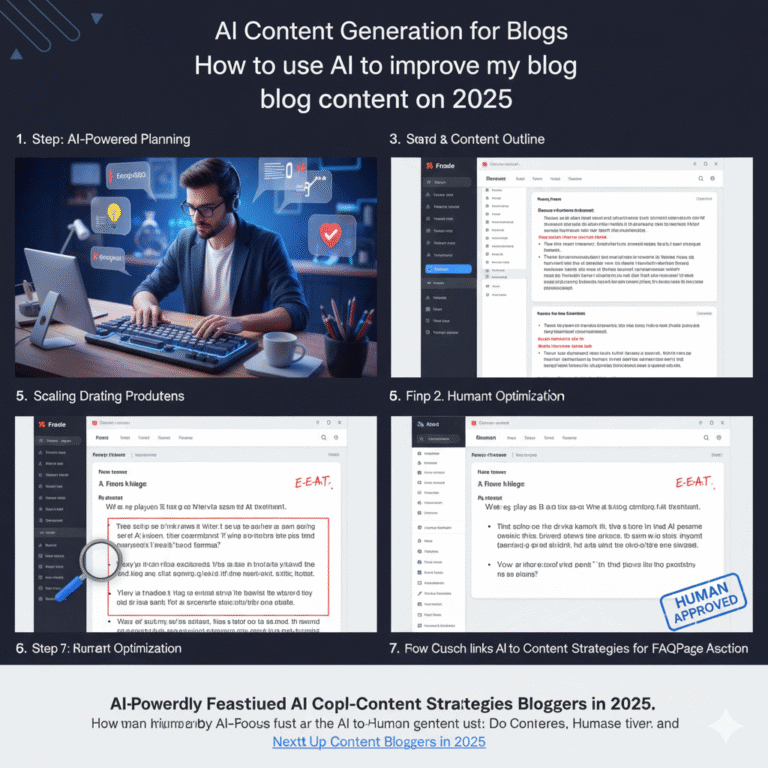
- AI Content Generation For Blogs: The Complete 7-Step Guide – See how AI supports planning, drafting, optimizing, and publishing blog posts.
- Best AI Tools For Blogging: The Ultimate Guide to Content Automation – Compare the main AI tools for long-form content and SEO.
- AI-Powered Content Strategies for Bloggers in 2025 – Learn how to connect AI tools, content types, and affiliate income into one calm system.
Category 1: Best AI Copywriting Software (Conversion-Focused)
This category is dominated by tools designed to generate high-performing, short-form copy for ads, landing pages, and email sequences. They prioritize frameworks like AIDA (Attention, Interest, Desire, Action) and PAS (Problem, Agitate, Solve).
1. Anyword: The Predictive Performance Engine
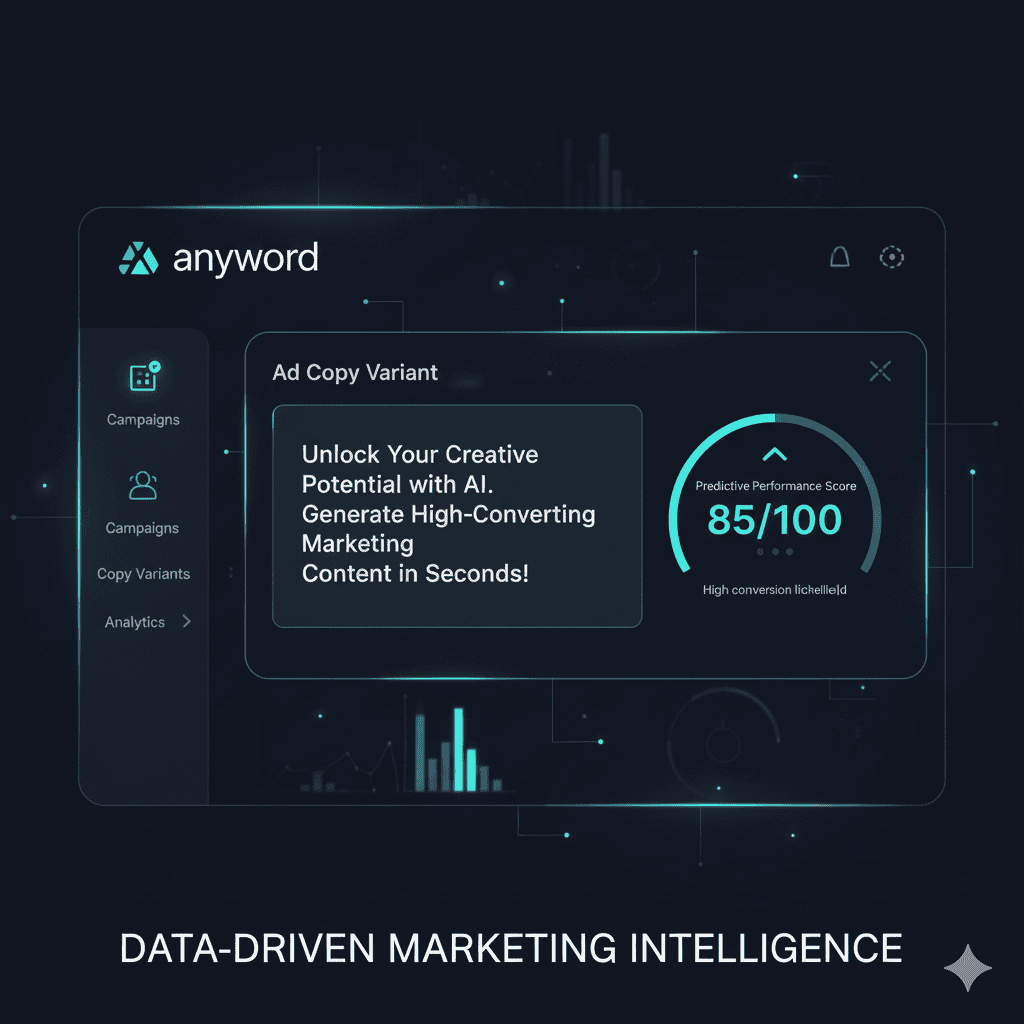
Anyword stands out as the best AI copywriting software for marketers who live and breathe conversion rates. Its proprietary model analyzes copy before it’s published, predicting its performance.
| Key Feature | Description |
| Predictive Score | Assigns a numerical score to copy variants, showing conversion likelihood for your target audience. |
| Customer Personas | Allows copy generation to be tailored specifically to defined demographics and buyer profiles. |
| Use Case: | Generating hundreds of ad copy variants (Facebook, Google, native) for A/B testing. |
| Pricing: | Starts around $49/month (Data-driven plan). |
| Pros | Cons |
| Data-driven insights reduce the need for expensive A/B testing. | Higher price point than general AI writing tools. |
| Excellent for ad copy and email subject lines where every word counts. | Can be overly focused on metrics, sometimes stifling pure creativity. |
2. Copy.ai: The Idea Machine for Short-Form Content
Copy.ai is celebrated for its incredible speed, intuitive interface, and massive library of templates. It’s an excellent choice for teams needing rapid ideation and a constant flow of fresh, creative marketing content.
Once you’ve explored these AI copywriting tools, these related guides show how to connect them to your content workflow:
| Key Feature | Description |
| 90+ Templates | Specialized tools for nearly every marketing asset (product descriptions, sales emails, value propositions). |
| Interface | User-friendly and fast, ideal for quick brainstorming sessions and overcoming writer’s block. |
| Use Case: | Generating product descriptions at scale for e-commerce platforms and fast social content. |
| Pricing: | Free plan available; Paid plans start at $36/month (Pro, billed annually). |
| Pros | Cons |
| Very intuitive interface with a short learning curve. | Less emphasis on deep SEO optimization compared to Frase or Jasper. |
| Free plan available, making it accessible for beginners. | Long-form content capability is secondary to short-form copy. |
Category 2: AI Tools for Social Media Content & Management
The next set of tools integrates content generation with the complexities of social media management, scheduling, and visual design. These are the best AI tools for social media content that automate the entire publishing workflow.
3. Canva’s Magic Studio: The Visual Content Creator
Canva has positioned itself as the go-to platform that combines design with content generation, making it the top tool for visual social media content.
| Key Feature | Description |
| Magic Design & Magic Write | AI instantly generates content and places it onto a visually stunning, platform-optimized template (Story, Carousel, Post). |
| Brand Consistency | Ensures all AI-generated visuals adhere to your predefined brand kit (colors, fonts, logos). |
| Use Case: | Generating branded, visual content and carousels for Instagram and Pinterest that require minimal design work. |
| Pros | Cons |
| Combines text and image generation in a single platform. | AI image features can be limited on the free tier. |
| Excellent for maintaining visual brand consistency across channels. | Primarily focused on visual design, with AI writing as a supporting feature. |

4. Hootsuite (with OwlyWriter AI): The All-in-One Scheduler
Hootsuite is traditionally a management platform, but its integration of OwlyWriter AI makes it a formidable tool for content generation and scheduling.
To expand your visuals and repurpose ideas calmly, explore these related tutorials:
| Key Feature | Description |
| AI-Driven Scheduling | Suggests the optimal time to post on each platform based on your historical engagement data. |
| OwlyWriter AI | Generates platform-optimized captions, post ideas, and even replies within the management dashboard. |
| Use Case: | Managing large-scale, multi-platform campaigns where consistency, timing, and team workflows are critical. |
| Pricing: | Plans start from $99/month, with custom enterprise tiers. |
| Pros | Cons |
| Seamlessly integrates content generation with scheduling and analytics. | High entry-level cost, making it impractical for solopreneurs. |
| Essential for large teams requiring approval workflows and centralized reporting. | Content generation is based on external AI models (like ChatGPT), not proprietary. |

Category 3: AI Tools for Creative Writing & Storytelling
These tools cater to the narrative side of content, helping to generate unique character ideas, compelling narratives, and nuanced language that is often lacking in standard marketing copy. This is where AI tools for creative writing meet your content marketing needs.
5. Sudowrite & Novelcrafter: The Narrative Accelerators
While not marketing tools, platforms like Sudowrite and Novelcrafter are essential AI tools for creative writing that can unlock narrative ideas for long-form content or brand storytelling.
- Use Case for Bloggers: Overcoming writer’s block on case studies, creating fictional scenarios to illustrate a complex concept, or generating unique metaphors and analogies to make technical content more engaging.
- The Difference: They are trained to prioritize vivid description, plot development, and emotional tone—skills that elevate any piece of human content marketing.
Helpful External Resources
- Google Search Central – Creating Helpful Content
- OpenAI – Responsible AI Usage Policies
- Canva – AI-Powered Design Features
- Buffer – AI Tools for Social Media Marketing
These references keep you updated on ethical, technical, and creative AI applications while maintaining authenticity.
Final Thoughts: Let AI Take the Heavy Lifting, Not the Control
AI tools for creative and marketing content in 2025 are like having a small team of helpers on your desk – writers, designers, video editors, and planners – all within reach whenever you log in. The goal isn’t to replace your voice, your stories, or your experience. It’s to speed up the “busy work” so you can spend more time on the parts you enjoy.
You don’t need to sign up for every shiny new tool. Pick one AI writing assistant, one visual/design tool, and one planning or organization tool. Use them to support your existing content plan: blog posts, emails, social media, or promotions for the programs you recommend.
As you grow more comfortable, you can explore new AI features – like repurposing content into multiple formats or using AI to test headlines and offers. Start small, stay consistent, and let AI become a quiet partner in your online business.
If you’re just getting started with affiliate marketing and want step-by-step guidance, my recommended training platform can walk you through picking a niche, building your site, and using tools like these the smart way.
If you’d like printable checklists and calm prompts to organize your AI content tools, download my free Affiliate Marketing Starter Kit for Beginners. It helps you connect your creative tools to a realistic affiliate income plan.
And if you’d like structured training, hosting, and built-in AI writing tools in one place, explore Wealthy Affiliate. It’s a beginner-friendly platform where retirees and creators learn SEO, content strategy, and AI-assisted marketing step by step.
Pick one AI tool from this list, test it on your next project, and keep only what truly lightens your creative load.
Frequently Asked Questions (FAQ)
Do I need all of these AI tools, or just one or two?
No, you don’t need every tool on this list. Most bloggers and marketers do well with a small stack: one main AI writer, one visual tool like Canva, and (optionally) a scheduler or social media helper. Start tiny and only add tools that clearly save you time or improve results.
Will using AI for creative and marketing content hurt my authenticity?
It can, if you copy AI outputs without editing. To stay authentic, use AI for ideas, rough drafts, and variations, then add your own examples, stories, and judgment. You remain the final editor, and your experience is what makes the content trustworthy.
How do I choose which AI tools are worth paying for?
Test each tool on your real content: a blog post, an email, or a small campaign. If it reliably saves you time, improves clarity, or helps you publish more consistently, it may be worth the cost. If it feels like extra work or “play,” it’s safe to skip.
Can I get started using only free or trial versions of AI tools?
Yes. Many creators start with free or trial versions of AI tools to see what fits their workflow. As your confidence and traffic grow, you can upgrade to paid plans when the extra features clearly support your goals.