
Last Updated on 4 days ago by Gila

Picture this: you have spent days building your first affiliate website, it finally looks decent, and now you are staring at that quiet little moment before launch.
This is where many beginners freeze.
Not because they are lazy. Not because they are not capable. Mostly because they are scared of missing something important.
If you are a retiree or late starter, that feeling makes sense. When a website is new, even small things can feel technical and high-stakes.
The good news is that launching your affiliate site does not need to feel dramatic.
You do not need a perfect website. You need a website that is clear, functional, trustworthy, and ready for your first readers.
This guide gives you a calm step-by-step launch checklist, so you know what to check before you go live and what to do after your site is live.
If you are still building the site itself, read my Website Setup Beginner Guide for Retirees first. And if you are still learning the business model, start with Affiliate Marketing 101 for Retirees.
TL;DR: What should you do before and after launching an affiliate website?
Before launch, make sure your site is clear, readable, mobile-friendly, and has the essential trust pages in place. After launch, focus on publishing content, checking links, improving internal navigation, and building steady momentum.
You do not need a giant launch day.
You need a simple checklist and one clear next step.
Why a launch checklist matters for beginners
When you are new, it is easy to focus on the wrong things.
Many beginners worry about tiny design details and forget the basics that actually affect reader trust.
A launch checklist helps you slow down and look at the site the way a visitor would.
That means checking:
- Does the site make sense?
- Is it easy to read?
- Do the pages work?
- Are the trust elements there?
- Is it ready for real content growth?
That is the real purpose of a launch checklist. Not perfection. Clarity.
Before you go live: 6 things to check
1. Make sure your site clearly says what it is about
When someone lands on your site, they should quickly understand what the site covers and who it is for.
If the homepage, title, and navigation feel vague, readers will not know what to expect.
Ask yourself:
- Can a first-time visitor tell what this site is about?
- Does the wording match my niche?
- Is the layout calm and easy to follow?
Clarity beats cleverness here.
2. Check that your basic pages are in place
Before launch, your site should have the basic pages that make it feel real and trustworthy.
At minimum, check for:
- Home
- About
- Blog
- Start Here or equivalent next-step page
- Affiliate Disclosure
- Privacy Policy
You do not need every future page done. You just need the core trust pages visible and working.
3. Test the site on mobile
This step gets skipped too often.
A site may look perfectly fine on a laptop and messy on a phone.
Before launch, open the site on mobile and check:
- headline readability
- menu behavior
- button spacing
- image size
- Overall scroll experience
If the site is hard to read on mobile, fix that first.
Nothing makes a new site feel unfinished faster than broken navigation.
Click through:
- main menu items
- footer links
- internal links in your first posts
- buttons and calls to action
Check every important path a beginner reader might take.
5. Add your first useful content before launch
A site with no useful content does not feel ready.
Before you launch, aim to have at least 3 to 5 helpful posts published.
They do not need to be masterpieces. They do need to be useful and relevant to your niche.
Examples could include:
- a beginner’s guide
- a how-to article
- a product roundup
- a simple FAQ-style article
Your content is what gives the site purpose.
6. Make sure your affiliate disclosure is visible
If your site will use affiliate links, your disclosure should be in place before you start adding them.
This is both a trust issue and a compliance issue.
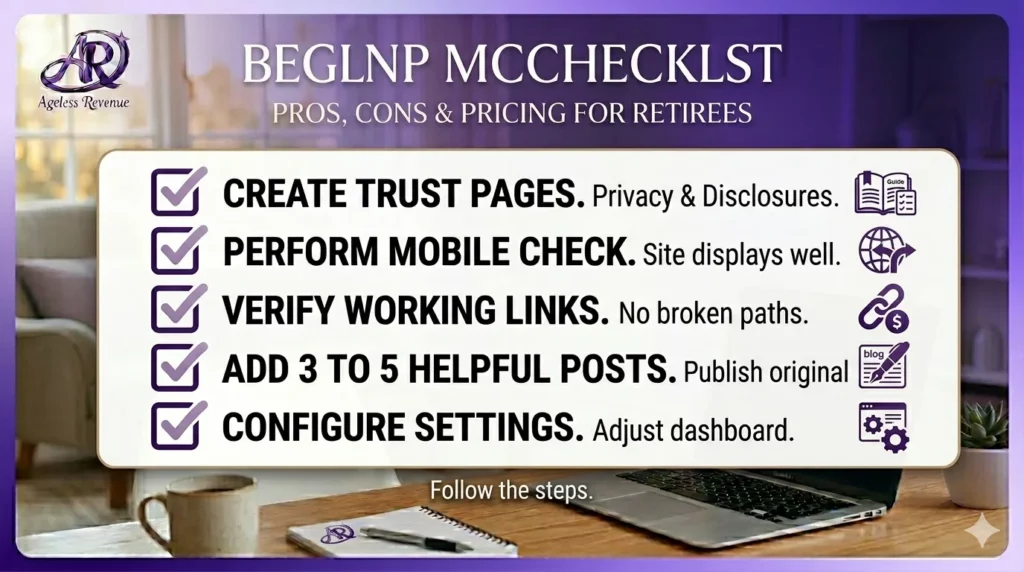
Make it easy for readers to find and use plain language.
You do not need a huge software stack to launch well, but you do need the basics in place. If you want a simple cost breakdown, read my guide to start affiliate marketing on a small budget.After you go live: 6 things to do next
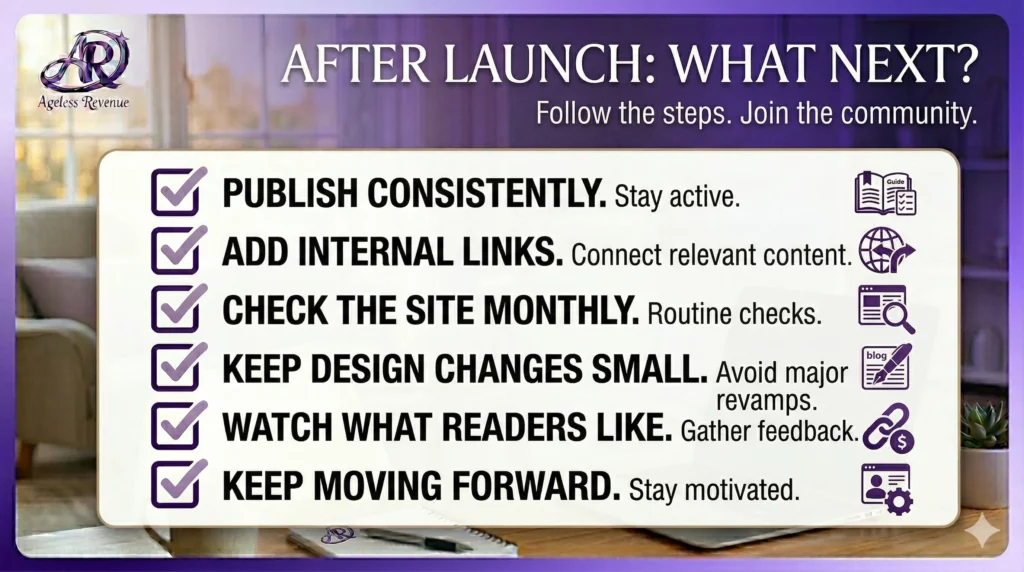
7. Publish consistently instead of redesigning everything
After launch, many beginners fall into a trap: they keep adjusting the site instead of building the content.
Once the site is live, the smarter move is to shift your focus toward publishing useful posts consistently.
Content is what turns a website into an affiliate asset.
As you add new content, start linking related posts together.
This helps readers move through your site and helps search engines understand how your content fits together.
For example, your affiliate marketing basics post can link to your website setup post, which can link to your launch checklist, which can link to your first review post.
That kind of structure makes your site stronger over time.
9. Check your site regularly for small issues
You do not need to obsess, but you do want to catch obvious problems early.
Check things like:
- broken links
- missing images
- weird spacing
- pages that stopped working
A simple monthly check is usually enough in the beginning.
10. Keep your design changes small
It is normal to notice things you want to improve after launch.
That is fine.
Just try not to rebuild the whole site every week.
Small improvements are better than endless redesign.
11. Begin tracking what readers respond to
As your site grows, you will start seeing which topics get clicks, which posts feel helpful, and which content deserves more attention.
You do not need deep analytics in week one. You just need to start noticing patterns.
12. Keep moving forward without waiting for perfection
This may be the most important one of all.
Your first site will improve as you use it.
You will spot better wording, cleaner layouts, smarter categories, and stronger article ideas over time.
That is normal. Growth comes from publishing, checking, improving, and repeating.
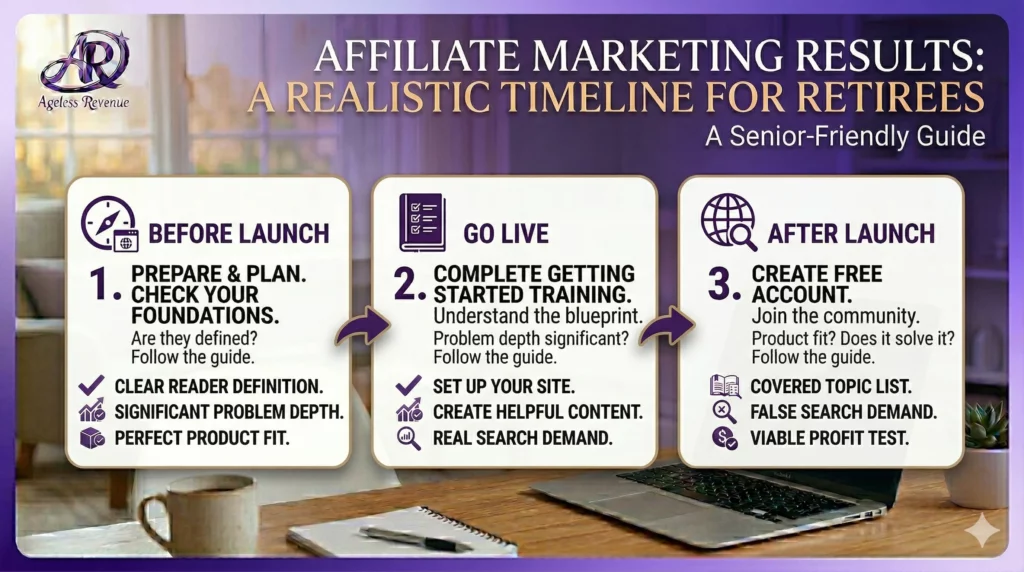
A simple launch sequence for retirees
If you want the launch process to feel easier, think of it in this order:
- Build a simple site
- Add the trust pages
- Publish 3 to 5 helpful posts
- Check mobile and navigation
- Launch
- Keep publishing
That is how progress begins.
Common launch mistakes to avoid
Waiting until everything feels perfect
A clear working site is better than a polished site that never gets published.
Launching with almost no content
Give readers something to read before you start promoting the site.
Ignoring trust pages
About, disclosure, and privacy pages matter more than many beginners think.
Changing the design instead of writing
Your first growth comes more from content than from design tweaks.
Thinking launch day is the finish line
Launch day is the beginning, not the end.
FAQ
How many posts should I have before launching?
Aim for at least 3 to 5 useful posts so the site does not feel empty.
Do I need an About page before launch?
Yes. It helps the site feel more trustworthy and gives readers context about who is behind it.
Should I launch even if the site is simple?
Yes. A simple, clear site is enough to begin, especially if the content is helpful.
What should I do right after the site goes live?
Focus on publishing more content, checking your internal links, and keeping the site clean and easy to use.
Do I need traffic before launch?
No. Launch first, then keep building content and improving the site steadily.
Final thoughts
Launching your first affiliate website does not need to be stressful.
You do not need a grand reveal. You need a site that works, a few useful posts, and a clear next step after launch.
Check the basics, go live, then keep building.
If you want help with the bigger beginner picture, read my Affiliate Marketing 101 for Retirees guide. If you are still working on the site itself, go to my Website Setup Beginner Guide for Retirees.
Ready to launch without the overwhelm?
Keep it simple, check the basics, and move forward. That is how real progress happens.
Leave a Reply