
Content marketing can sound like one more thing on an already crowded to-do list. If you run a small business, you are probably balancing customer service, scheduling, invoices, follow-up, and day-to-day operations already. The good news is that content marketing does not have to be fancy, expensive, or overwhelming to work.
At its core, content marketing simply means sharing useful content that helps people notice your business, trust your expertise, and remember you when they are ready to buy. That content might be a blog post, a short video, a customer success story, a simple email, a before-and-after photo, or a helpful checklist. It is not about being everywhere. It is about being useful in the right places.
For small businesses, this matters because trust is often the real sales engine. People want to buy from businesses that feel credible, approachable, and helpful. Good content does exactly that. It answers questions before a customer asks. It shows the quality of your work. It keeps your business visible even when you are not actively selling.
Another big advantage is that content keeps working after you publish it. A helpful blog post can bring search traffic for months. A strong FAQ video can answer the same customer question again and again. A local update on your Google profile can help the right people find you when they search nearby. One smart piece of content can save time while also building momentum.
If you are brand new, do not worry. You do not need a marketing degree. You do not need a giant audience. You do not need expensive software. What you do need is a simple plan, realistic consistency, and a willingness to create content that solves real problems for the people you want to serve.
In this guide, I will walk through the best free and low-cost content marketing strategies for small businesses, real-world examples, an easy planning template, common questions, and practical next steps. If you want a calmer, simpler way to market your business without relying only on ads, this is a great place to start.
TL;DR (Quick Wins For Small Business Content Marketing)
- Start small and stay consistent: one helpful post per week beats a burst of random content.
- Use low-cost channels first: your website, email list, Google Business Profile, and one social platform are enough to begin.
- Answer real customer questions: the best content often comes straight from the conversations you already have.
- Focus on quality over volume: one useful article or video can outperform ten rushed posts.
- Show real proof: reviews, photos, testimonials, and behind-the-scenes content build trust fast.
- Repurpose everything: one blog post can become emails, social posts, short videos, and graphics.
- Track simple numbers: clicks, leads, replies, bookings, and reviews tell you what is working.
- Keep your message practical: small businesses grow faster when content is helpful, local, and easy to understand.
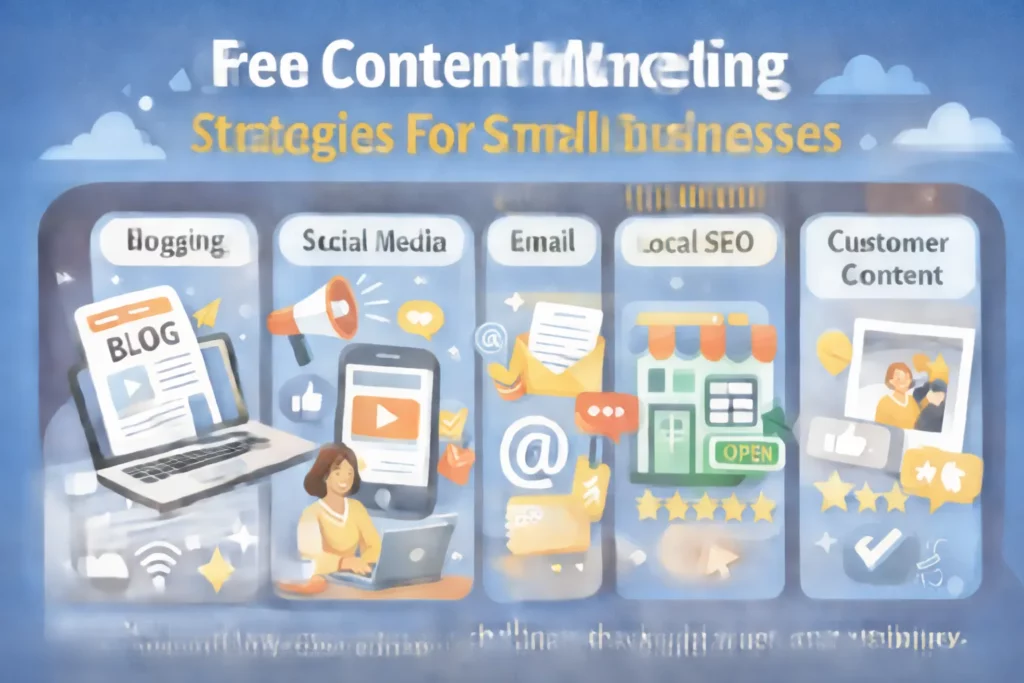
Best Free Content Marketing Strategies For Small Businesses
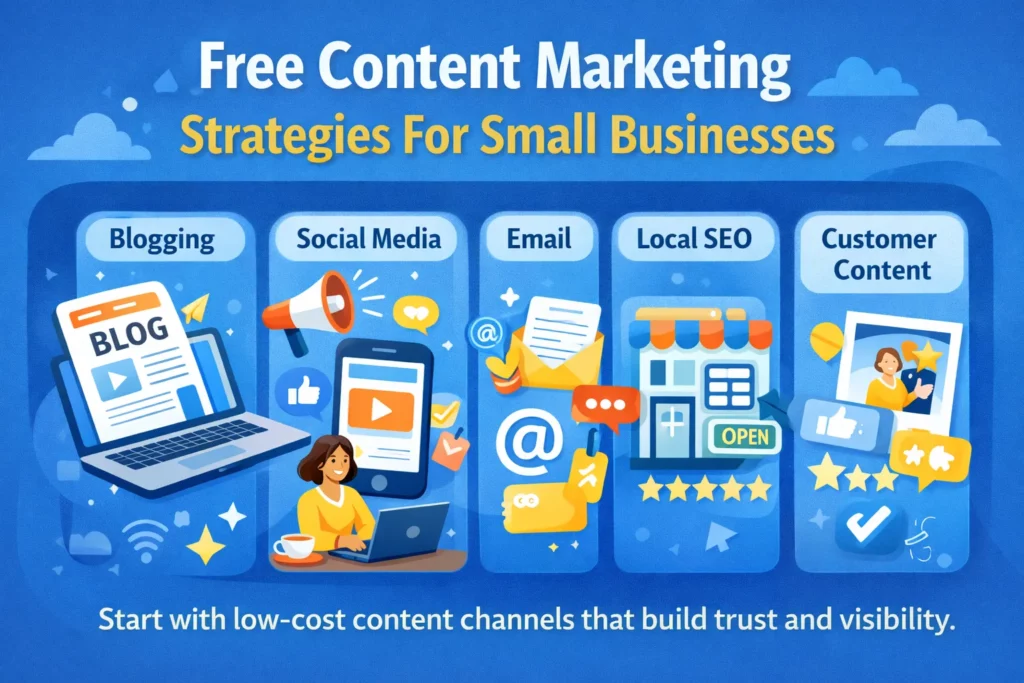
If your budget is tight, start here. Free content marketing strategies can still create strong results when they are focused and consistent. Many small businesses actually do better with simple, practical content because it feels more personal and believable than polished corporate marketing.
Blogging
A blog gives your business a home base for helpful content. It is one of the easiest ways to answer customer questions, explain your services, and show up in search results over time. A local plumber might publish a post about preventing frozen pipes. A bakery might write about custom cake ordering tips. A bookkeeper might share a simple small business tax checklist.
The best blog posts are not written to impress other marketers. They are written to help real customers. If you are not sure where to begin, make a list of the top ten questions customers ask before buying from you. Those questions are your content plan.
If your business also has an online income angle, you can study how beginner-friendly sites structure helpful content, like this guide to using AI without sounding robotic and this beginner guide to monetizing a niche site.
Social Media (Organic)
You do not need to be on every platform. For most small businesses, one or two channels are enough. A local service business may do well with Facebook and Instagram. A B2B consultant may get better results from LinkedIn. A visual product business may benefit from Pinterest or Instagram.
Organic social media works best when you share useful, human content. That includes quick tips, before-and-after photos, customer wins, process videos, FAQs, seasonal reminders, and community updates. Think less like a broadcaster and more like a helpful guide.
If you want a simple traffic channel that keeps working over time, this Pinterest marketing guide shows how evergreen visual content can keep bringing people back to your website.
Email Newsletters
Email is one of the most reliable ways to stay connected with past customers and interested leads. Social platforms can change their algorithms at any time. Your email list is something you own.
Your newsletter does not need to be long. A short weekly or twice-monthly email can work well. Share one useful tip, one customer story, one timely reminder, or one featured offer. If you are a local business, this can be especially effective for seasonal promotions, service reminders, and repeat business.
A simple email list also helps you turn one-time visitors into long-term subscribers. That matters because most people do not buy the first time they hear about a business.
Google Business Profile And Local SEO
If you serve a local area, your Google Business Profile is one of your most important content assets. It is not just a listing. It is a living business page where people can read reviews, see photos, check hours, ask questions, and decide whether to contact you.
Keep it current. Add accurate contact details, service areas, fresh photos, offers, and updates. A complete and active profile can help you stand out when people search for local solutions. Google’s own Business Profile Help Center is useful if you want step-by-step setup help.
Collaborations, Guest Posts, And User-Generated Content
Partnerships can stretch your reach without stretching your budget. A florist and a wedding photographer can feature each other. A gym and a nutrition coach can co-create a simple tip series. A local boutique and a stylist can film a short video together.
User-generated content is also valuable. Ask happy customers if you can repost their photos, reviews, or success stories. Real content from real customers often performs better than polished promotional posts because it feels believable.
Paid And Organic Content Marketing Strategies That Scale
Once your basics are working, you can add a few low-cost strategies to grow faster. These do not replace your foundation. They build on it.
Lead Magnets And Content Upgrades
A lead magnet is a useful freebie that gives people a good reason to join your email list. For small businesses, this could be a buying guide, checklist, worksheet, quote request guide, mini-course, or discount code.
The best lead magnets solve one small problem quickly. A dog groomer could offer a coat care checklist. A travel advisor could offer a vacation planning worksheet. A home organizer could offer a room-by-room decluttering list.
If you want to see a simple example of a lead magnet funnel in action, the Ageless Revenue Starter Kit is a good model of a clear, low-pressure free offer.
Evergreen Video Content
Video can feel intimidating, but small businesses do not need studio production. A smartphone, decent light, and a helpful topic are enough. Short evergreen videos work especially well when they answer common questions, explain your process, demonstrate results, or show how to use a product.
Try simple topics like “What happens during your first appointment,” “Three mistakes to avoid,” or “How to choose the right option for your budget.” These videos can live on your website, YouTube, Facebook, or Instagram and continue helping people long after you publish them.
Repurposing Content
This is one of the smartest ways to save time. Start with one core piece of content, then reuse it in different formats. A blog post can become:
- a short email newsletter
- Three social media tips
- a quick FAQ video
- a checklist graphic
- a short caption with a customer example
Repurposing helps small businesses stay visible without constantly creating from scratch. It also keeps your message consistent across channels.
Paid Content Promotion
If you have a little budget, promote your strongest content instead of boosting random posts. Focus on content that already has a clear purpose, such as a testimonial, lead magnet, useful local guide, or service explainer.
A small budget can go further when your targeting is specific, and your content is already useful. Start small, test one offer at a time, and keep the goal clear. Do you want more email signups, quote requests, bookings, or local visibility?
Review And Referral Programs
Happy customers are often your best marketers. Make it easy for them to leave reviews and tell others about you. You can follow up with a kind request, a direct review link, or a simple referral thank-you program.
Just make sure your claims stay honest and clear. The FTC’s advertising and marketing guidance is worth reviewing if you use testimonials, endorsements, special claims, or incentives.
Community Forums And Helpful Participation
Forums and groups can be useful if you show up to help, not just sell. Local Facebook groups, neighborhood communities, Reddit threads, and niche forums are full of people asking practical questions.
Answer honestly. Share helpful advice. Link only when it genuinely adds value. Over time, this can position you as the business people remember when they need help.
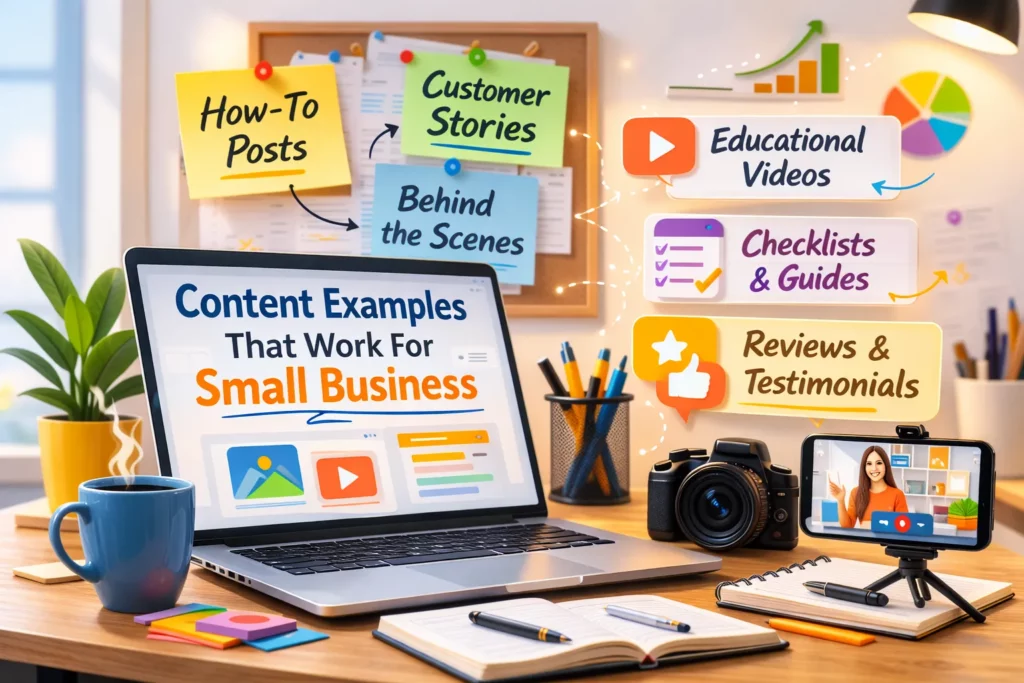
Business Content Examples That Actually Work
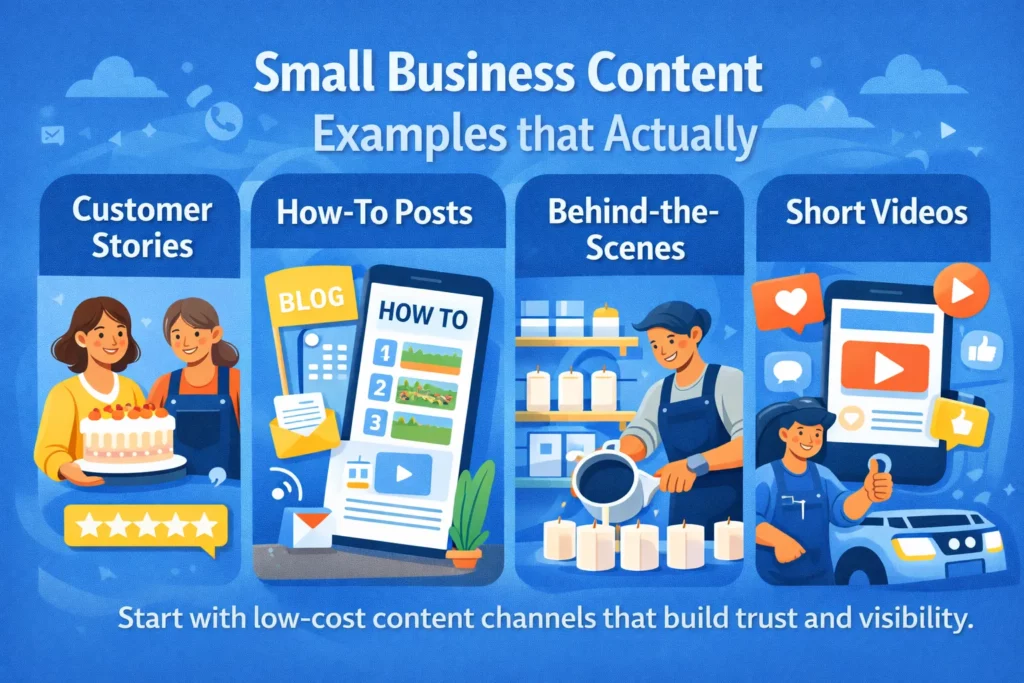
The strongest small business content usually feels specific, useful, and real. Here are formats that work across many industries.
How-To Blog Posts
A landscaper publishes “How To Prep Your Lawn For Spring.” A baker shares “How To Store Cupcakes For A Weekend Event.” A local accountant writes “What Small Business Owners Should Bring To Tax Prep Appointments.” These posts attract search traffic and pre-sell your expertise.
Customer Spotlights
Featuring a customer story helps future customers picture themselves working with you. A salon can share a makeover story. A tutor can share a student’s confidence win. A contractor can show the before, the process, and the final result.
Behind-The-Scenes Content
People like seeing how the work gets done. A candle maker pouring a batch, a mechanic inspecting brakes, or a photographer preparing a session gives your brand personality and credibility.
Educational Videos
A quick video that answers one common question can be reused everywhere. Keep it simple, friendly, and practical. Aim for clarity, not perfection.
Seasonal Checklists And Guides
Seasonal content gives you natural reasons to publish. A cleaning company can share a spring checklist. A travel business can share a holiday packing guide. A wellness coach can share a fresh-start habit tracker.
How To Build Your Own Content Marketing Plan
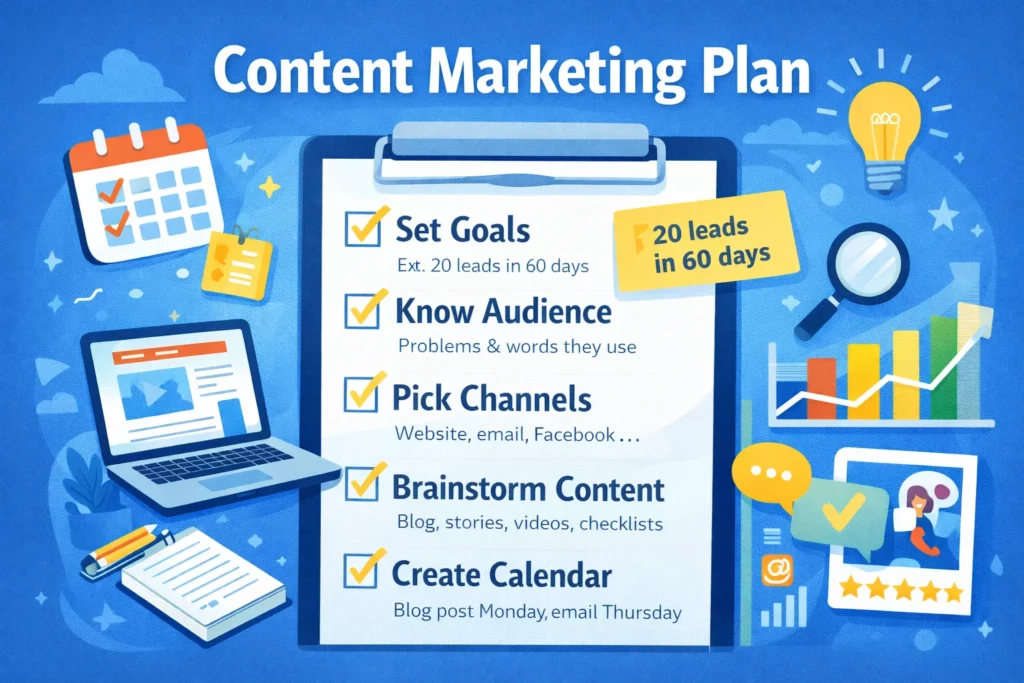
You do not need a complex marketing document. A one-page working plan is often enough for a small business.
Step 1: Set One Or Two Clear Goals
Choose goals that are simple and measurable. Examples include more bookings, more email subscribers, more local visibility, or more website traffic to a key service page. If you try to chase everything at once, your content will feel scattered.
Step 2: Know Your Audience
Write a short description of your ideal customer. What are they trying to solve? What worries them before buying? What words do they use? What makes them choose one business over another?
When you understand these questions, your content becomes more useful and more persuasive.
Step 3: Pick Your Main Channels
Choose one core content home and one or two supporting channels. A simple setup might be your website, blog, email, and one social platform. That is enough for many small businesses.
Step 4: Choose A Few Content Types
Do not try to create everything. Pick three or four repeatable content types, such as:
- how-to blog posts
- customer stories
- short videos
- email updates
- checklists or quick tips
Step 5: Create A Basic Calendar
Planning ahead reduces stress. A simple calendar might include one blog post, two social posts, one email, and one customer spotlight each week. You can keep this in a notebook, spreadsheet, or shared document.
Step 6: Measure What Matters
You do not need complicated reporting. Track the numbers that connect to business growth: website visits, email signups, inquiries, quote requests, review count, bookings, and top-performing content. If you want help learning the basics, Google has an Analytics guide for beginners and small businesses.
Simple Content Marketing Plan Template (Ready To Use)
Use this as a starting point for your own plan.
- Business Goal: Example: Get 20 new leads in the next 60 days.
- Target Audience: Describe your ideal customer in two or three clear sentences.
- Main Channels: Website, email, Facebook, Instagram, LinkedIn, Pinterest, or YouTube.
- Content Types: Blog posts, videos, testimonials, checklists, reviews, FAQs, or behind-the-scenes updates.
- Posting Schedule: Example: one blog post, two social posts, and one email each week.
- Seasonal Promotions: List upcoming dates, events, or campaigns.
- KPIs: Website visits, leads, bookings, replies, reviews, and conversions.
- Tools Needed: Canva, Google Docs, email platform, scheduling tool, phone camera.
- Top Tasks This Month: Choose three to five practical actions only.
If you want a beginner-friendly online content system you can adapt over time, it also helps to study how simple offer funnels work. This getting started guide for Wealthy Affiliate is a useful example of clear next-step content for beginners.
Key Principles Behind Winning Content Marketing For Small Businesses
Tools matter less than principles. Across industries, the same basics keep showing up.
- Be helpful: solve real problems instead of posting just to fill space.
- Be clear: simple language usually converts better than clever wording.
- Be trustworthy: use honest claims, real examples, and realistic promises.
- Be consistent: a little content published regularly beats long gaps.
- Be customer-focused: content should answer what your audience cares about, not only what you want to say.
- Be patient: content marketing compounds over time.
Small business owners often give up too early because content does not produce instant results. But this is a long-game strategy. The value builds as your library grows, your brand becomes more recognizable, and your best pieces continue working in the background.
Best Tools For Small Business Content Marketing
You do not need a big software stack. Start with simple tools you will actually use.
- Canva: for social graphics, checklists, and simple visuals.
- Google Docs or Google Sheets: for planning, brainstorming, and content calendars.
- Email platform: for newsletters and lead magnets.
- Scheduling tool: for basic social media planning.
- Google Business Profile: for local presence and review management.
- Google Analytics: for website measurement and simple reporting.
- Your phone camera: for quick videos, customer stories, and behind-the-scenes content.
The best tool is not always the most advanced. It is the one you can use consistently without adding friction.
Leave a Reply