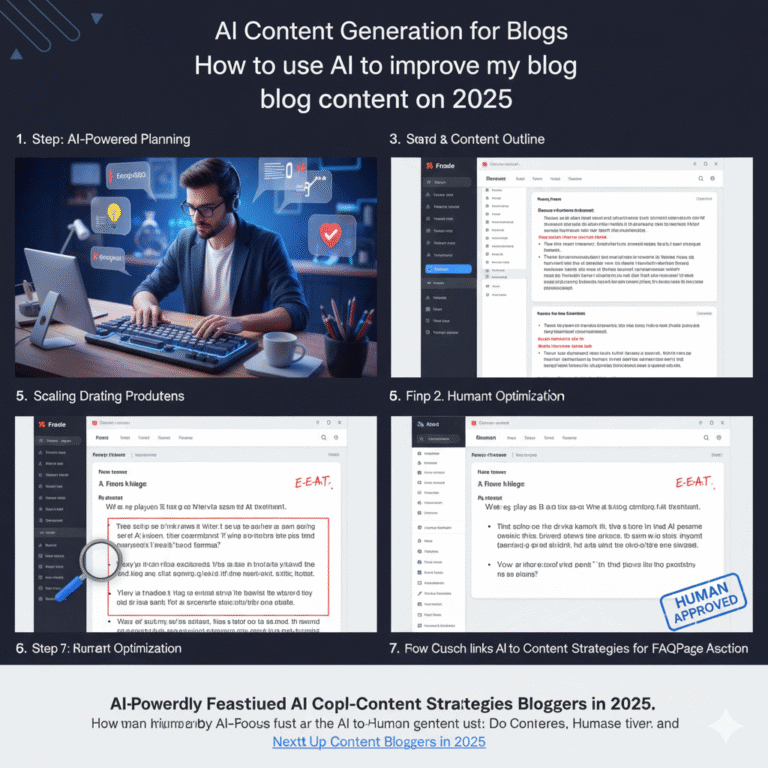
3 Advanced AI Writing Templates for Effective Blogging
Last Updated on 2 months ago by Gila
Advanced AI Content: Capabilities & Templates for Maximum Impact
In this guide, you’ll walk through three calm AI writing templates for blogging, you can reuse for almost every blog post you publish.
TL;DR: These 3 advanced AI writing templates give you reusable “bones” for nearly any blog post. You stay in charge of ideas, tone, and examples—AI just helps fill in the structure faster.
- Template 1: Problem → Promise → Plan → Proof → Next Step.
- Template 2: Comparison/Review with honest pros, cons, and clear winner.
- Template 3: Step-by-step tutorial or checklist you can turn into lead magnets.
- Use AI for drafts: ask it to follow the template, then rewrite in your own voice.
- Edit for truth: add your stories, screenshots, and gentle CTAs for affiliate links.
Primary Keywords: Best AI Capabilities For Content Creation, AI Writing Templates For Effective Blogging
Secondary Keywords: Advanced Prompt Engineering, Sentiment Analysis, Entity Recognition
Schema Recommendation: Article and FAQPage
Introduction: The New Frontier of AI-Powered Content
You’ve moved past basic AI content generation and mastered the core workflow. Now, it’s time to unlock the best AI capabilities for content creation—the features and techniques that transform AI from a writing assistant into a true strategic partner.
For experienced bloggers and content marketers, success in 2025 isn’t about using a tool; it’s about mastering advanced prompt engineering and leveraging sophisticated AI functions like Sentiment Analysis and Entity Mapping. These advanced applications directly enhance E-E-A-T, improve content precision, and save hours of high-level strategic work.
This guide details the advanced AI capabilities and frameworks needed to deliver maximum impact.
Part 1: Advanced AI Capabilities (The Science of Content)
The following features separate the premium, strategically valuable tools from basic LLMs. They directly support data-driven strategy and quality.
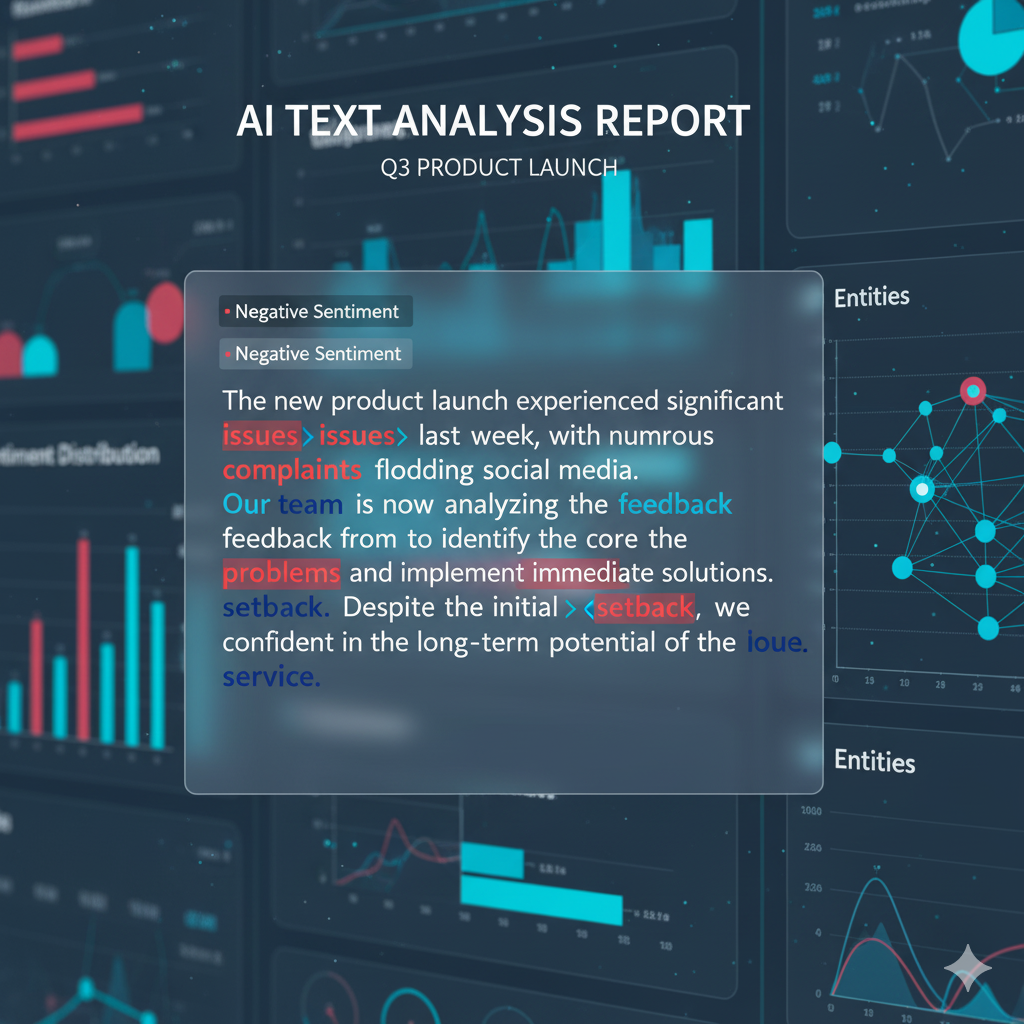
1. Sentiment and Tone Analysis
This capability allows you to measure the emotional impact of your writing, moving beyond correctness to conversion.
- Capability: AI analyzes text (yours or a competitor’s) and scores it for overall emotional tone (positive, negative, neutral) and specific emotions (frustration, excitement, urgency).
- Use Case for Bloggers:
- Audience Resonance: Test a headline to see if it reads as “authoritative” or “aggressive.”
- Competitor Analysis: Analyze customer reviews on a competitor’s product to pinpoint their emotional pain points, which you can then address in your content.
- Internal Consistency: Use the feature to ensure your sales page copy generates an “urgent” sentiment, while your help article generates a “calm” sentiment.
2. Entity Recognition and Mapping
This is the ultimate AI capability for implementing Entity-Based SEO (Article 4, Pillar 3).
- Capability: AI identifies and maps every key concept, person, place, or organization (entities) within a body of text.
- Use Case for Bloggers:
- Topical Depth: Feed the AI your draft and ask, “What entities are missing compared to the top 5 ranking pages?” This is the fastest way to achieve comprehensive topical coverage.
- Internal Linking: Automatically identify every relevant entity on a page and suggest internal links to supporting articles where that entity is a focus.
- Example: If you write about “Frase,” the AI identifies it as a “Content Optimization Platform” and recommends linking to your “Best AI Tools” article.
3. Custom AI Workflows and Prompt Chaining
The best AI capabilities for content creation are often created by the user, not the developer. Workflow automation allows you to connect multiple steps into a single action.
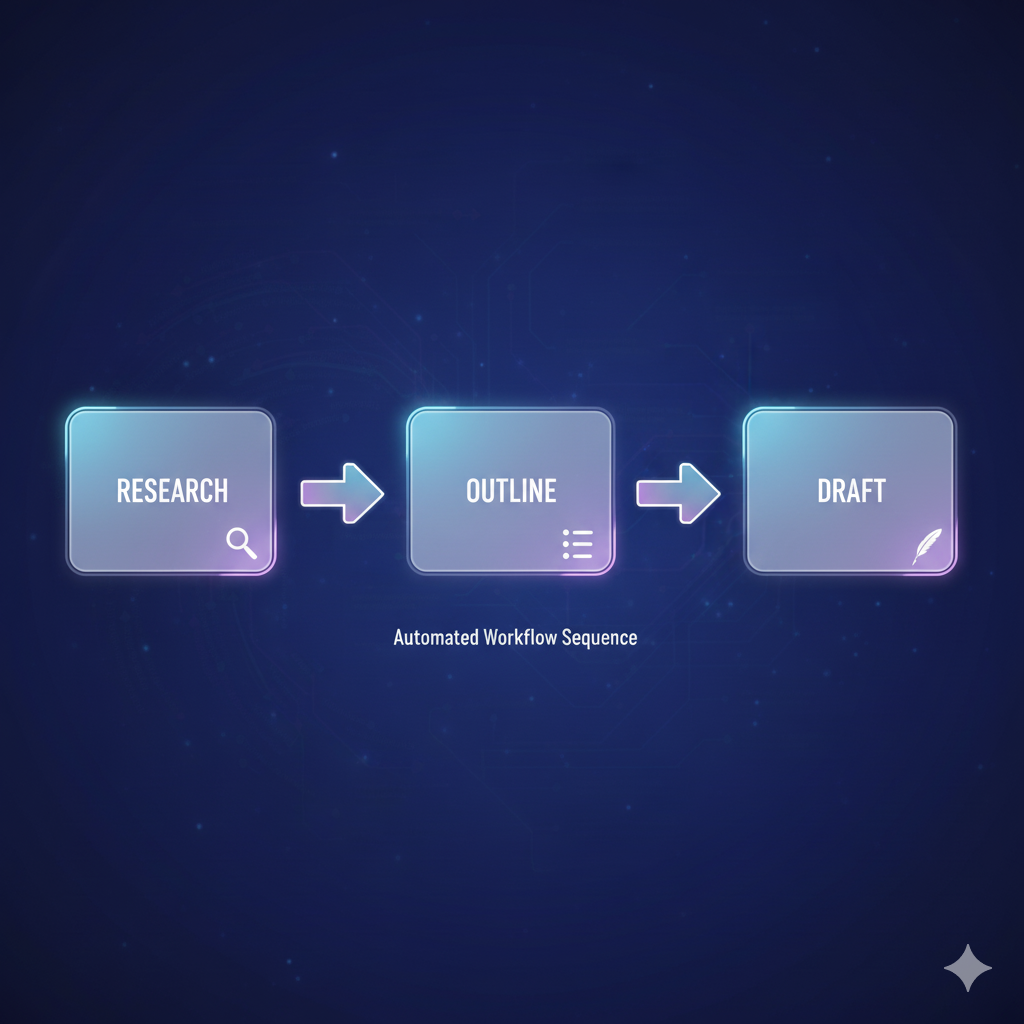
- Capability: Chaining multiple prompts together so the output of one step (e.g., Outline Generation) becomes the input for the next step (e.g., Draft Section 1).
- Use Case for Bloggers: Automate your entire research and drafting process:
- Prompt 1 (Research Agent): Analyze SERP for keyword [X].
- Prompt 2 (Outline Agent): Create a 5-section outline based on Prompt 1’s findings.
- Prompt 3 (Drafting Agent): Write the Introduction and Conclusion using a persuasive tone.
Part 2: AI Writing Templates for Blogging (The Art of the Prompt)
These frameworks are the advanced AI writing templates for effective blogging. They instruct the AI on how to think before it writes.
Template 1: The Role-Based Persona Prompt (RBP)
This fundamental template is the easiest way to elevate the quality of your output.
| Component | Description | Example Input |
| [Role] | Define the persona the AI must assume. | Act as a veteran investigative journalist. |
| [Goal] | Define the purpose of the output. | Create a balanced analysis of the risks and benefits of AI in finance. |
| [Constraints] | Set limitations on length, tone, and format. | Use a formal, skeptical tone. Format as an H2 section, 600 words max. Must cite 3 external reports. |
| [Context] | Add specific knowledge or proprietary data. | Reference the recent bank failure data from Q3 2025 that I provided above. |
Why it works: It forces the AI to use domain-specific language and reasoning, instantly boosting the perceived Expertise of the content.
Use Template 1 With a Clear Niche and Reader in Mind
Template 1 works best when you know exactly who you’re writing for and what small problem you’re solving. These guides help you get that clarity:
- Top 10 Online Business Ideas Perfect For Retirees (2025) – Choose a calm, realistic direction for your content.
- The Do’s And Don’ts Of Niching Down Online Business – Make sure your topic is focused enough for your AI-powered posts to stand out.
- How Does Affiliate Marketing Work? Easy Beginner Guide (2025) – See how problem–solution posts lead naturally to affiliate clicks and commissions.
Template 2: Few-Shot Prompting (FSP) for Tone and Style, Comparison & Review Blueprint
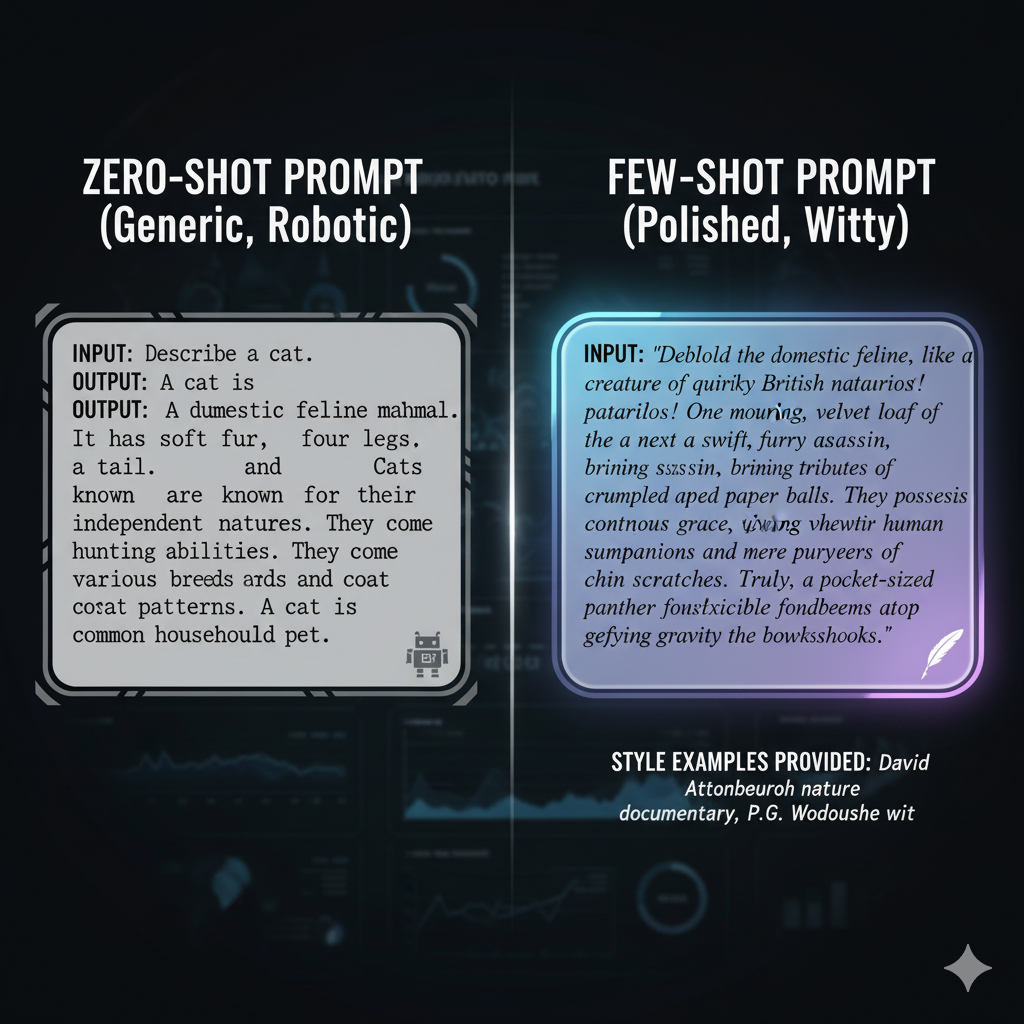
Use this framework when you need the AI’s output to consistently match your brand’s unique, nuanced style.
- Framework: Instruction + 2-3 Examples + Final Request.
- Action: Provide the AI with two examples of successful product descriptions (or email subject lines) that perfectly match your brand voice.
- Example Prompt (FSP):Instruction: You are a witty, slightly cynical brand writer. Your task is to write a blog post conclusion. Example 1 (Tone Sample): “So, there you have it. Go forth and conquer your inbox, or just scroll Instagram. Either way, at least you’ll be doing it with better data.”Example 2 (Tone Sample): “Stop chasing the next shiny object. We both know that ends in a canceled subscription. Focus on the basics, and you’ll actually win.”Final Request: Now, write a conclusion for an article about the best CRM software, using this witty, cynical tone.
Why it works: The AI picks up on the pattern, rhythm, and vocabulary of the examples, delivering an output that feels far less generic than a basic tone command.
Want Real Examples of Reviews and Comparisons Using This Template?
Template 2 is perfect for tools and programs. These examples show how to stay honest while still guiding readers to a smart choice:
- Wealthy Affiliate Review 2025: Honest Pros, Cons & Verdict – A calm, detailed review using clear sections and proof.
- Wealthy Affiliate vs Other Affiliate Programs: An Honest Beginner’s Comparison (2025) – A comparison-style post that declares a winner for specific readers.
- Best Passive Income Affiliate Programs For Retirees Over 60 – An example of how to present multiple programs in a helpful, non-pushy way.
Template 3: Chain-of-Thought (CoT) for Reasoning, Step-by-Step Tutorial & Checklist
Use this when you need the AI to solve a complex logical problem or justify a recommendation.
- Framework: Question + The Command: “Let’s think step by step.”
- Action: Force the AI to articulate its reasoning before giving the final answer.
- Example Prompt (CoT):Question: Given the current traffic metrics and keyword difficulty for the topic ‘AI Content Strategy,’ should a new blogger focus on creating one 5,000-word pillar or five 1,000-word cluster articles first?Command: Let’s think step by step, analyzing the difficulty score versus the time-to-rank for a new domain. Then provide your final recommendation.
Why it works: CoT reduces factual errors (“hallucination”) by forcing the model to slow down its cognitive process, making its output more reliable for strategic decisions.
Turn Template 3 Into Tutorials, Lead Magnets, and Calm Systems
Step-by-step templates are perfect for blog posts, PDFs, and mini-courses. These guides show how to plug them into your wider system:
- AI Content Generation For Blogs: The Complete 7-Step Guide – Use AI to fill in tutorial sections without losing your voice.
- Online Business Plan Template: Simple 1-Page Guide (2025) – Turn your tutorials into a simple plan for your whole business.
- Affiliate Marketing Starter Kit for Beginners – See how checklists and templates become powerful lead magnets.
Helpful External Resources for AI Writing Templates
- Google Search Central – Creating Helpful, Reliable Content
- OpenAI – Usage Policies and Responsible AI Guidelines
- HubSpot – How to Use AI Writing Effectively
- Originality.ai – Best Practices for AI-Assisted Writing
Use these as neutral references while you adapt the three templates in this guide to your own blog and niche.
Conclusion: Content Creation is Now Prompt Engineering
These 3 advanced AI writing templates aren’t meant to box you in—they’re here to remove decision fatigue. Once you know the basic structure of a problem–solution post, a comparison, and a step-by-step tutorial, you can reuse them over and over with new topics and products.
If you’d like printable checklists and gentle prompts that pair nicely with these templates, download my free Affiliate Marketing Starter Kit for Beginners. It helps you turn drafts into a simple, realistic affiliate income system.
And if you’d like structured training, hosting, and built-in AI tools under one roof, you’re welcome to explore Wealthy Affiliate. It’s a beginner-friendly platform where you can practice these templates, learn SEO, and grow your blog in a calm, step-by-step way.
Pick one of the three templates, apply it to your very next post, and let AI help you fill in the middle. Then edit, publish, and improve the next one. That’s how these templates turn into a steady, sustainable writing rhythm.
For the advanced blogger, the key to scaling content creation in 2025 lies in mastering the art of the input, not just reacting to the output.
By leveraging best AI capabilities for content creation, like Entity Mapping and adopting sophisticated AI writing templates for effective blogging (RBP, FSP, CoT), you stop generating basic drafts and start generating strategically optimized, high-authority content. Your value is no longer in writing 1,000 words an hour, but in writing a single, perfect prompt that directs the machine to do your bidding.
Frequently Asked Questions (FAQ)
Do I need to use all three templates for every post?
No. Most of the time, you will pick just one template that fits the goal of the post. For example, a review fits Template 2, and a how-to guide fits Template 3. The idea is to reuse the same structure often so writing feels lighter.
Can I use these templates without any AI tools?
Yes. These are writing templates first and AI prompts second. You can follow the same sections by hand, then bring in AI only when you want help with ideas, transitions, or alternative phrasings.
What is the biggest mistake when using AI writing templates?
The biggest mistake is copying AI output directly into your blog without editing. That can lead to generic, inaccurate, or repetitive content. Always add your own examples, stories, and checks for accuracy.
How often should I reuse the same template?
You can reuse a good template as often as you like. Most readers never notice the underlying structure—they only care that the article is clear, helpful, and honest. Vary your examples, tone, and visuals so each piece still feels fresh.