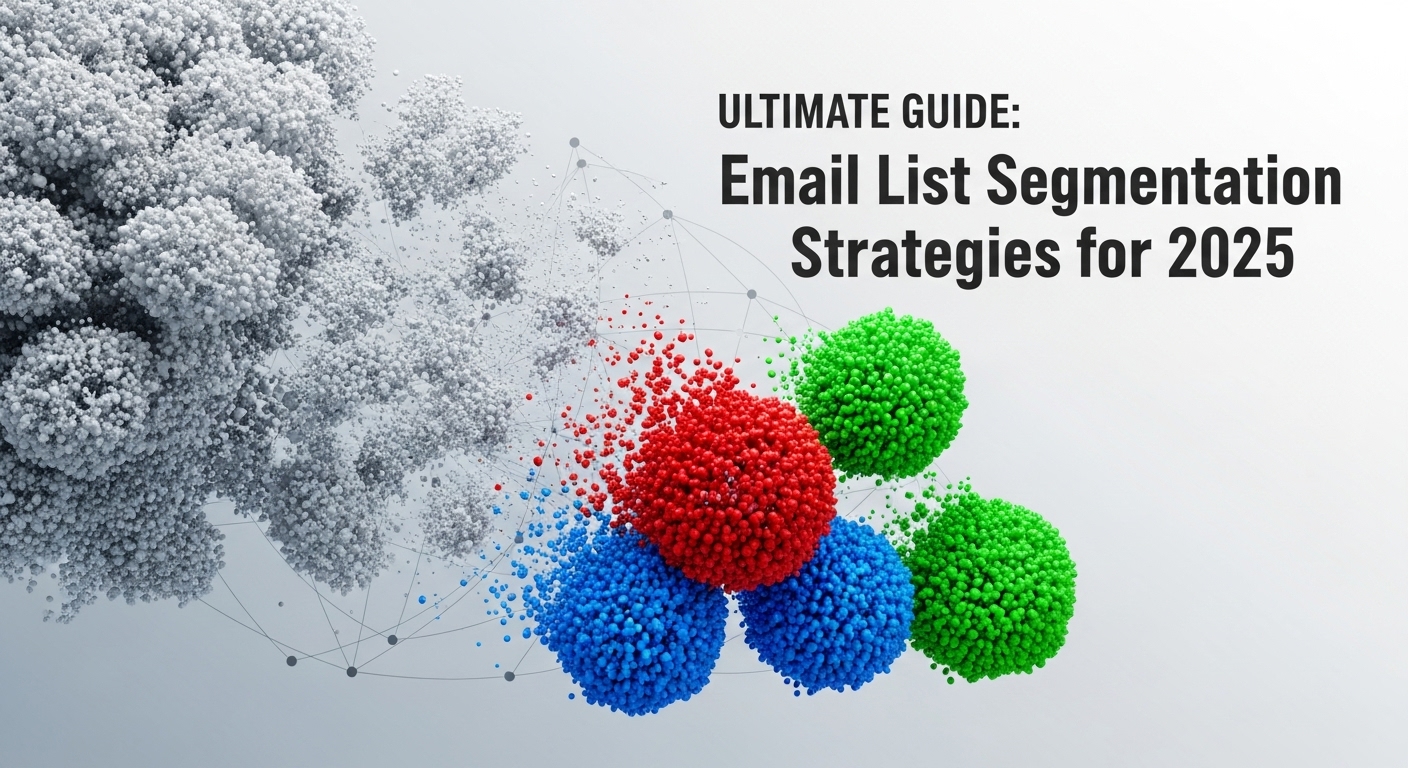
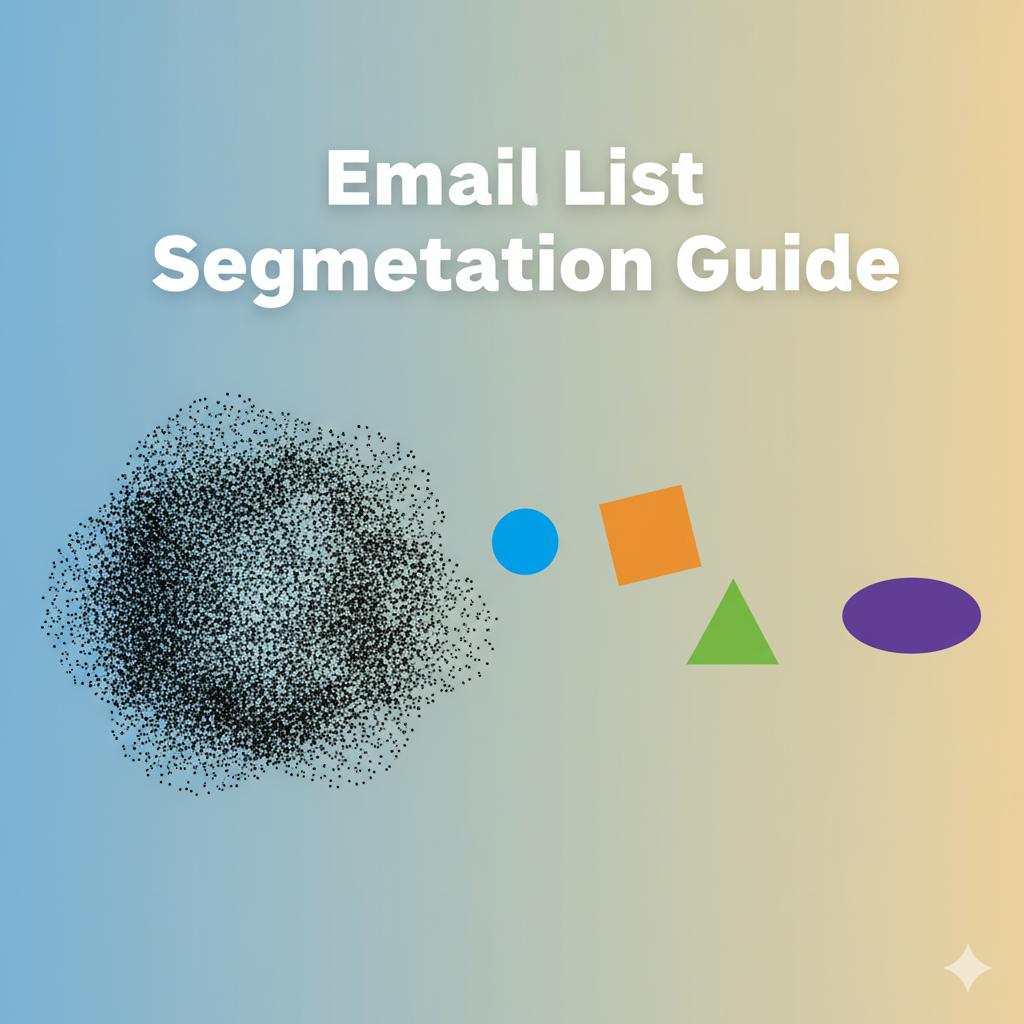
A diagram illustrating email list segmentation, showing a large, disorganized mass of subscribers separating into four smaller, targeted, and color-coded groups.
The Ultimate Guide to Email List Segmentation: What It Is, Why It’s Necessary, and Strategies for 2025
Introduction: The Segmentation Imperative
For too long, the default approach to email marketing has been what’s known as “batch and blast”—crafting a single message and sending it to your entire mailing list. In 2025, that strategy is no longer a growth path; it’s a fast track to the spam folder and the unsubscribe button.
If you’ve noticed your email open rates plummeting, click-through rates stalling, and revenue lagging, the problem isn’t email itself—it’s relevance. Your subscribers are diverse, but your message is generic.
The solution is the core strategy used by the world’s most successful email marketers: email list segmentation.
Segmentation is the process of grouping your subscribers into smaller, more specific lists based on shared traits, behaviors, or preferences. It turns your one-way announcement into a series of personalized, one-on-one conversations.
This ultimate guide will break down the foundational principles, show you exactly what email list segmentation is and why it is important, and lay out the advanced email segmentation strategies for 2025 that will finally unlock hyper-relevance and maximum engagement.
TL;DR: Email list segmentation means sending different emails to different groups of subscribers so your messages stay relevant, welcome, and profitable.
Segmentation turns one generic list into smaller, focused groups based on traits, behavior, or interests.
Relevant emails get higher open and click rates and directly increase conversions and revenue.
Better engagement improves deliverability, keeping you in the primary inbox instead of the spam folder.
Start with a few core segments (like lifecycle stage and engagement) and refine over time.
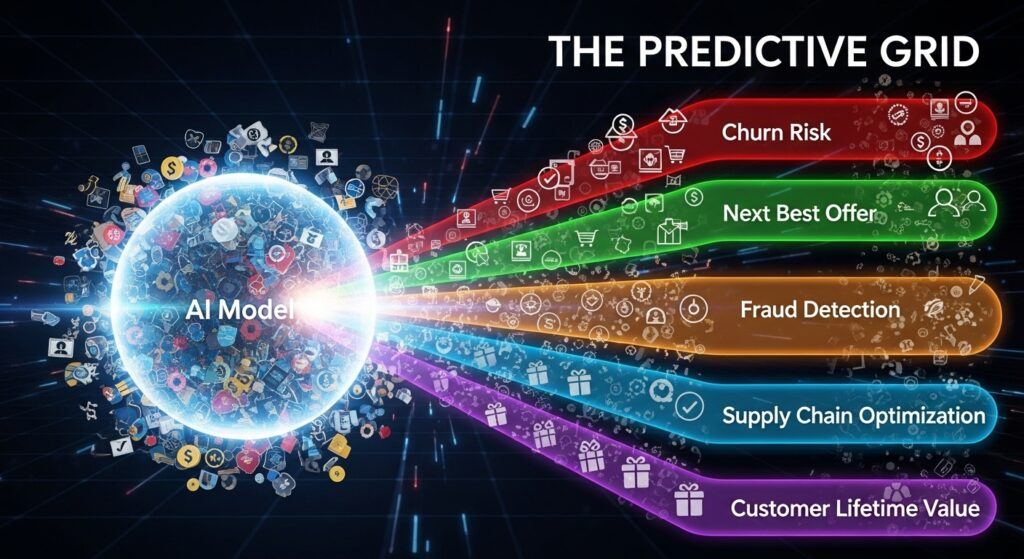
As your data improves, AI and predictive models can automatically spot “churn risk” and “next best offer” segments.
You don’t need a huge list to get results—segmentation is a mindset, not a volume requirement.
Part 1: Segmentation 101: The “What” and “Why”
What Is Email List Segmentation, and Why Is It Important?
To truly master this strategy, we must first cover the Email List Segmentation Basics.
Simply put, What Is Email List Segmentation? It is the practice of dividing your total email subscriber list into smaller, more manageable groups (or segments) based on data points you have collected about them. Instead of sending a generic “Dear Subscriber” email to 10,000 people, you might send one version to “First-Time Visitors” and a different one to “Repeat Buyers of Product X.”
It’s about sending the right message to the right person at the right time.
Why Is Email List Segmentation Necessary For Marketing Success?
In a competitive digital landscape, personalization is the non-negotiable expectation of the modern consumer. Here is a breakdown of the critical business outcomes that answer the question: Why Is Email List Segmentation Necessary For Marketing?
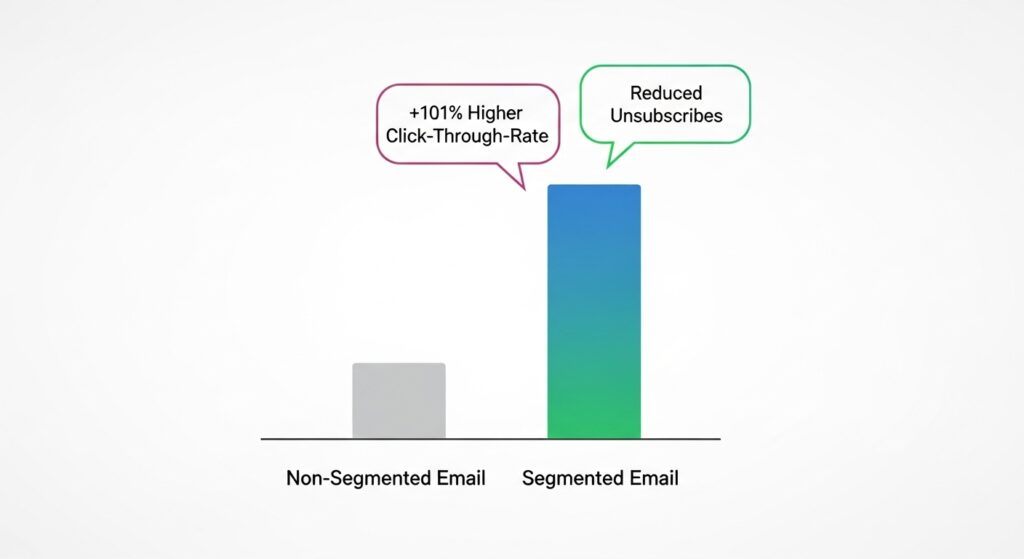
Statistical chart comparing generic vs. segmented email performance, showing a 101% higher click-through-rate (CTR) for segmented campaigns.
Skyrocketing Engagement Rates: Segmented campaigns boast open rates that can be 14.31% higher and click-through rates that are 101% higher than non-segmented campaigns. Relevant content naturally encourages action.
Higher Conversions and ROI: By sending targeted promotions or content (e.g., an offer for dog food only to the ‘Dog Owners’ segment), you dramatically increase the likelihood of a purchase. This direct relevance maximizes your return on investment (ROI).
Improved Deliverability: High engagement rates (opens and clicks) signal to Internet Service Providers (ISPs) like Gmail and Outlook that your emails are valuable, not spam. This positive reputation ensures your emails reliably land in the main inbox, not the junk folder.
Reduced Unsubscribes and Churn: Generic, irrelevant emails are the number one reason people unsubscribe. By providing content tailored to a recipient’s specific stage or interest, you reduce the annoyance factor and build a stronger, more trusting relationship.
Want to make your segmented emails even more effective? These guides will help you strengthen the foundation of your email strategy:
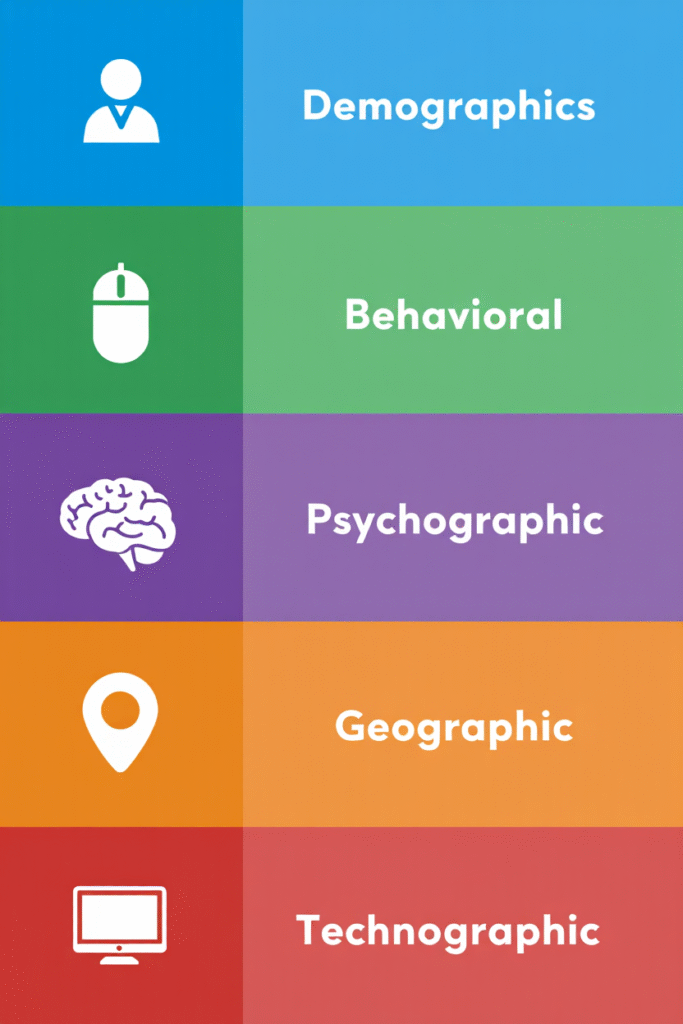
The 5 Essential Ways To Segment My Email List For Better Engagement
To effectively answer How To Segment My Email List For Better Engagement, you need a practical, actionable framework for dividing your audience.
Infographic detailing the 5 essential email list segmentation criteria, organized in a radial diagram: Demographics, Behavioral, Purchase History, Lifecycle Stage, and Self-Reported Preference.
1. Demographic Segmentation (Who They Are)
Criteria: Age, Gender, Location, Job Title (B2B), and Income Level.
Use Case: Sending a region-specific holiday offer timed perfectly for their Location and time zone.
2. Behavioral Segmentation (What They Do)
Criteria: Pages viewed on your website, Clicks/Opens on past emails, Cart Abandonment, and Content downloaded.
Use Case: Targeting a user who viewed your pricing page three times in a week with a case study or testimonial email.
3. Purchase History / RFM Segmentation (What They Buy)
Criteria:Recency, Frequency, Monetary Value (RFM), and Product Category.
Use Case: Sending a personalized cross-sell email recommending accessories for the exact product a customer purchased six months ago.
4. Customer Lifecycle Stage (Where They Are)
Criteria:Prospect/Lead, First-Time Buyer, Repeat Customer, Loyal Customer, and At-Risk/Inactive.
Use Case: Sending a dedicated, automated Welcome Series to new leads to build trust and educate them before sending any sales-focused emails.
5. Self-Reported Preference (What They Tell You)
Criteria: Explicit choices made in a Preference Center (e.g., “I only want weekly updates,” “I am interested in Topic A”).
Use Case: Allowing subscribers to select their preferred email frequency. Sending daily promotions to your “Daily Deals” segment while sending only a “Weekly Digest” to the others.
⚡ Quick-Answer Summary: Part 2
Question:How Do I Segment My List for Better Engagement?
Answer: To ensure maximum engagement, you should combine at least two segmentation criteria (e.g., Purchase History and Email Engagement). This creates a highly focused group, ensuring your message is hyper-relevant to both what they buy and how they interact with your brand.
Ready to go beyond the basic 5 segmentation criteria? Explore these next-level resources:
Email Segmentation Strategies For 2025: Looking to the Future
The biggest shift in Email Segmentation Strategies For 2025 is the move toward predictive modeling.
Visual model of AI segmentation, showing a predictive machine learning system organizing complex customer data into anticipated segments like ‘Churn Risk’ and ‘Next Best Offer’.
How to Leverage Predictive and AI Segmentation
Artificial Intelligence (AI) and Machine Learning (ML) can analyze hundreds of data points instantly to predict:
Churn Risk: Which customers are most likely to unsubscribe or stop buying in the next 30 days?
Next Best Offer: Which product or content piece a specific user is most likely to click on next.
This level of automation creates segments that human marketers could never manage manually.
A Step-by-Step Plan to Implement Your First 3 Segments
You don’t need to overcomplicate things with dozens of segments from day one. Start with 2 to 3 high-impact segments that address the biggest gaps in your current communication.
Define a Clear, Measurable Goal: Your goal must be specific. Example: “Increase repeat purchases by 10% from ‘First-Time Buyers’ in Q4.”
Choose Your Segments and Gather the Data: Select segments that directly address your goal. Start with the data you already have (e.g., purchase date).
Automate, Test, and Adjust: Set up your segments to update automatically. A/B test the content, and conduct Regular List Hygiene to keep your segments clean.
Choosing the Right Tools to Automate Segmentation
A successful segmentation strategy relies on an email marketing platform that can execute the complex logic of combined data points.
Need help choosing and setting up the right tools for segmentation?
Look for: Dynamic Tagging, Seamless E-commerce/CRM Integration, and a Visual Workflow Builder.
🛠️ Ready to find your platform? The software makes the segmentation possible. Learn what features to prioritize based on your business size in our comprehensive buyer’s guide: The Best Email Marketing Software Comparison 2025.
⚡ Quick-Answer Summary: Part 4
Question:What are the biggest mistakes to avoid when segmenting a list?
Answer: The three most common mistakes are under-segmenting (still sending generic content), over-segmenting (creating tiny groups that are too time-consuming to manage), and ignoring the Inactive Segment. Always prioritize data over intuition.
Part 5: Frequently Asked Questions (FAQ)
Q: What is the minimum list size for effective segmentation?
A: There is no minimum. Segmentation is a mindset, not a volume requirement. Even with 500 subscribers, you can (and should) separate them into basic groups like “Leads” and “Customers.” Start small and scale up.
Q: How many segments should a business create?
A: Start with 3 to 5 core segments that align directly with your top business goals (e.g., New Leads, Loyal Customers, Inactive). You should only create a new segment if you are prepared to send them unique, tailored content.
Q: Is email segmentation the same as personalization?
A: No, they work together. Segmentation is a group strategy (dividing the audience). Personalization is a tactic used within those segments (inserting a name, specific product image, or location details). Segmentation creates the context for effective personalization.
Q: How often should I update or clean my email segments?
A: Your segments should be dynamic and update in real-time based on behavior. However, you should review and clean your list hygiene segments (inactive/unengaged) quarterly to ensure you are not paying to email subscribers who will never engage.
Conclusion: The Final Word on Smart Segmentation
The era of one-size-fits-all email is over. The Ultimate Guide to Email List Segmentation proves that relevance isn’t a luxury in 2025—it’s the price of admission.
By implementing the core criteria and looking ahead to AI-driven strategies, you will stop annoying your subscribers, drastically reduce your opt-out rates, and transform your email list from a static mailing address database into a dynamic, profitable engine for personalized marketing.
Ready to stop “batch and blast” and start sending emails that people actually look forward to opening?
Next Steps: Put Your Segments to Work
If you’re ready to turn these ideas into a simple, realistic plan, you don’t have to figure it all out alone. I created a free resource designed especially for retirees and beginners who want to build an online income without pressure or hype.
And if you’d like structured training, community support, and tools all in one place, you can explore the platform I personally recommend for beginners:
Take your time, move at a comfortable speed, and remember: even a small, well-segmented list can become a valuable asset when you keep things relevant, respectful, and consistent.