
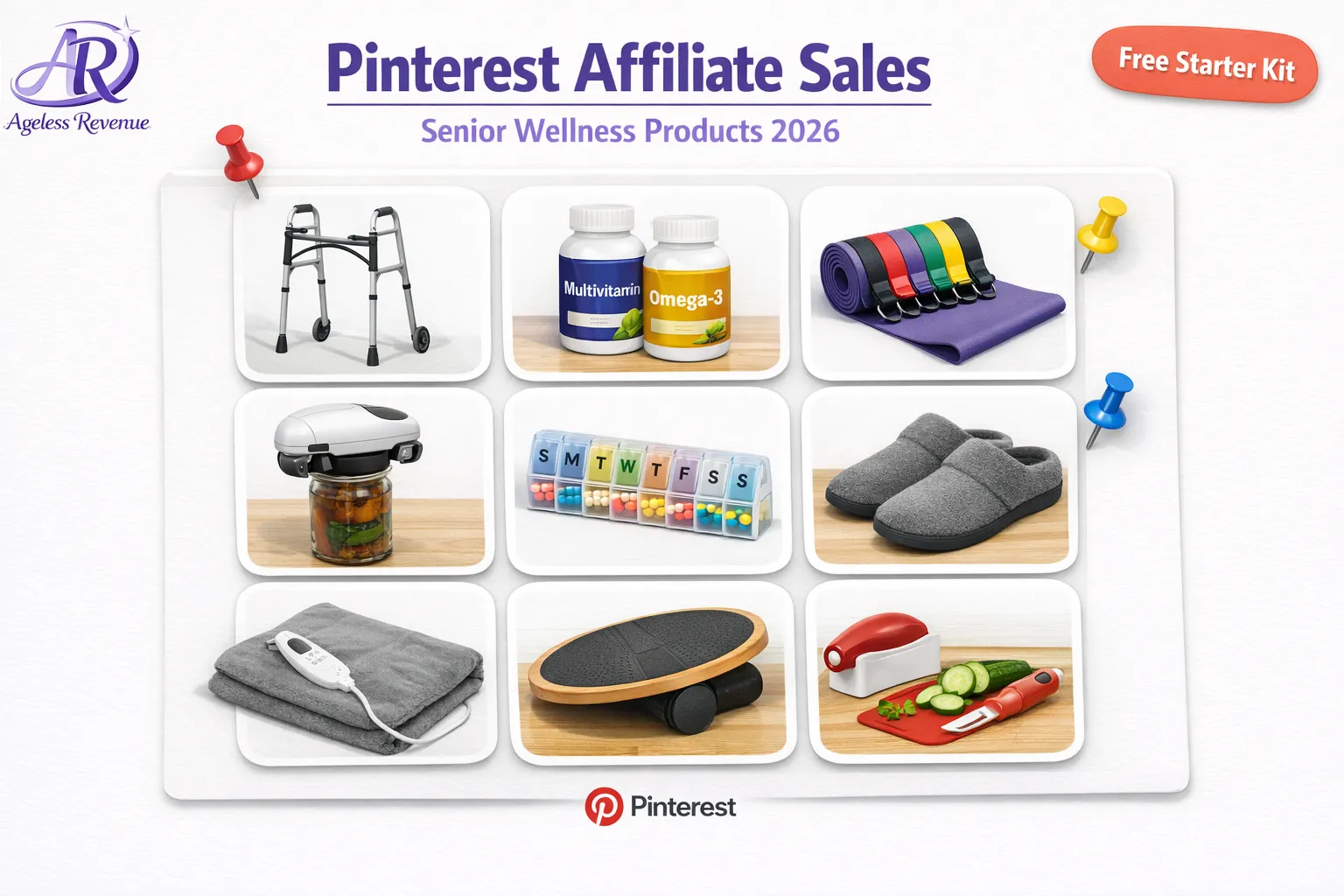
Unlock Passive Income by Recommending Senior Wellness Products on Pinterest
Affiliate disclosure (FTC): This article may contain affiliate links. If you click and make a purchase, I may earn a small commission at no extra cost to you. I only recommend products I believe are genuinely helpful.
Introduction
Older adults and caregivers are constantly looking for products and ideas that improve quality of life — and Pinterest is basically one giant “solution search engine” for that.
Unlike most social platforms, where people scroll for entertainment, Pinterest users often arrive with a plan. They’re searching for answers like:
- “Best walking shoes for seniors”
- “Arthritis relief tools for hands”
- “Chair exercises for balance”
- “Healthy smoothies for over 60”
That’s why Pinterest can be such a strong platform for affiliate marketing, especially for the senior wellness niche. When you create helpful pins that solve real problems, those pins can keep showing up in searches for months (even years). It’s one of the best “set it up once, benefit long-term” platforms out there.
In this guide, you’ll learn exactly how to use Pinterest to generate steady affiliate sales by recommending senior wellness products in a calm, trust-first way. I’ll walk you through:
- Which affiliate programs to choose
- How to find Pinterest keywords people actually search for
- How to design pins that get clicks (without feeling salesy)
- Whether you should link directly to affiliate offers (and when not to)
- How to track which pins generate real sales
If you’re new to affiliate marketing, don’t worry — this is written to be beginner-friendly and action-based.
TL;DR (Too Long; Didn’t Read)
Here’s the fast version:
- Pinterest is a visual search engine, not just social media.
- Pins are evergreen and can send traffic for months.
- Use specific keywords like “arthritis tools for seniors” instead of broad ones like “wellness.”
- Educational pins convert best (guides, checklists, step-by-steps).
- In most cases, send Pinterest traffic to a helpful blog post first, then place affiliate links inside the post.
- Track results using Pinterest Analytics + UTM tracking (or your affiliate dashboard).
Why Pinterest Works for Senior Wellness Affiliate Marketing
Pinterest isn’t “just another social platform.” It behaves more like Google.
People go there to search, plan, and solve problems — which means they’re already motivated when they see your content.
That matters because the senior wellness audience usually has a real need behind their search:
- Comfort
- Mobility
- Independence
- Safety
- Pain relief
- Sleep improvement
- Low-stress routines
Pinterest also attracts a large base of women and caregivers, and many adult children use Pinterest to find solutions for their parents.
Even better: Pinterest content lasts.
A pin about a “simple balance routine for seniors” can keep driving clicks long after you publish it. That’s exactly what makes Pinterest a great match for affiliate income: your content becomes a long-term asset.
How to Get Affiliate Sales on Pinterest (Step-by-Step)
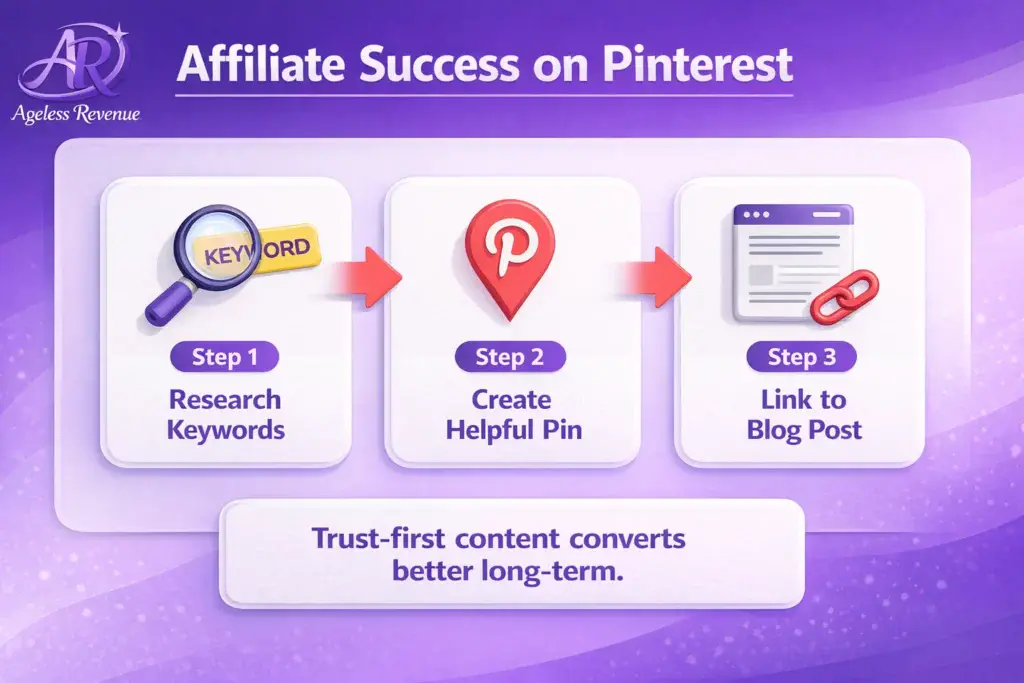
Here’s the exact process I recommend:
- Pick the right affiliate programs
- Research keywords & topics that Pinterest users search
- Create helpful, clickable pins
- Link pins to valuable content (the trust-first approach)
- Stay consistent with posting and scheduling
- Build trust through community + good account structure
Let’s walk through each one.
1) Pick the Right Affiliate Programs
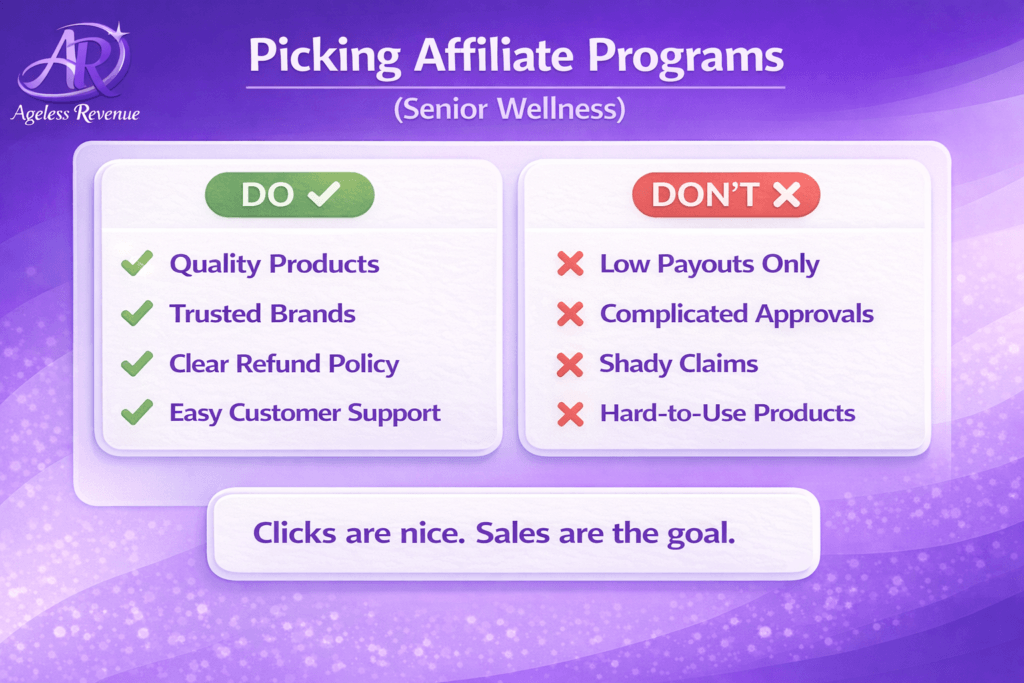
Start with affiliate programs that have products your audience actually wants — and that you can recommend confidently.
Good places to begin:
- Amazon Associates (huge variety, lower commissions but easy conversions)
- ShareASale / CJ / Impact (brand-based programs)
- Direct brand programs (often higher commissions)
- Digital products or memberships related to wellness (if reputable)
When choosing products, focus on these qualities:
- Solves a specific problem (mobility, comfort, safety, etc.)
- Has strong reviews and clear benefits
- Easy to explain and demonstrate
- Suitable for older adults (simple, not complicated tech)
Examples of high-interest senior wellness product categories:
- Arthritis supports (compression gloves, wrist braces, heated wraps)
- Mobility aids (walkers, canes, grab bars, reachers)
- Balance + light fitness tools (resistance bands, pedal exercisers)
- Sleep aids (white noise machines, weighted blankets, cooling pillows)
- Daily-living helpers (jar openers, easy-grip utensils, shower chairs)
- Pill organizers and medication reminder devices
Tip: Your best conversion opportunities come from products that help seniors stay independent. That’s a very strong emotional “yes.”
2) Research Keywords & Topics (The Pinterest Way)
Pinterest runs on keywords.
Before you create pins, spend 10 minutes researching what Pinterest already wants to show people.
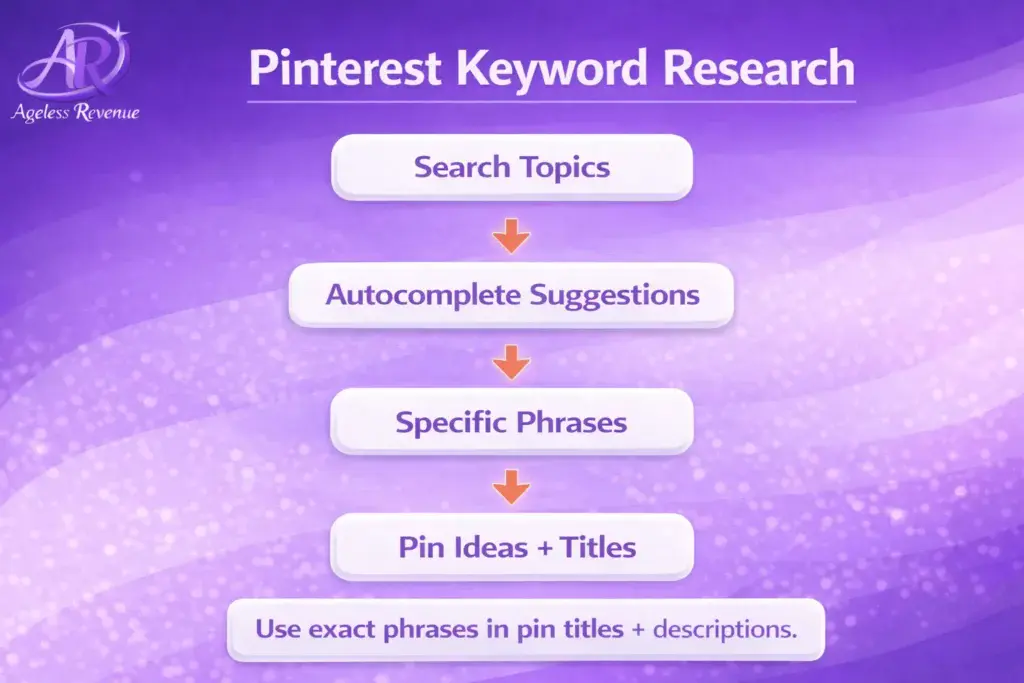
How to find easy Pinterest keywords
- Open Pinterest and click the search bar
- Start typing a phrase (don’t hit enter yet)
- Watch the autocomplete suggestions (those are real searches)
- Click a suggestion and scan the top results
- Save the phrasing you see repeatedly
Keyword examples for this niche
Try typing these starters and see what Pinterest suggests:
- senior exercises
- arthritis relief
- caregiver tips
- mobility aids
- balance exercises
- healthy meals for seniors
- sleep help
Then go more specific:
- “chair yoga for seniors beginners”
- “balance exercises for seniors at home”
- “arthritis pain relief hands”
- “easy healthy breakfast for seniors”
- “fall prevention for seniors at home”
- “Best shoes for seniors with balance problems”
The more specific the keyword, the more targeted the traffic (and the more likely someone clicks because it matches their situation).
3) Create Helpful, Clickable Pins (That Don’t Feel Salesy)
The best affiliate pins don’t look like ads.
They look like they help.
That means your pins should feel like:
- a quick solution
- a mini guide
- a checklist
- a simple routine
- a “what to buy and why” explanation
Pin design basics (especially for older readers)
- Use large, readable text
- Keep wording short (5–10 words on the image)
- Use high contrast (easy to read)
- Use one clear idea per pin
- Avoid clutter and tiny text
High-performing pin formats for senior wellness
- Step-by-step guides
- “Top 5” product lists
- Simple routines (“3-minute mobility stretch”)
- Before/after style story pins (gentle, not exaggerated)
- Checklists (“fall-proof your bathroom”)
- Problem/solution pins (“Hands hurt opening jars? Try these.”)
Real pin title examples you can copy (2026)
Here are practical, clickable pin titles:
- “7 Arthritis-Friendly Kitchen Tools (That Actually Help)”
- “Beginner Chair Exercises for Better Balance”
- “Fall Prevention Checklist for Seniors at Home”
- “Best Walking Shoes for Seniors (2026 Comfort Picks)”
- “Simple Morning Stretch Routine for Stiff Joints”
- “Top Sleep Aids for Seniors (Calm + Non-Complicated)”
- “Mobility Aids That Make Daily Life Easier”
Suggested Pinterest descriptions (examples)
Use descriptions that include keywords + a calm CTA:
- “Looking for simple chair exercises for seniors? This beginner routine improves balance and mobility at home. Full step-by-step guide inside.”
- “These arthritis tools for seniors make cooking easier with less hand strain. See my top picks and why they help.”
- “Fall prevention tips for seniors: easy home changes + helpful safety products. Read the checklist and recommendations.”
4) Should You Link Directly to Affiliate Products on Pinterest?
This is an important one.
You can sometimes link directly to affiliate offers on Pinterest — but it’s usually not the best approach for beginners, and it can be risky depending on the affiliate program and Pinterest’s spam filters.
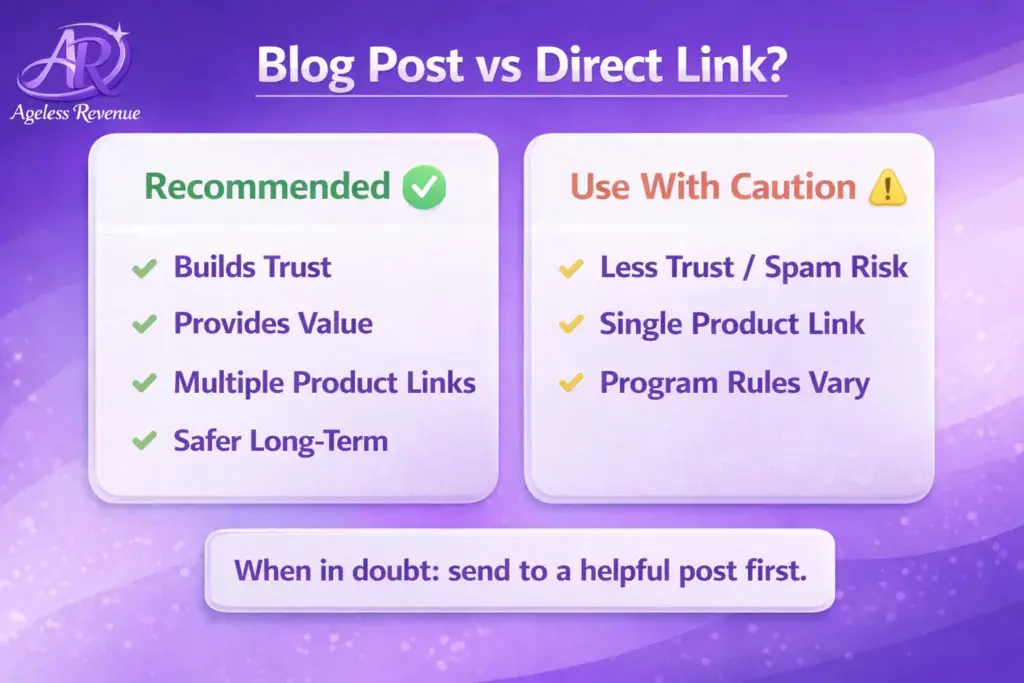
The trust-first strategy (recommended)
Pinterest Pin → Helpful blog post → Affiliate links inside the post
Why this works so well:
- Pinterest likes helpful content
- Your reader gets value first
- You build trust before recommending anything
- You control the experience (and can add email opt-ins)
- You can include multiple products naturally
When direct-to-affiliate might be okay
Direct affiliate links can work when:
- The affiliate program clearly allows it
- Your pin is informational (not spammy)
- You disclose properly
- You’re not posting direct affiliate links repeatedly
- The destination page is trustworthy and relevant
Simple do’s and don’ts
Do:
- Send people to a helpful tutorial or product guide
- Include an FTC disclosure on your blog post
- Use one main affiliate CTA per page (keep it clean)
- Create content that answers a question first
Don’t:
- Spam multiple direct affiliate pins in a row
- Use misleading “clickbait” claims
- Link to low-quality landing pages
- Hide the fact that it’s an affiliate recommendation
If you want a simple rule:
If the pin is “helpful content,” send it to your blog post.
If the pin is “product-only,” be extra careful and use it sparingly.
5) Link Pins to Valuable Content (What to Create on Your Blog)
To make Pinterest work long-term, you’ll want a few “pin-friendly” post types.
Here are the best content formats:
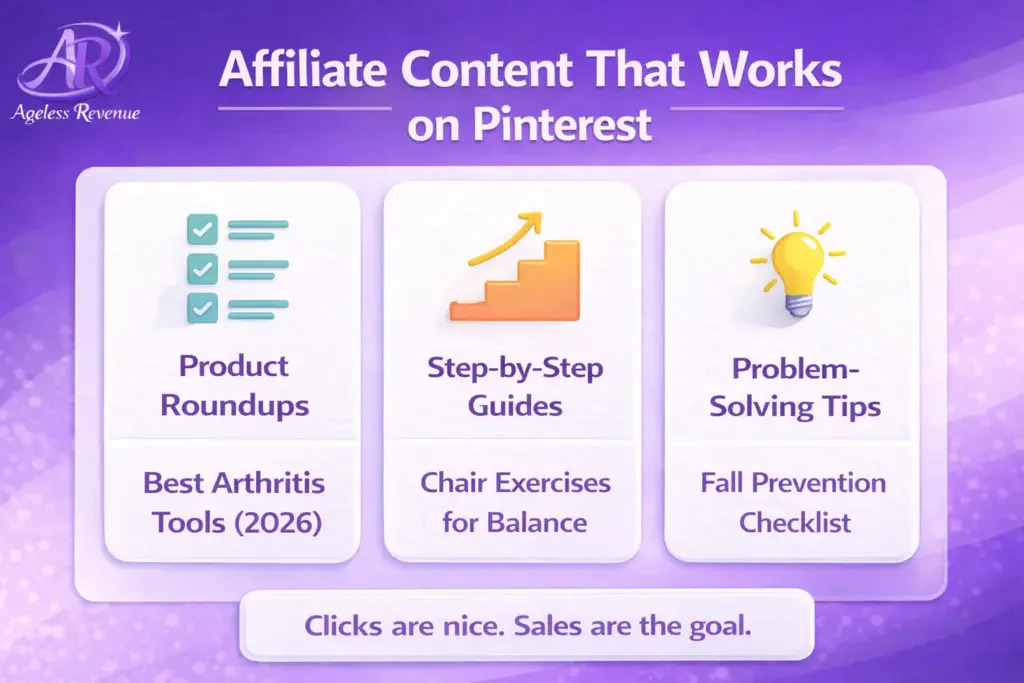
1) Product roundup posts
Examples:
- “Best Arthritis Tools for Seniors (2026 Picks)”
- “Top Mobility Aids for Independent Living”
- “Best Sleep Aids for Seniors (Comfort + Calm Options)”
2) Problem/solution posts
Examples:
- “How to Improve Balance at Home (Beginner Steps)”
- “Hands Hurt While Cooking? Try These Easy Fixes”
- “Fall Prevention Tips for Seniors (Room-by-Room Checklist)”
3) Step-by-step posts
Examples:
- “Chair Yoga Routine for Beginners”
- “How to Use Resistance Bands Safely (Over 60 Guide)”
- “Simple Walking Plan to Improve Stamina”
In each post, you can naturally recommend products without feeling salesy, because they support the solution.
Internal link tip: If you have a “Resources” page, link to it from this post and say something clear like:
“You can also browse my recommended affiliate tools and networks on my Resources page.”
Pinterest rewards consistency more than perfection.
A simple rhythm:
- 3–7 new pins per week (total)
- Repin 5–10 helpful pins from others (optional)
- Rotate topics so your account stays balanced
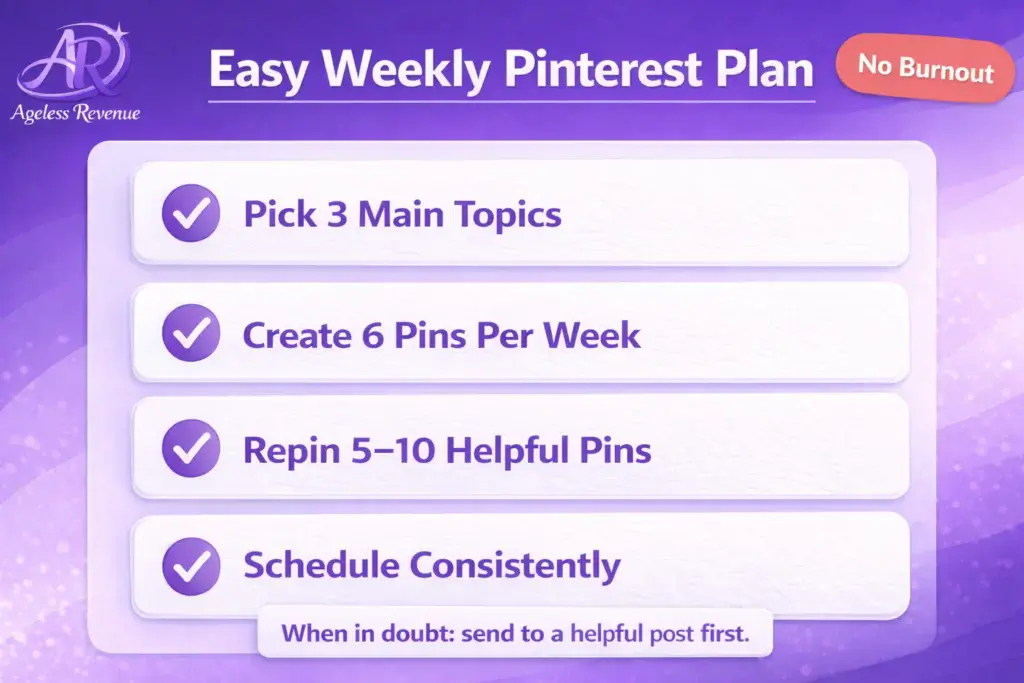
Easy weekly strategy
Pick 2–3 main topics (example):
- Balance exercises
- Arthritis help
- Sleep comfort
Then create:
- 2 pins per topic per week = 6 pins
That’s enough to grow steadily.
Schedulers like Tailwind can help, but you can also batch upload inside Pinterest weekly.
7) Get Involved with the Pinterest Community
Pinterest isn’t as “chatty” as Facebook, but trust still matters.
Here’s what helps:
- Organize your boards clearly (avoid messy board names)
- Pin useful content regularly
- Use consistent visuals so people recognize your style
- Join a few quality group boards (caregiver, wellness, aging, etc.)
- Save great content from others (it helps your account look active)
Best Niches and Products for Affiliate Sales on Pinterest
What is the most profitable niche on Pinterest?
Pinterest tends to perform well for:
- health & wellness
- recipes
- home organization
- DIY
- crafts
- beauty/self-care
For senior wellness specifically, strong sub-niches include:
- mobility and fall prevention
- arthritis and joint comfort
- gentle fitness routines
- sleep + stress support
- independence-support tools for daily living
What products sell best on Pinterest (senior wellness)?
Based on what people actively search for, these categories usually do well:
- Easy-grip household gadgets
- Supportive slippers / non-slip socks
- Chair exercise tools (bands, pedal exercisers)
- Pill organizers with alarms
- Heated pads/wraps for comfort
- Simple safety tools (night lights, grab bars, shower seats)
Seasonal spikes also happen for:
- holiday gifts for grandparents
- summer hydration and walking gear
- Winter comfort tools
Top Strategies to Boost Pinterest Affiliate Conversions
1) Tell mini stories (without oversharing)
Story-based pins build trust.
Example angle:
- “My hands got sore cooking dinner, so I tried these arthritis tools…”
Even one line can make a pin feel human.
2) Make step-by-step guide pins
Step pins work incredibly well on Pinterest.
Examples:
- “3 steps to reduce fall risk at home”
- “5-minute morning mobility routine”
- “How to choose a cane (simple guide)”
3) Create “Best of” lists
Roundups are Pinterest gold.
Examples:
- “Top 5 Heated Blankets for Seniors”
- “Best Balance Tools for Home Use”
- “Most Helpful Mobility Aids for Daily Living”
4) Use calm, clear CTAs
Instead of hype, use gentle direction:
- “See the full checklist.”
- “Read the full guide.”
- “My top comfort picks”
- “Step-by-step tutorial”
5) A/B test your pin designs
Create 2–3 versions of one idea:
- different photo
- different title wording
- different layout
Let Pinterest tell you what works.
6) Use Rich Pins (for trust)
Rich Pins pull extra info from your site and can increase credibility.
They also make your content look more “official” and reliable.
Tracking and Optimizing Your Affiliate Pins on Pinterest
Affiliate success is not just about clicks — it’s about sales.
1) Use UTM parameters or link trackers
Track which pins are actually converting.
You can use:
- UTMs
- affiliate dashboards (Amazon, ShareASale, etc.)
- a simple spreadsheet log
2) Watch Pinterest Analytics
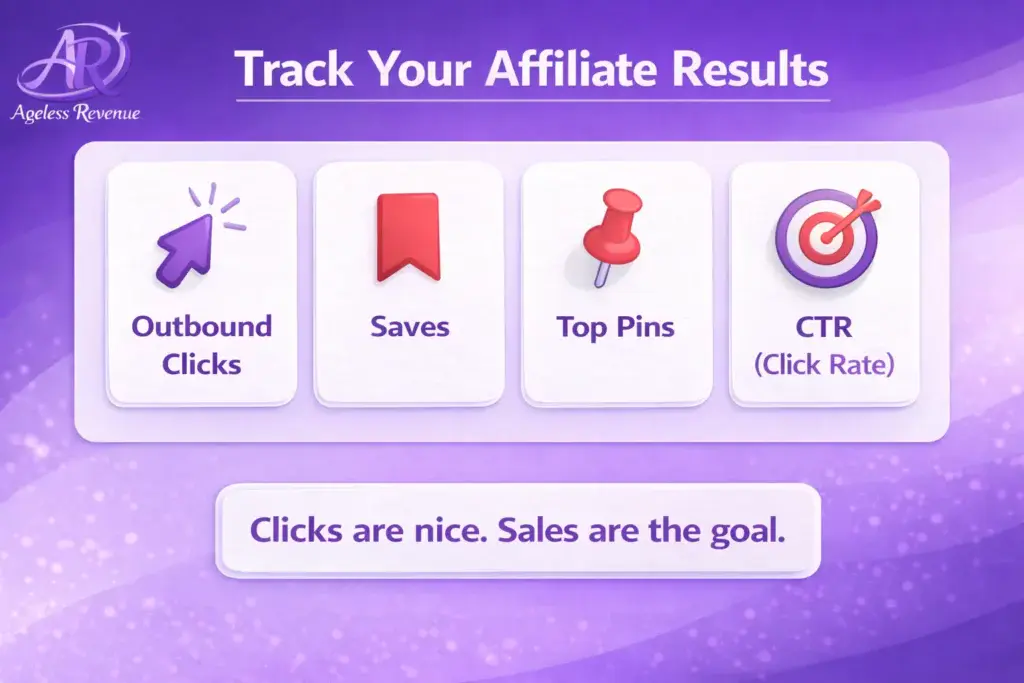
Focus on:
- outbound clicks
- saves
- impressions
- click-through rate
High saves often mean your pin is helpful and evergreen.
3) Refresh your best-performing pins
After 30–60 days:
- swap the image
- Update the title
- refresh the description
Republishing the same content with a new look can reach a whole new audience.
4) Test new products seasonally
Every season, test a few new ideas.
If one product suddenly performs well, consider:
- a dedicated review post
- a new board
- a mini pin series around it
5) Stay aligned with Pinterest guidelines
Pinterest and affiliate programs update their rules sometimes.
Stick with these safe habits:
- disclose relationships clearly
- avoid spammy posting
- Focus on value first
- Don’t flood Pinterest with direct affiliate links
Frequently Asked Questions (FAQ)
Q: How do I get affiliate sales on Pinterest?
A: Join affiliate programs that match senior wellness needs, research Pinterest keywords, and design helpful pins that lead to valuable content like blog posts or reviews. Place affiliate links inside those posts, use calm CTAs, and track results with analytics.
Q: What is the most profitable niche on Pinterest?
A: Health/wellness, home, organization, recipes, and DIY often perform best. Senior wellness is especially promising because people search for real solutions and helpful products.
Q: Is Pinterest a good place for affiliate marketing?
A: Yes. Pinterest works like a search engine, so pins can keep sending traffic long after you publish them. It’s especially effective when you focus on helpful content instead of hard selling.
Q: What products sell best on Pinterest?
A: Products that solve everyday problems: ergonomic tools, balance and mobility aids, sleep comfort items, arthritis supports, and safety tools for the home.
Q: How many affiliate pins should I post?
A: A good beginner ratio is 2–4 affiliate-related pins for every 10 helpful/educational pins. Pinterest rewards accounts that feel useful, not sales-heavy.
Conclusion
Pinterest is one of the best low-stress ways to reach people who are actively searching for solutions — especially in the senior wellness space, where trust matters.
If you focus on helpful, keyword-rich content and recommend products naturally inside your guides and posts, you can build steady affiliate income without feeling pushy.
Here’s what to remember:
- Create pins that solve a specific problem
- Use real Pinterest keywords (not vague ones)
- Send traffic to helpful content first whenever possible
- Track what works and refresh your best pins
- Stay consistent, even with just a few pins per week
Your simple 30-day Pinterest action plan (beginner-friendly)
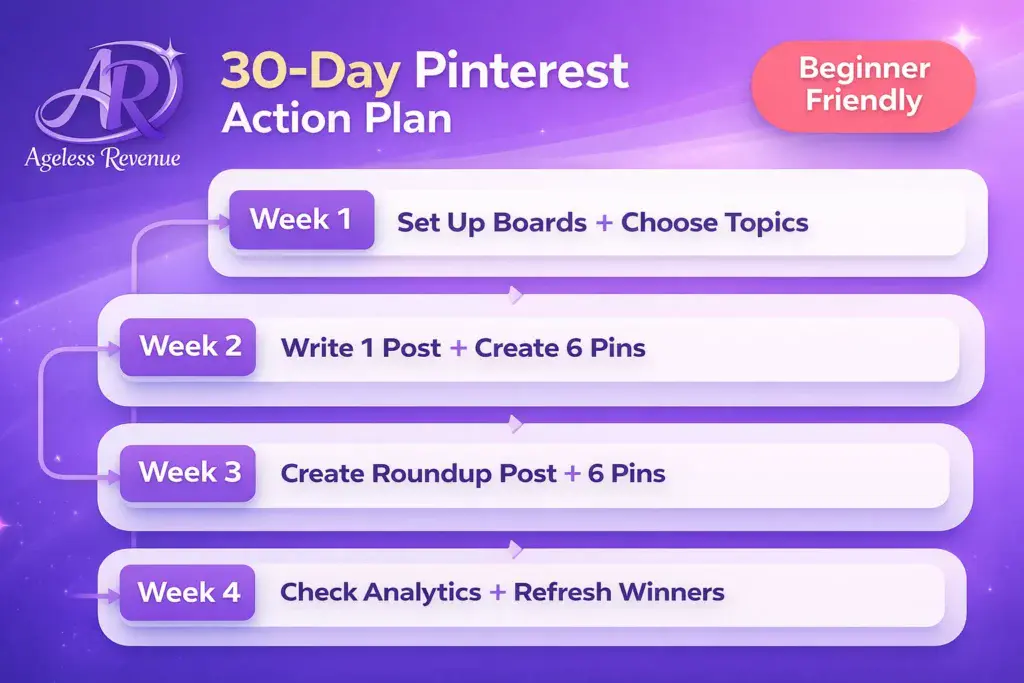
Week 1: Set up boards + choose 3 main topics
Week 2: Publish 1 helpful blog post + make 6 pins for it
Week 3: Publish 1 roundup post + make 6 pins for it
Week 4: Check analytics + create 6 new pins based on what got saves/clicks